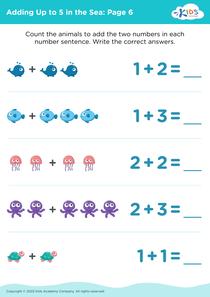
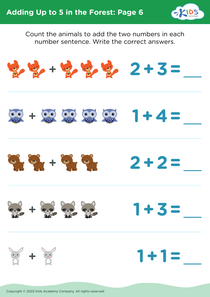
Basic arithmetic practice Adding at the Zoo Worksheets
4 filtered results
-
From - To
Welcome to our "Basic Arithmetic Practice: Adding at the Zoo Worksheets" page! Here, young learners can embark on a fun mathematical adventure with engaging, zoo-themed worksheets designed to enhance their addition skills. Our activities incorporate colorful illustrations of animals, capturing children's interest while they practice basic arithmetic operations. Each worksheet focuses on different addition problems, making math approachable and enjoyable for early grade students. Whether in the classroom or at home, these worksheets provide valuable opportunities for hands-on learning and reinforce foundational math concepts. Explore our collection now to inspire a love of learning through play and creativity!
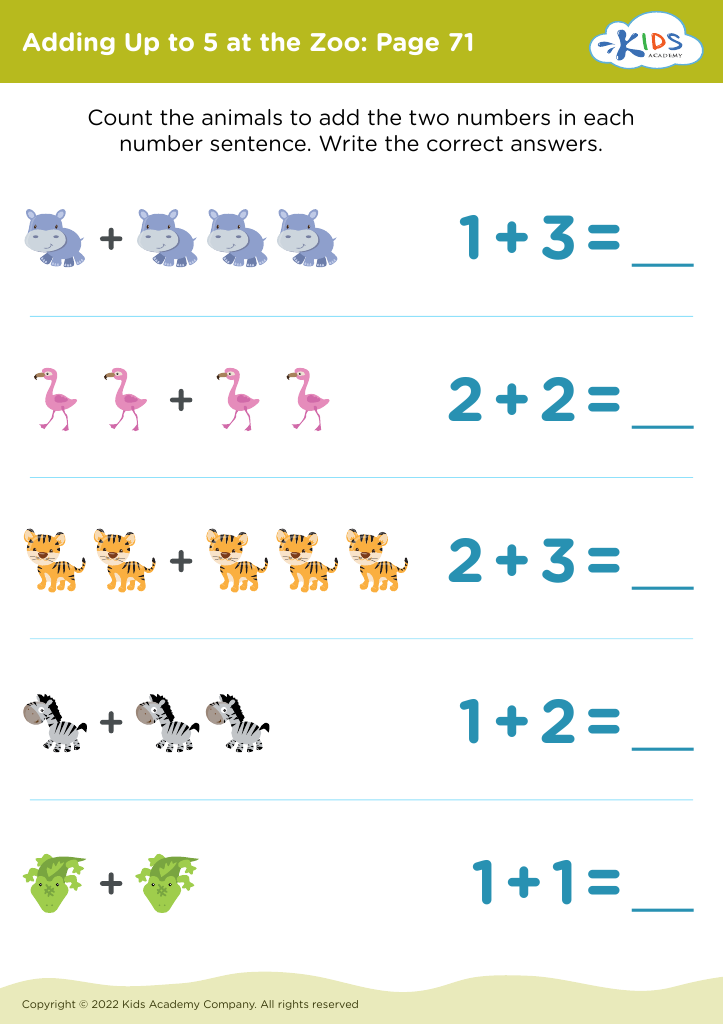
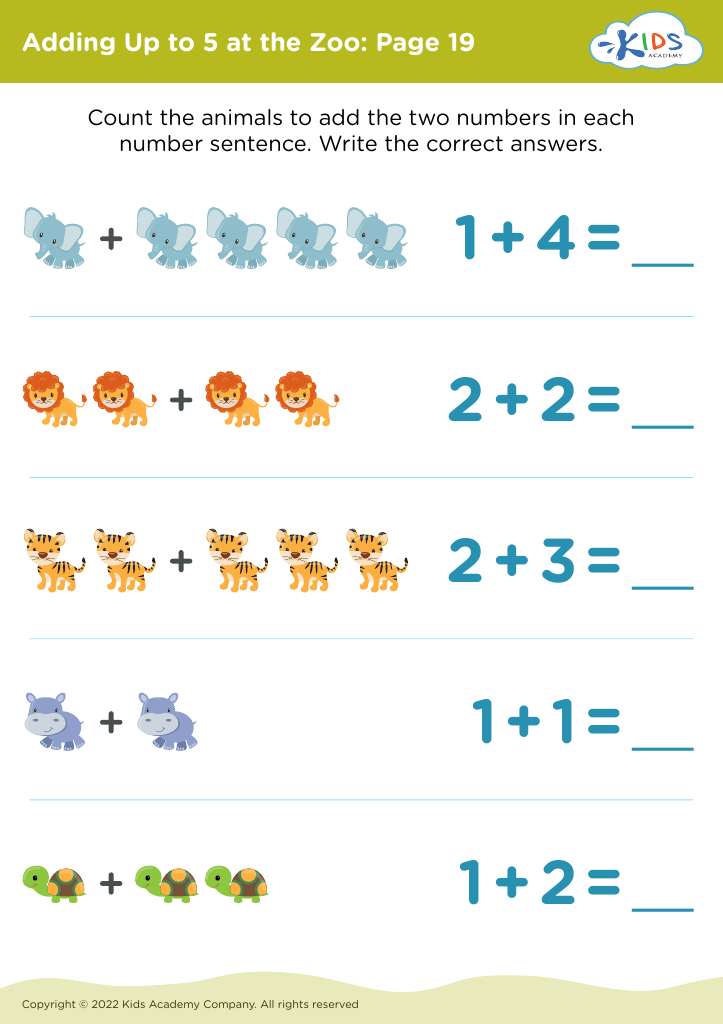
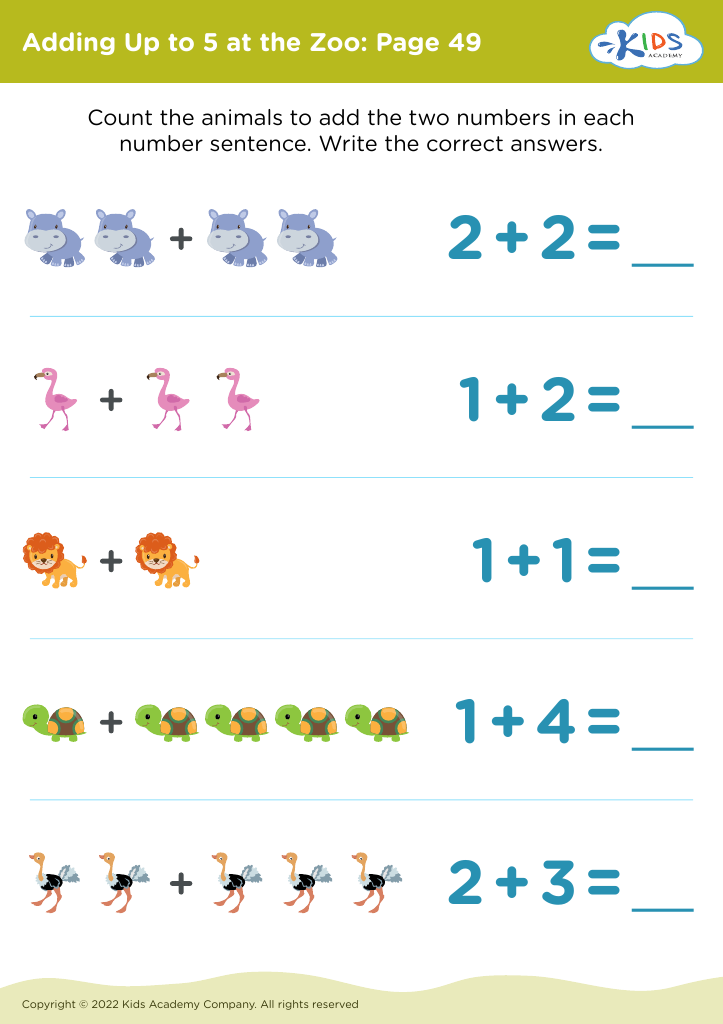
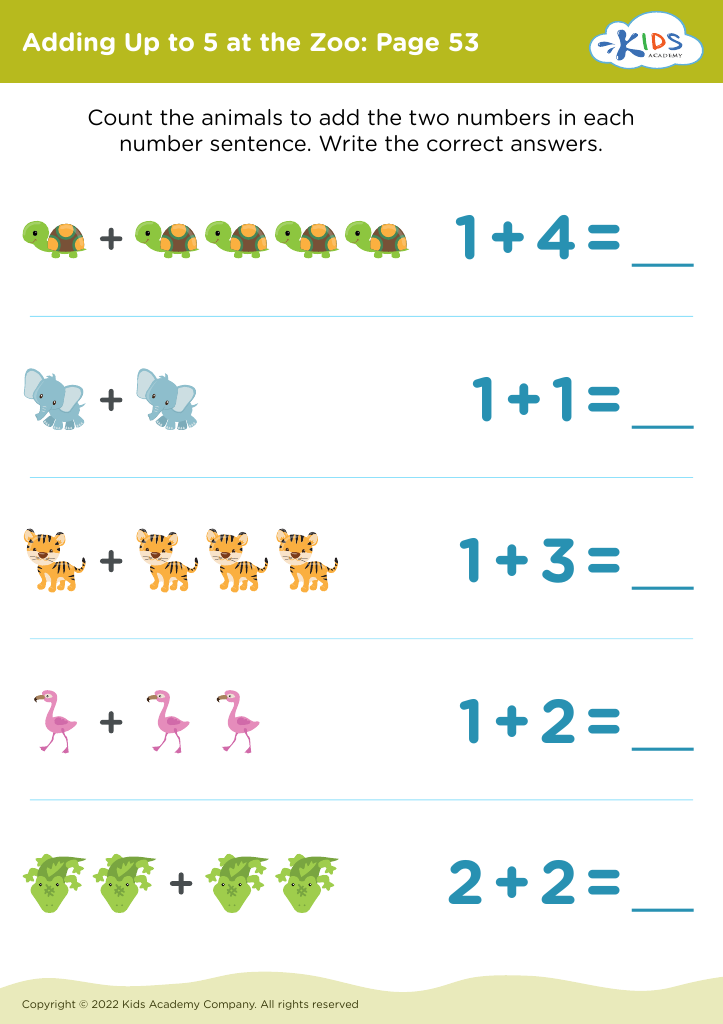



Parents and teachers should prioritize basic arithmetic practice, such as "Adding at the Zoo," for several compelling reasons. Engaging in activities that combine math with enjoyable themes, like a zoo setting, captivates young learners' interest, making arithmetic more appealing and less intimidating. Such interactive practices foster a positive attitude towards math, which is crucial for lifelong learning.
Moreover, early exposure to foundational skills develops critical thinking and problem-solving abilities. Arithmetic exercises lay the groundwork for more complex math concepts, helping children make connections between real-world scenarios and mathematical principles. By incorporating zoo animals into math practice, children can visualize the concepts, enhancing comprehension and retention.
Additionally, teamwork during these activities promotes social skills. Children can work collaboratively, sharing strategies and solutions, which enriches their learning experience. This collaborative approach also offers opportunities for educators and parents to provide immediate feedback and encouragement, boosting children's confidence in their math abilities.
Ultimately, by emphasizing enjoyable and relevant math experiences, parents and teachers build a strong mathematical foundation, fostering a love for learning. This foundational support can lead to greater academic success as students progress through their education.