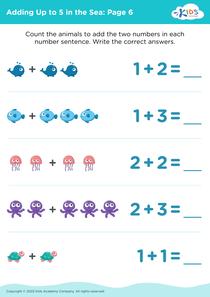
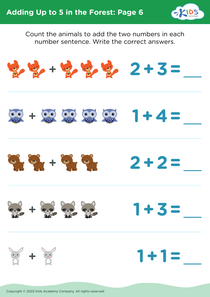
Counting practice Adding at the Zoo Worksheets
41 filtered results
-
From - To
Our "Counting Practice Adding at the Zoo Worksheets" offer exciting and educational fun. Designed for early learners, these worksheets feature colorful zoo animals to engage young mathematicians. Children will enhance their counting and addition skills by adding quantities of animals. Perfect for both classroom and home use, these printables strengthen number recognition and basic arithmetic. Each worksheet is crafted to build confidence and foster a love for math. It's the perfect activity to turn counting practice into an enjoyable adventure! Get ready to watch your child roar with success as they add their favorite zoo animals.
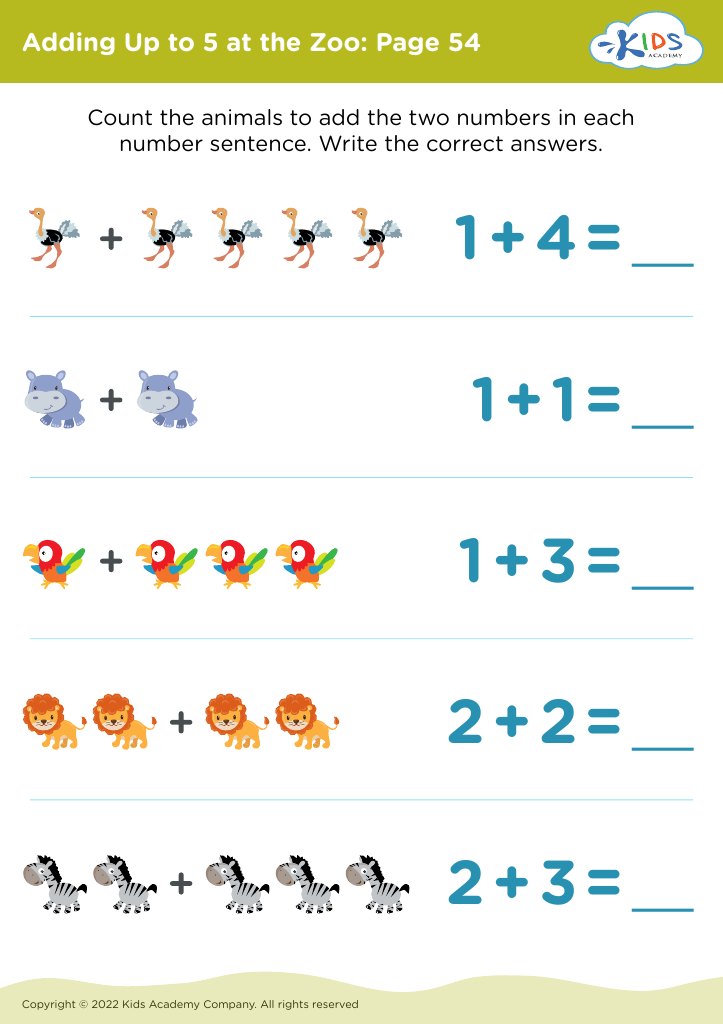
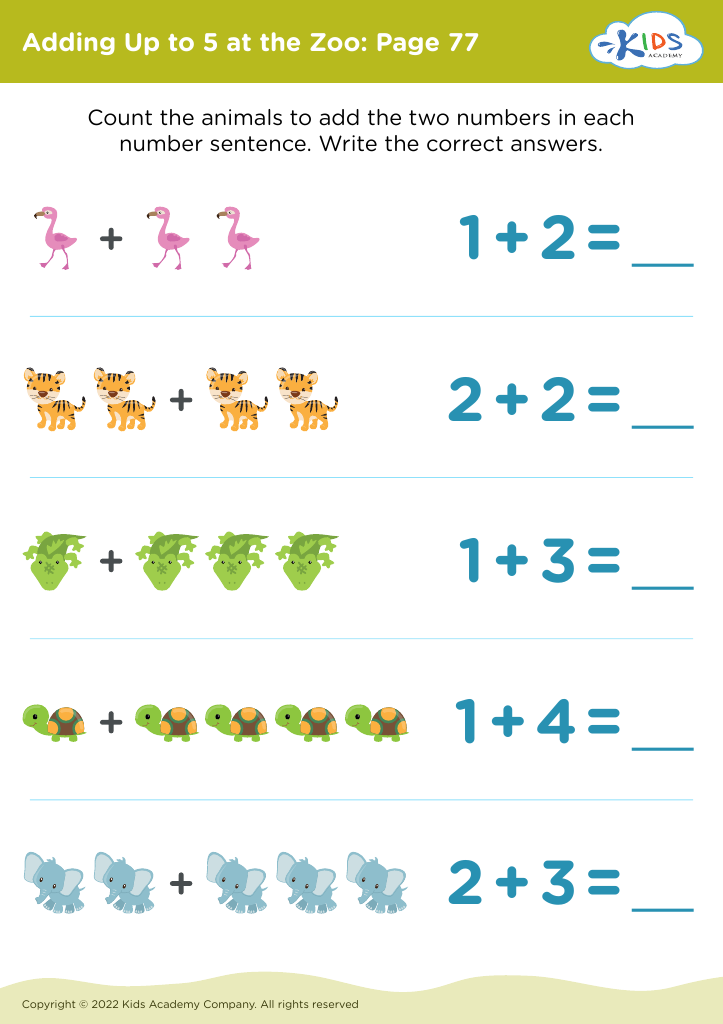
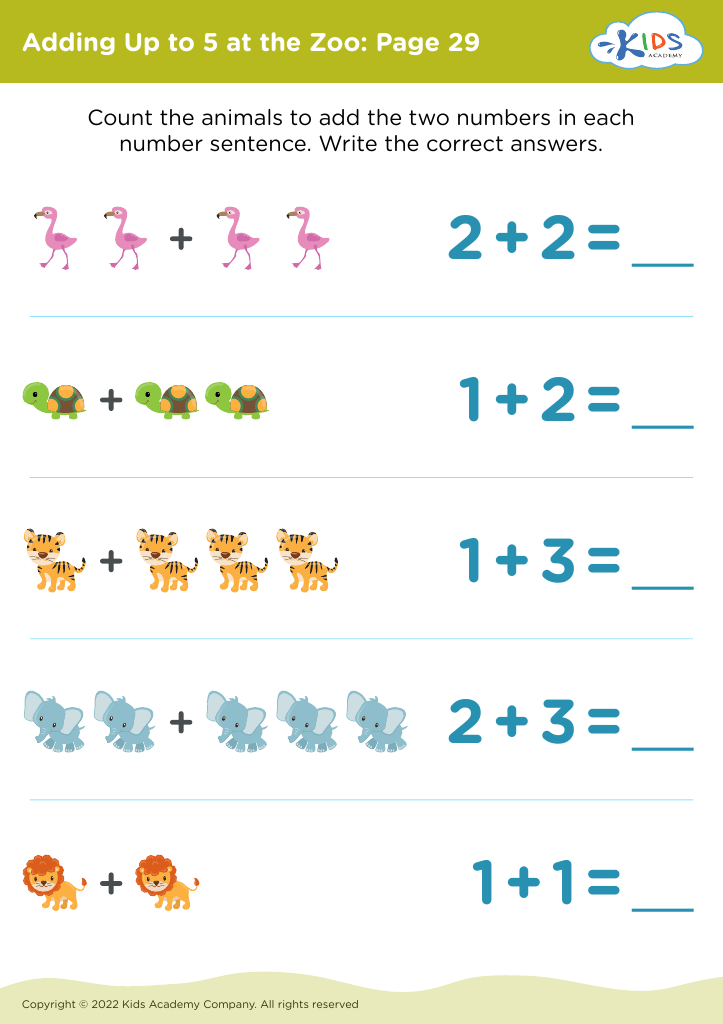
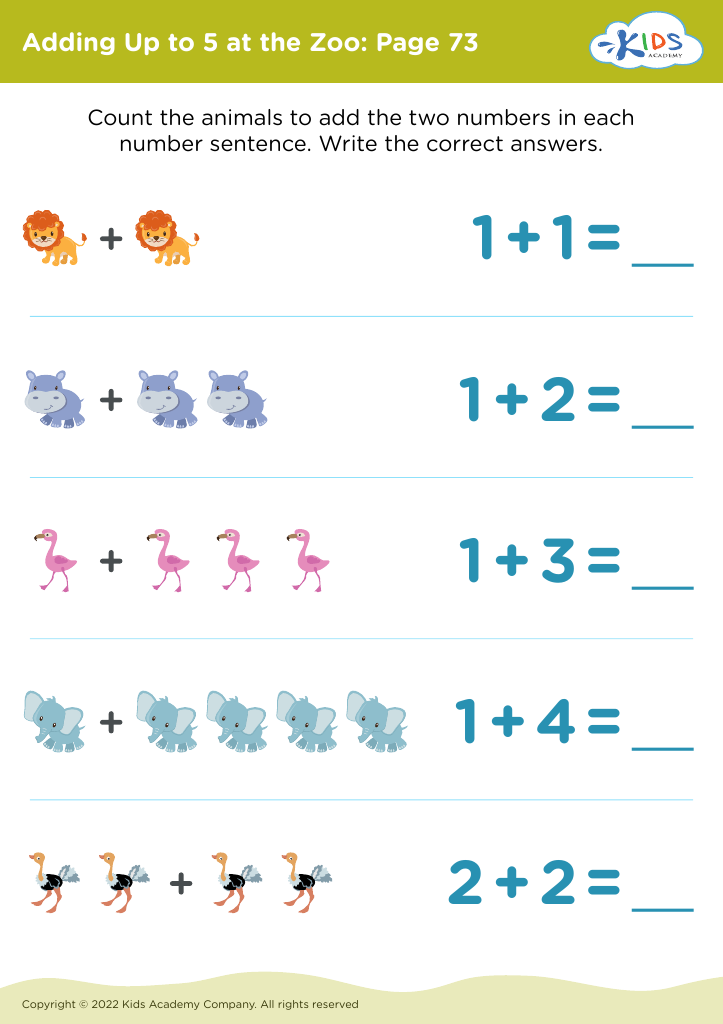
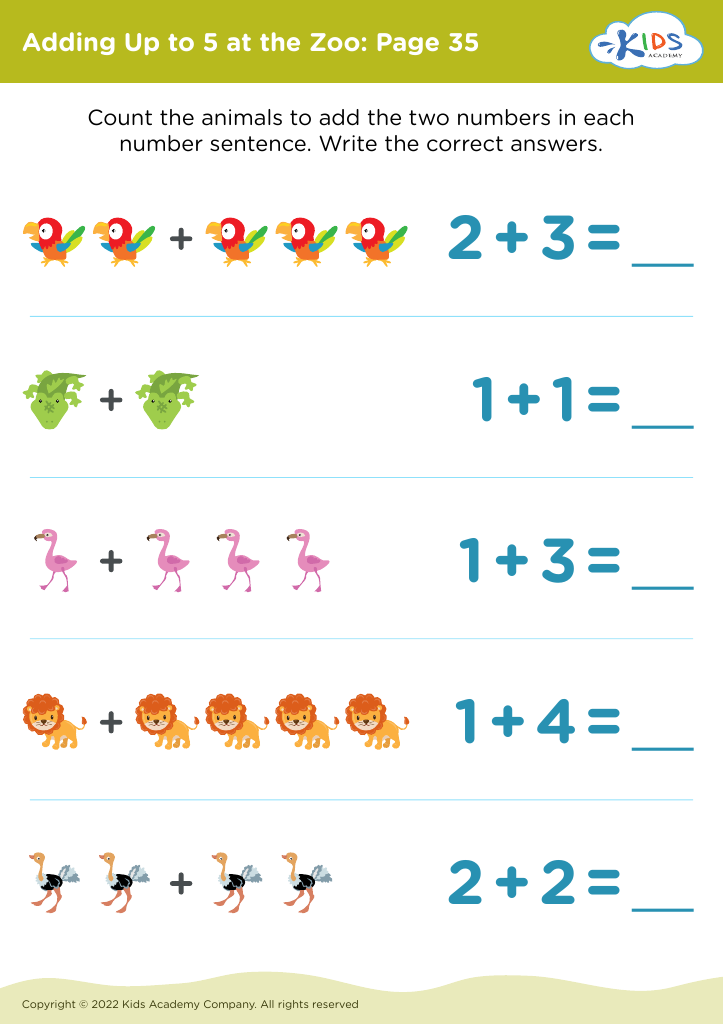
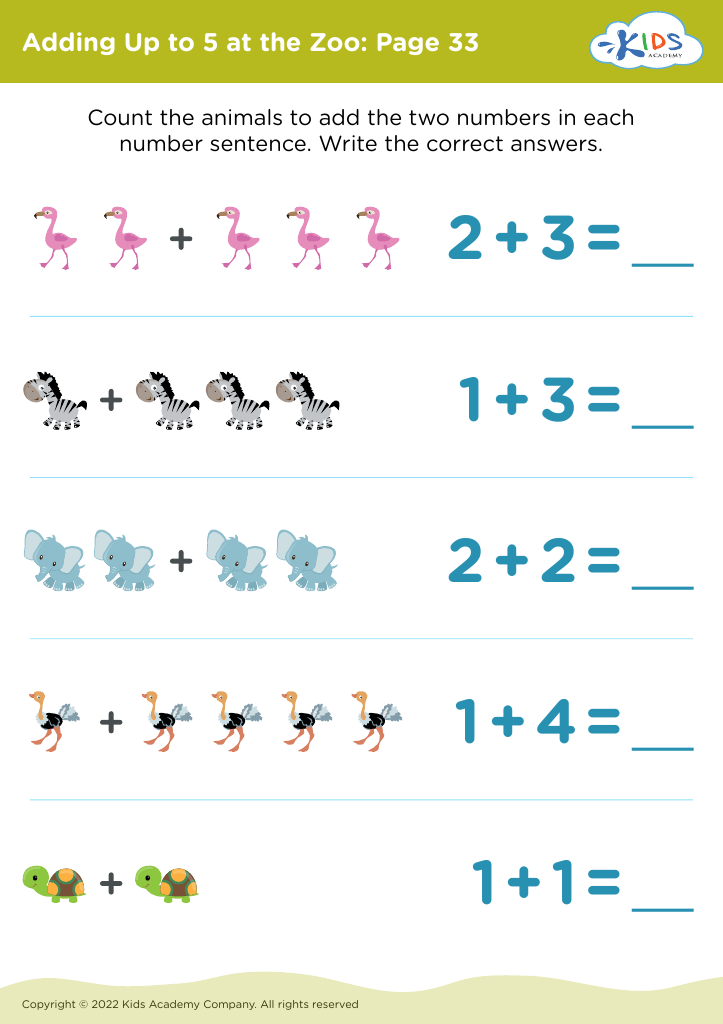
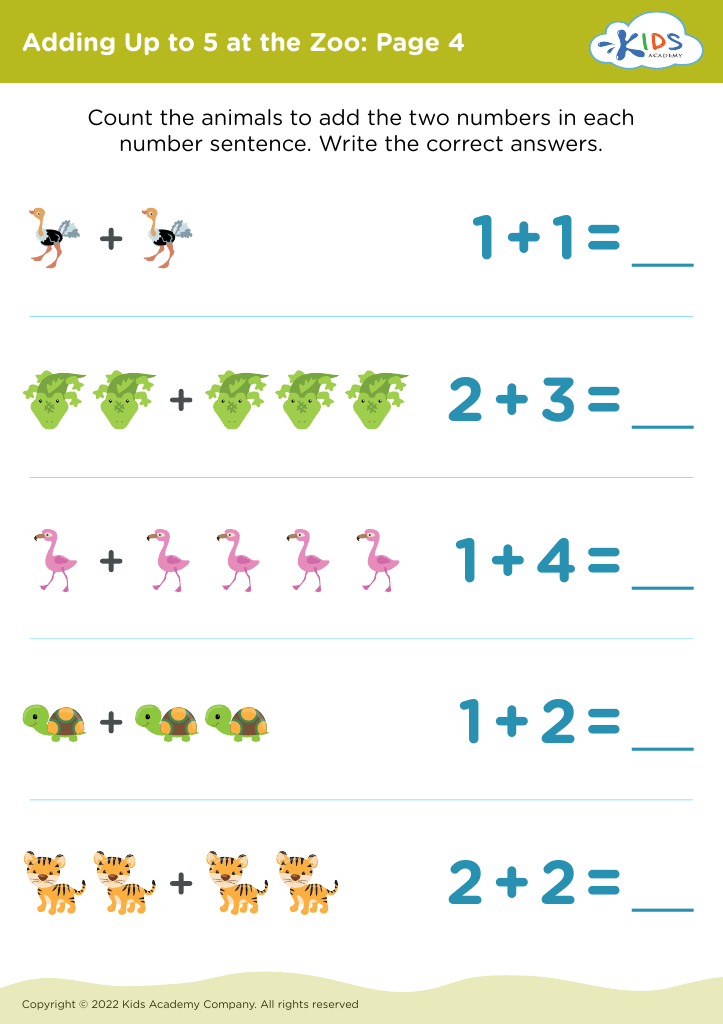
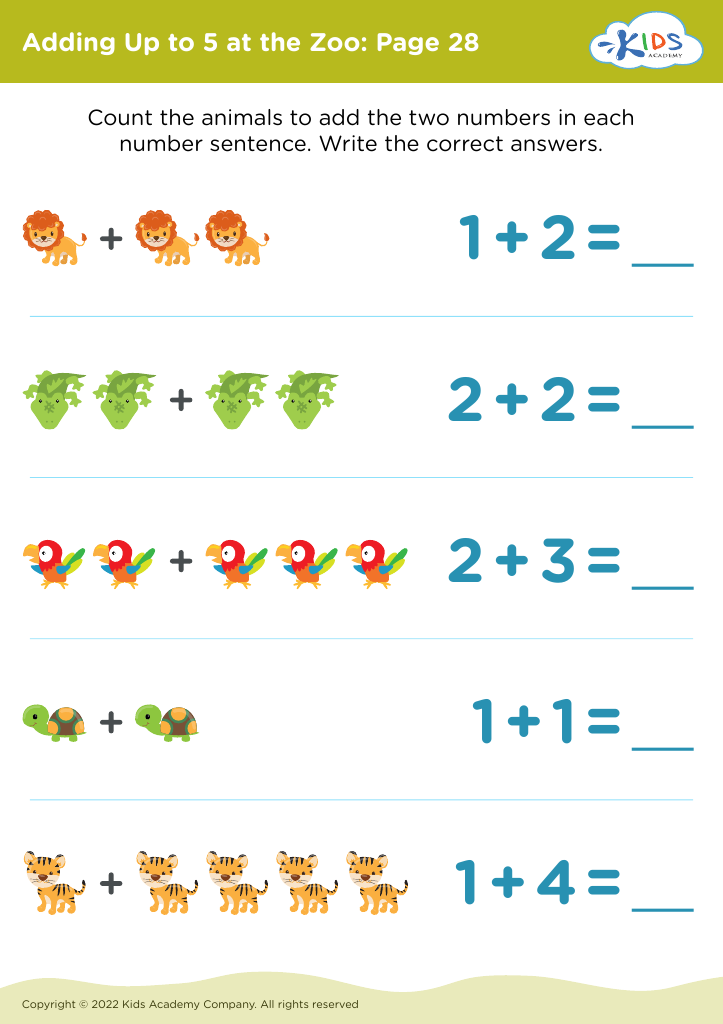
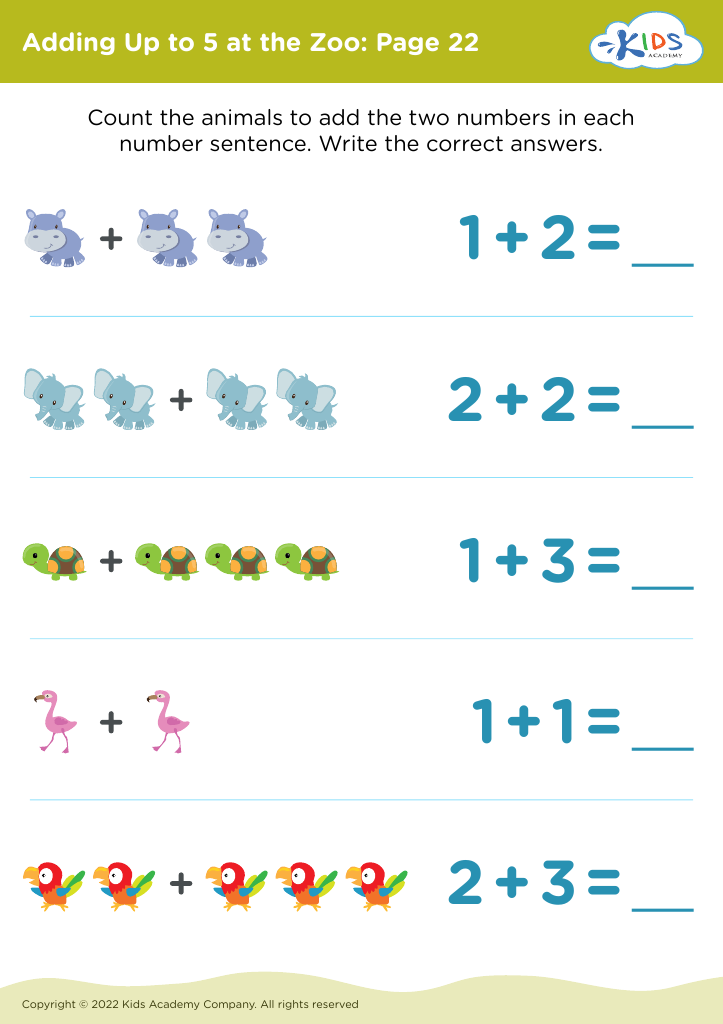
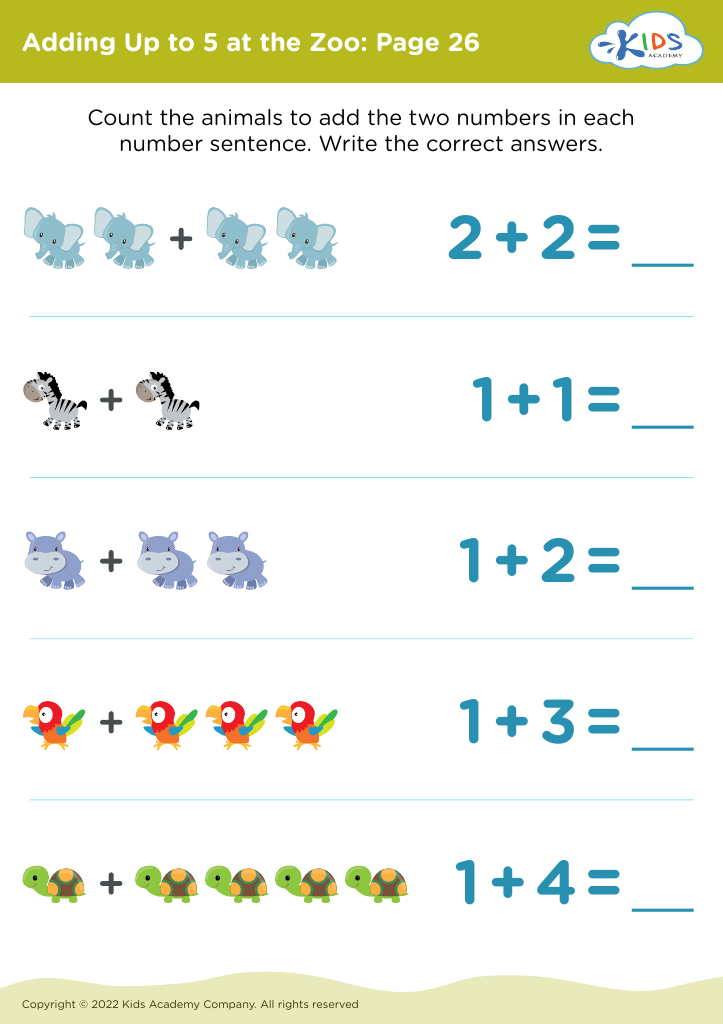
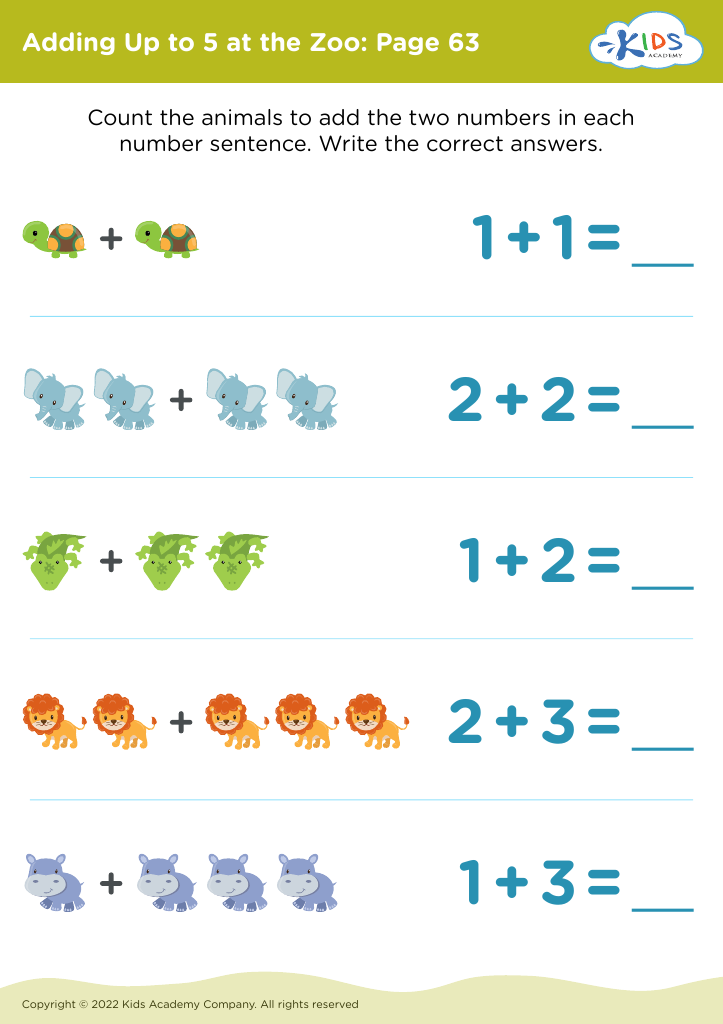
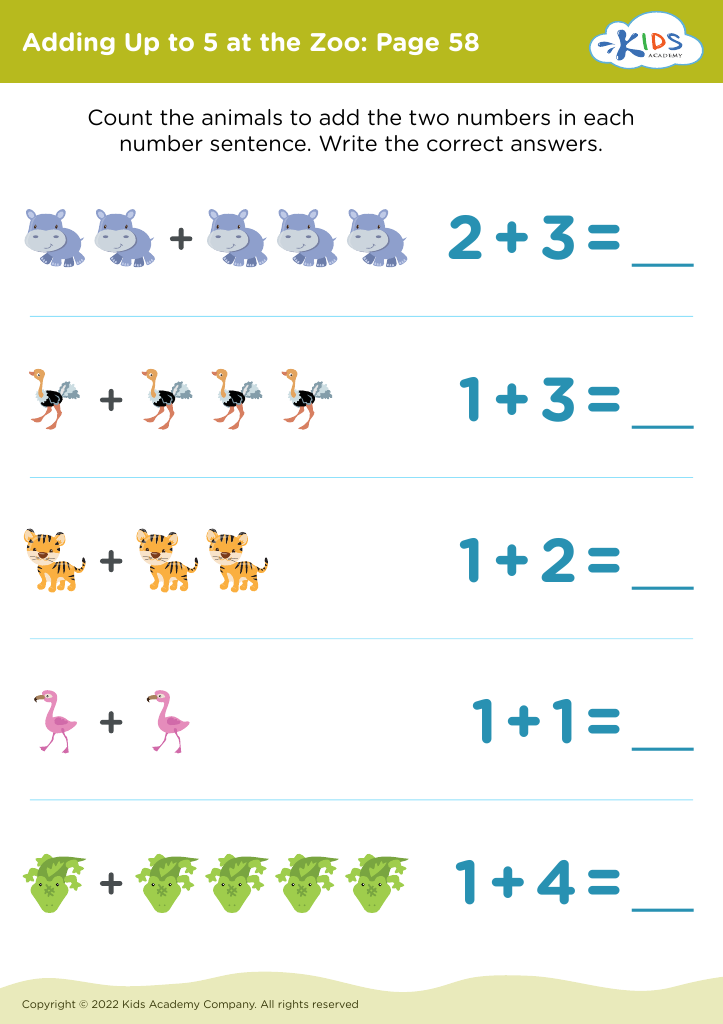
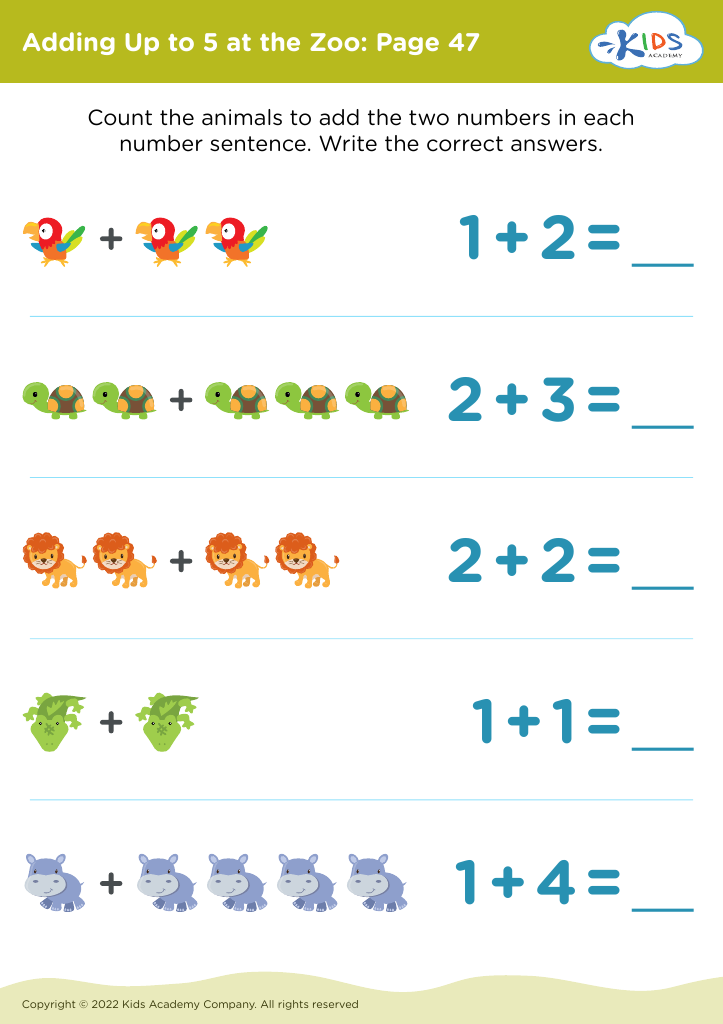
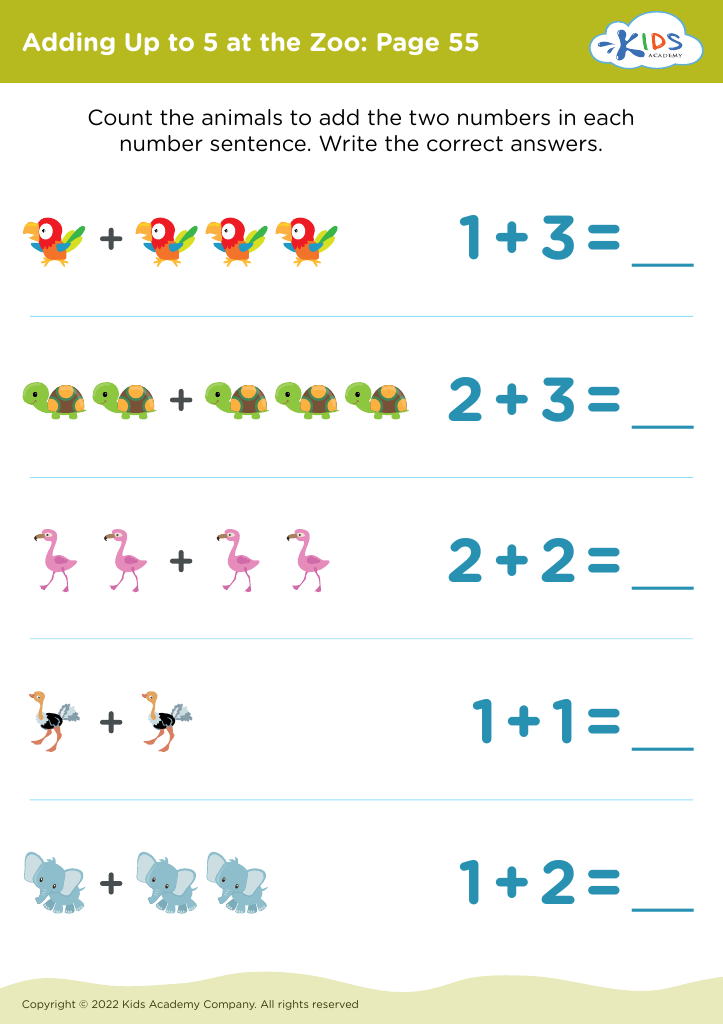
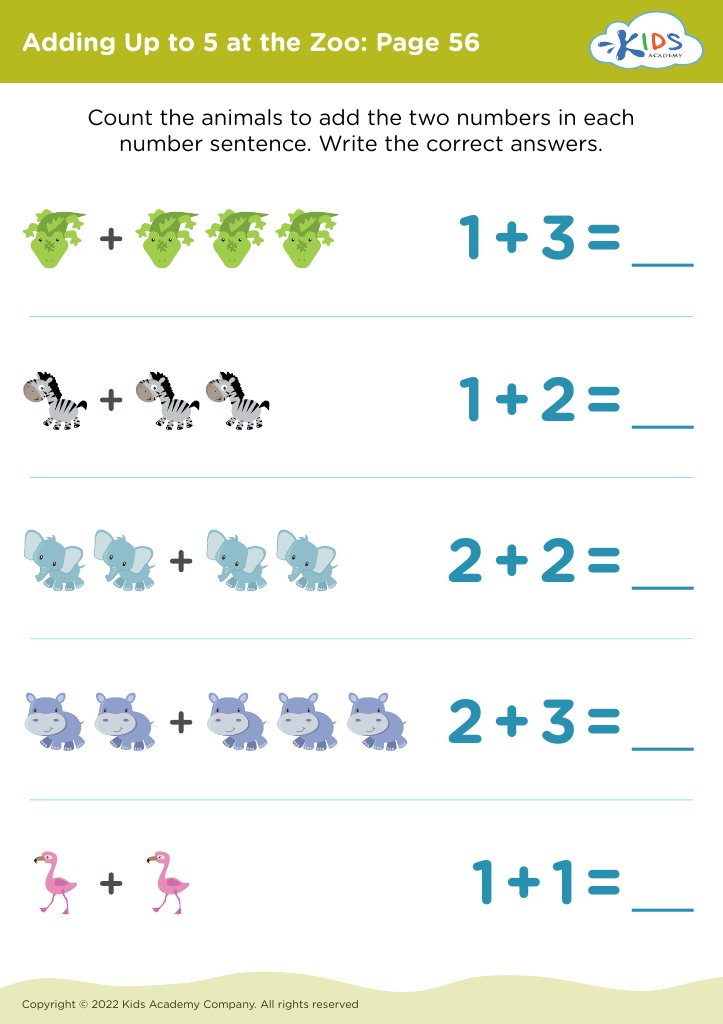
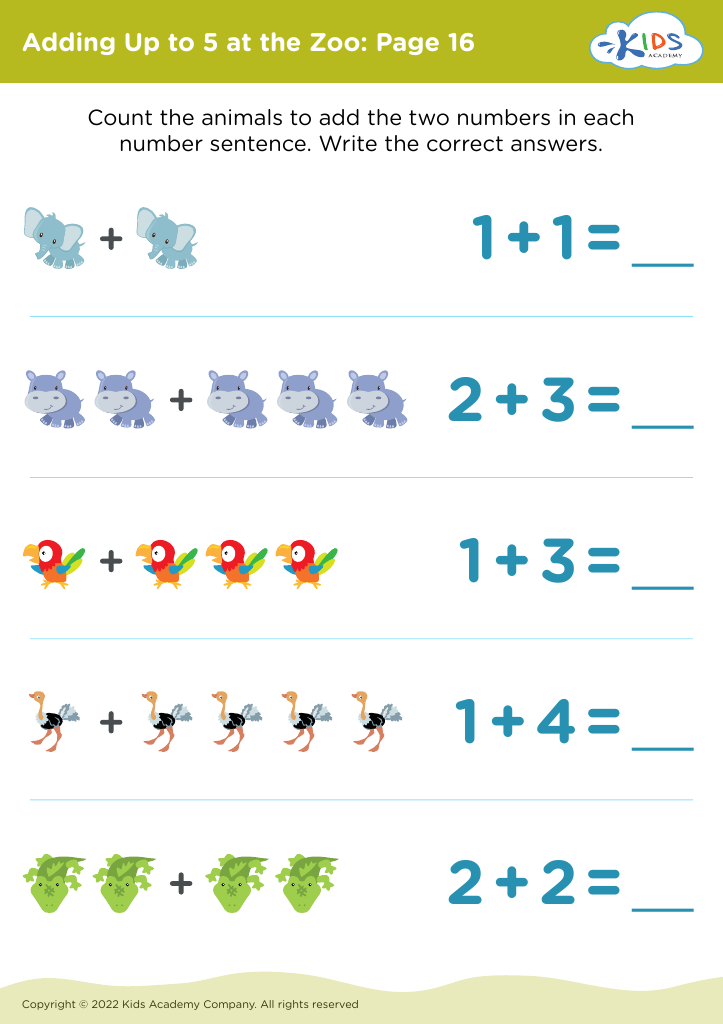
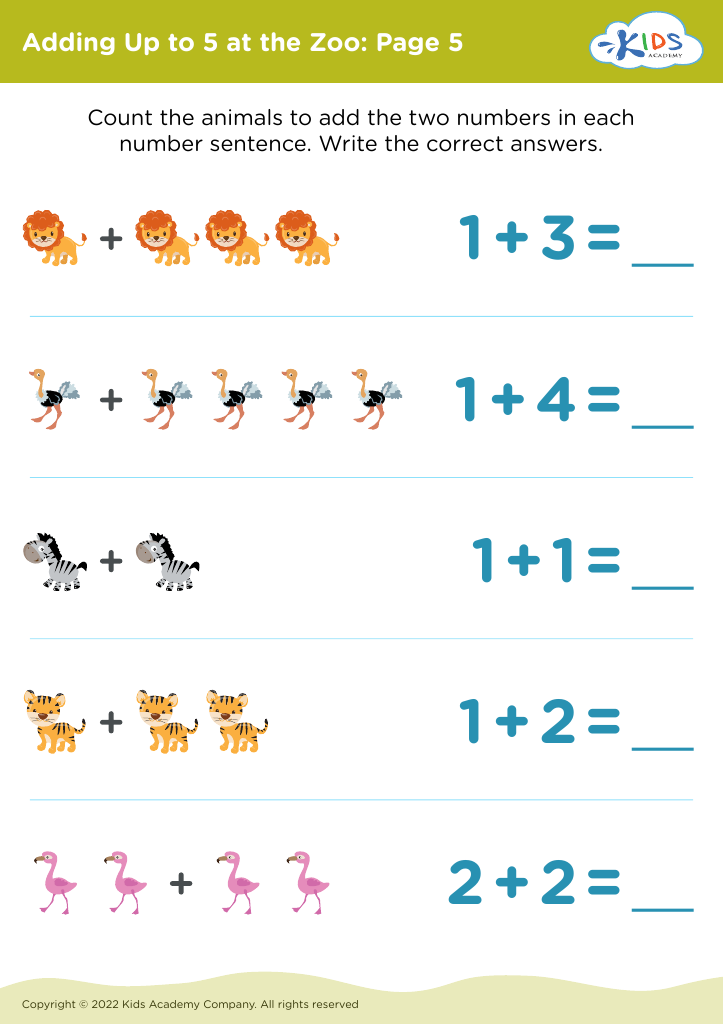
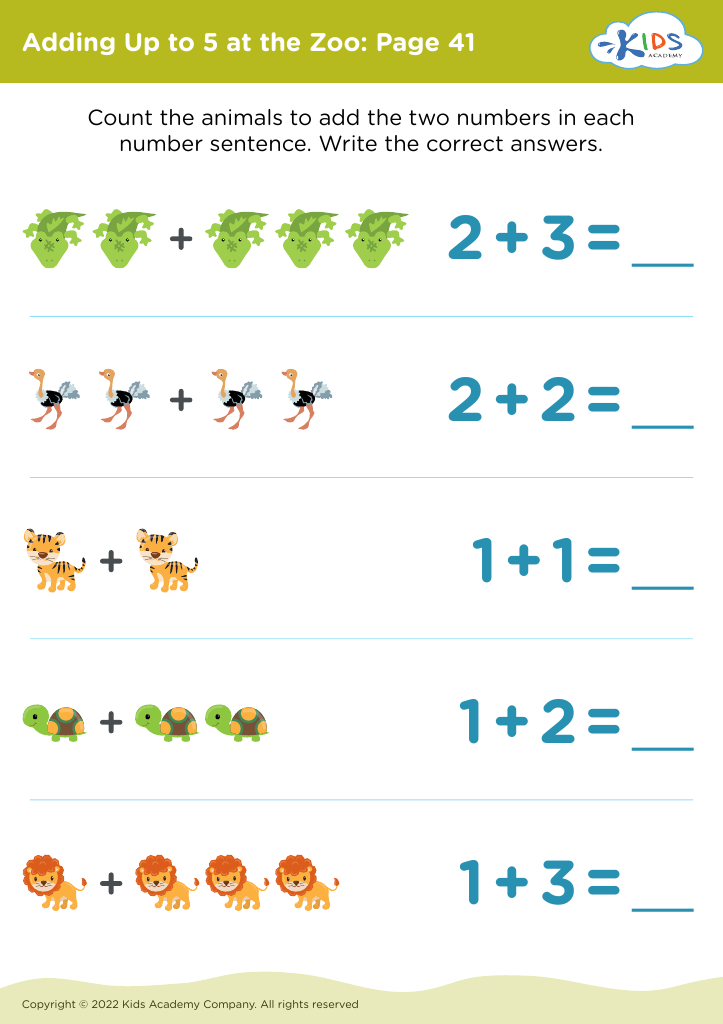
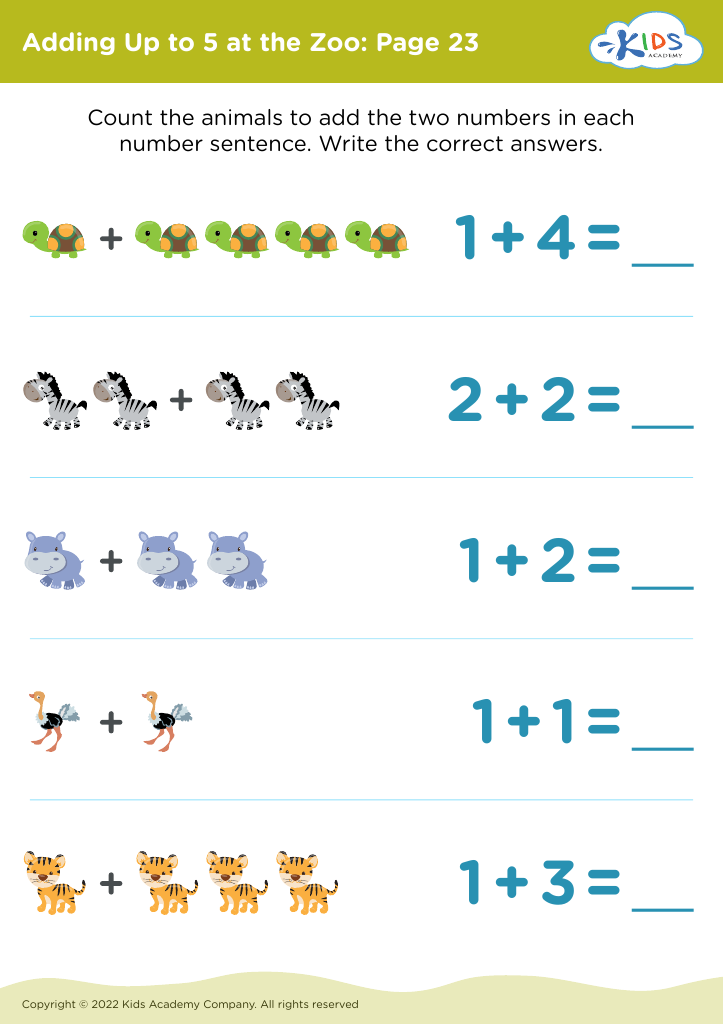
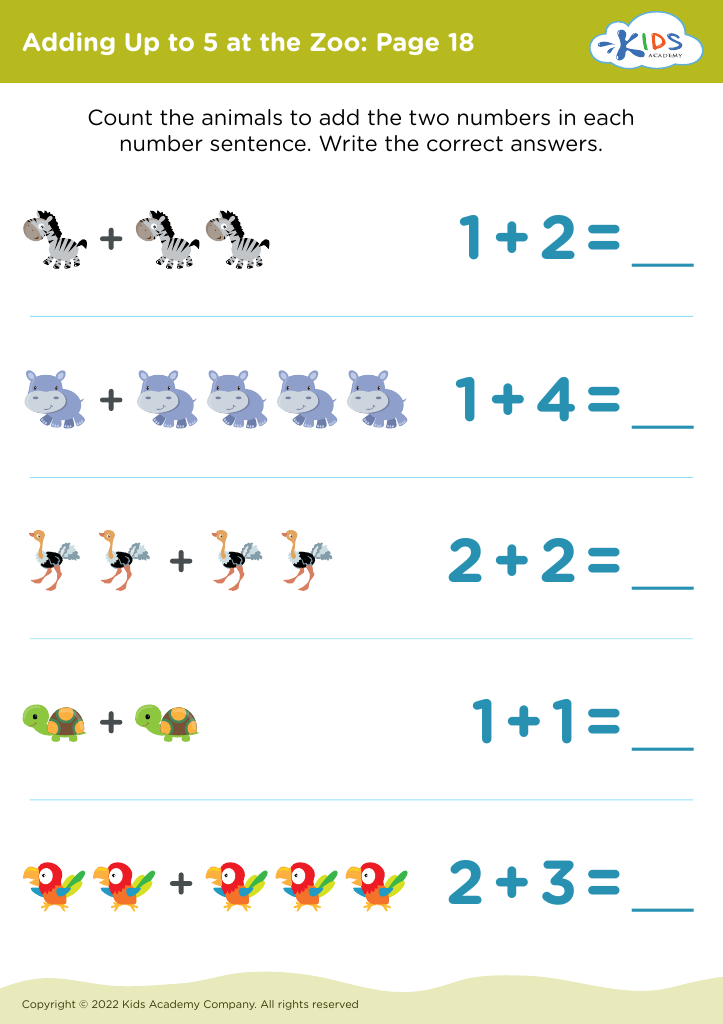
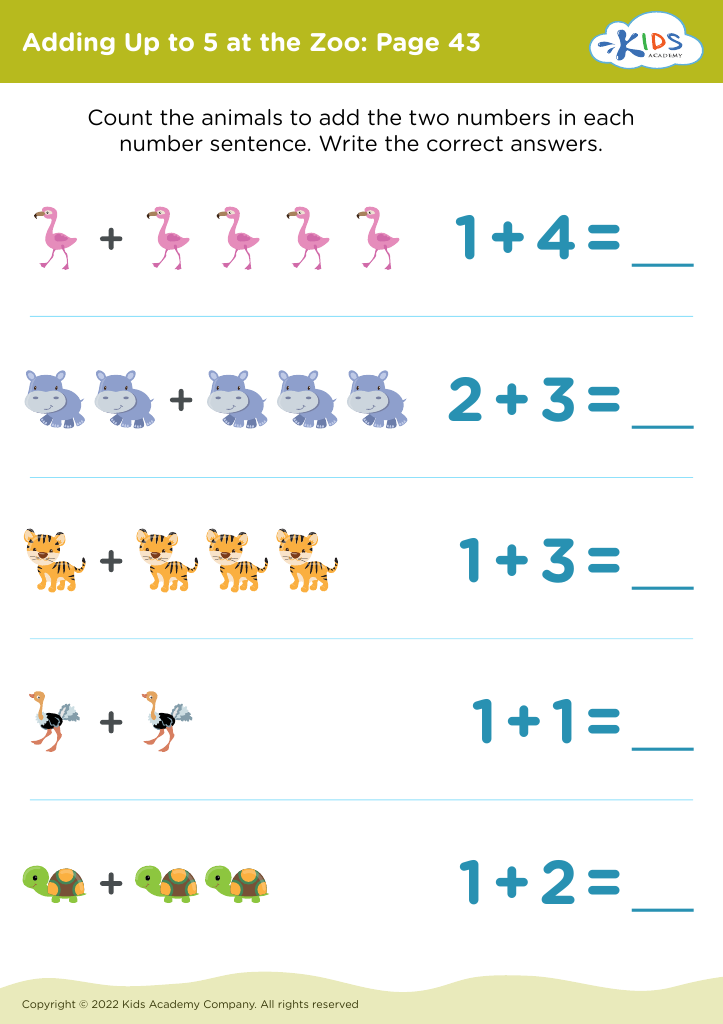
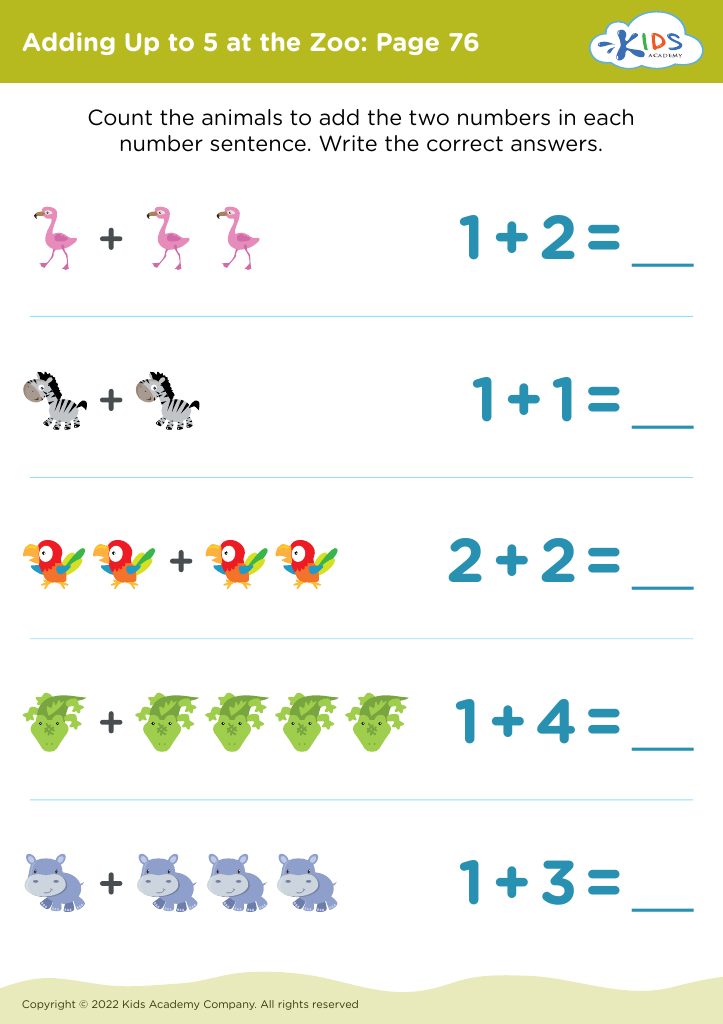
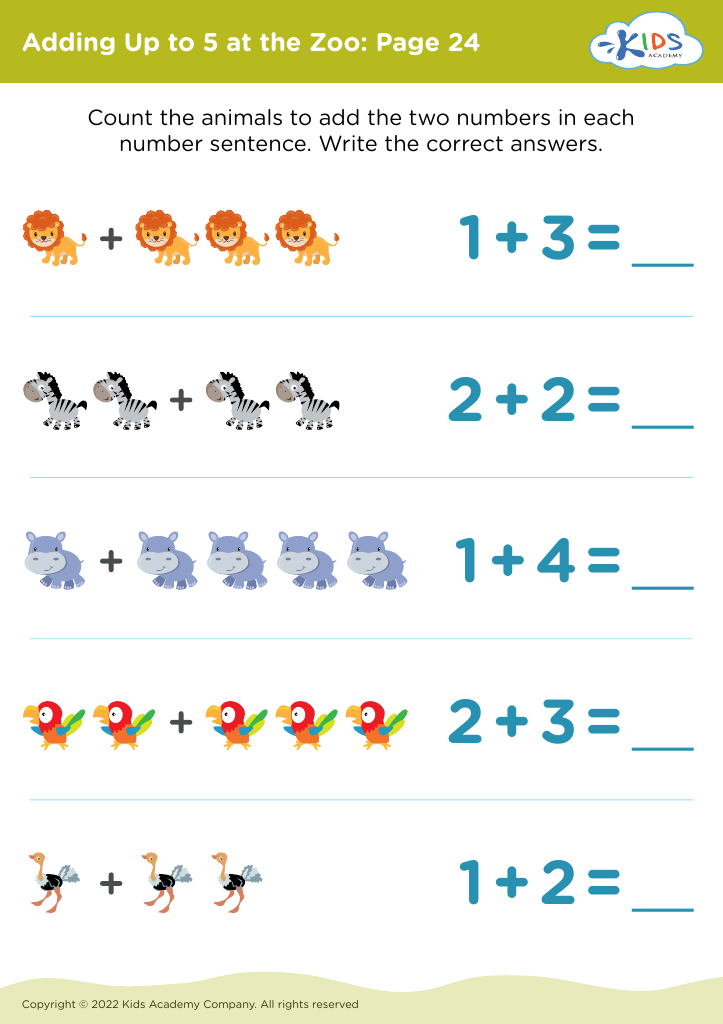
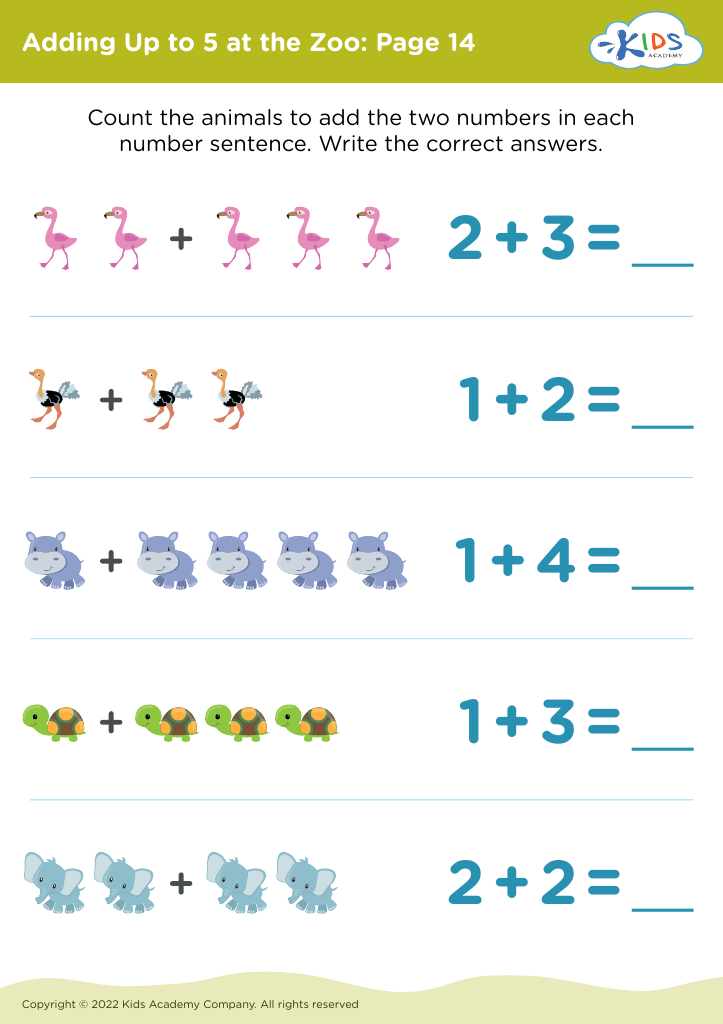



Counting practice through activities like "Adding at the Zoo" is crucial in early childhood education as it builds foundational math skills in a fun and engaging way. For starters, animals easily capture children's interest, which naturally increases their enthusiasm for learning. When kids are excited and engaged, they are more likely to absorb and retain new information.
By using a captivating setting like the zoo, this activity incorporates real-world context into math practice. For example, children might count the number of lions, add it to the number of monkeys they see, and then find the total number of animals. This helps them understand abstract concepts like addition by connecting them with tangible, visual examples.
Moreover, this approach supports the development of critical thinking and problem-solving skills. When children are tasked with counting and adding, they must observe their environment, make decisions, and perform calculations—all of which are cognitive tasks that strengthen their mental agility.
Lastly, incorporating fun counting activities fosters a positive attitude towards math early on. Establishing confidence and interest in math at a young age can lead to long-term academic success. Therefore, parents and teachers should prioritize such engaging counting practices to help children build a strong mathematical foundation while also nurturing their natural curiosity.