Hand-eye Coordination Adding at the Zoo Worksheets
3 filtered results
-
From - To
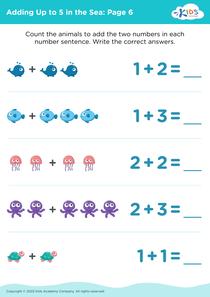
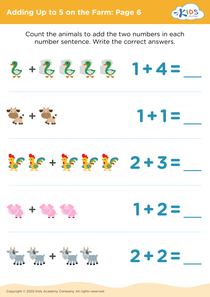
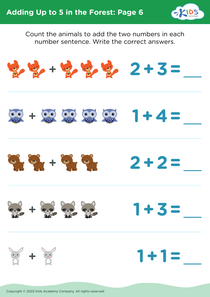
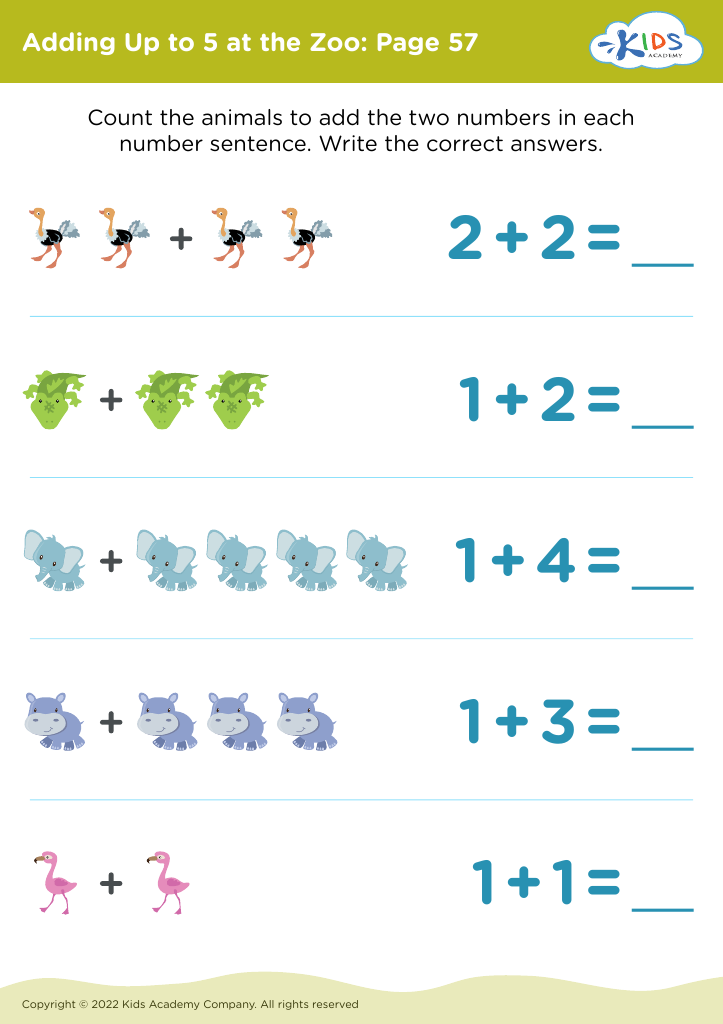
Enhance your child's hand-eye coordination with our engaging "Adding at the Zoo" worksheets! Designed for early learners, these fun and interactive worksheets promote mathematical skills while developing fine motor abilities. Kids will enjoy counting various animals as they interact with colorful images, helping them master addition in a playful context. Each exercise encourages children to correlate their physical movements with visual cues, fostering both cognitive and physical development. Perfect for classroom activities or at-home learning, our worksheets make math enjoyable and hands-on. Visit our site to download and inspire young learners at the zoo today!
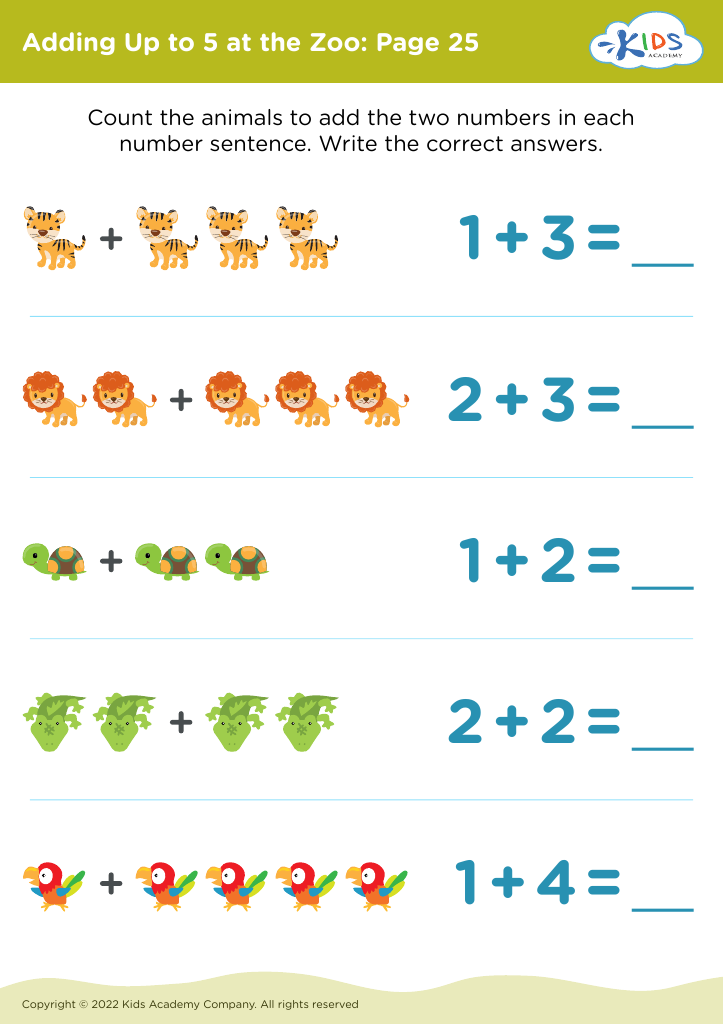
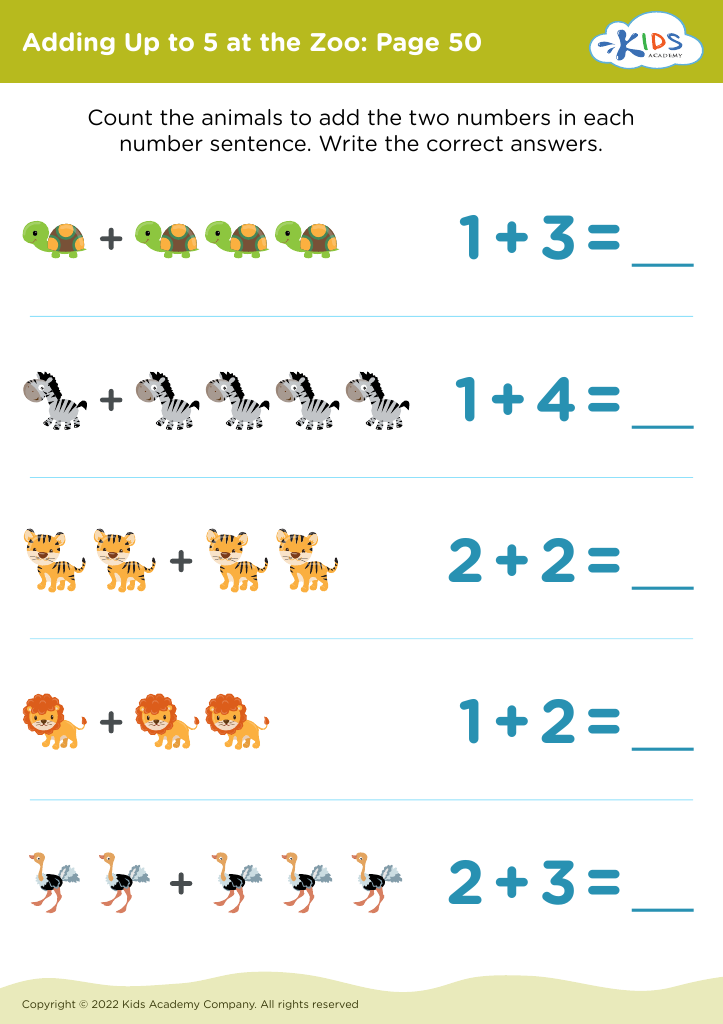



Hand-eye coordination is a vital skill that significantly impacts a child’s overall development, making it important for parents and teachers to care about activities that promote it, like hand-eye coordination games in engaging settings such as the zoo. At the zoo, children can participate in various interactive games, such as tossing rings onto animal figures or aiming balls at targets to mimic animal feeding. These activities not only boost hand-eye coordination but also enhance fine motor skills, concentration, and hand dexterity.
Caring about hand-eye coordination is crucial because it fosters abilities that children will use in everyday tasks, including writing, sports, and other forms of play. When children exhibit strong hand-eye coordination, it boosts their confidence and encourages participation in physical activities, promoting a healthy lifestyle.
Moreover, integrating learning experiences with real-world scenarios, like observing animals at the zoo, enhances engagement. It allows children to learn about different species while enhancing their coordination in a fun, interactive way. Ultimately, by supporting activities that develop hand-eye coordination, parents and teachers can lay a strong foundation for children's physical and cognitive development, improving their educational capacities and life skills as they grow.