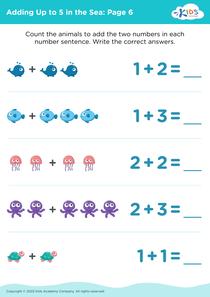
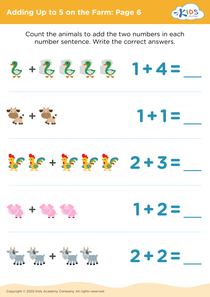
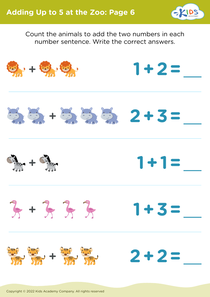
Nature awareness Adding in the Forest Worksheets
8 filtered results
-
From - To
Introduce your young learners to the enchanting world of nature with our "Nature Awareness Adding in the Forest" worksheets by Kids Academy. These educational resources blend basic math skills with environmental awareness, featuring charming forest-themed activities that delight and engage. Children practice addition while visually exploring flower patches, tree groves, and woodland creatures. Designed to encourage a love and respect for nature, our worksheets foster curiosity and learning enjoyment. Perfect for early grade teachers and parents looking to enrich their math curriculum, bring a little bit of the forest into every lesson. Start nurturing eco-friendly mathematicians today!
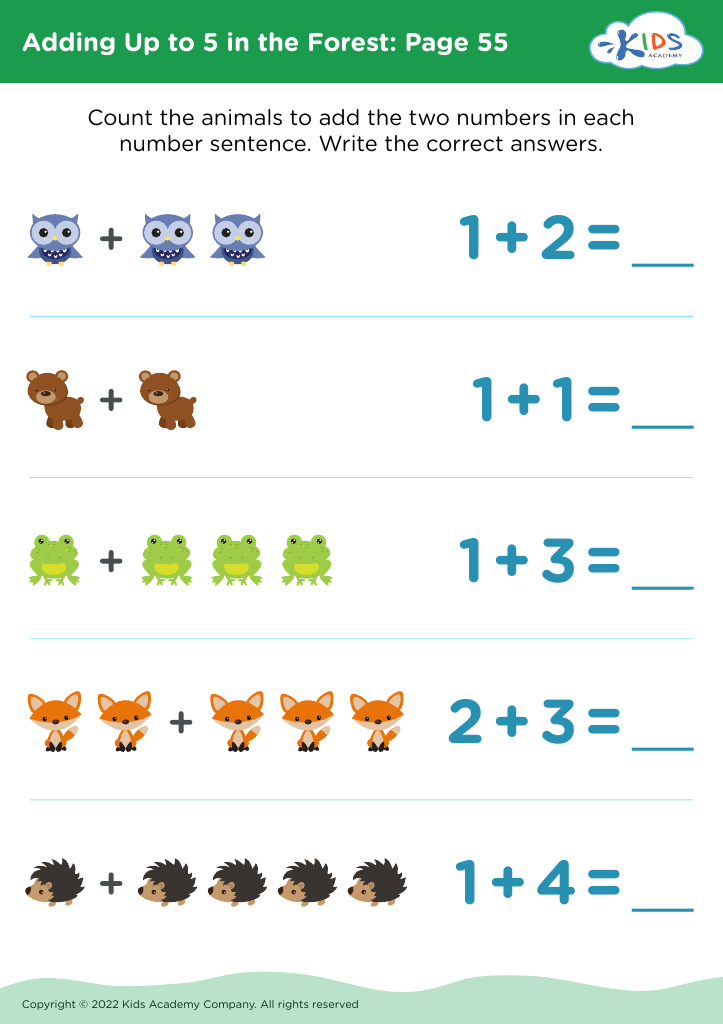
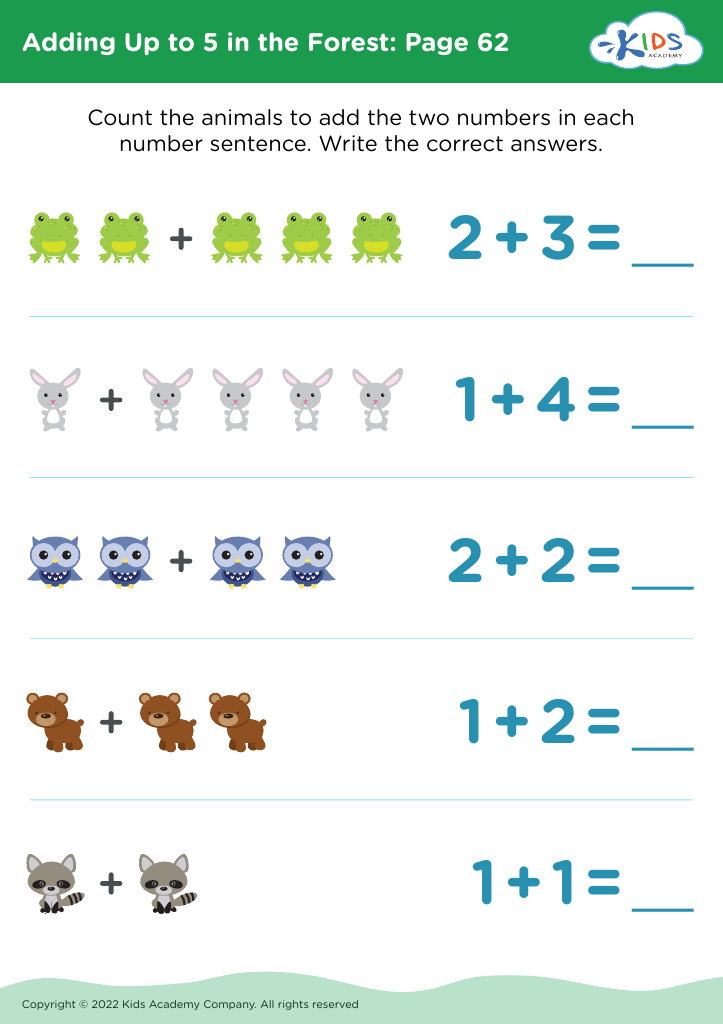
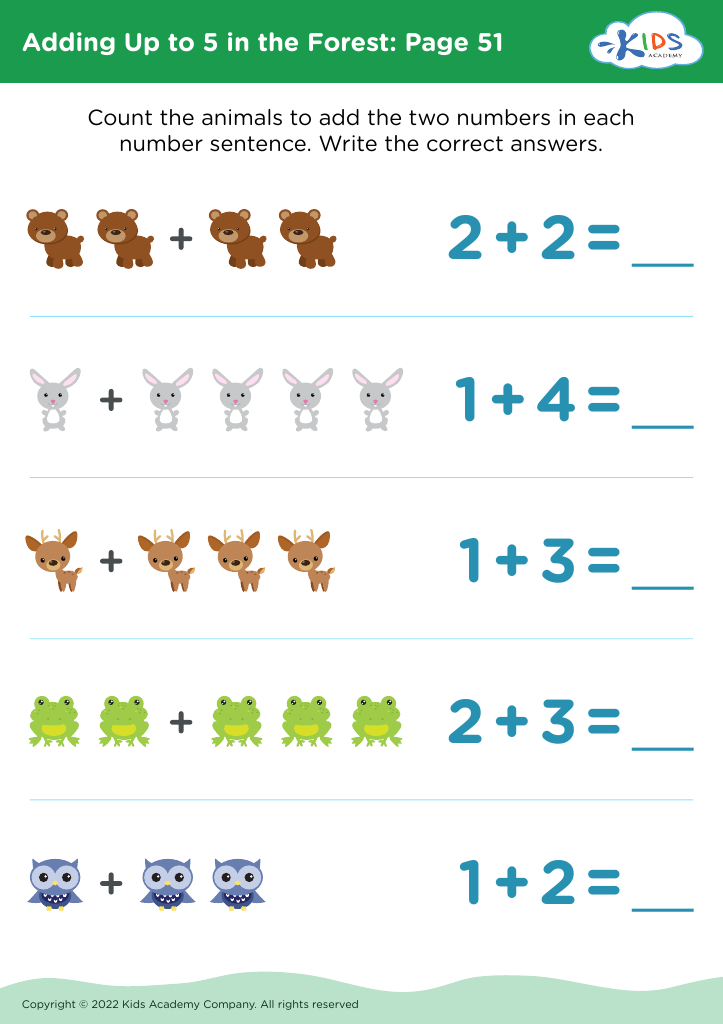
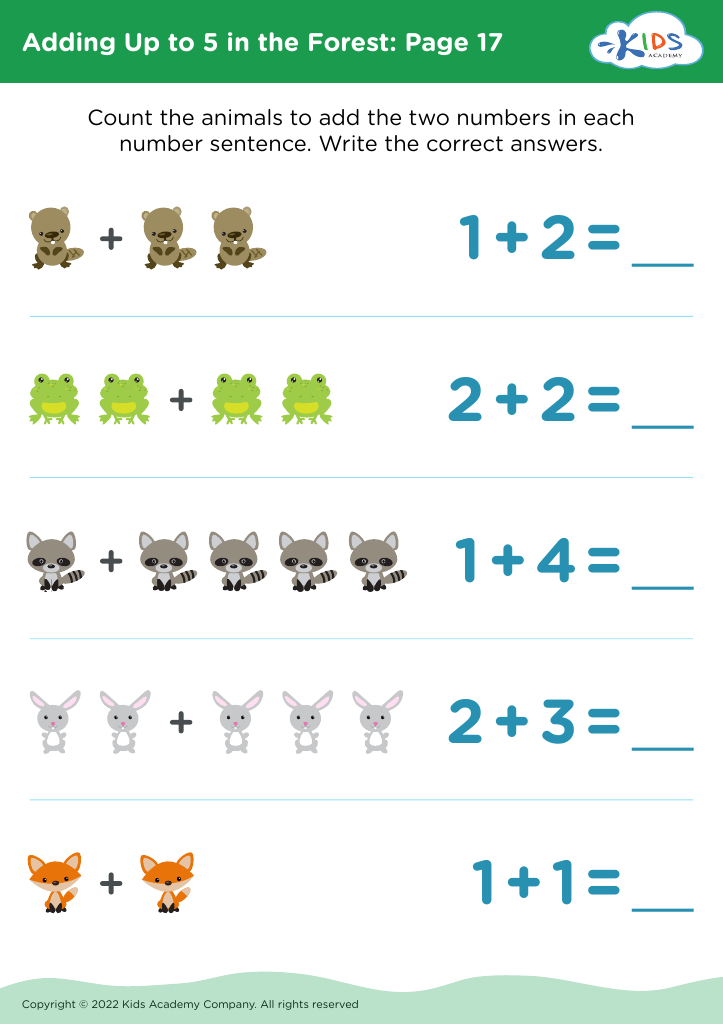
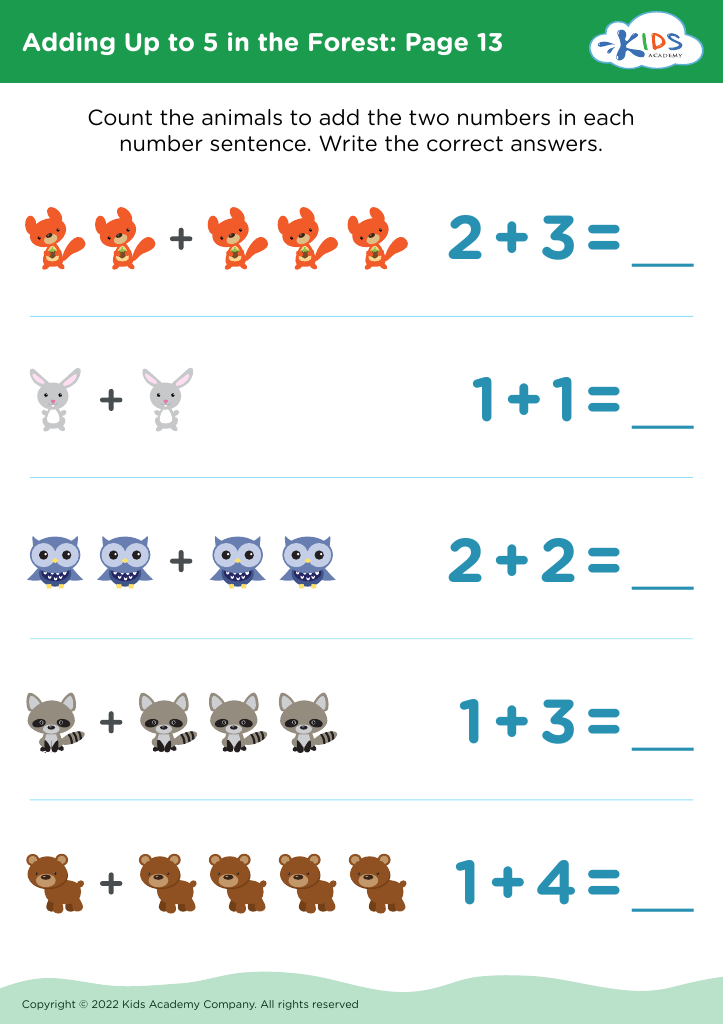
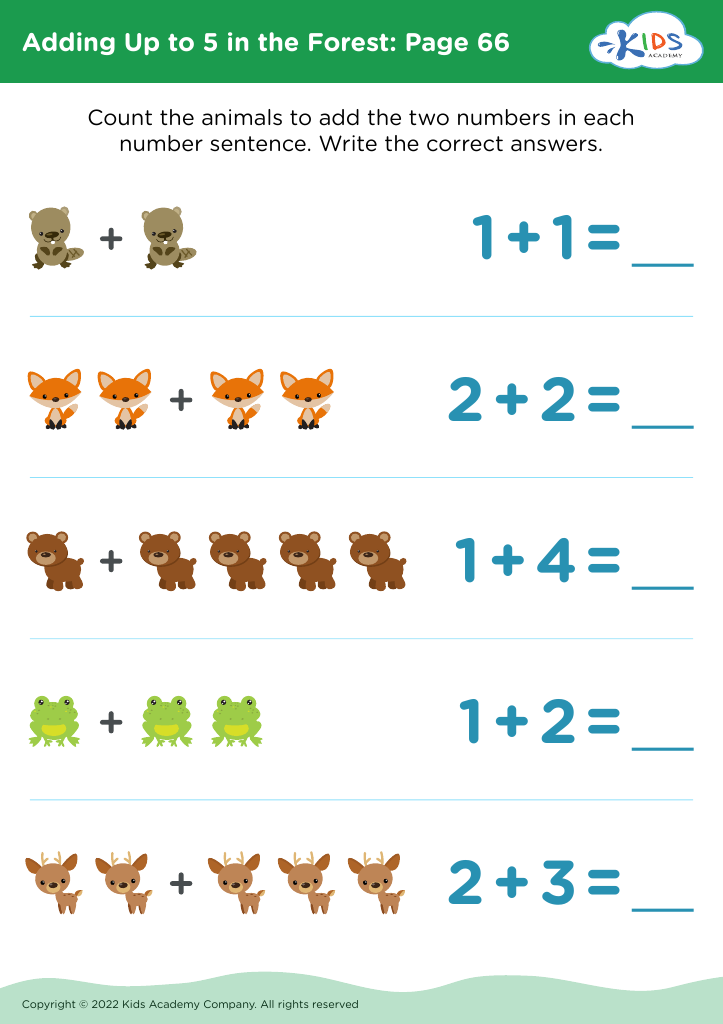
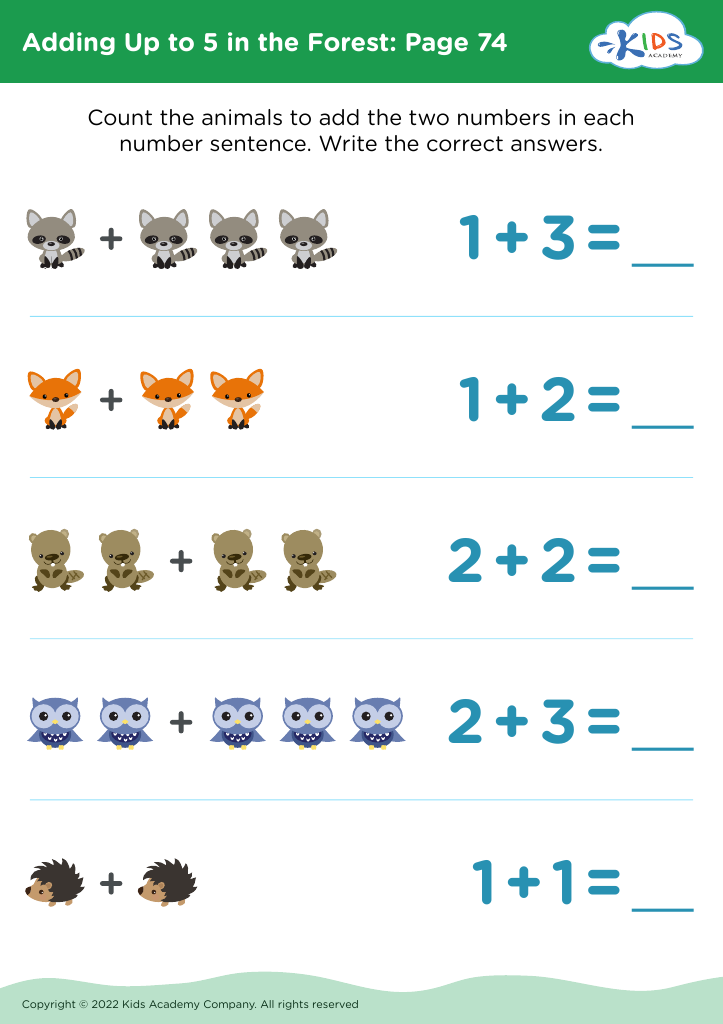
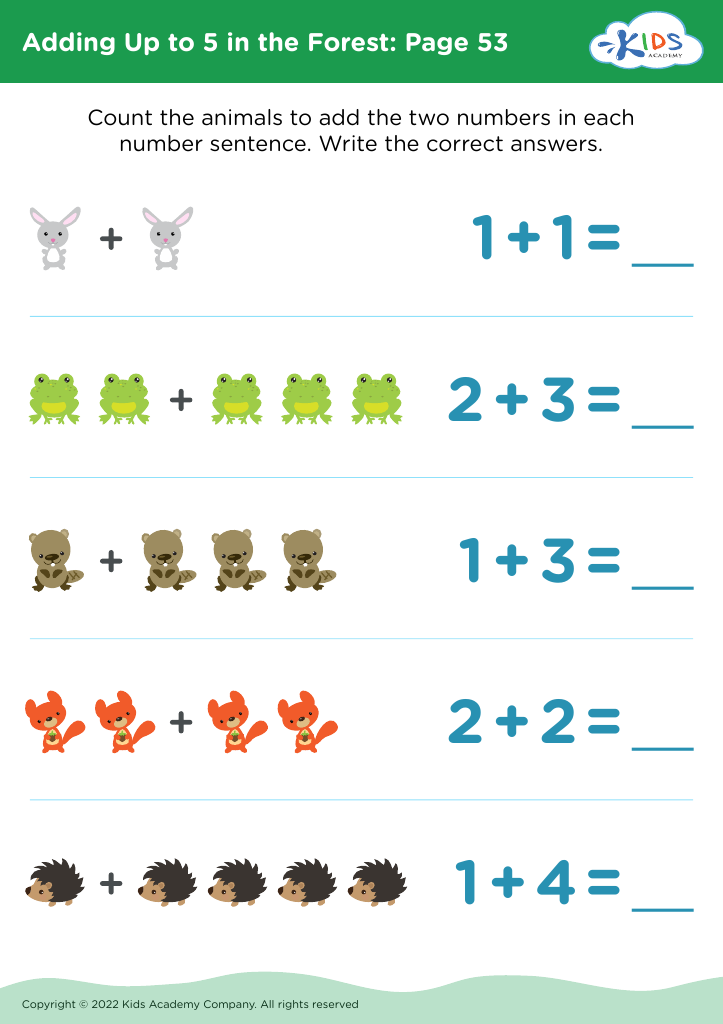



Nature awareness, especially through activities like adding in the forest, fosters a myriad of benefits for children that both parents and teachers should value deeply. Firstly, outdoor learning enhances cognitive development. Engaging with nature while solving math problems, like adding, stimulates a child’s brain in unique ways compared to traditional classroom settings. Natural environments can also reduce stress, improving overall mental well-being which is crucial for effective learning.
Additionally, integrating nature into education nurtures curiosity and creativity. When children are surrounded by plants, animals, and diverse natural elements, they become more inquisitive and imaginative, enriching their understanding and discovery processes. This experiential learning supports better retention and comprehension of academic concepts.
Furthermore, promoting nature awareness helps instill environmental stewardship from an early age. Children who regularly spend time in nature are more likely to develop a lifelong respect and care for the environment. This is crucial in cultivating responsible future citizens who are conscious of their impact on the planet.
Social skills also flourish in nature-based learning environments. Collaborative activities, like group math games in the forest, enhance teamwork and communication skills among peers. Therefore, integrating nature into education not only supports academic growth but also holistic development, making it a vital component for both parents and educators to consider.