Number Recognition Adding in the Forest Worksheets - Page 2
70 filtered results
-
From - To
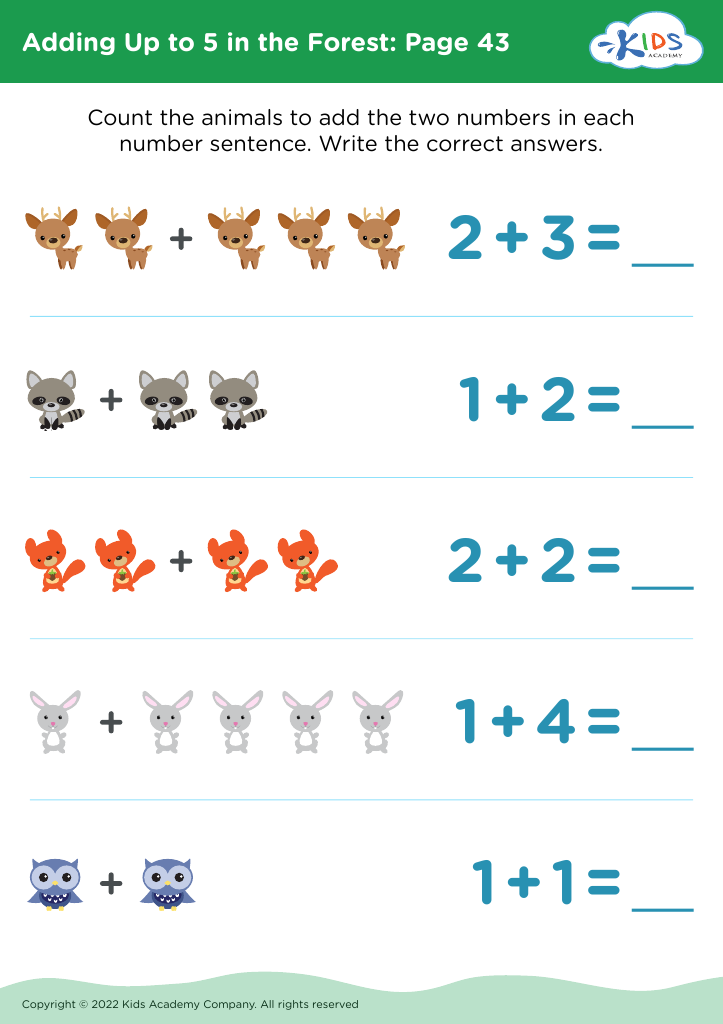
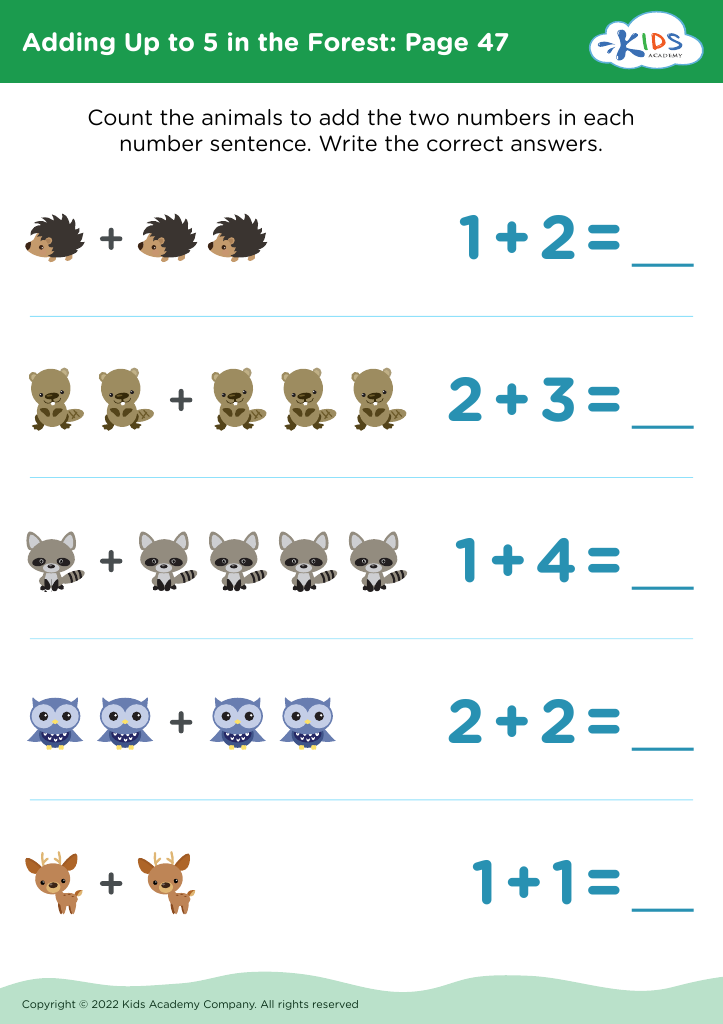
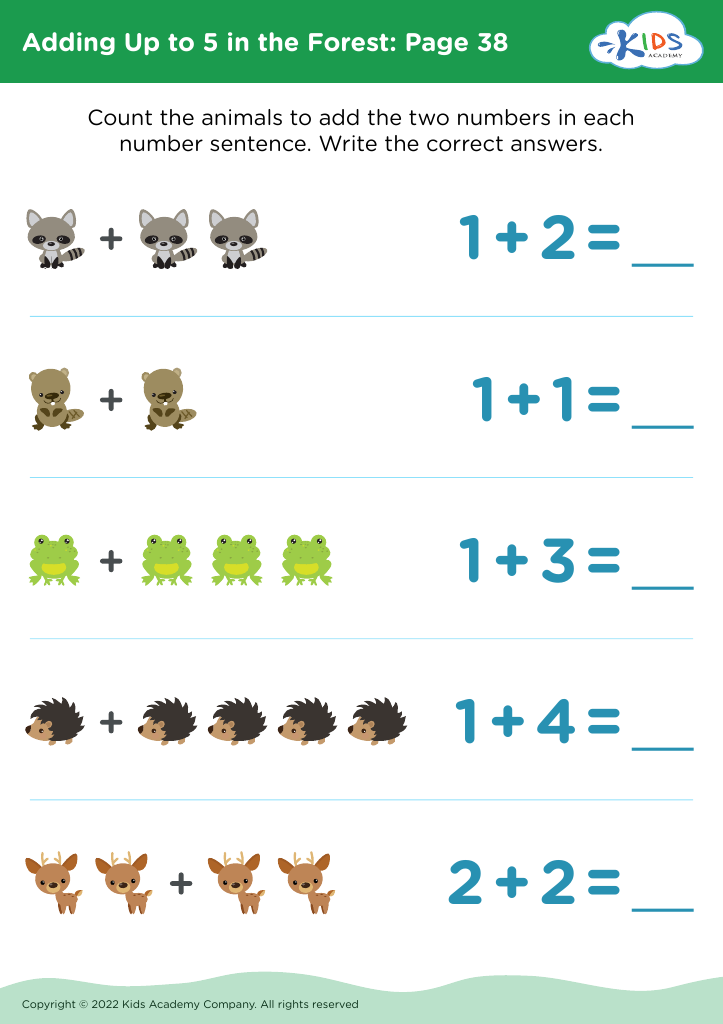
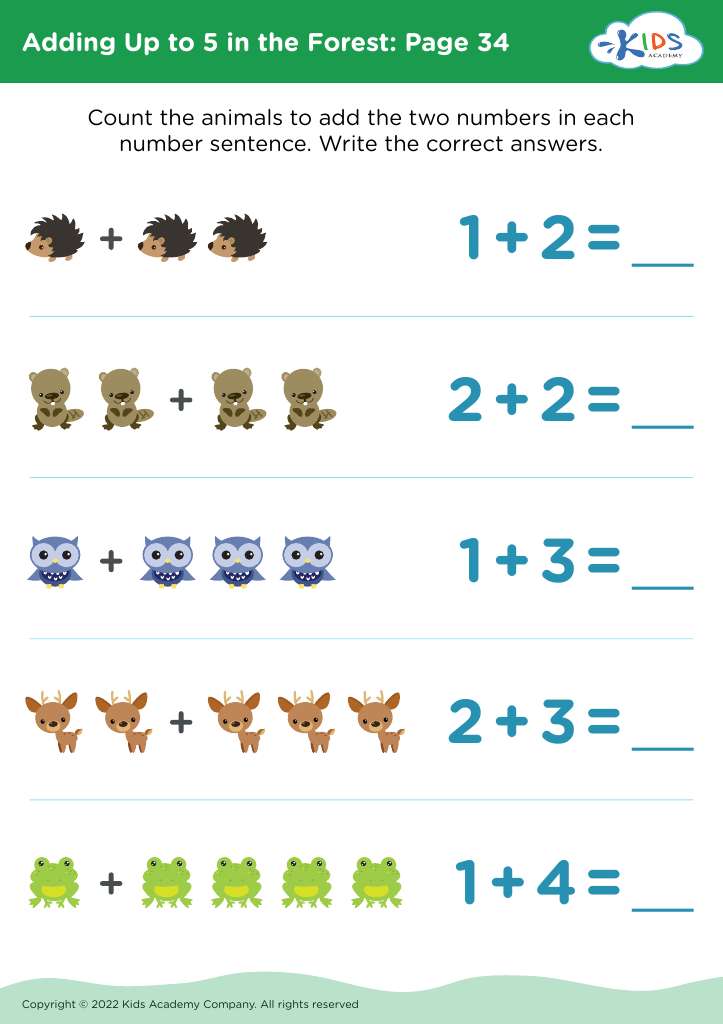
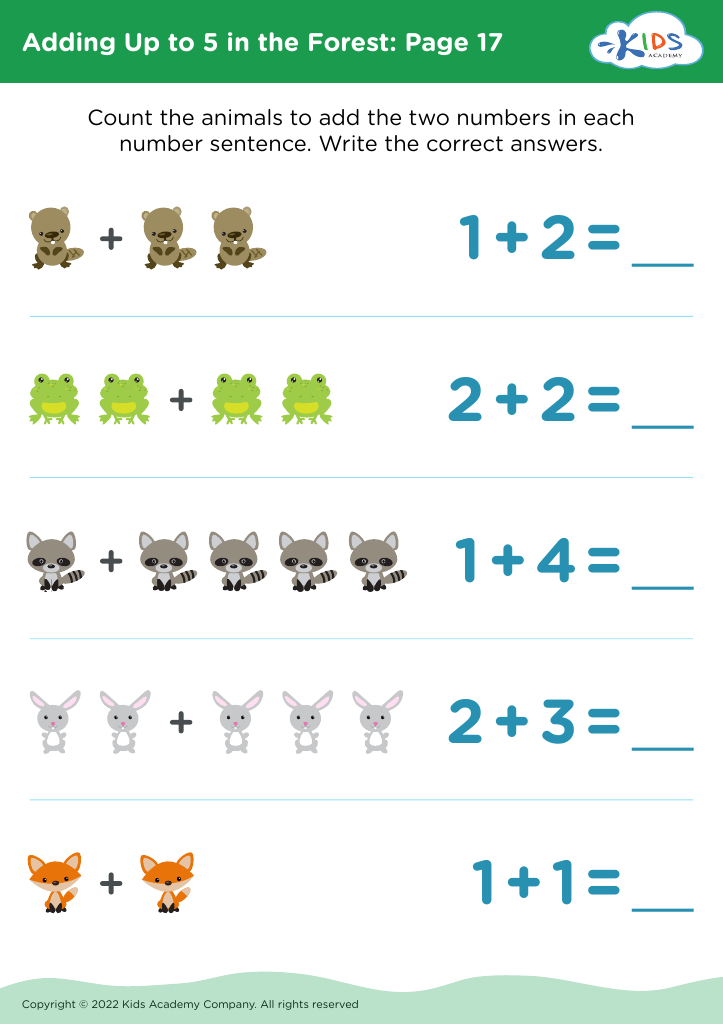
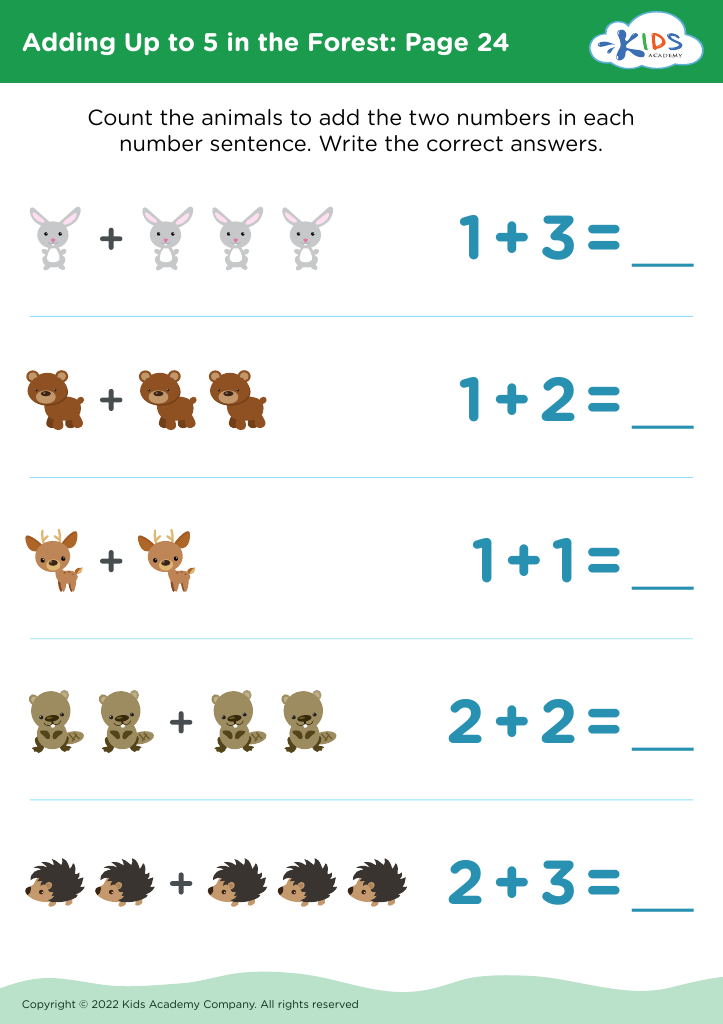
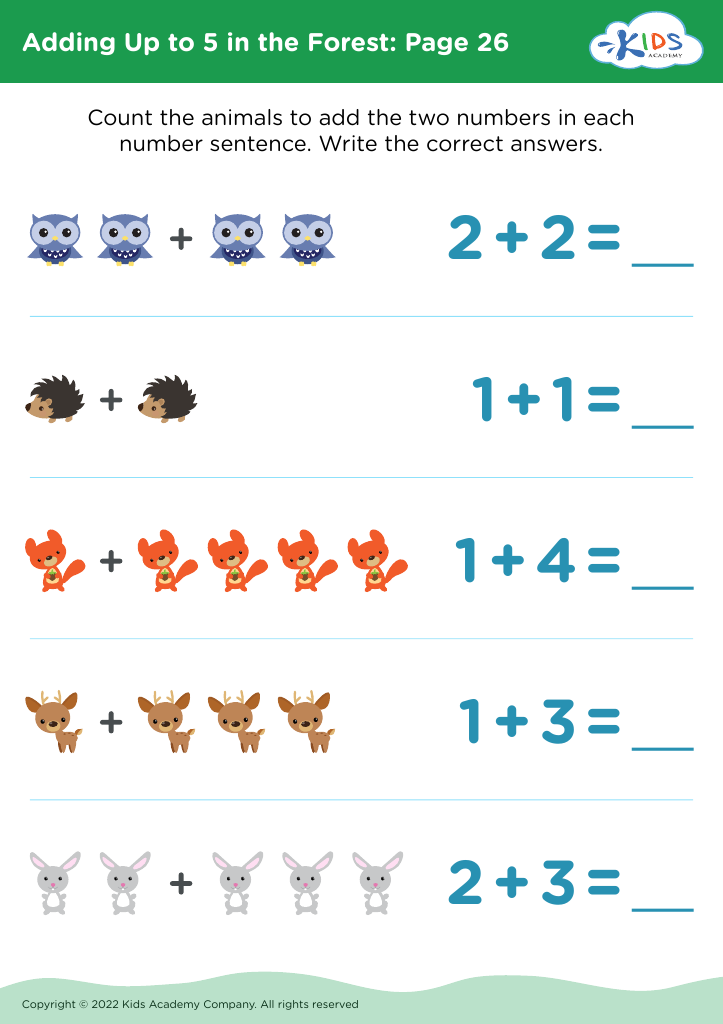
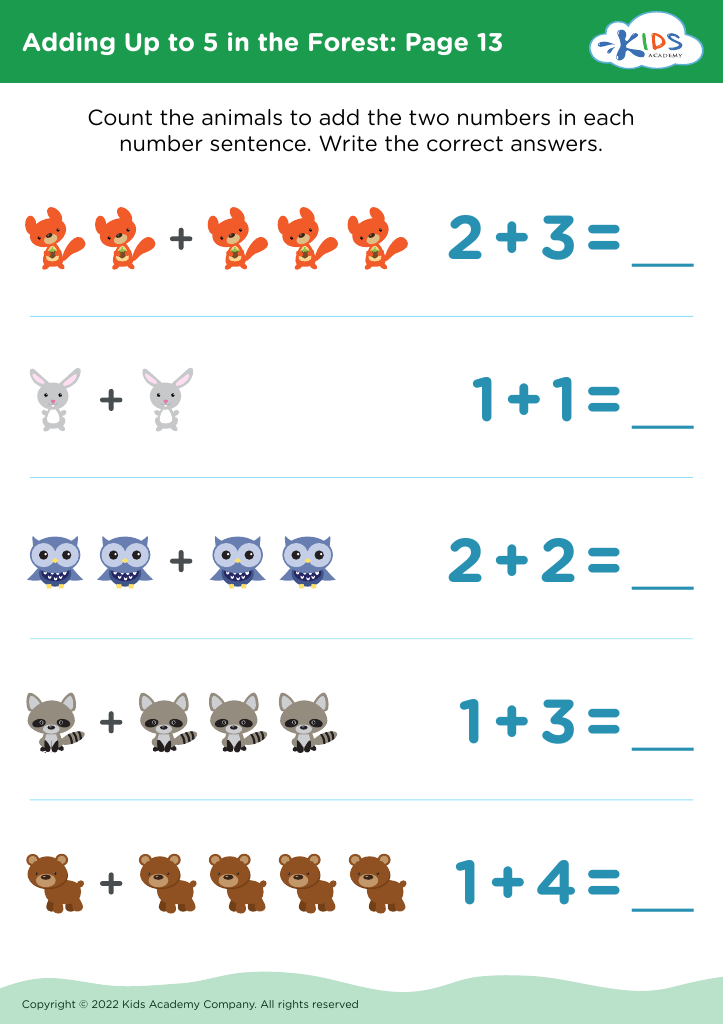
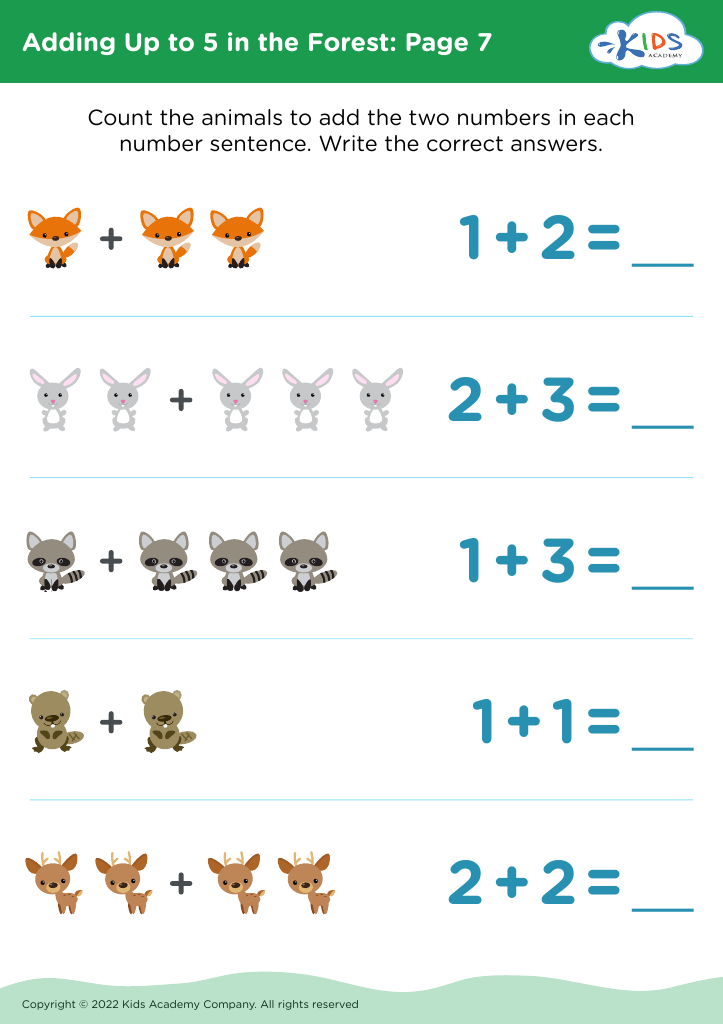
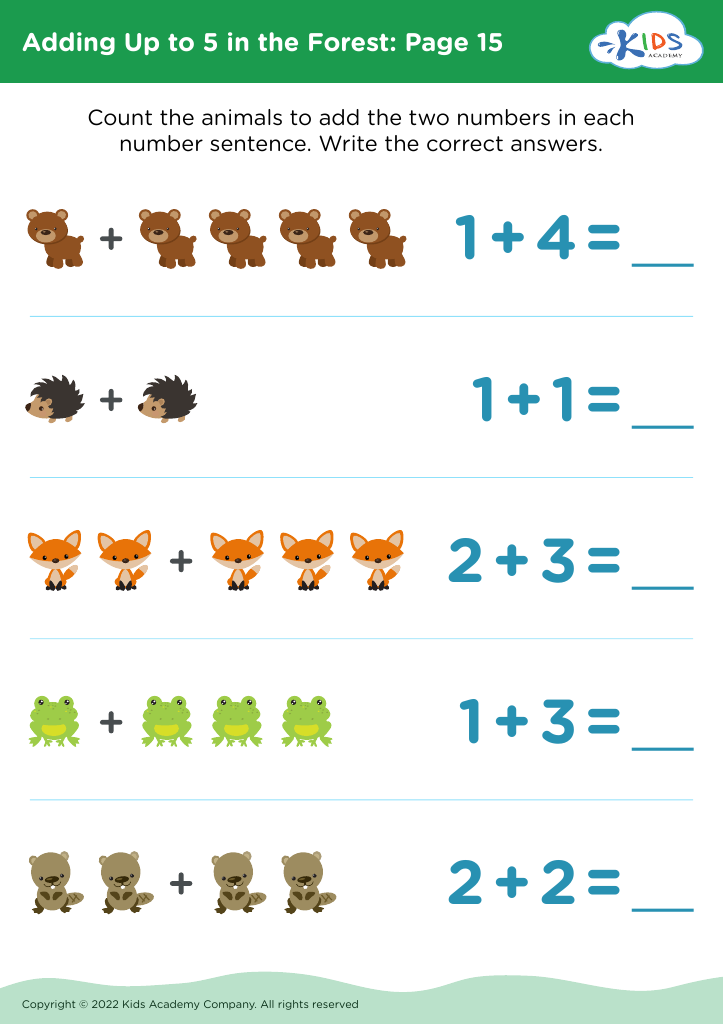
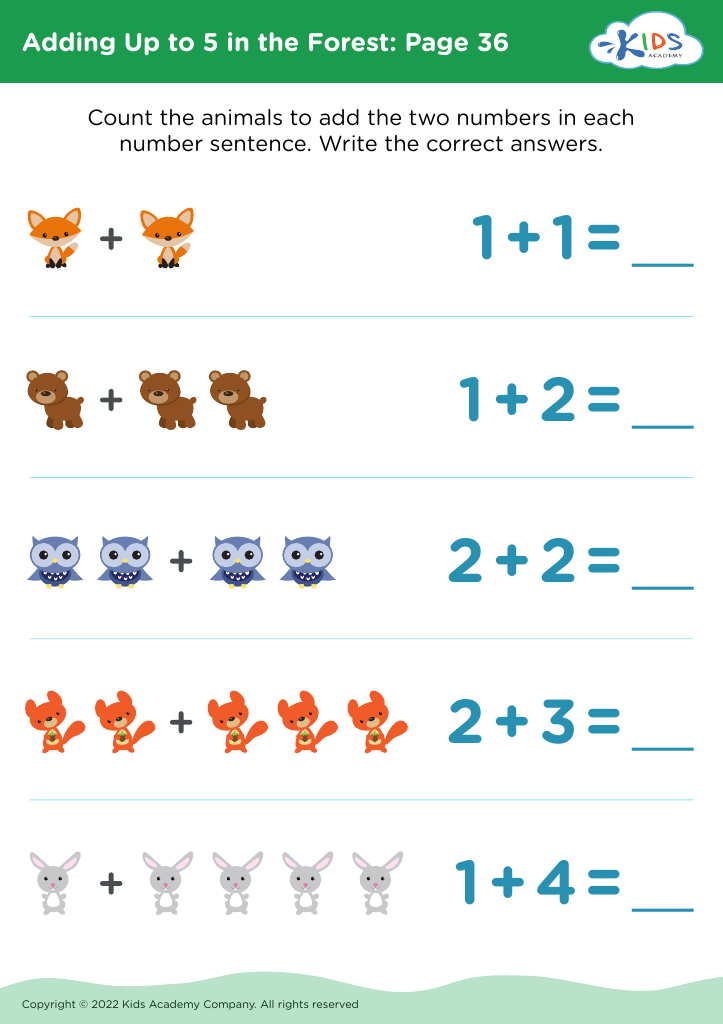
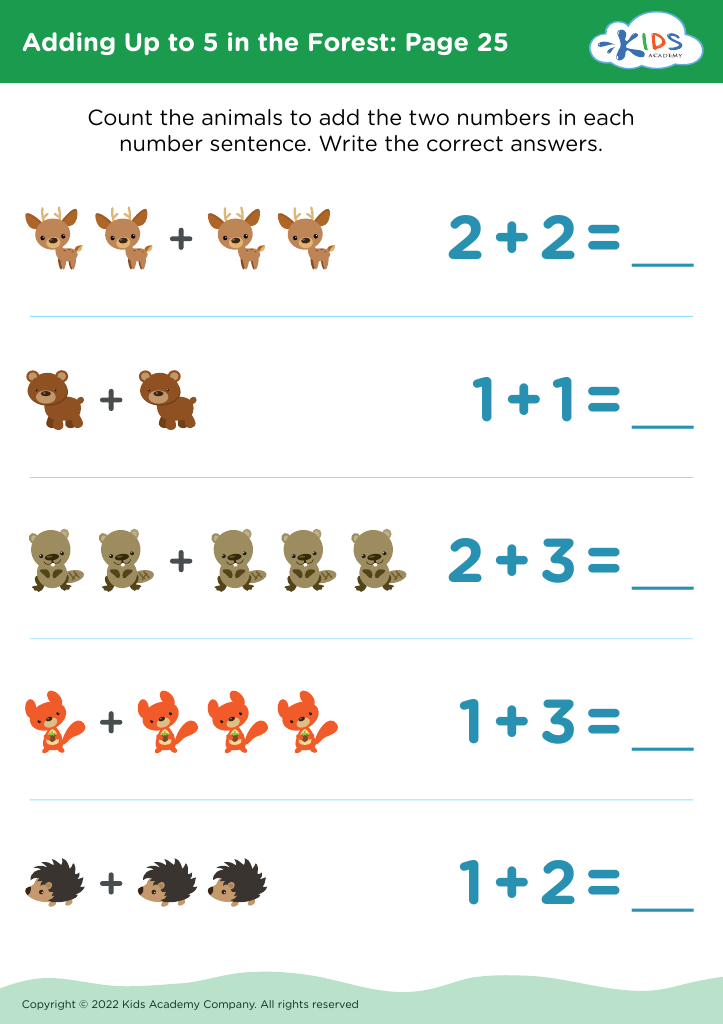
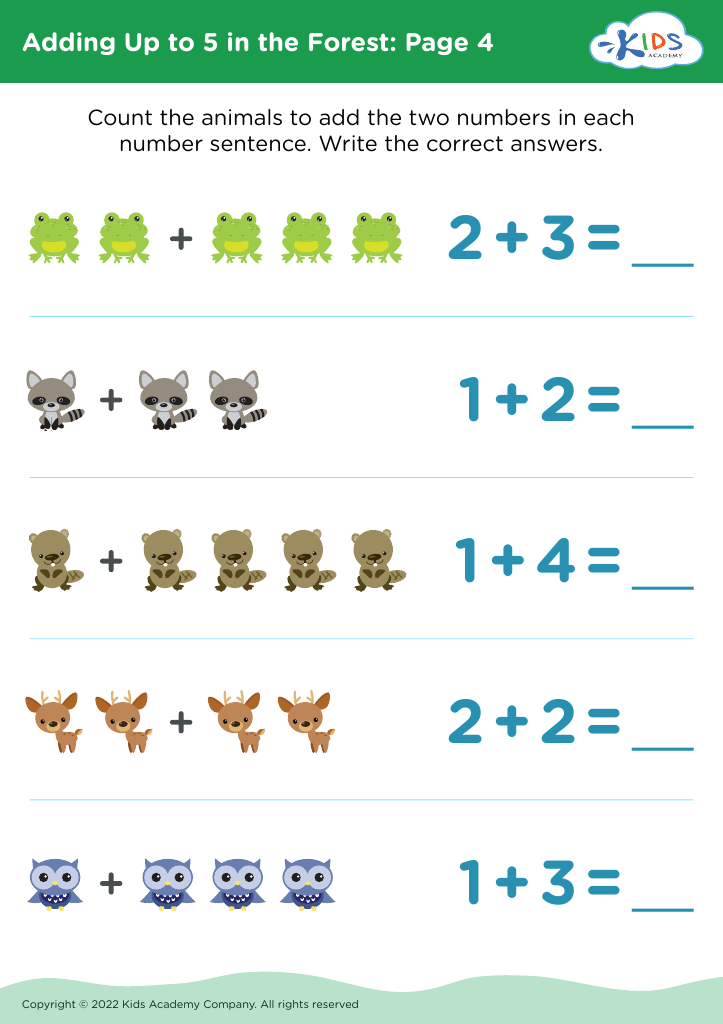
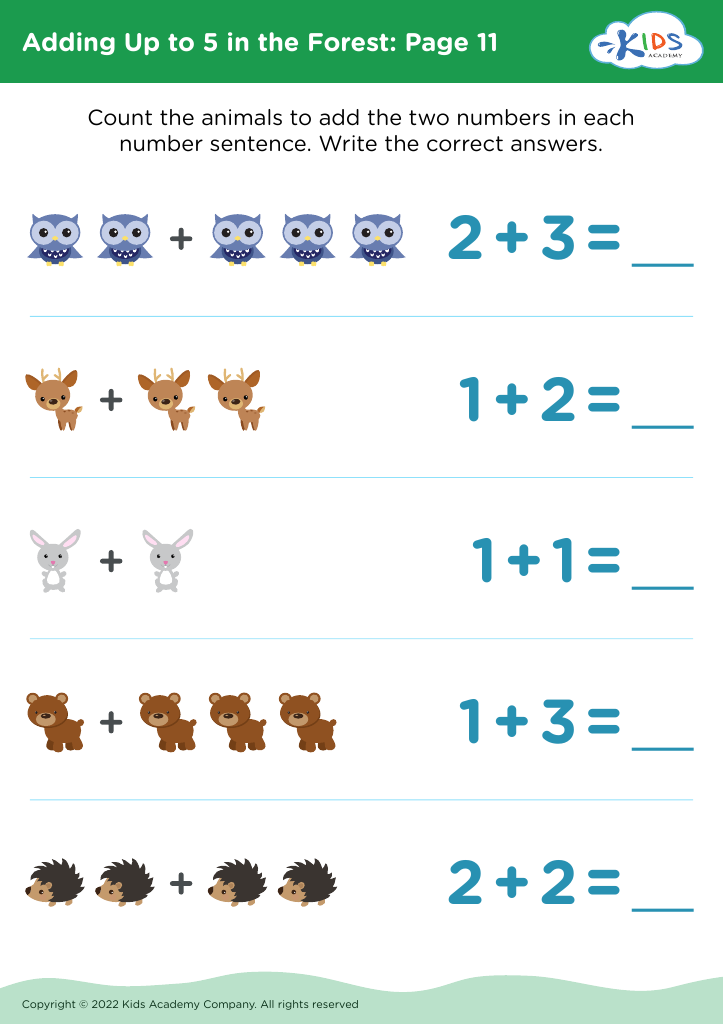
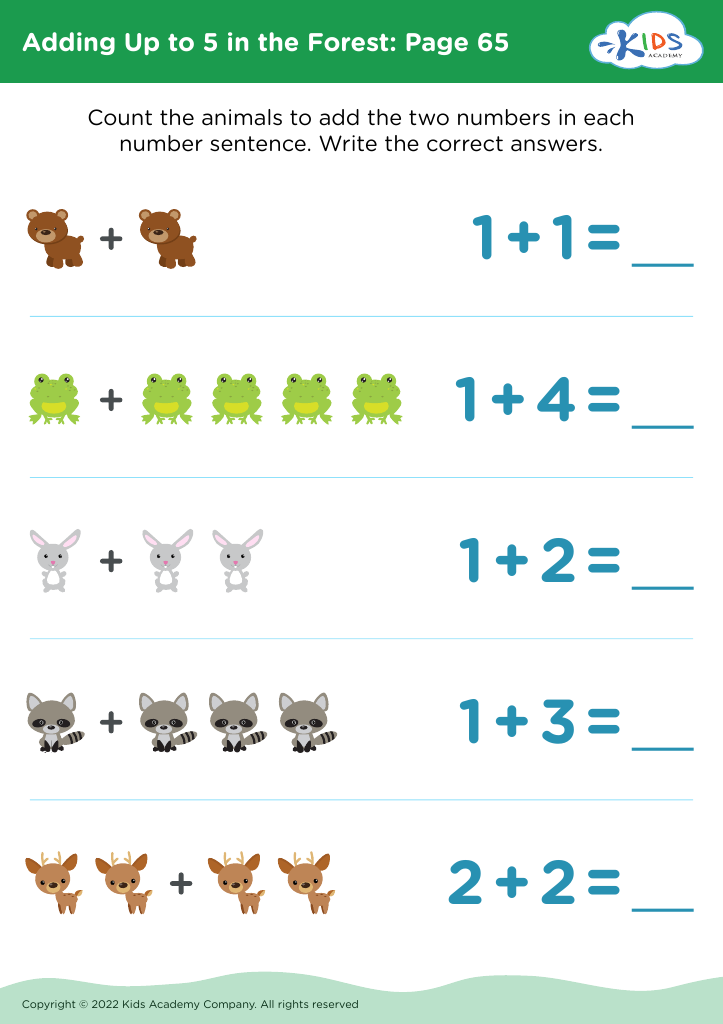
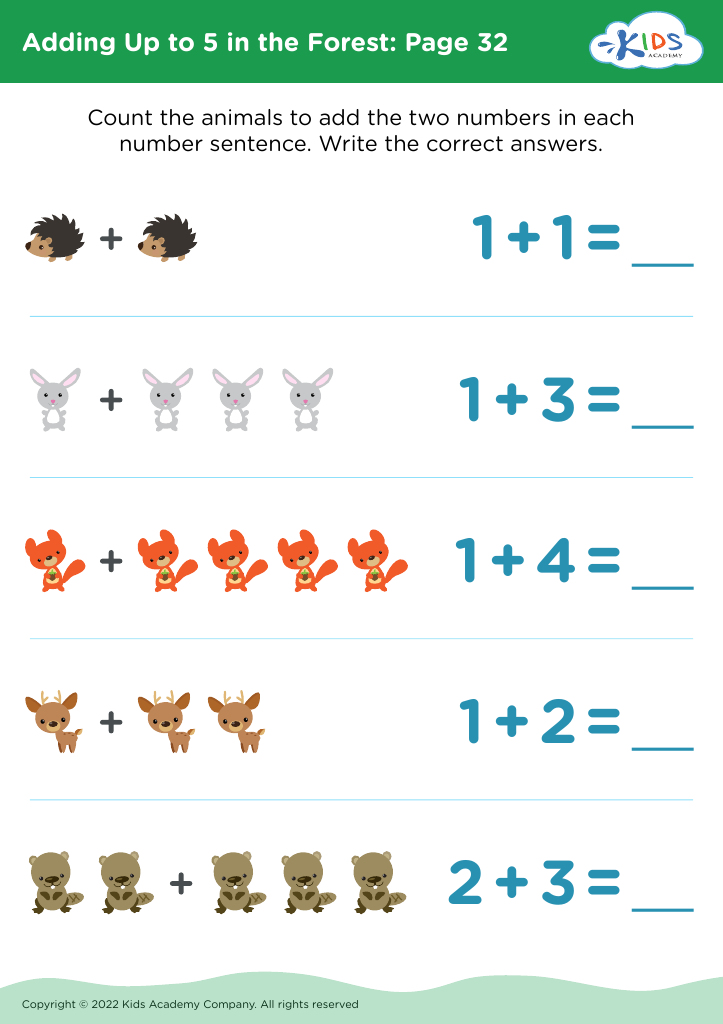
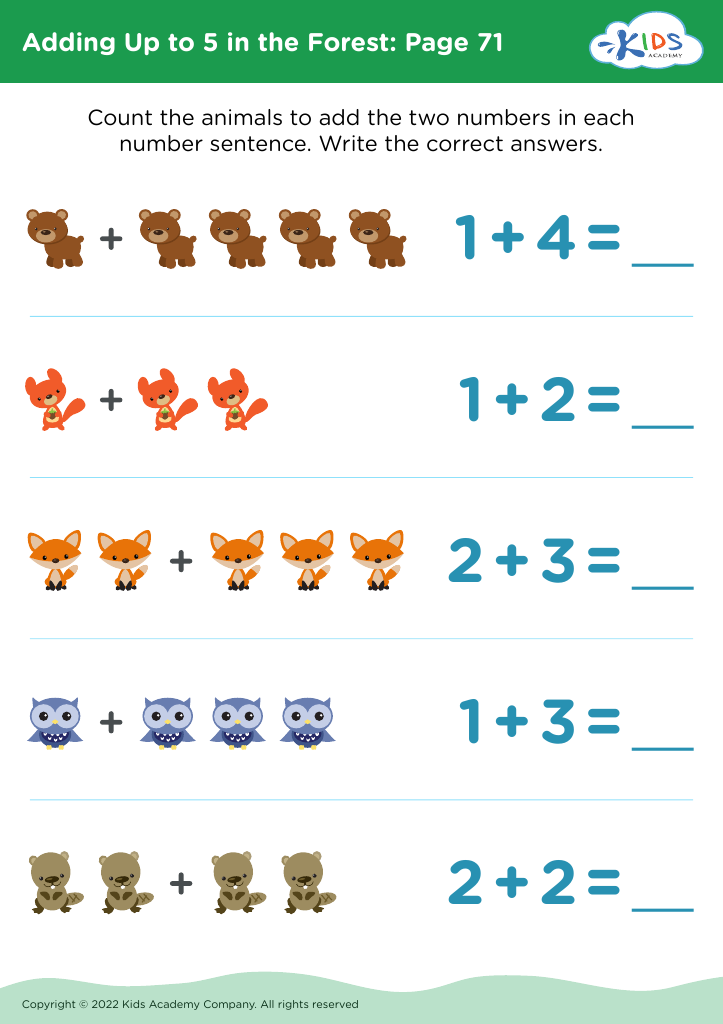
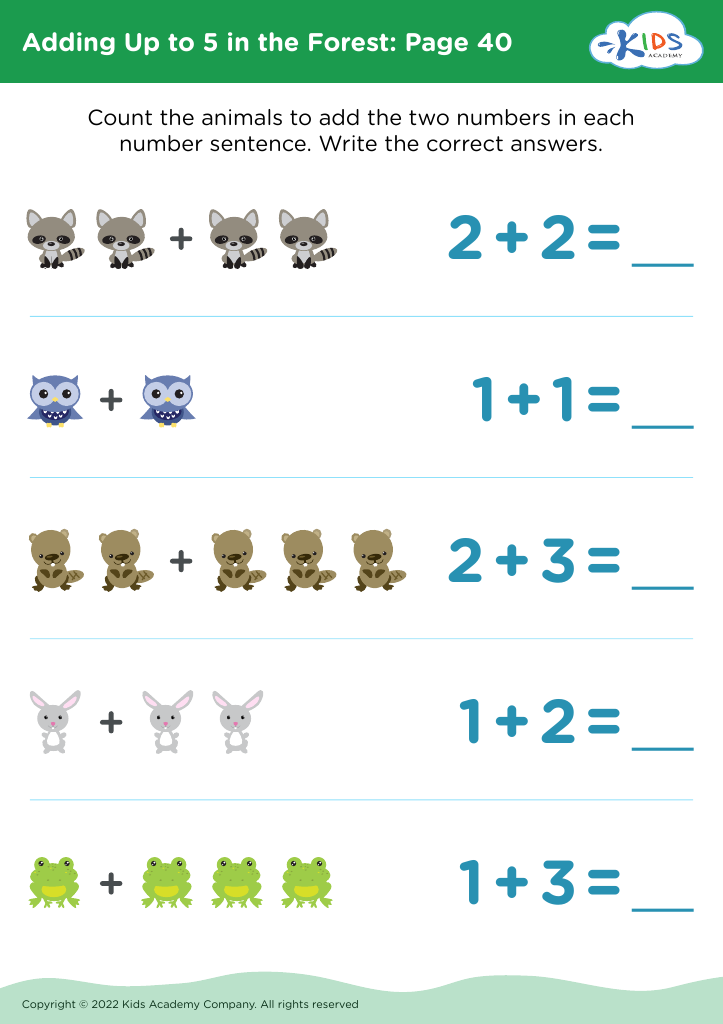
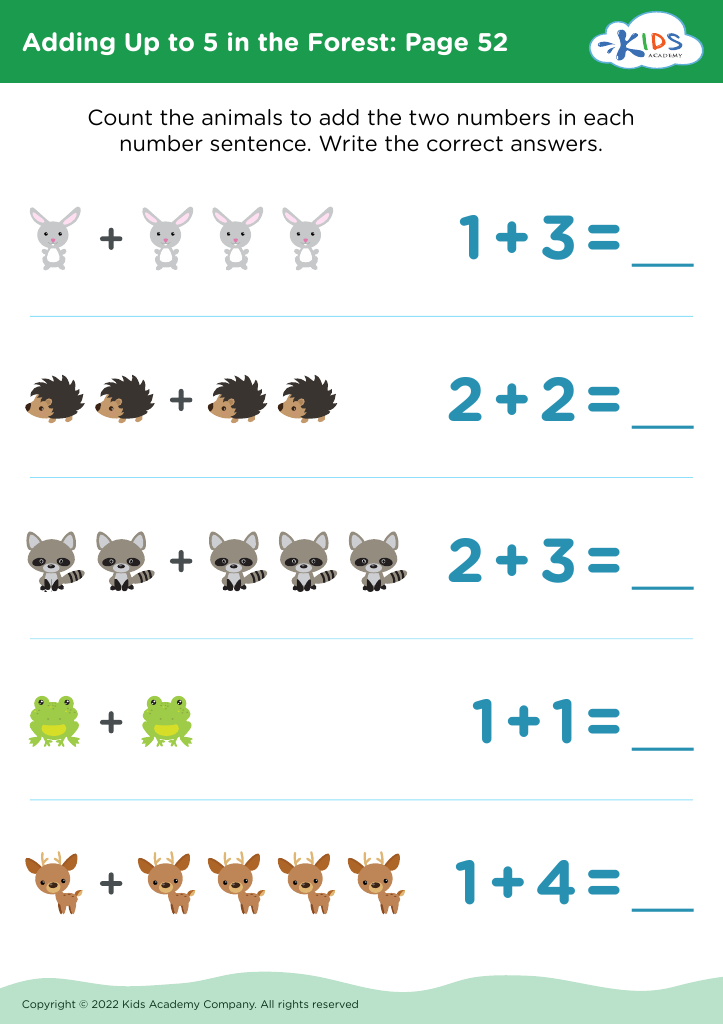
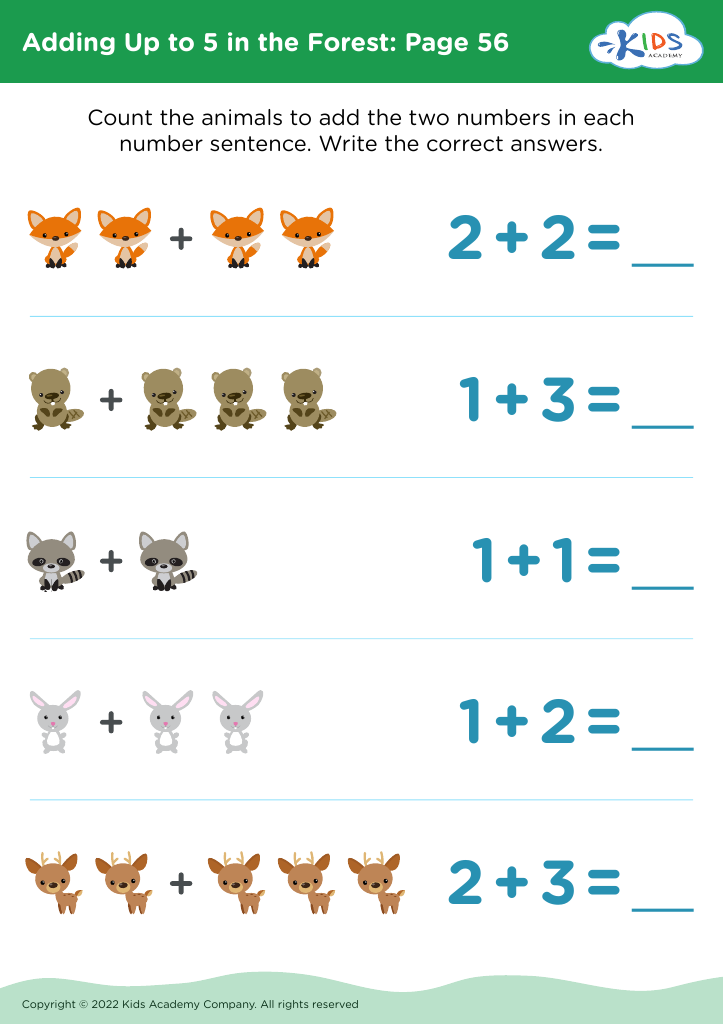
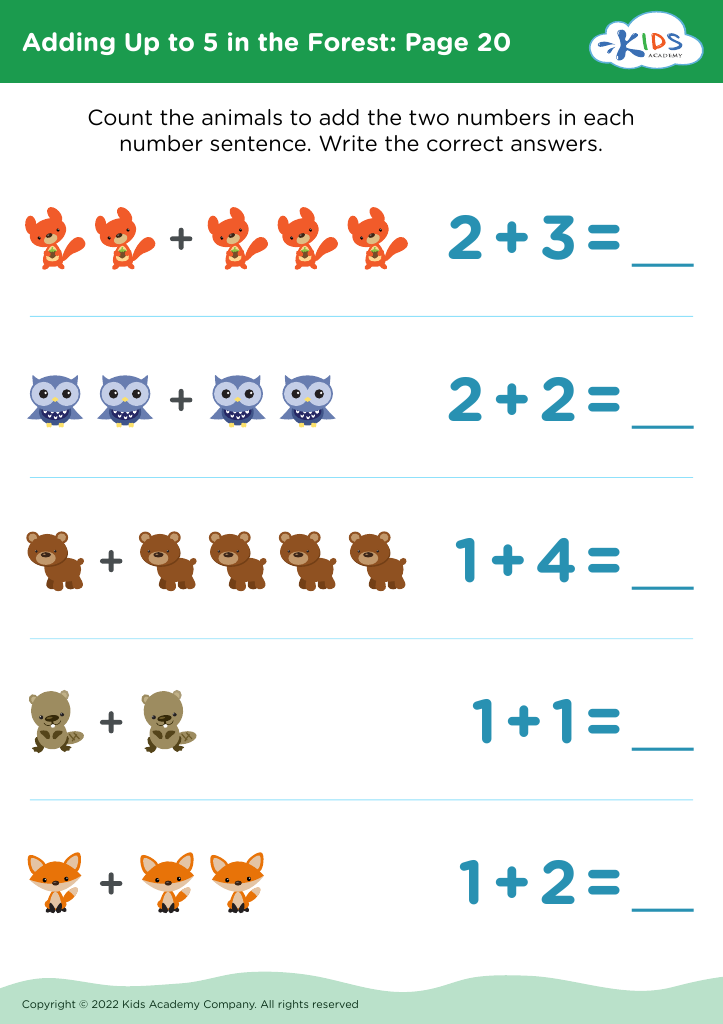
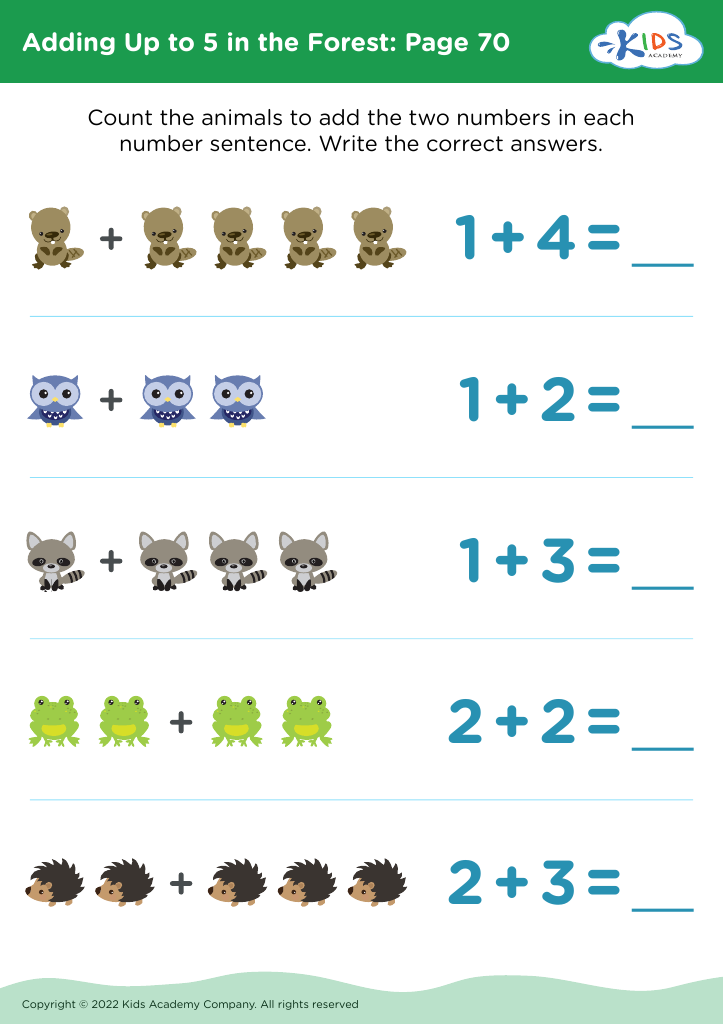
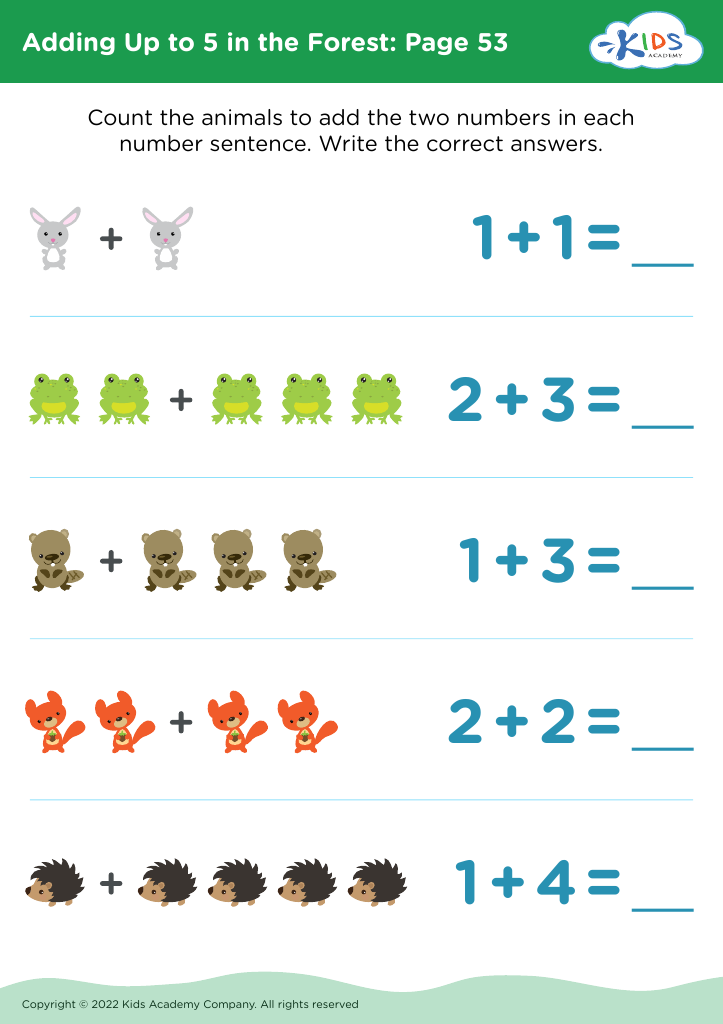
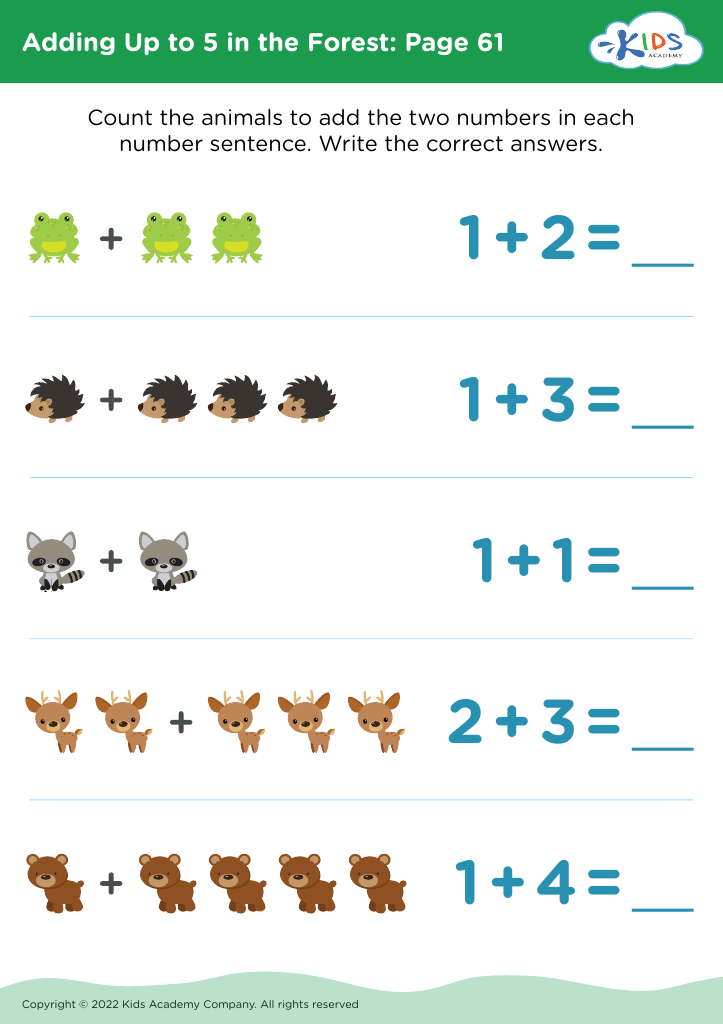




Number recognition is a foundational skill in early mathematics education, and it is especially important in engaging contexts like “Adding in the Forest.” This playful learning activity not only captivates children's interest but also fosters critical cognitive skills. By recognizing quantities and experimenting with addition in a natural setting, children develop a deeper understanding of numbers and their relationships.
Parents and teachers should care about this approach as it promotes hands-on learning, encouraging children to explore numbers in a concrete manner. Activities like counting leaves, acorns, or animals around them allow for real-world applications of math concepts, making learning more relevant and enjoyable. This active exploration can also improve children's spatial awareness and problem-solving skills.
Furthermore, such activities support social interactions, as children often work in groups to explore and understand their surroundings. This collaboration builds communication skills, cooperation, and emotional intelligence. In evaluating experiences like “Adding in the Forest,” adults foster a love for learning and a growth mindset toward challenges in mathematics.
In summary, focusing on number recognition and adding in fun and relatable contexts enhances learning outcomes, encourages creativity, and builds essential life skills that benefit children in multiple aspects.