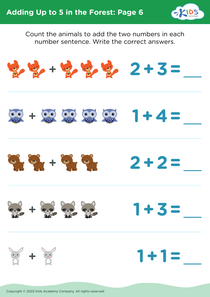
Improving concentration Adding in the Sea Worksheets
4 filtered results
-
From - To
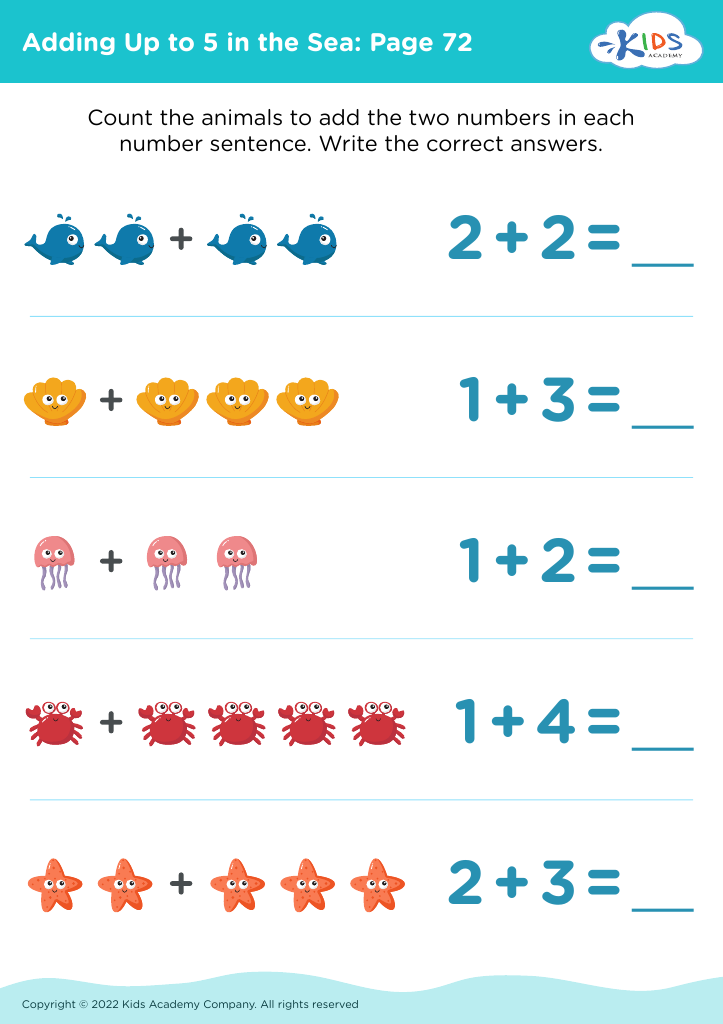
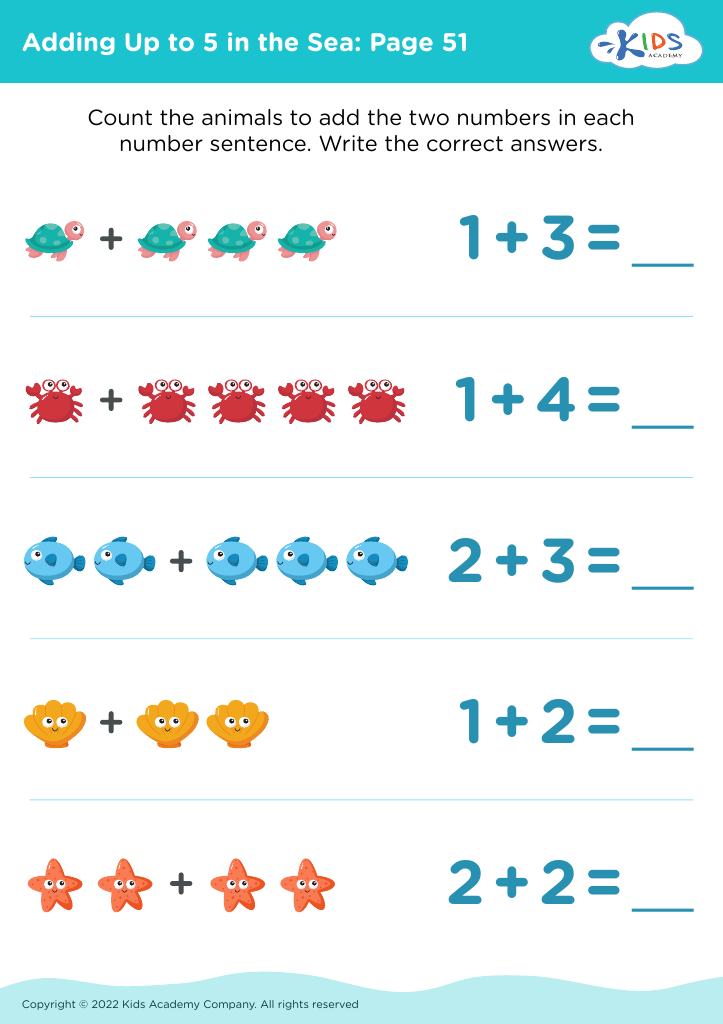
Enhance your child's concentration with our "Adding in the Sea Worksheets." Designed to make math enjoyable, these engaging worksheets feature delightful ocean-themed visuals that capture kids' attention. By incorporating fun marine elements, children can practice addition while developing focus and cognitive skills. Our resource promotes learning through interactive problem-solving, ensuring that math becomes exciting rather than daunting. Whether at home or in the classroom, these worksheets serve as an effective tool for reinforcing math concepts. Dive into the depths of learning today and watch your young learners flourish as they master addition with a splash of fun!
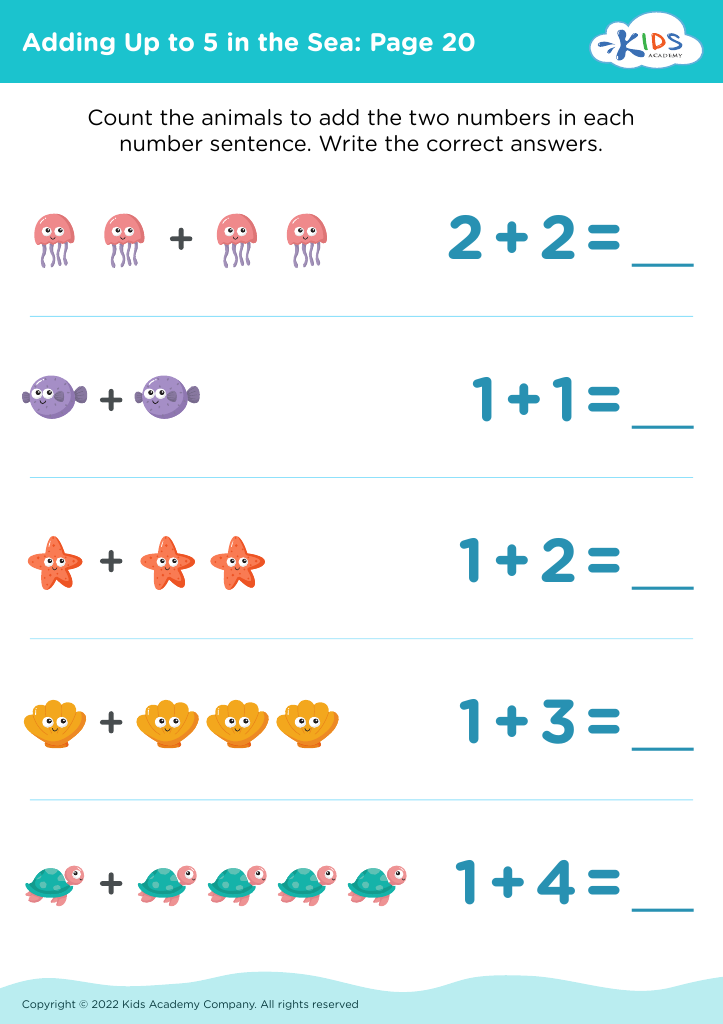
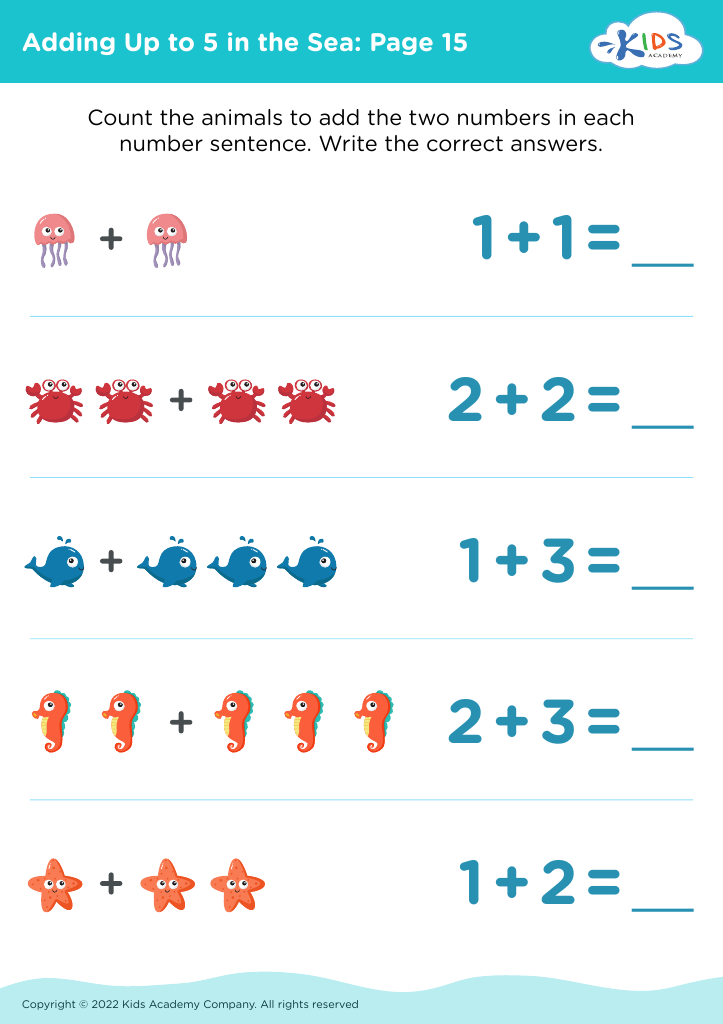



Improving concentration is crucial for both academic success and overall well-being in children. When students can focus, they absorb information more effectively, leading to better understanding and retention of knowledge. This skill enhances classroom participation and encourages a love for learning, fostering lifelong habits that benefit both personal and academic growth.
Incorporating concepts like "Adding in the Sea" presents a fun and engaging strategy to captivate young minds. This method not only makes learning exciting but also allows children to connect mathematical concepts to real-world scenarios, such as ocean life. By weaving together concentration and creative learning, educators and parents can enhance children's ability to concentrate while tapping into their inherent curiosity.
Furthermore, teaching concentration skills early on can support emotional regulation. Children with better focus are less likely to feel overwhelmed or frustrated by challenging tasks, leading to improved resilience and confidence.
Ultimately, by prioritizing concentration enhancement and creative methods like "Adding in the Sea," parents and teachers lay a solid foundation for academic achievement and well-rounded personal development. Recognizing the importance of these skills is essential in shaping capable and enthusiastic learners.