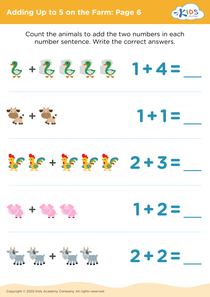
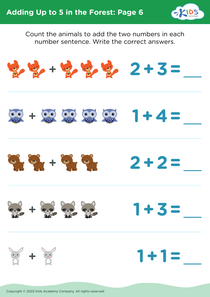
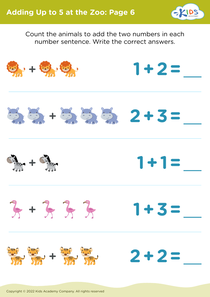
Sea creatures identification Adding in the Sea Worksheets
3 filtered results
-
From - To
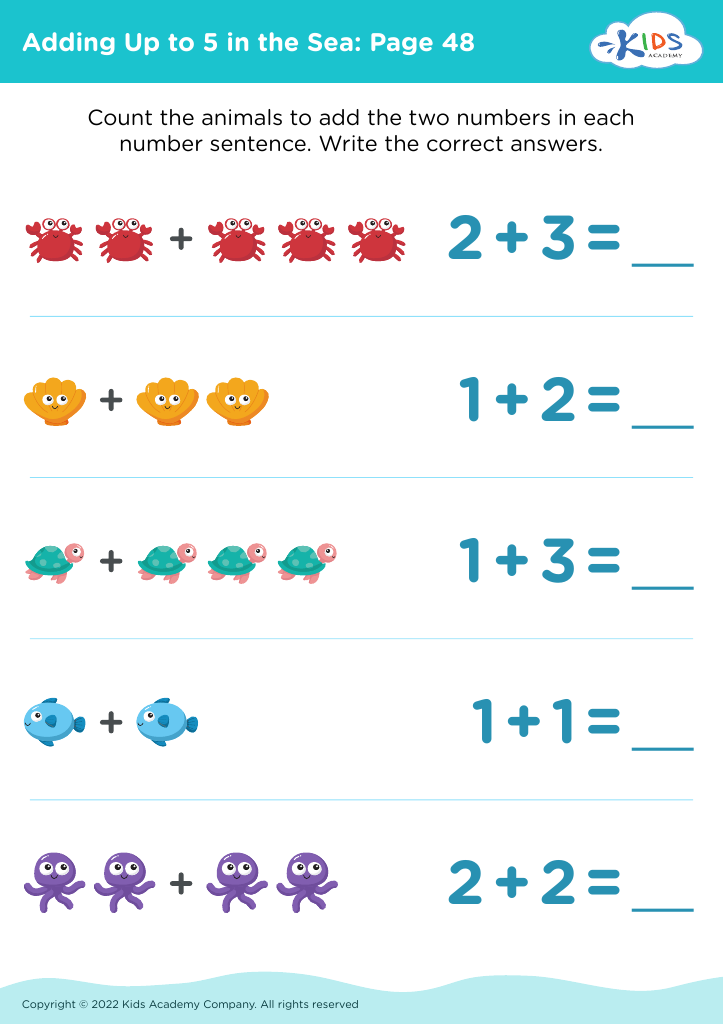
Explore the wonders of the ocean with our "Sea Creatures Identification Adding in the Sea Worksheets." Specially designed for young learners, these worksheets help children practice addition skills while discovering fascinating marine life. Each page features engaging math problems alongside illustrations of diverse sea creatures, making learning both fun and educational. Perfect for classroom use or homeschooling, these resources foster mathematical development and ignite curiosity about oceanic habitats. Dive into a world of numbers and nature, and watch your child develop critical thinking and problem-solving abilities, all while having a splashing good time!
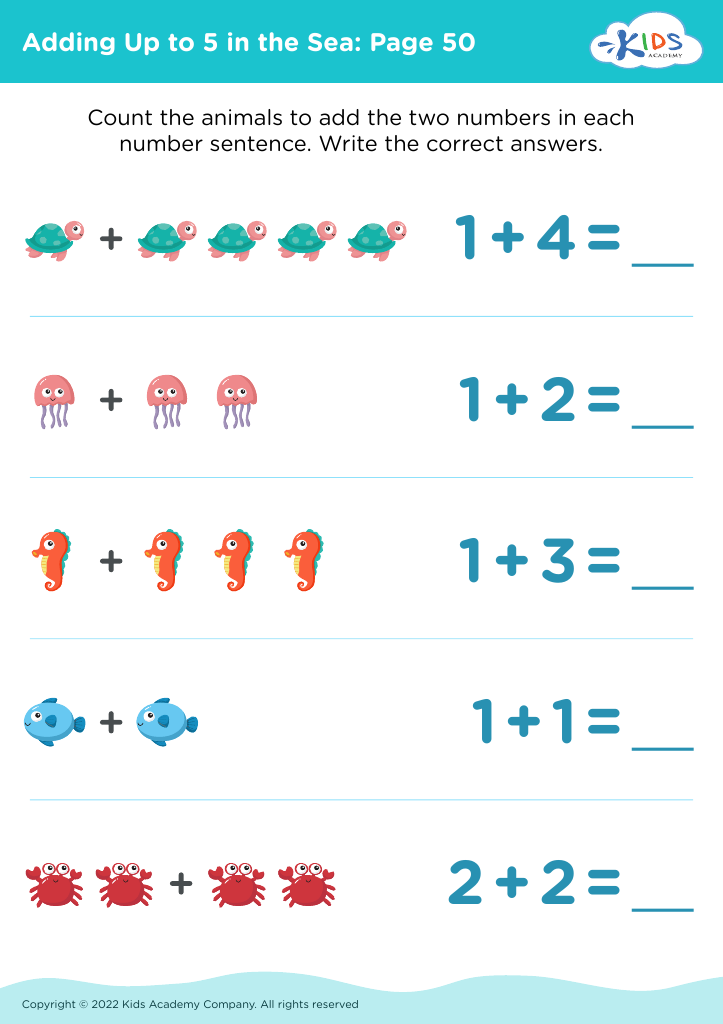
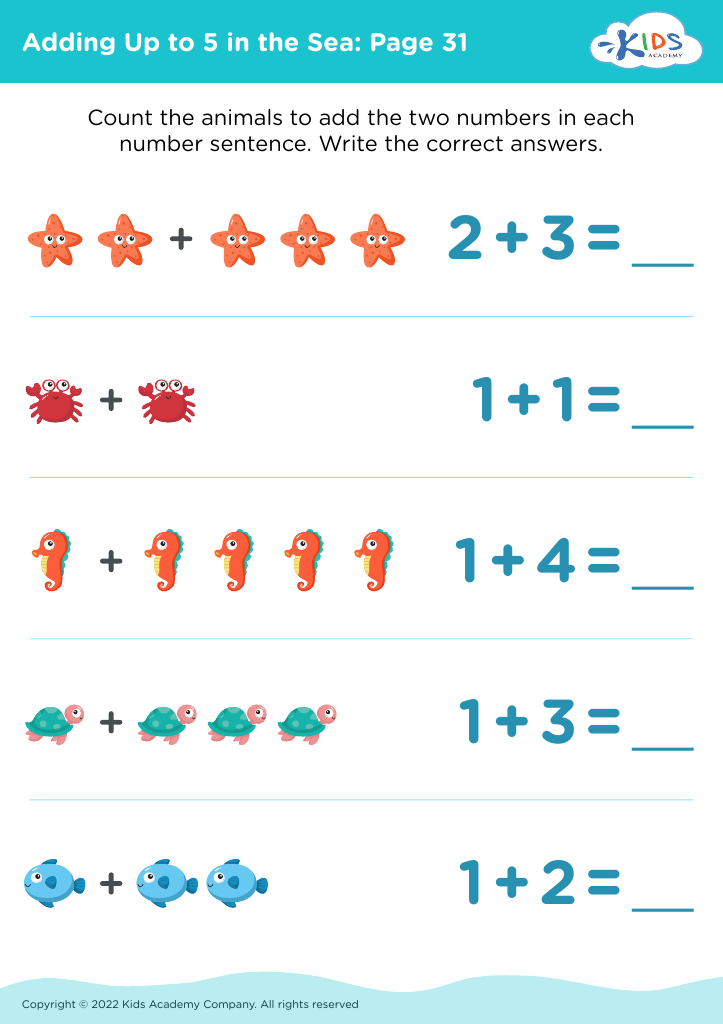



Parents and teachers should care about sea creature identification because it cultivates environmental stewardship, encourages curiosity, and supports a well-rounded educational experience. By learning to identify various sea creatures, children develop a deeper appreciation for marine ecosystems and the incredible biodiversity within our oceans. This awareness is fundamental for fostering respect for nature and promoting conservation efforts from a young age.
When children understand the roles that different sea creatures play in maintaining the health of our oceans, they can better grasp the importance of ecosystems and biodiversity. Recognizing that every sea creature, from the tiniest plankton to the largest whale, is interconnected helps to underscore the significance of preserving natural habitats.
Furthermore, the process of identifying sea creatures sparks curiosity and scientific inquiry. Children become more engaged and motivated to learn when they can explore vibrant, colorful marine life. This hands-on learning aligns with STEM education principles, building foundational skills in observation, classification, and critical thinking.
Additionally, engaging in sea creature identification can enrich language skills as children describe the animals and their behaviors, augmenting their vocabulary and comprehension. Educational activities involving sea creatures can seamlessly blend science, art, and literature, creating a multifaceted learning environment that caters to various interests and learning styles. Through these experiences, children can develop both a lifelong love for the ocean and a robust educational foundation.