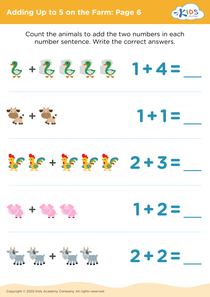
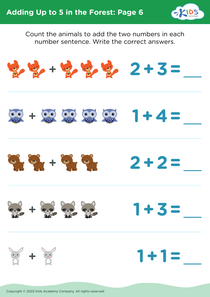
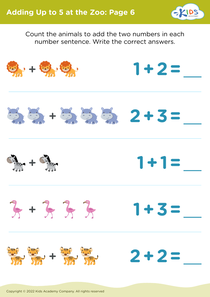
Underwater animal identification Adding in the Sea Worksheets
3 filtered results
-
From - To
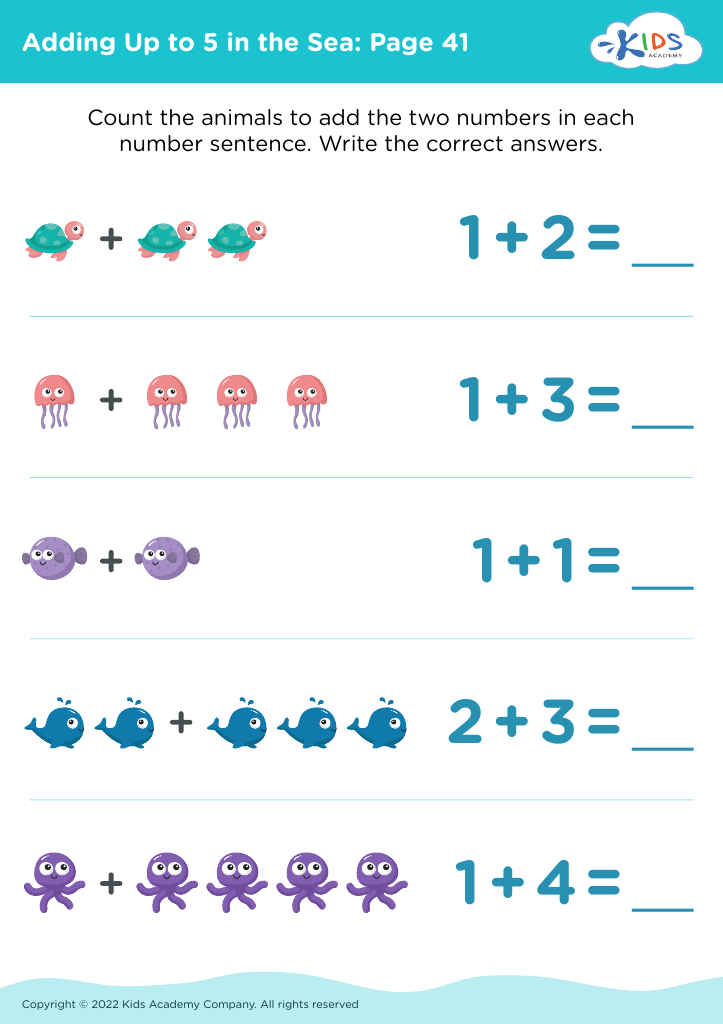
Explore the wonders of the ocean with our "Underwater Animal Identification Adding in the Sea Worksheets!" Designed for young learners, these engaging worksheets combine math with marine biology, making addition fun and educational. Kids will enhance their counting skills and learn about various underwater creatures as they identify colorful fish, playful dolphins, and other fascinating animals in their ocean habitat. Each worksheet encourages critical thinking and observational skills while introducing early mathematics concepts. Perfect for classrooms or at-home learning, these printables will spark children's curiosity and love for the ocean, fostering a rich understanding of both math and wildlife!
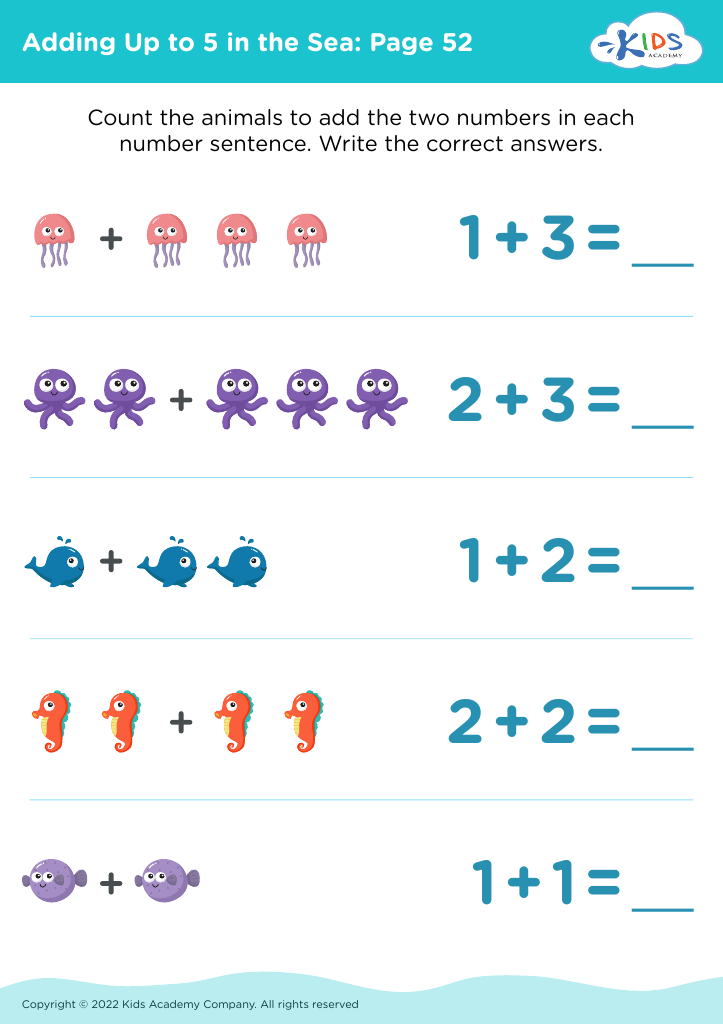
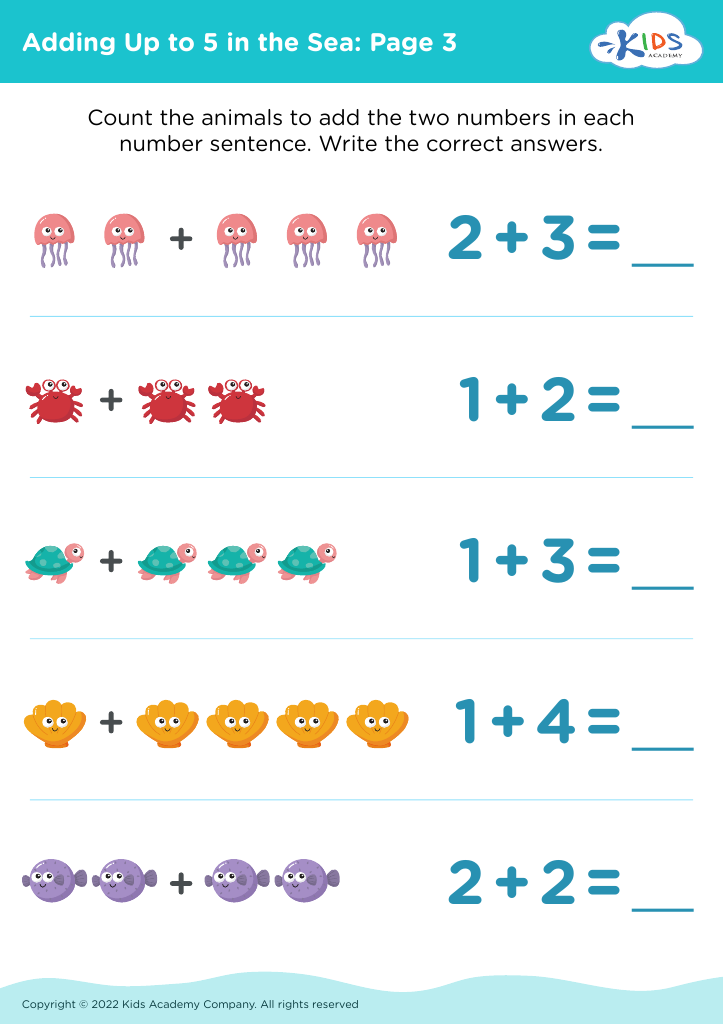



Understanding underwater animal identification is essential for both parents and teachers for several reasons. Firstly, it fosters a sense of curiosity and appreciation for marine life among children. Early exposure to the ocean's biodiversity can ignite a passion for environmental science, promoting a lifelong interest in wildlife conservation and marine ecology.
Second, awareness of underwater animals encourages environmental stewardship. When children learn to identify species such as fish, crustaceans, and coral, they develop a deeper connection to the ecosystem, recognizing the importance of protecting natural habitats. This knowledge can empower them to participate in beach cleanups and conservation efforts, positively affecting local ecosystems.
Moreover, integrating underwater animal education into curricula supports interdisciplinary learning. It can enhance subjects like science, geography, and even art as students explore marine biology, ecosystems, and the physical characteristics of various species.
Finally, fostering collaboration between parents, teachers, and students creates a shared environment of learning. Parents can reinforce these lessons through family activities like visits to aquariums or seaside habitats. By prioritizing underwater animal identification in education, both parents and teachers can help nurture environmentally aware, knowledgeable, and responsible future generations.