Animal recognition Adding on the Farm Worksheets - Page 2
31 filtered results
-
From - To
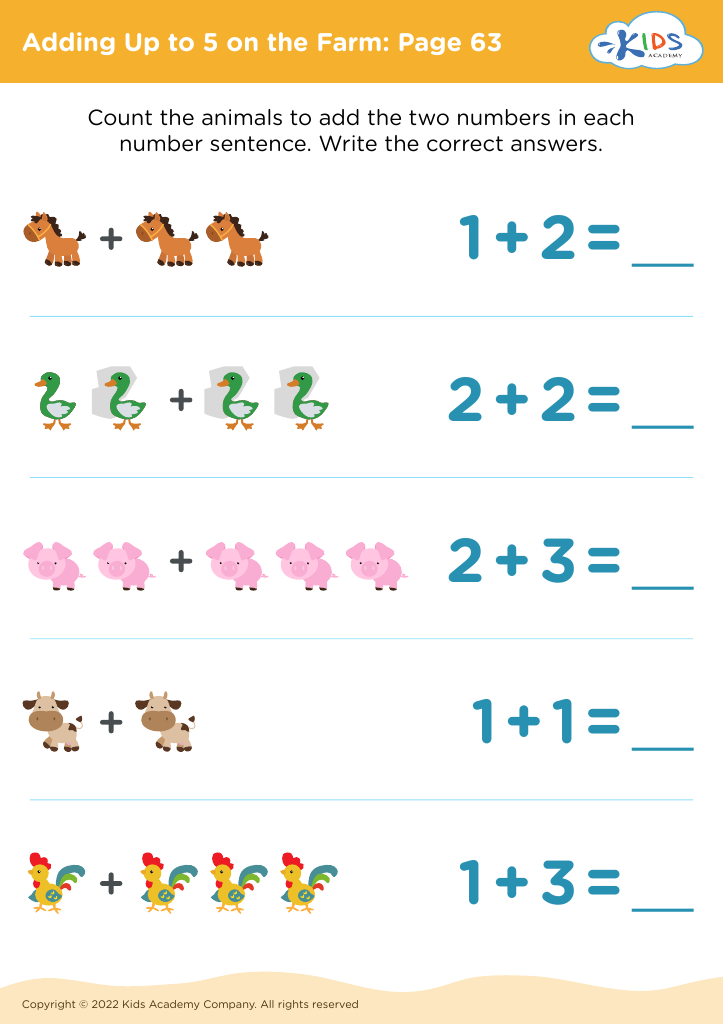
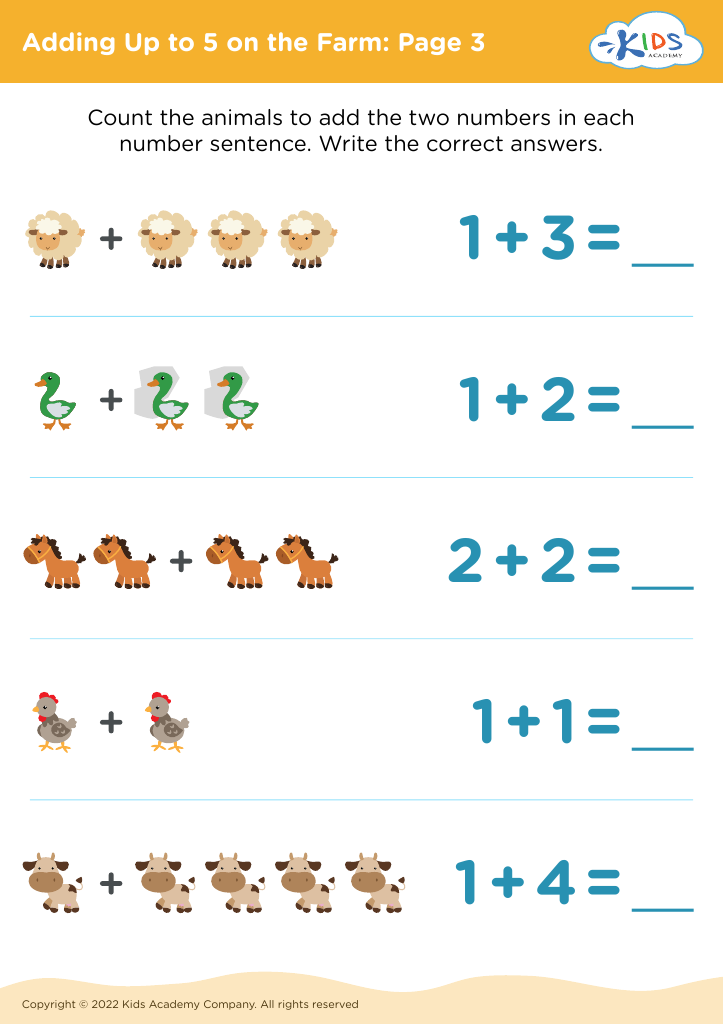
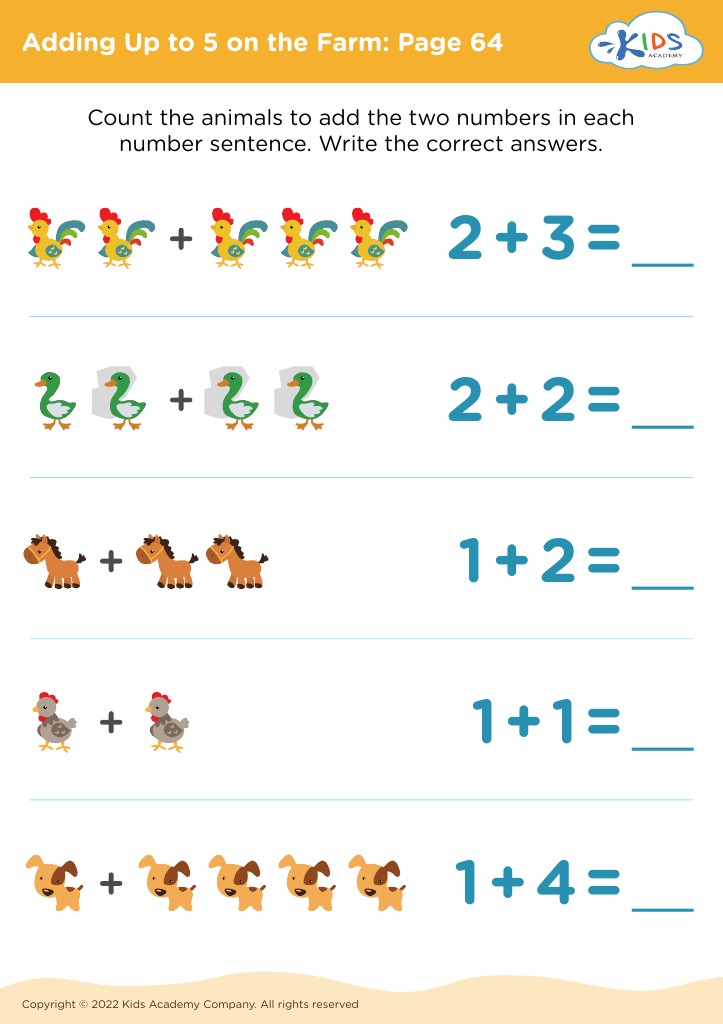
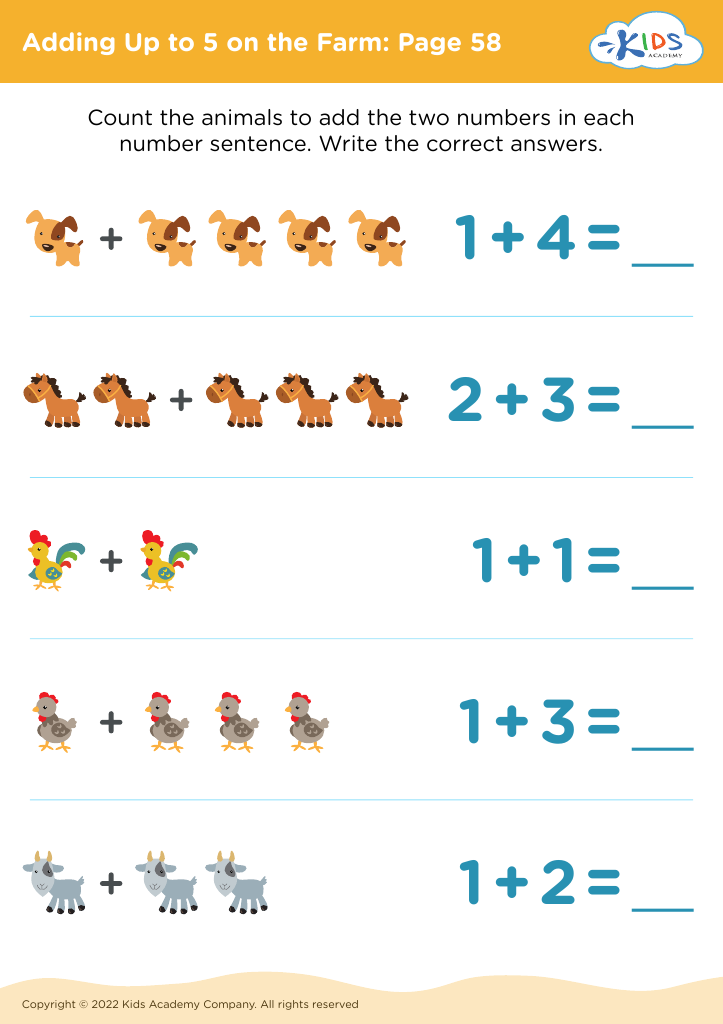
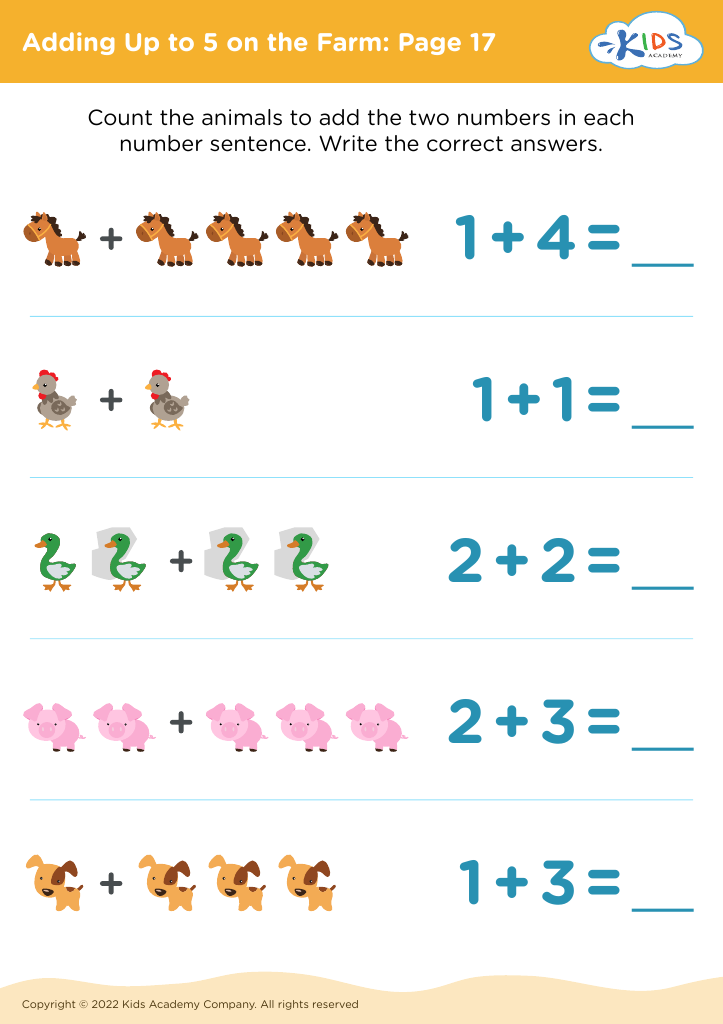
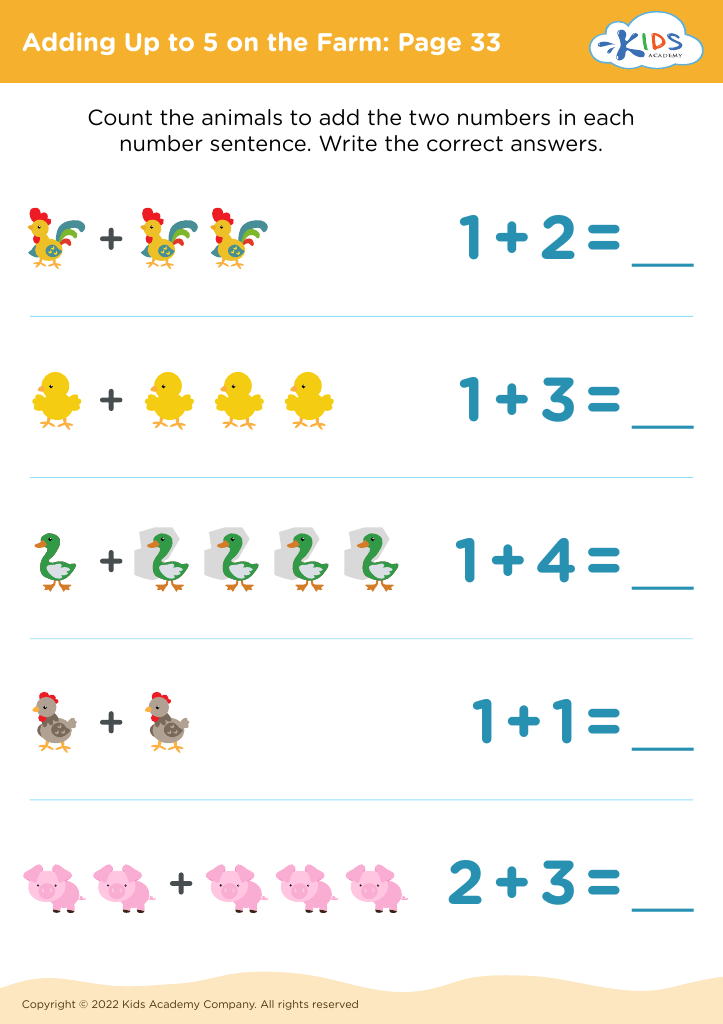
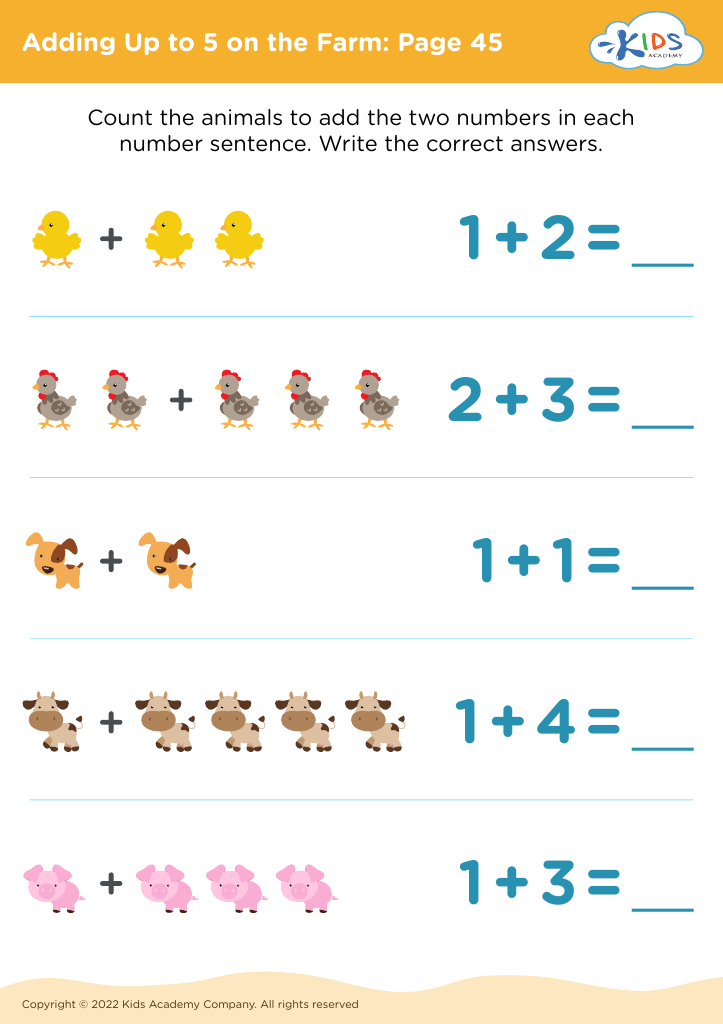



Animal recognition plays a crucial role in early childhood education, especially on the farm, as it connects children with nature and fosters a sense of responsibility towards living beings. For parents and teachers, engaging young learners in recognizing different farm animals can enhance their observational skills and cognitive development. Understanding various animals, such as cows, pigs, sheep, and chickens, helps children learn about their characteristics, habitats, and roles in the ecosystem, promoting curiosity and critical thinking.
Furthermore, farm animals serve as an excellent starting point for discussions about nutrition, agriculture, and environmental stewardship. By learning about where food comes from and the importance of farming, children gain an appreciation for healthy eating and sustainable practices. This knowledge arms them with the tools to become responsible consumers and caretakers of the earth.
In addition, animal recognition can foster empathy in children. By learning to identify and understand animals' needs and behaviors, they develop a stronger emotional connection to living creatures. This gentle approach encourages compassion, patience, and teamwork, qualities that are essential for personal development. In summary, animal recognition on the farm enriches children's learning experiences and contributes to their overall growth, making it an important area for parents and teachers to prioritize.