Develop fine motor skills Adding up to 100 Misc Worksheets
4 filtered results
Difficulty Level
Grade
Age
-
From - To
Subject
Activity
Standards
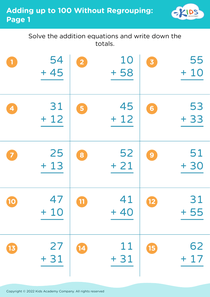
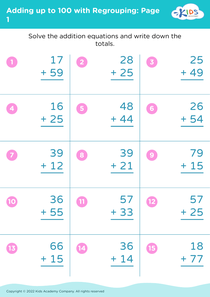
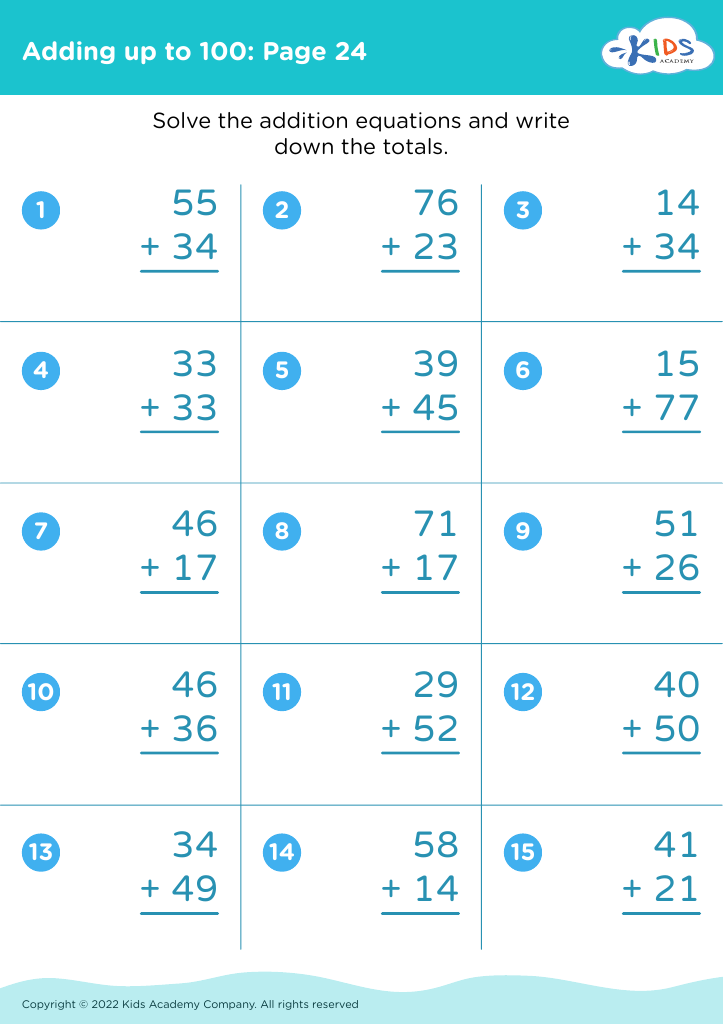
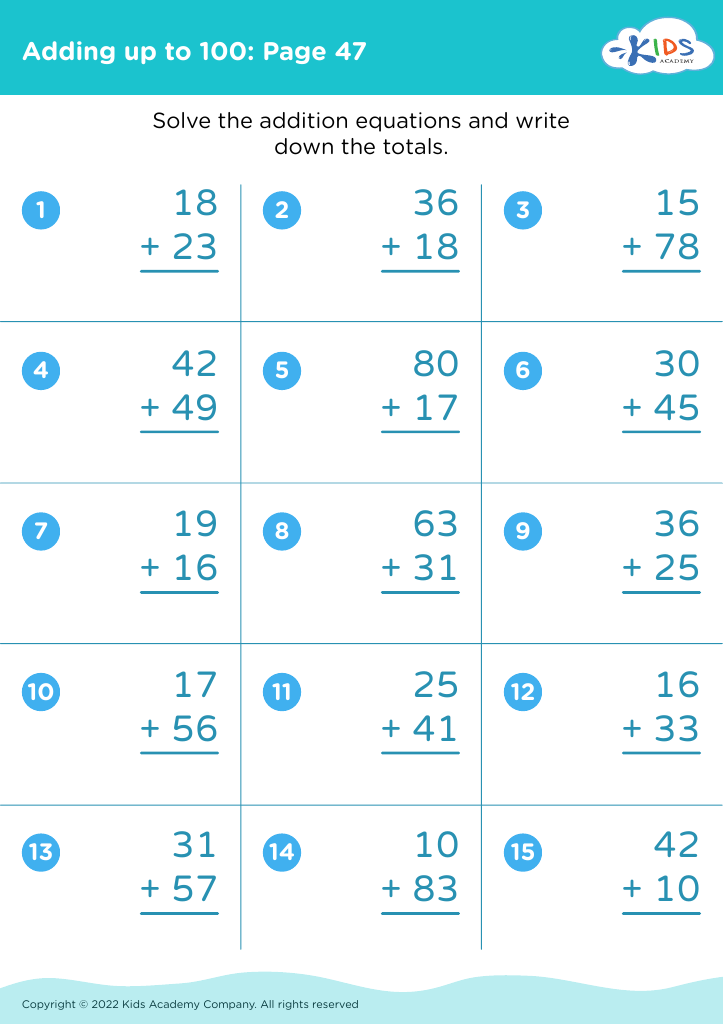
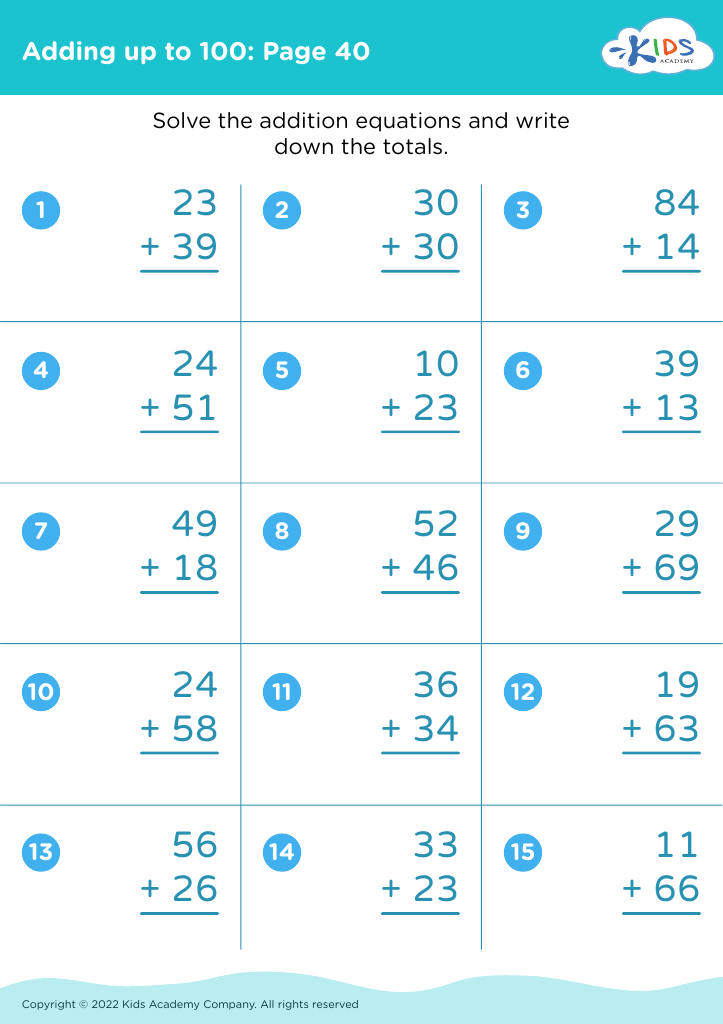
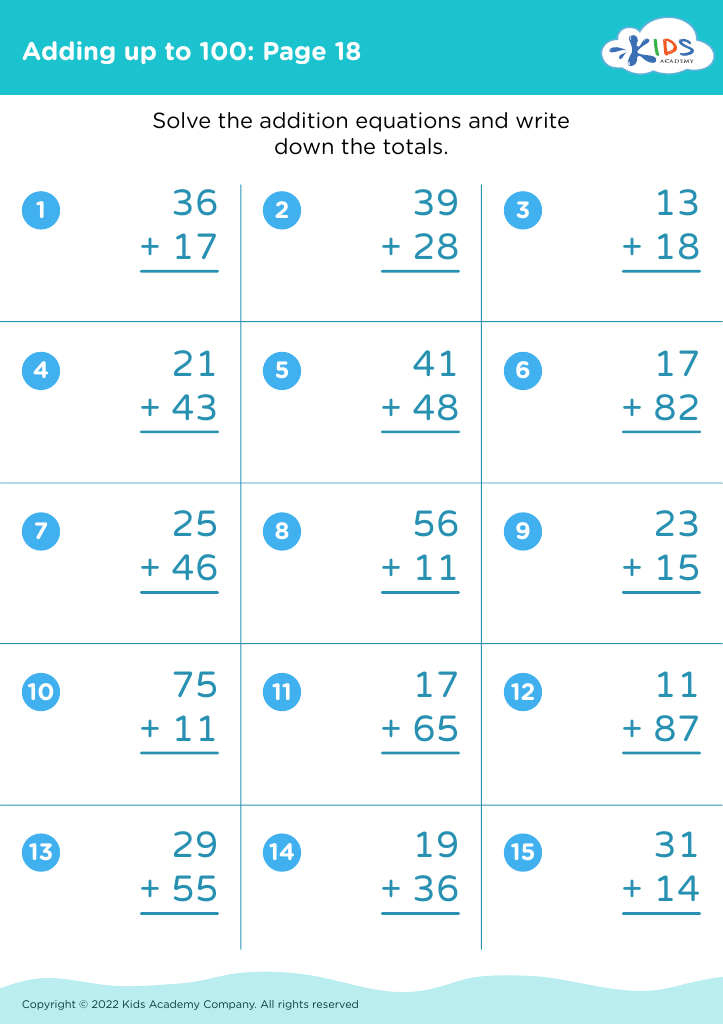
Explore our selection of "Develop fine motor skills Adding up to 100 Misc Worksheets" at Kids Academy! Specially designed for young learners, these engaging worksheets not only teach essential addition skills but also bolster fine motor development. Perfect for classrooms and home practice, activities include coloring, tracing numbers, and filling grid puzzles, making math practice enjoyable and effective. Your child will develop coordination, hand strength, and precision while smoothly transitioning into more advanced math concepts. Discover the fun way to enhance math fluency and fine motor skills, all in one comprehensive collection of worksheets!
Favorites
With answer key
Interactive
Join Kids Academy for Free
Who is primarily going to use this learning content?


Developing fine motor skills and learning how to add up to 100 are essential milestones for young children, and parents and teachers play a vital role in facilitating these skills. Fine motor skills involve the coordination of small muscles in the hands and fingers, crucial for everyday tasks like writing, buttoning a shirt, or tying shoelaces. When children refine these skills, they become more independent and confident in handling various activities. A solid foundation in fine motor skills also positively impacts their ability to perform well in school since activities like cutting with scissors, drawing, and handwriting all depend on these skills.
On the other hand, learning to add up to 100 sets the groundwork for a child's future proficiency in mathematics. Mastering addition within this range boosts mental arithmetic, laying a strong foundation for more complex mathematical concepts. It fosters problem-solving skills, logical thinking, and number sense, which are fundamental across various academic subjects and real-life situations, like shopping or planning.
When parents and teachers take an active interest in developing these skills, they create a supportive and enriching environment that encourages growth and learning. Engaging in activities that enhance fine motor skills and mathematical ability helps children achieve academic success and gain practical life skills, setting them up for a brighter future.