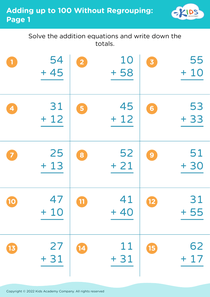
Color Identification Adding up to 100 with Regrouping Worksheets
3 filtered results
-
From - To
Enhance your child's learning experience with our engaging "Color Identification Adding up to 100 with Regrouping Worksheets." These thoughtfully designed resources combine math and color recognition to make learning addition exciting and interactive. Students will practice adding numbers up to 100 while identifying colors, reinforcing both mathematical concepts and visual skills. Each worksheet encourages critical thinking and provides ample opportunities for regrouping exercises, ensuring a solid understanding of addition. Perfect for early grade learners, these worksheets promote a fun and educational environment, making math enjoyable and accessible. Get your child ready for success in math with our vibrant and effective worksheets!
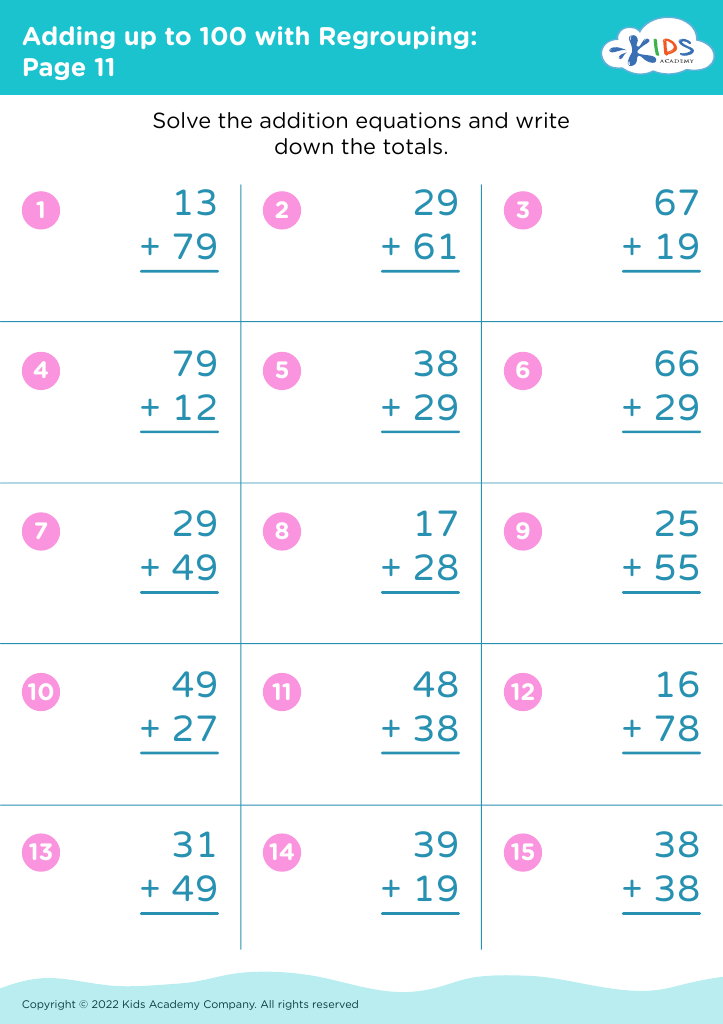
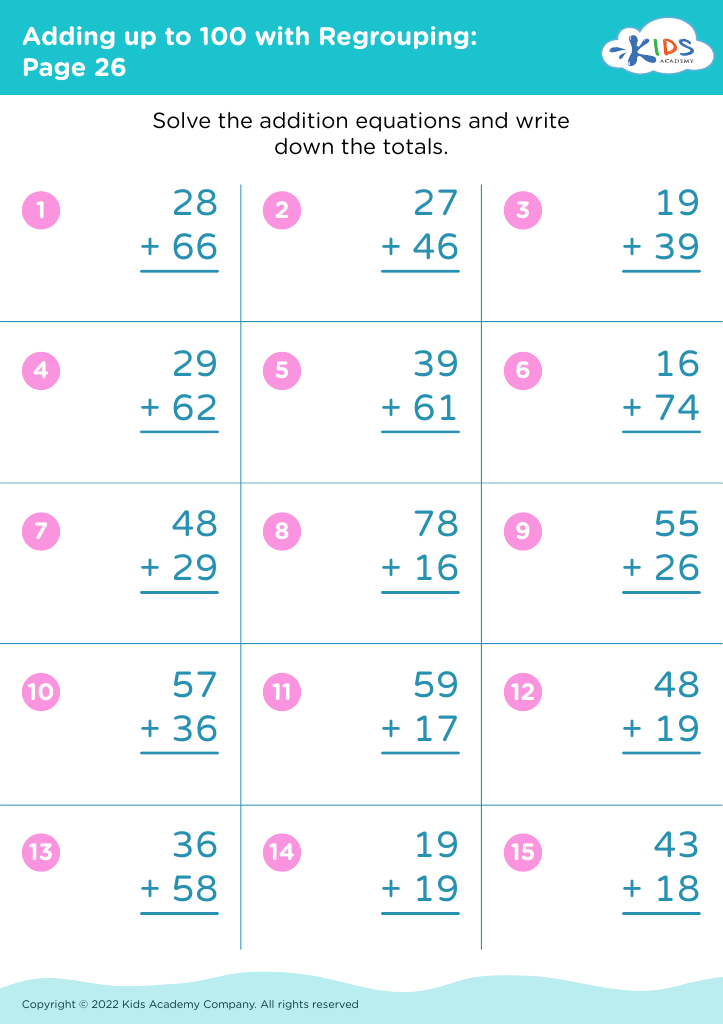
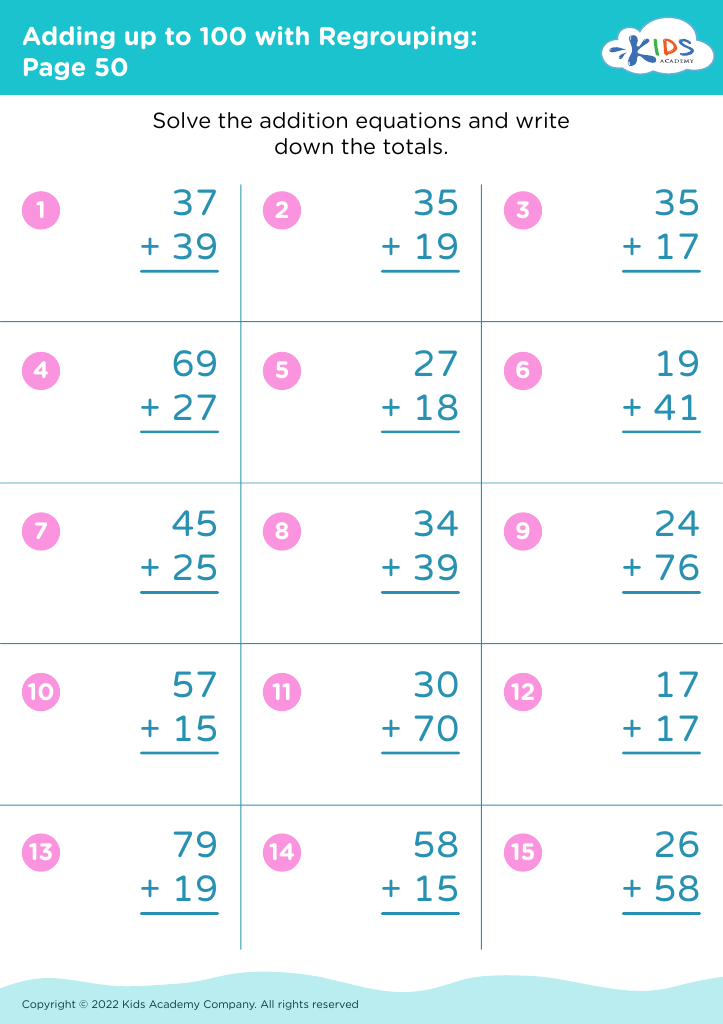




Color identification, while seemingly basic, plays a crucial role in a child's cognitive development, particularly in enhancing their mathematical skills like addition with regrouping. Understanding colors helps young learners to categorize and organize information, making abstract concepts more tangible and relatable. When paired with mathematical concepts, such as adding numbers to reach a sum of 100, color-coded materials can foster enhanced focus and engagement.
For instance, using different colors for tens and ones can visually illustrate the place value concept, thus aiding in the understanding of regrouping. This strategy simplifies complex equations, making them more accessible for young minds. It encourages a hands-on approach, allowing children to manipulate objects in a colorful way that captures their attention and reinforces learning.
Furthermore, integrating color identification with math can assist children in developing problem-solving skills and critical thinking. Parents and teachers who understand the importance of this pedagogy can create rich, stimulating environments that promote early numeracy skills. Ultimately, empowering children with the tools to master addition through color aids their overall academic achievement and boosts their confidence in mathematical abilities.