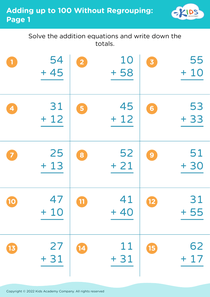
Comparing Fractions Adding up to 100 with Regrouping Worksheets
9 filtered results
-
From - To
Discover our captivating "Comparing Fractions Adding up to 100 with Regrouping Worksheets," designed to make learning fractions fun and accessible for young students! These dynamic exercises help children master the skill of comparing fractions while practicing addition with regrouping, making complex concepts simpler to grasp. Perfect for both classroom and home use, these worksheets reinforce key math skills, enhance problem-solving abilities, and build confidence. With engaging visuals and hands-on activities, each worksheet aims to develop a strong foundation in fractions and addition. Cultivate your child's love for math today with these comprehensive and enjoyable resources!
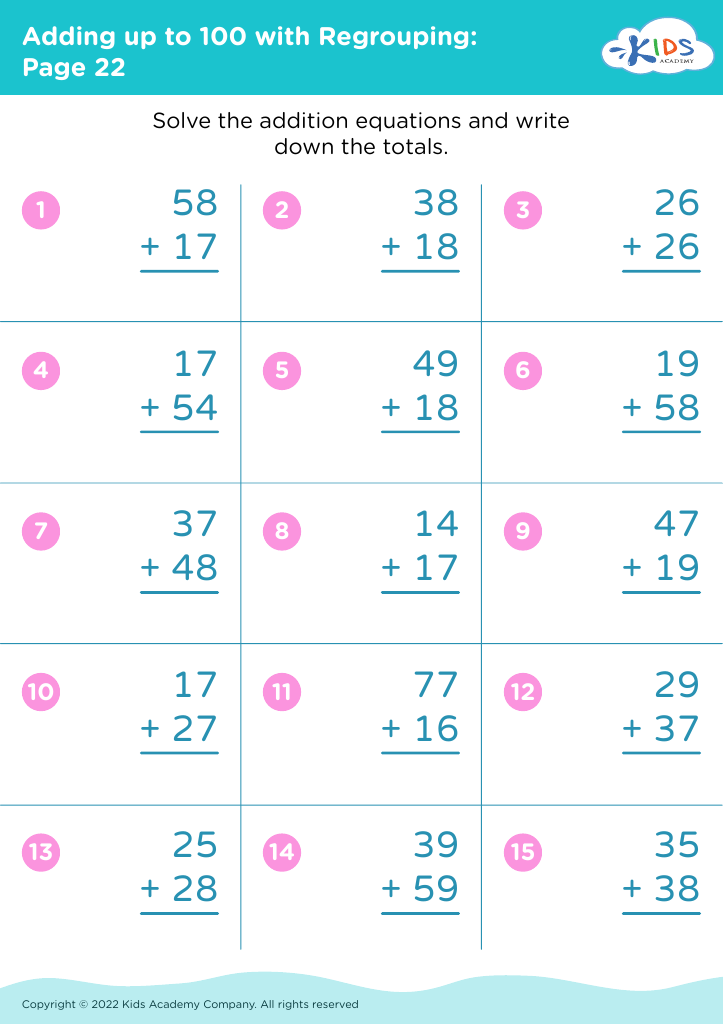
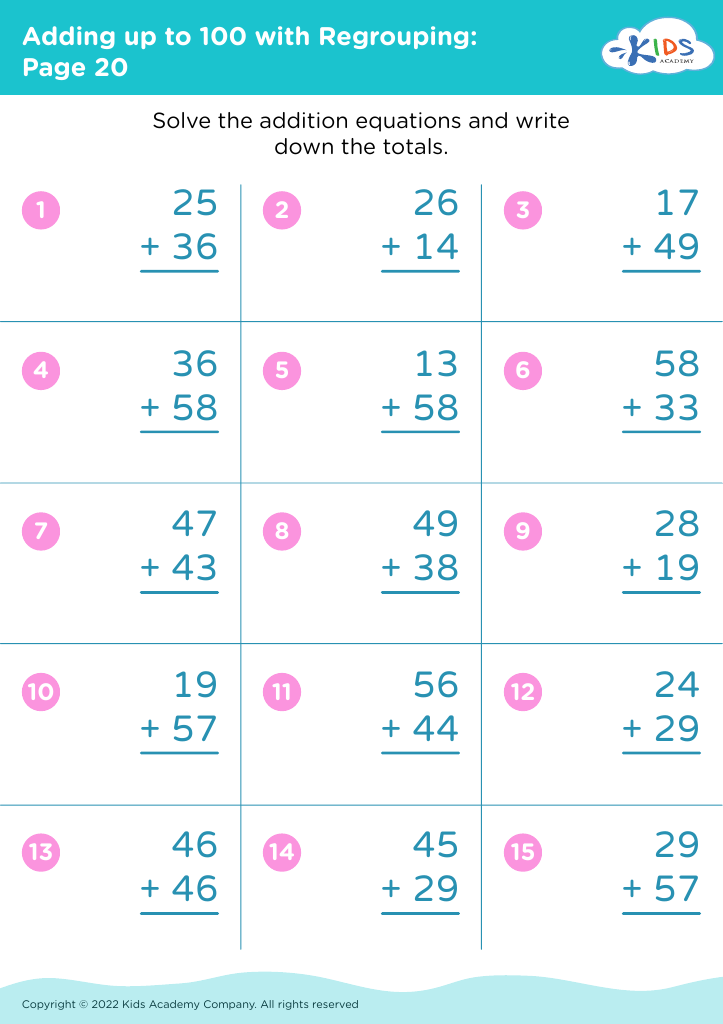
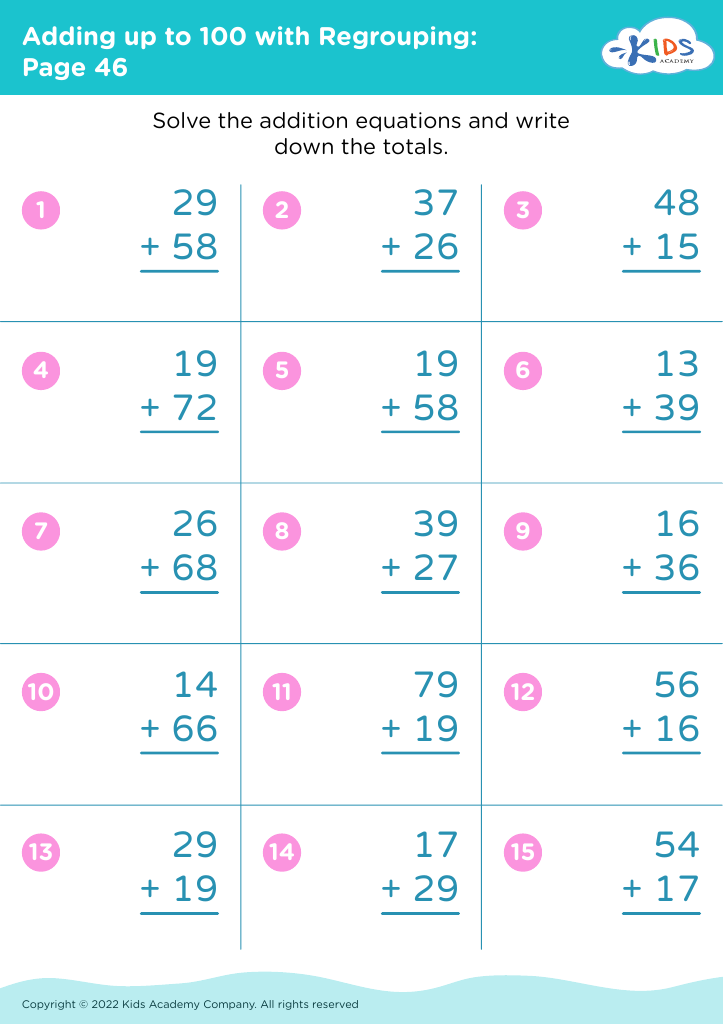
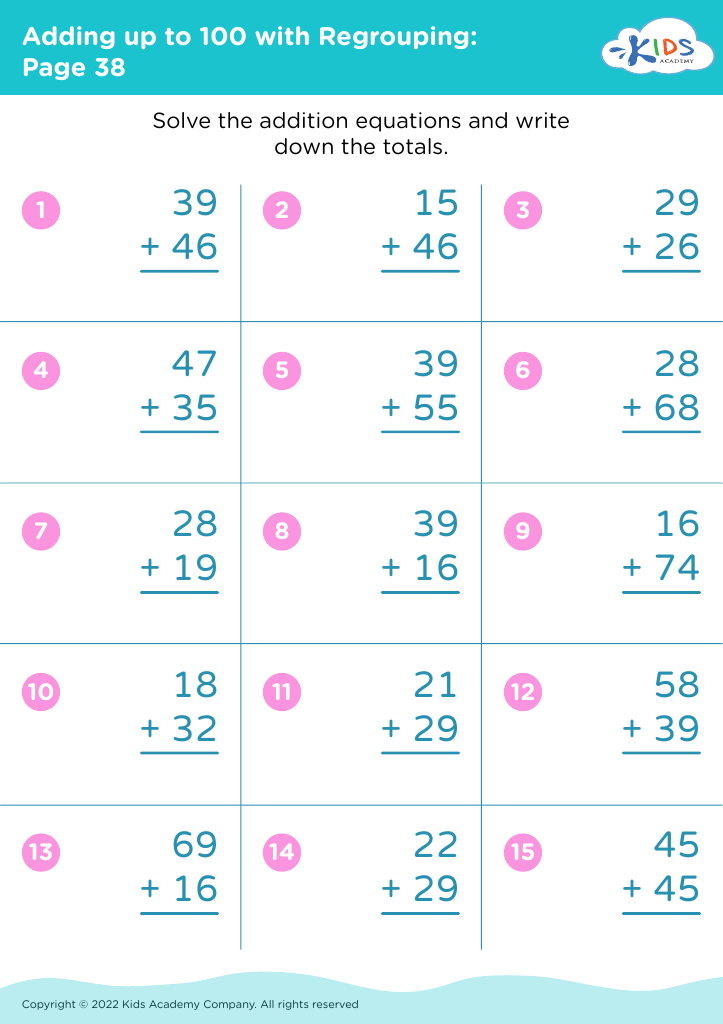
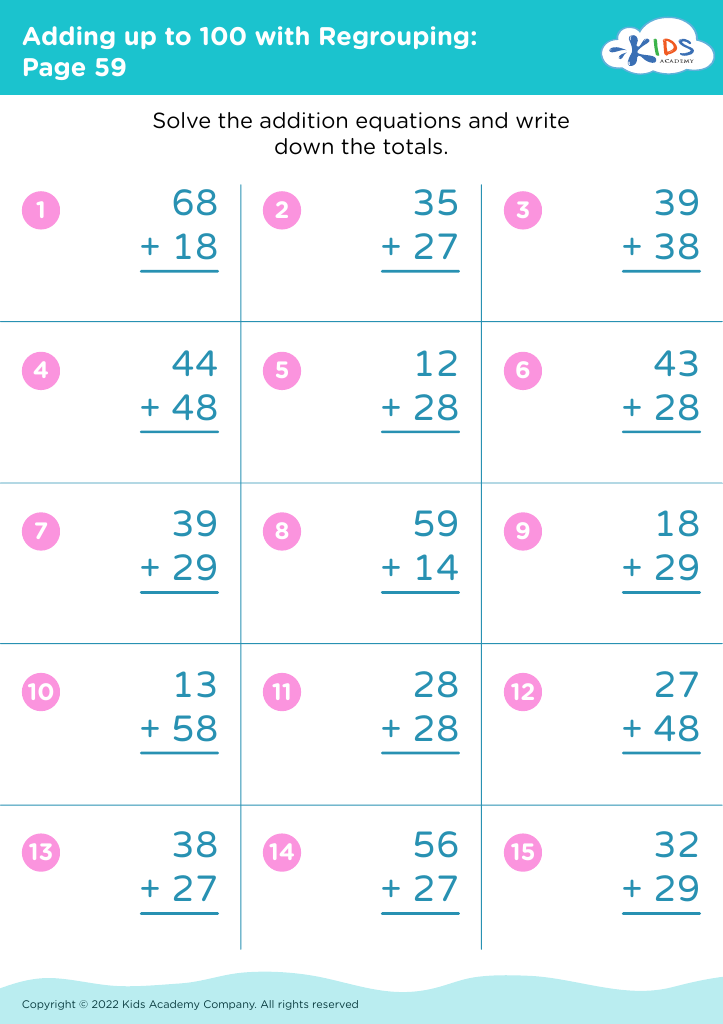
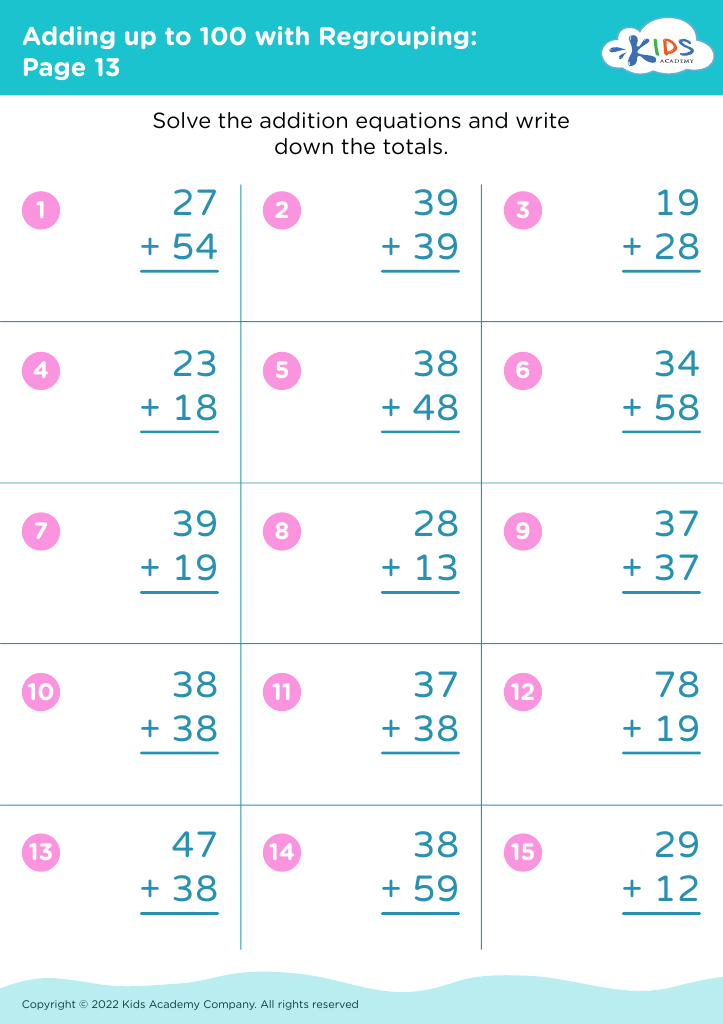
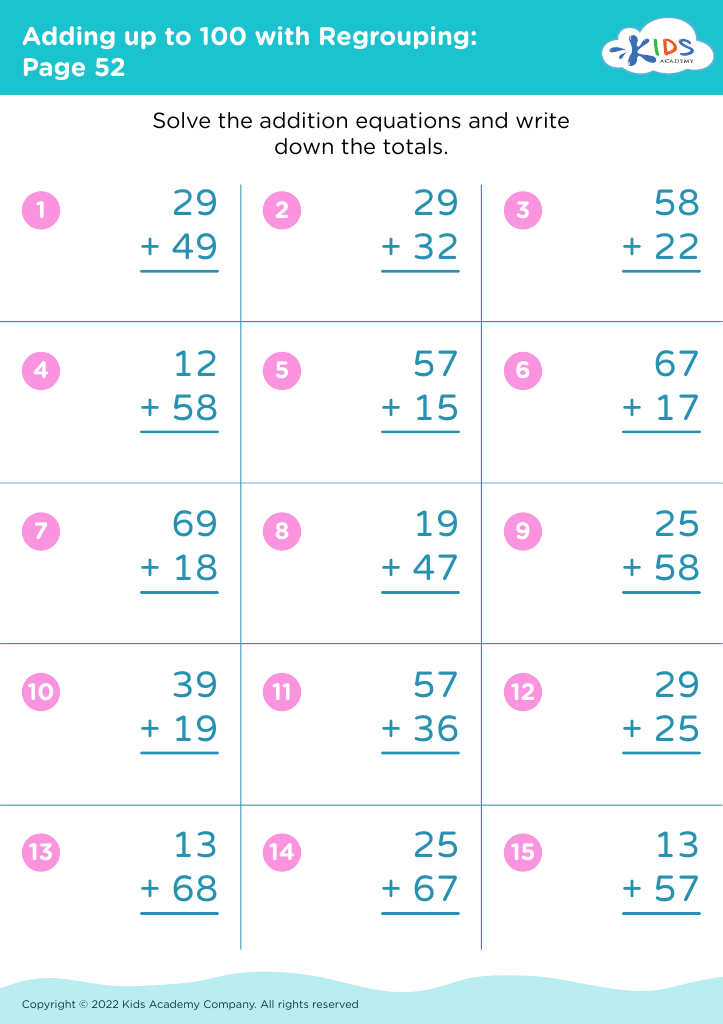
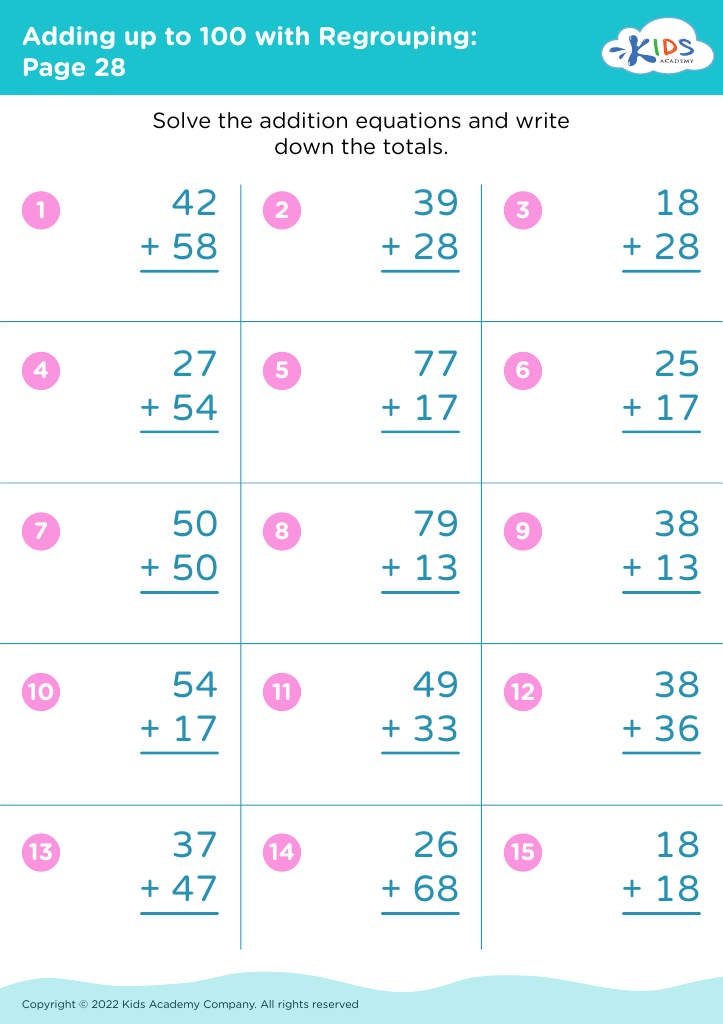
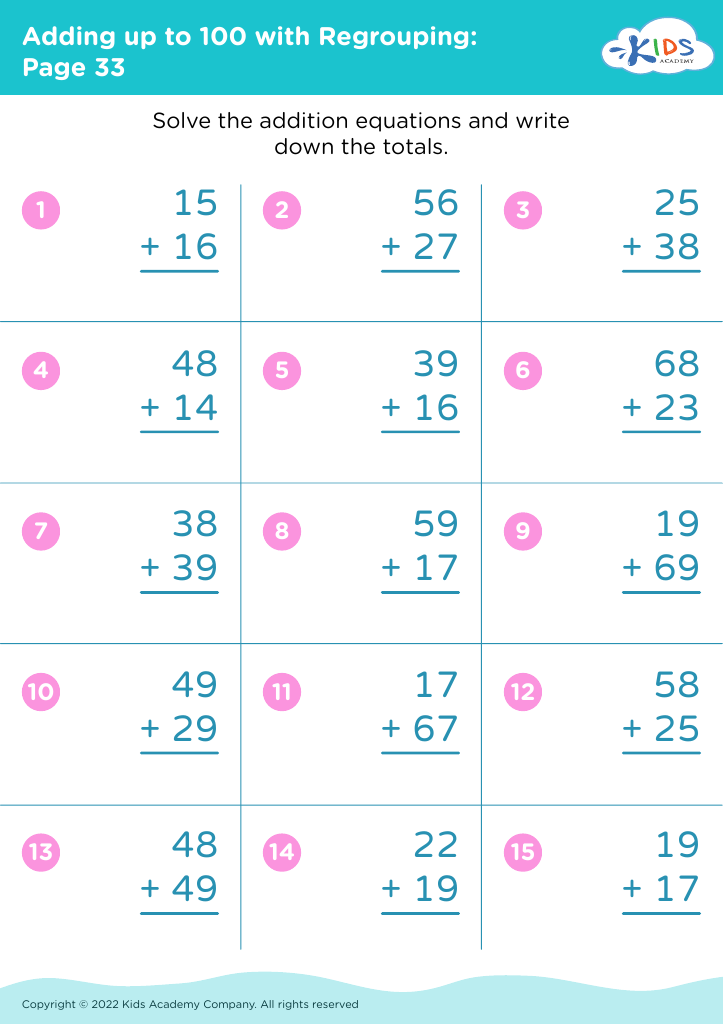




Comparing fractions and understanding how they sum up to 100—particularly with regrouping—are crucial skills for young learners because they promote foundational numeracy and advanced problem-solving abilities. This concept introduces students to the nature of fractions, showing them how parts relate to a whole, which is a fundamental aspect of both mathematics and real-world scenarios.
When parents and teachers engage students in comparing fractions and adding up to 100 with regrouping, they are helping them develop critical thinking skills. These activities require students to manipulate numbers, comprehend equivalent fractions, and understand how to regroup fractions to reach desired sums. This lays the groundwork for more complex mathematical concepts such as algebra and number theory, which they will encounter in later grades.
Moreover, this skill carries practical implications. Grasping fractions translates into everyday situations such as cooking, budgeting, and time management, where proportional reasoning is essential. Early mastery of these concepts can lead to greater confidence in math, reducing math anxiety and fostering a positive attitude towards ongoing learning.
In essence, comparing fractions and practicing regrouping exercises promote precision, enhance conceptual understanding, and prepare students for future success in mathematics—and life. Teachers and parents serve a vital role in facilitating these early learning experiences, ensuring students build a strong numerical foundation.