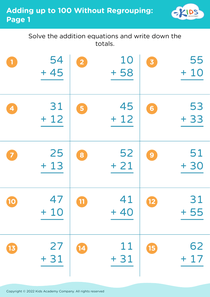
Fine Motor Skills Adding up to 100 with Regrouping Worksheets
3 filtered results
-
From - To
Enhance your child's math and fine motor skills with our 'Adding up to 100 with Regrouping' worksheets! Designed for young learners, these worksheets offer a fun and educational way to practice addition problems with regrouping. By solving these problems, kids will not only strengthen their math skills but will also refine their fine motor abilities through writing and number manipulation. Engaging and easy to follow, each worksheet provides ample practice opportunities, ensuring your child builds a solid math foundation while enjoying the learning process. Ideal for classroom settings or at-home practice, these worksheets are a perfect addition to your educational toolkit.
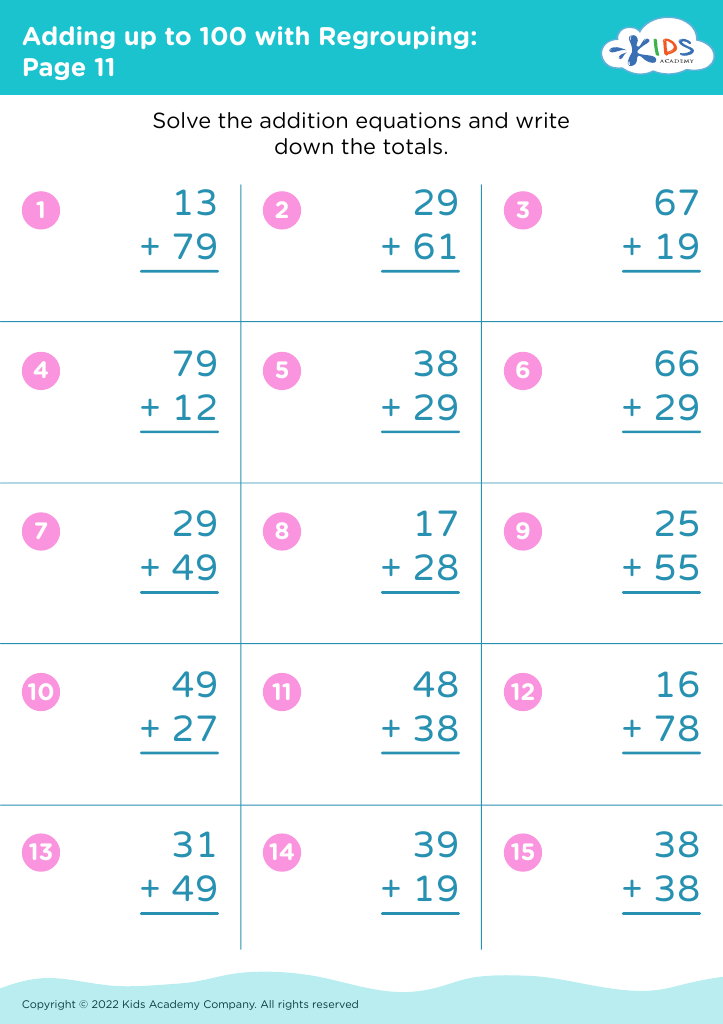
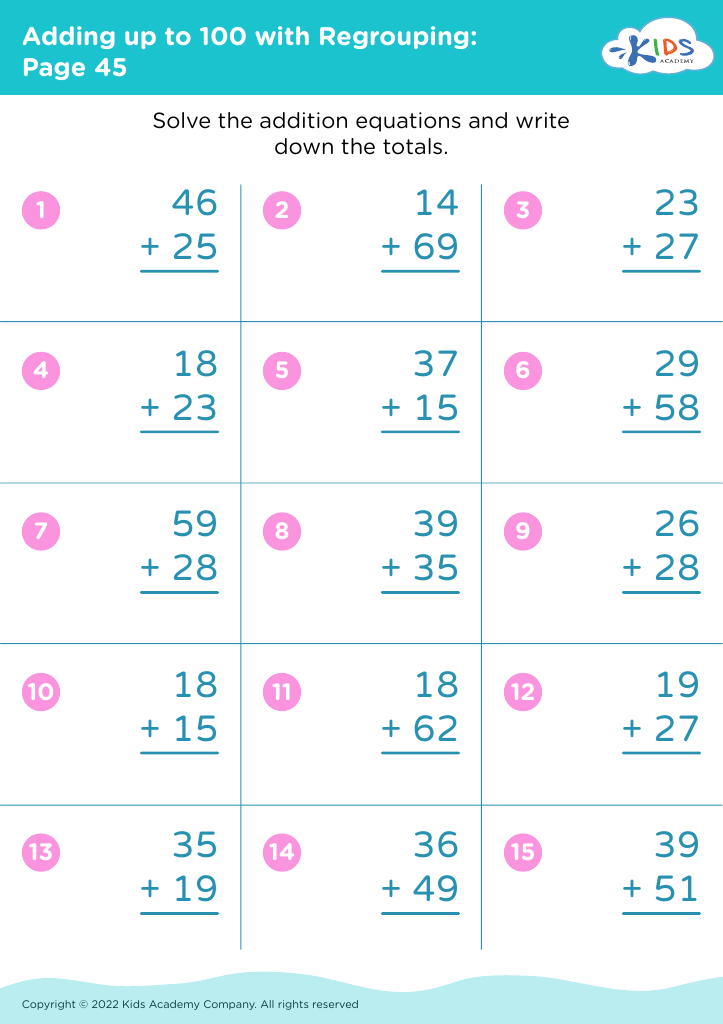
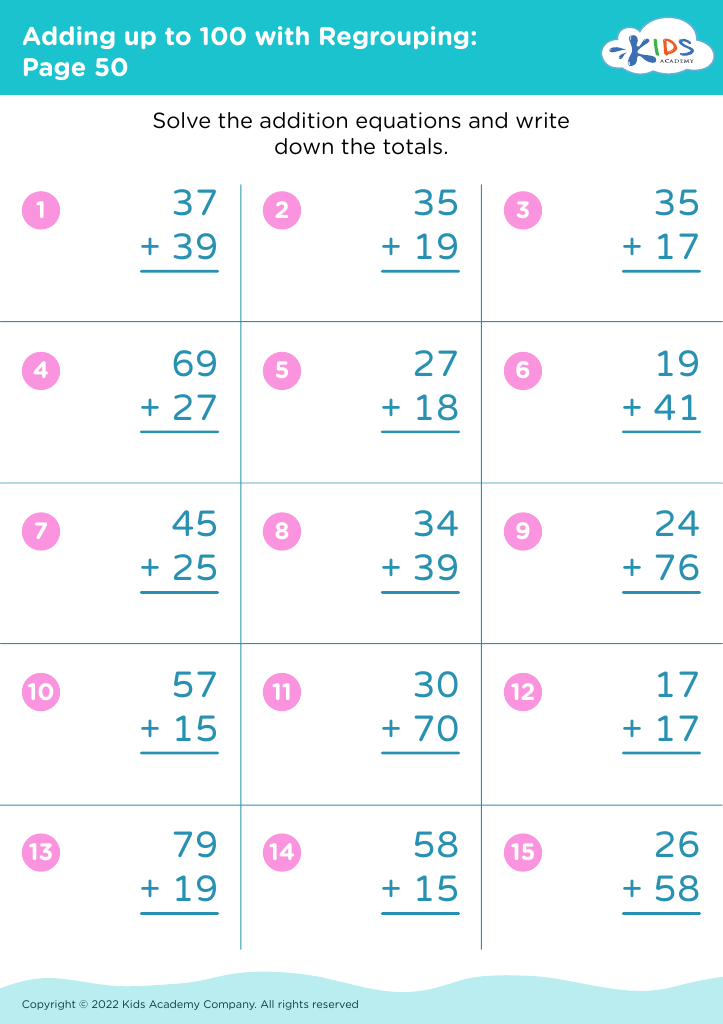




Fine motor skills are crucial in early childhood development, and mastering these skills significantly impacts a child's ability to perform everyday activities and succeed academically. Fine motor skills involve the coordination of small muscle movements in the hands and fingers, which are essential for tasks such as writing, buttoning clothes, and manipulating objects. When it comes to adding up to 100 with regrouping, strong fine motor skills make a considerable difference.
Firstly, solving addition problems requires precise control to accurately write numbers, line them up correctly, and carry out the regrouping process. When children are learning to add numbers up to 100, they often must organize their work on paper, making clear number columns and understanding how to carry over digits. Fine motor proficiency ensures that children can perform these tasks neatly and without frustration, leading to greater accuracy and confidence in their math abilities.
Moreover, cognitive processing and motor skills are interrelated. By practicing fine motor activities such as drawing, cutting, and assembling puzzles, children enhance their concentration and problem-solving abilities, which in turn supports their mathematical thinking and regrouping skills.
In summary, nurturing fine motor skills in young children not only aids their overall development but also significantly enhances their capacity to perform essential academic tasks, such as adding up to 100 with regrouping. This integrated development makes learning experiences more seamless and enjoyable for children, fostering a positive attitude towards education.