Fraction comparison Adding up to 100 with Regrouping Worksheets
3 filtered results
-
From - To
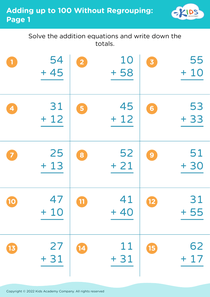
Discover our engaging "Fraction Comparison: Adding Up to 100 with Regrouping" worksheets designed specifically for young learners. These resources help students master the skill of comparing fractions while introducing the concept of regrouping. Through a variety of interactive exercises and real-world scenarios, children will gain confidence in their mathematical abilities. Each worksheet promotes critical thinking, encourages problem-solving, and reinforces understanding through practice. Perfect for classroom use or at-home learning, these worksheets cater to diverse learning styles, helping students grasp fractions and addition seamlessly. Start your child's journey towards math proficiency with our comprehensive worksheets today!
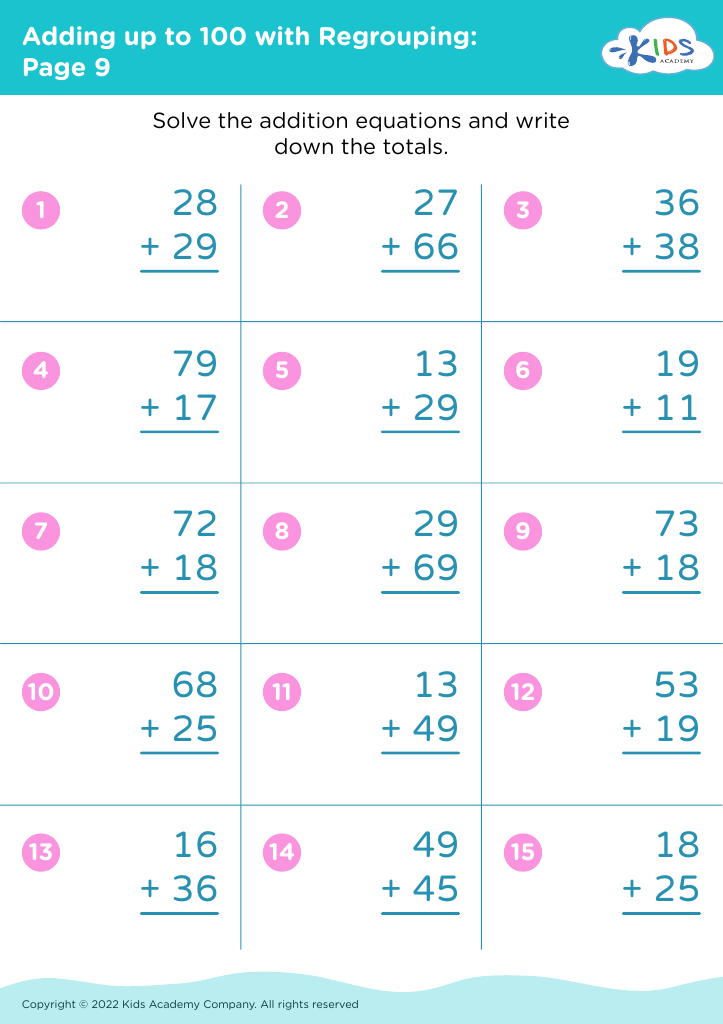
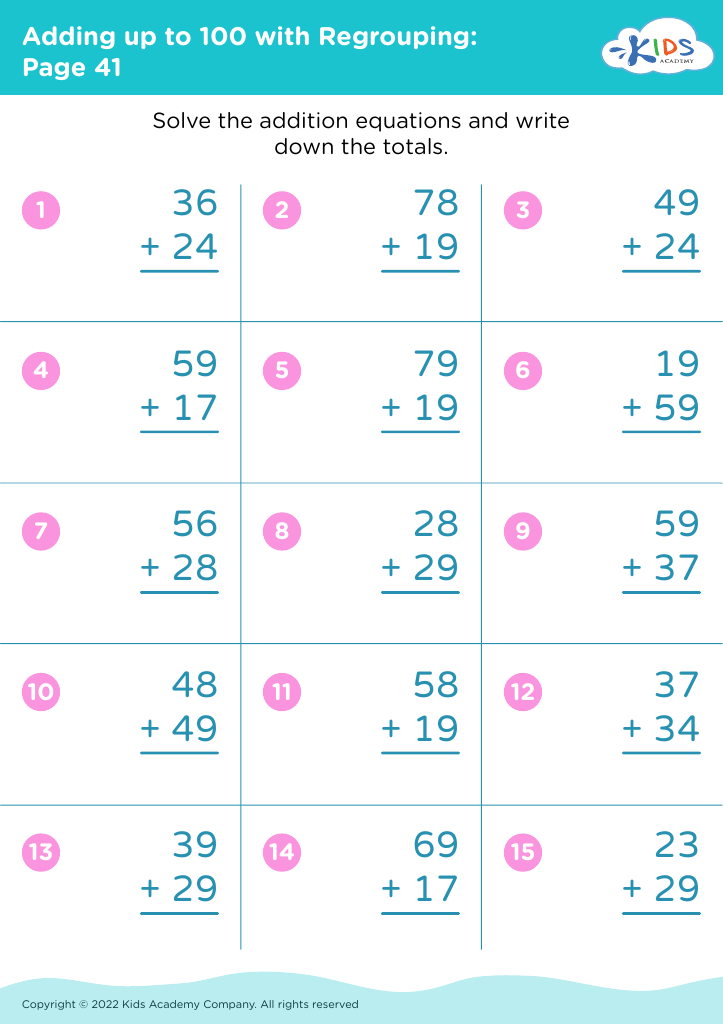
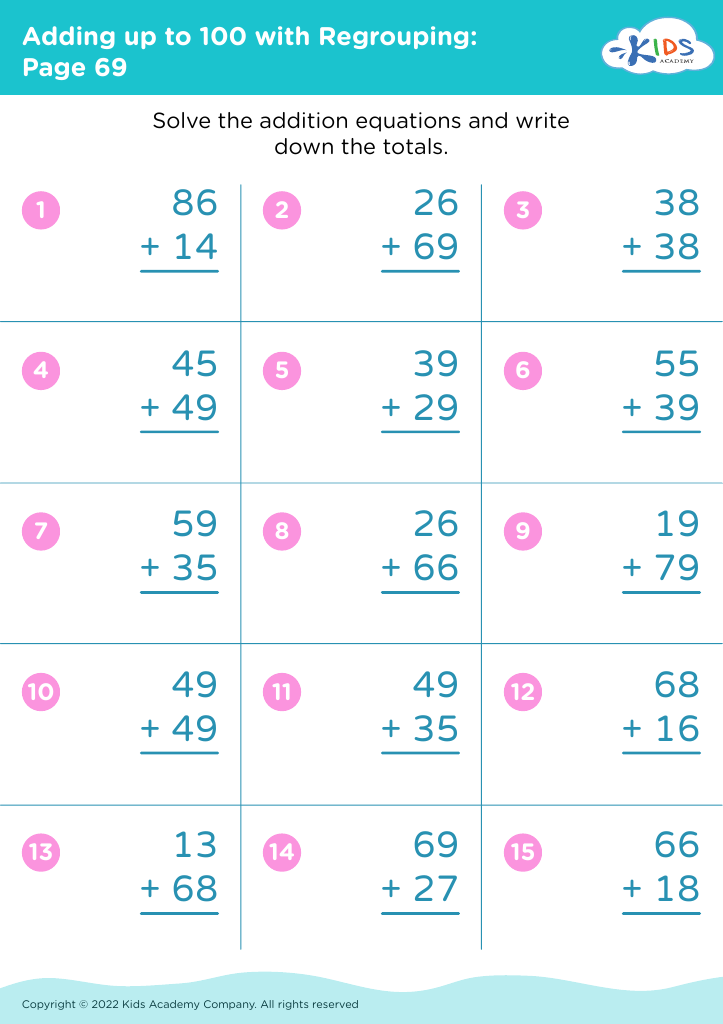




Understanding fraction comparison and regrouping in the context of adding up to 100 is fundamental for students' mathematical development. Parents and teachers should prioritize this topic because it lays the groundwork for more advanced mathematical concepts. Fractions are pivotal in various everyday situations, including cooking, shopping, and budgeting. Mastering fraction comparison helps students make sense of parts of a whole and enhances their problem-solving skills.
Additionally, regrouping is an essential strategy in ensuring accurate addition, particularly when dealing with mixed numbers and different denominators. This concept fosters critical thinking, encouraging students to analyze problems from different perspectives. It also supports mental math, facilitating quicker calculations in future mathematical tasks.
Moreover, knowledge of fractions and regrouping enhances students’ confidence in math, paving the way for positive attitudes toward the subject. Effective understanding acquired at an early stage diminishes math anxiety often faced later in life. For teachers and parents, fostering these skills develops a strong mathematical foundation, preparing children for academic success. Ultimately, investing time in these concepts ensures that students can approach math challenges with competence and assurance, which are essential tools for their academic journeys and everyday life.