Understanding fractions Adding up to 100 with Regrouping Worksheets
16 filtered results
-
From - To
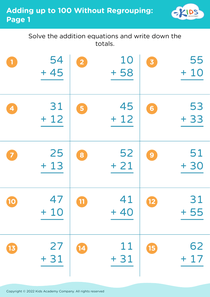
Unlock your child's potential in math with our "Understanding Fractions Adding up to 100 with Regrouping Worksheets." Specifically designed for young learners, these worksheets blend the complexities of fractions with the fundamental skill of addition up to 100. Regrouping becomes a breeze with engaging exercises that instill confidence and mastery. Tailored for maximum learning impact, our worksheets ensure a solid grasp of these critical concepts, paving the way for future math success. Dive into our collection and watch your child's mathematical abilities flourish. Make learning fractions and addition up to 100 interactive, fun, and effective.
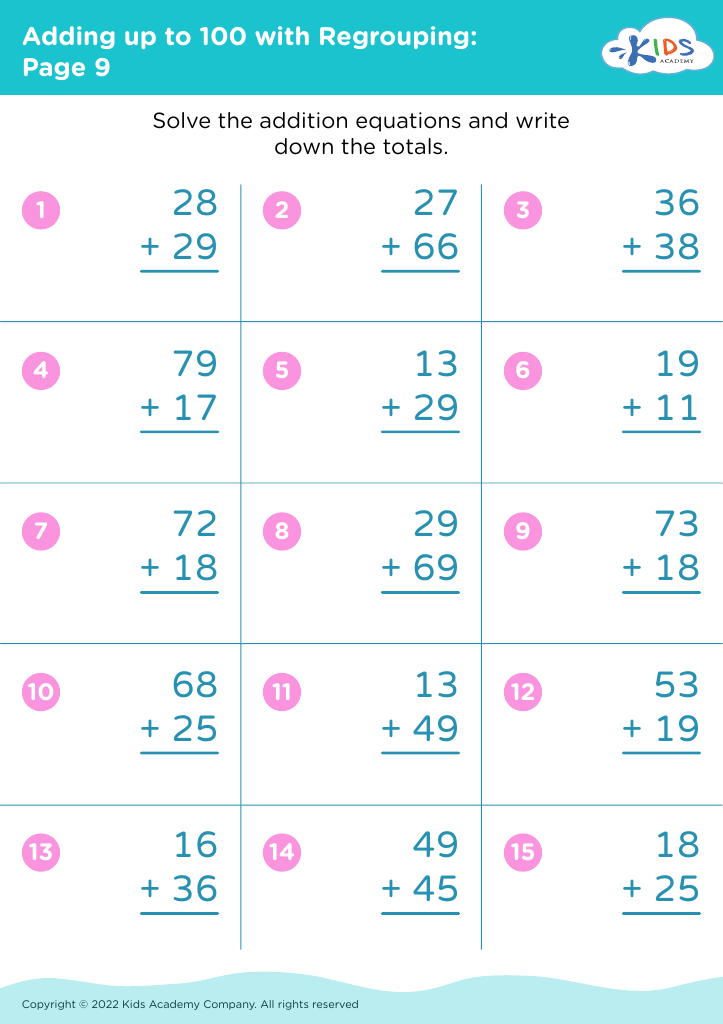
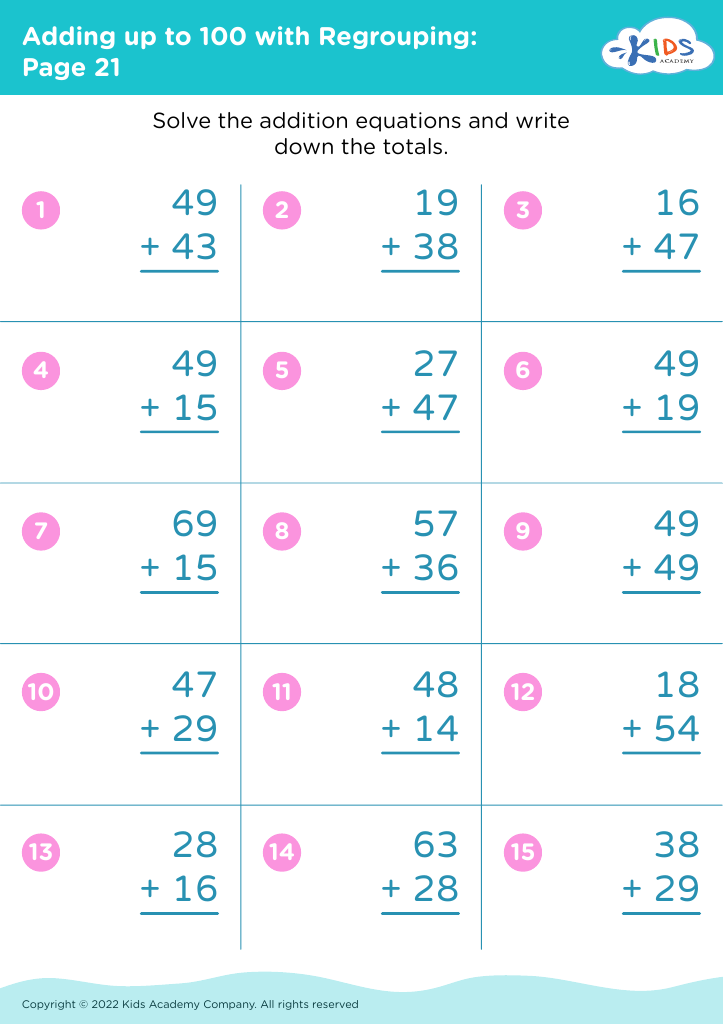
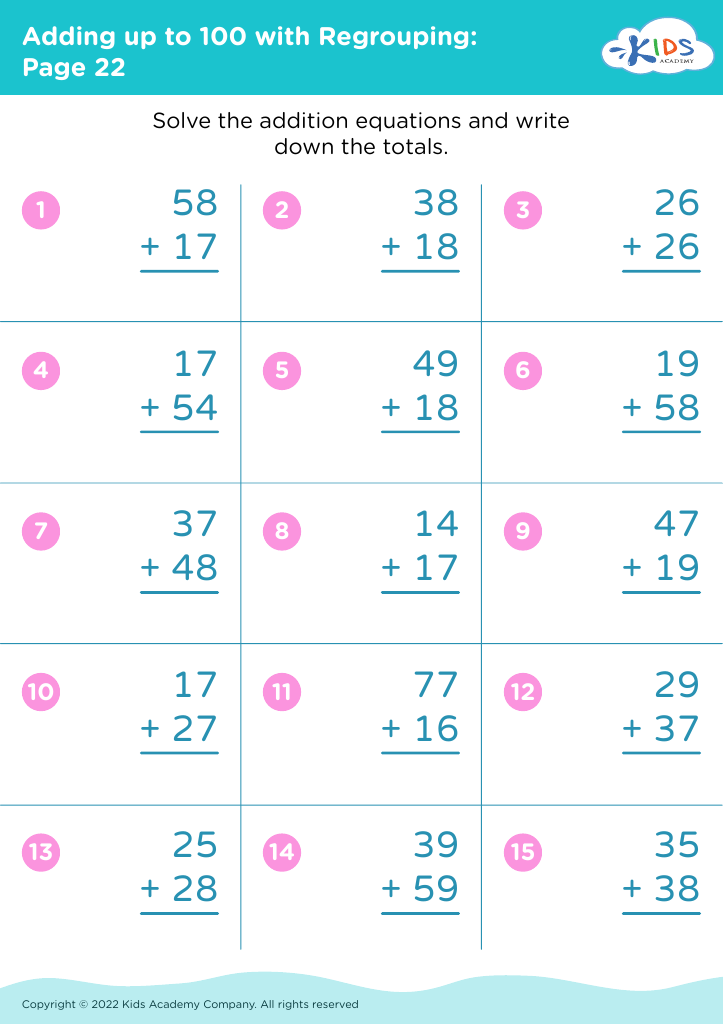
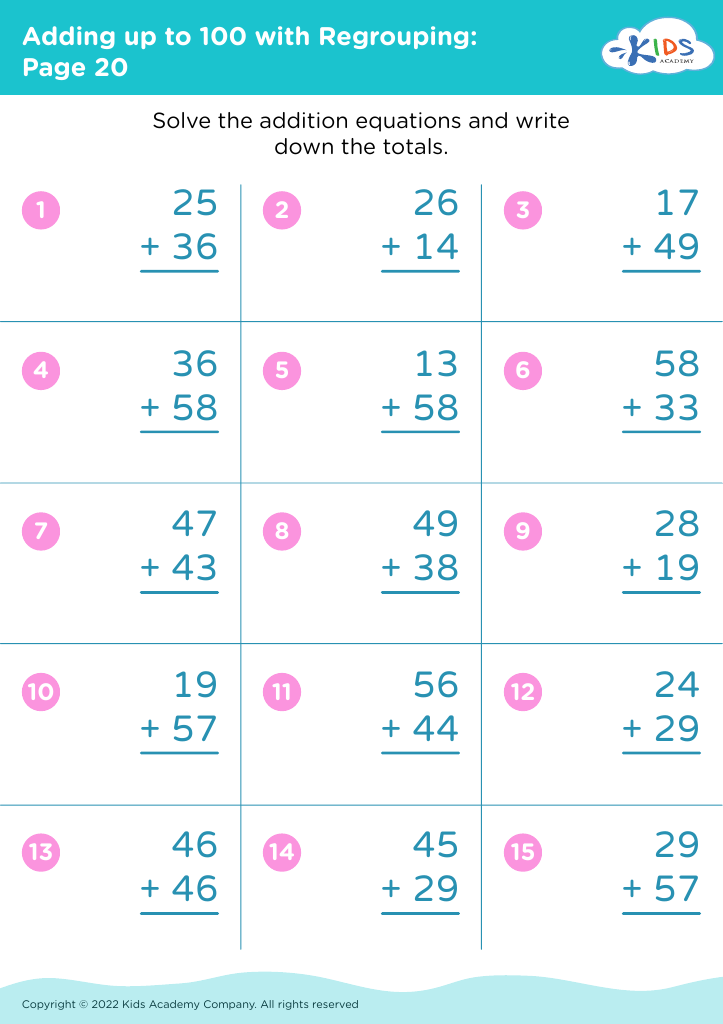
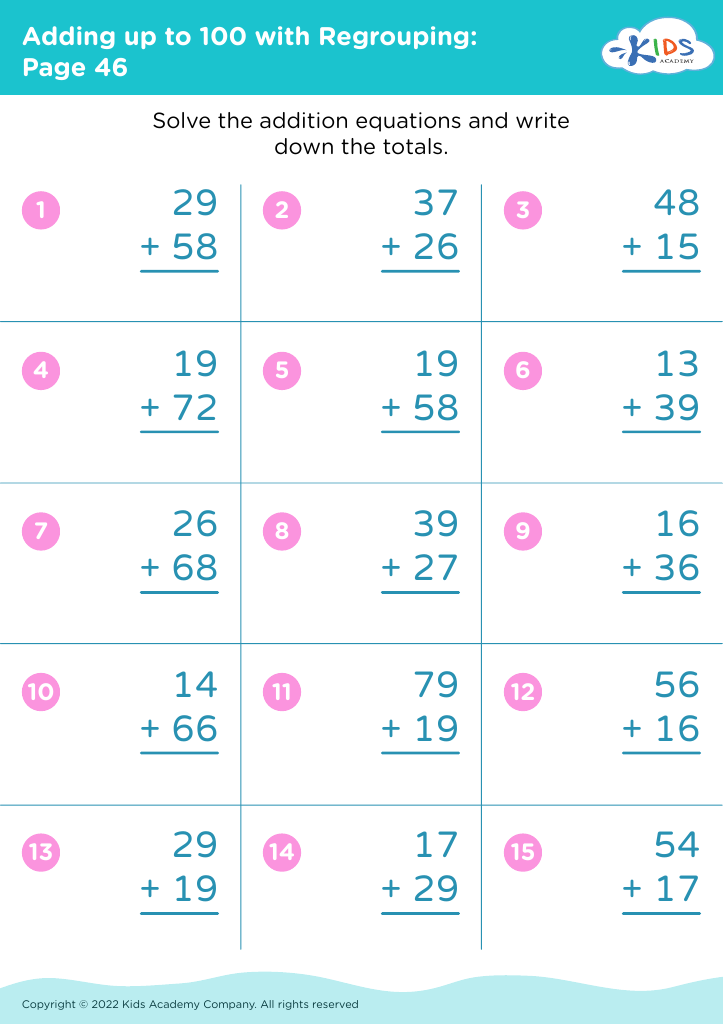
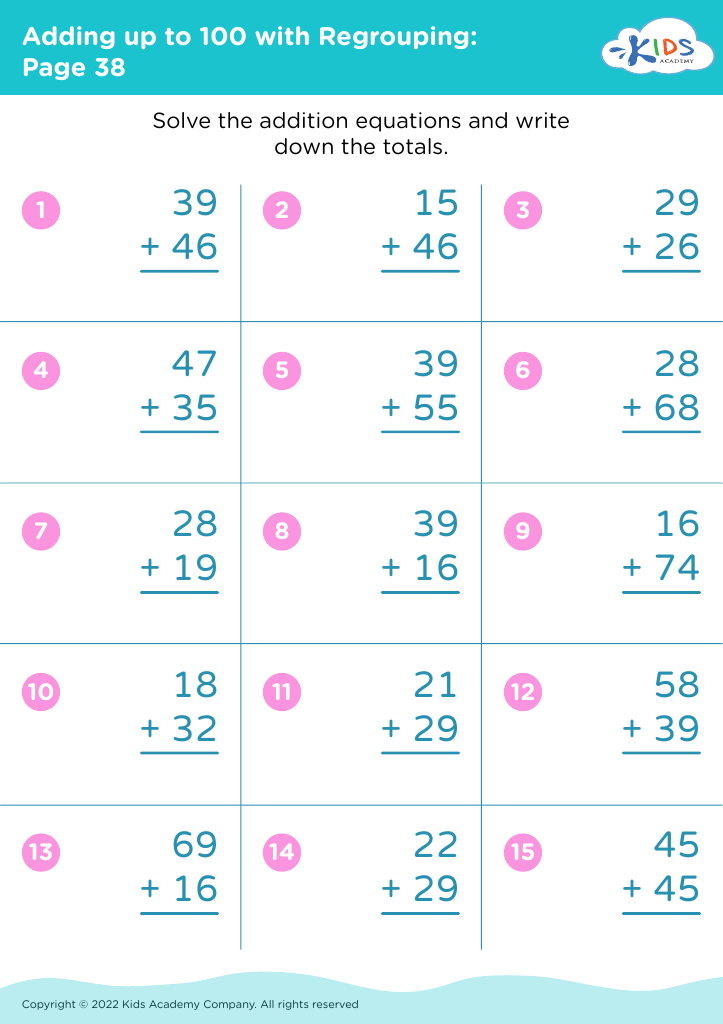
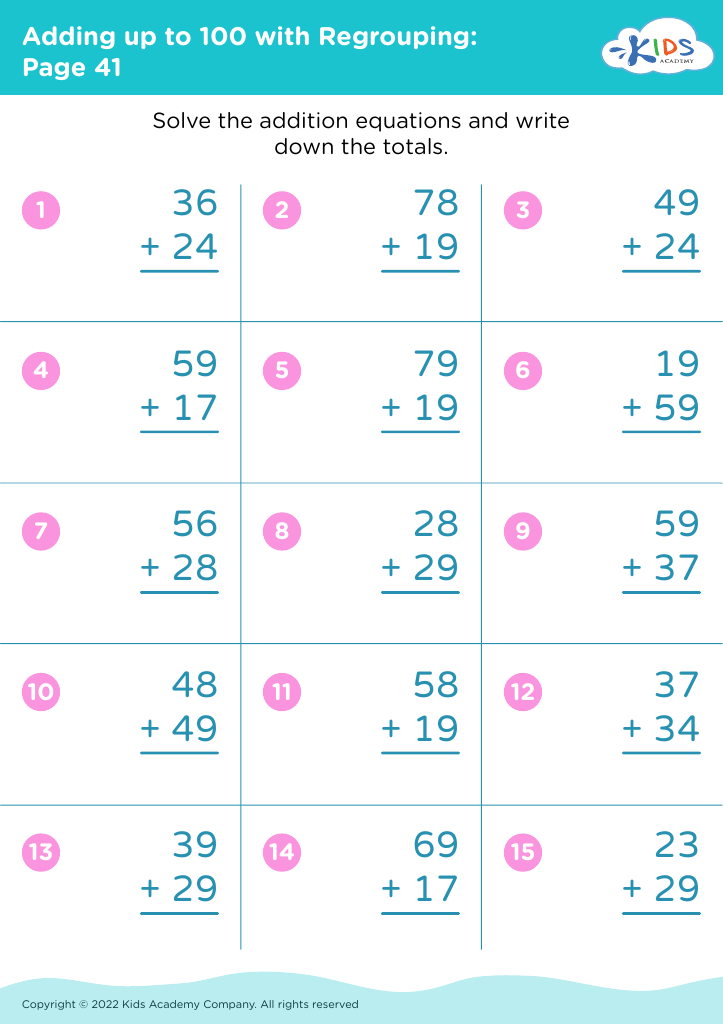
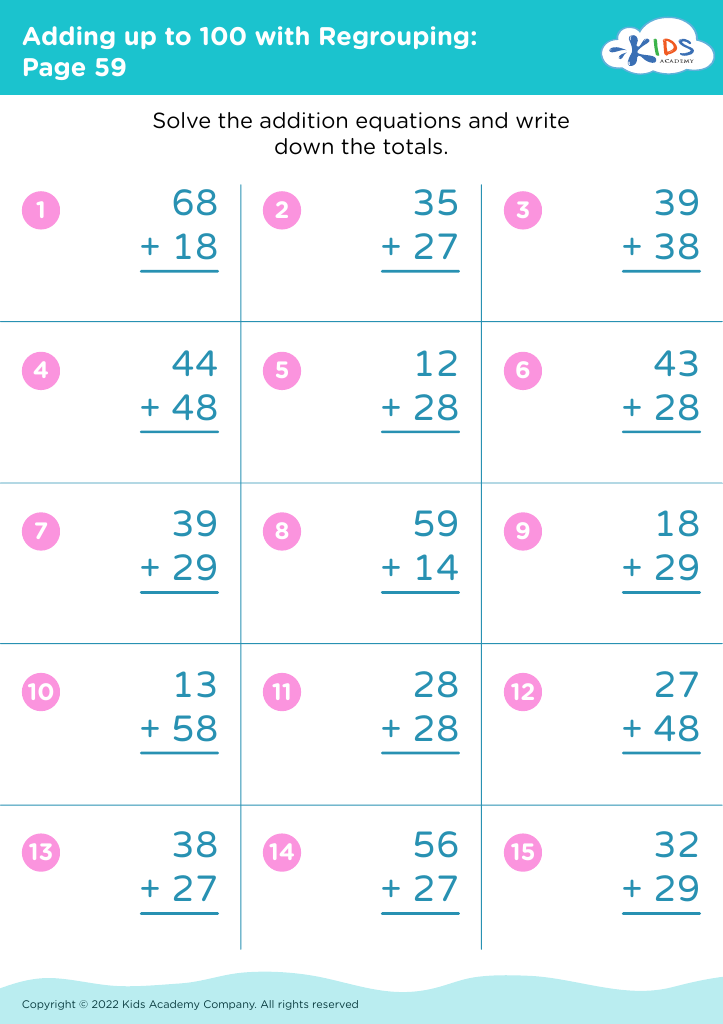
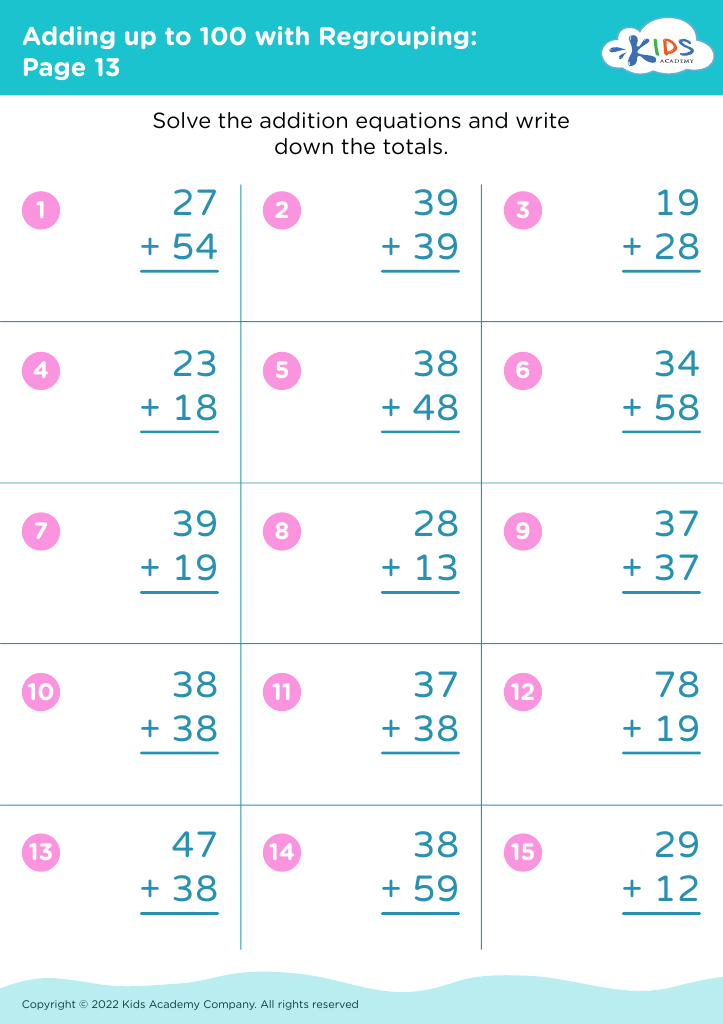
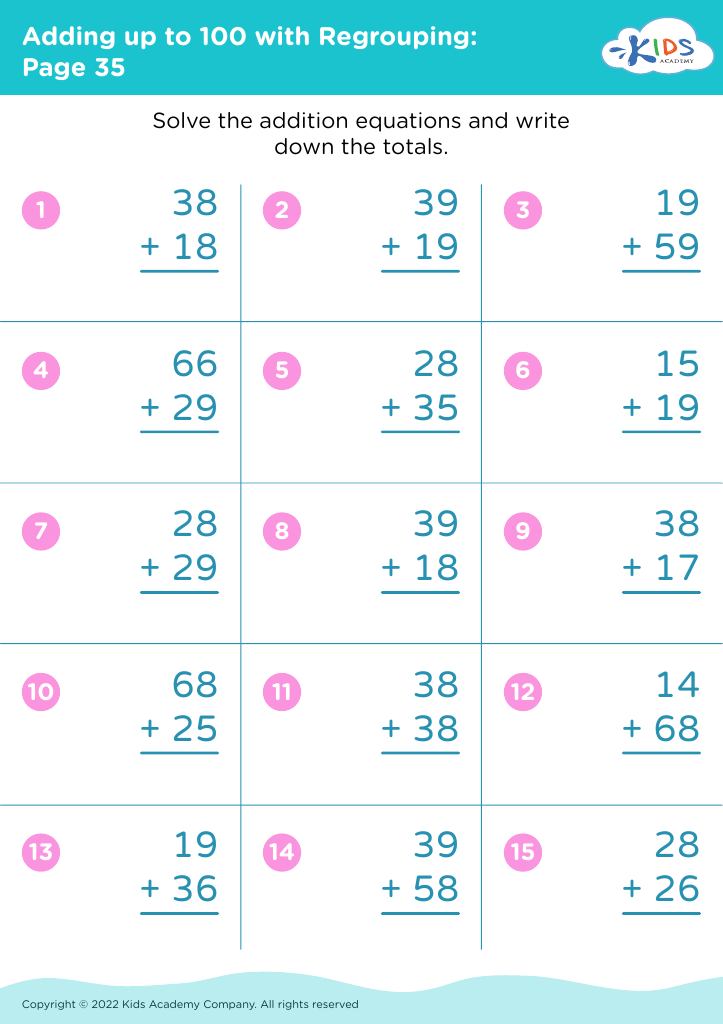
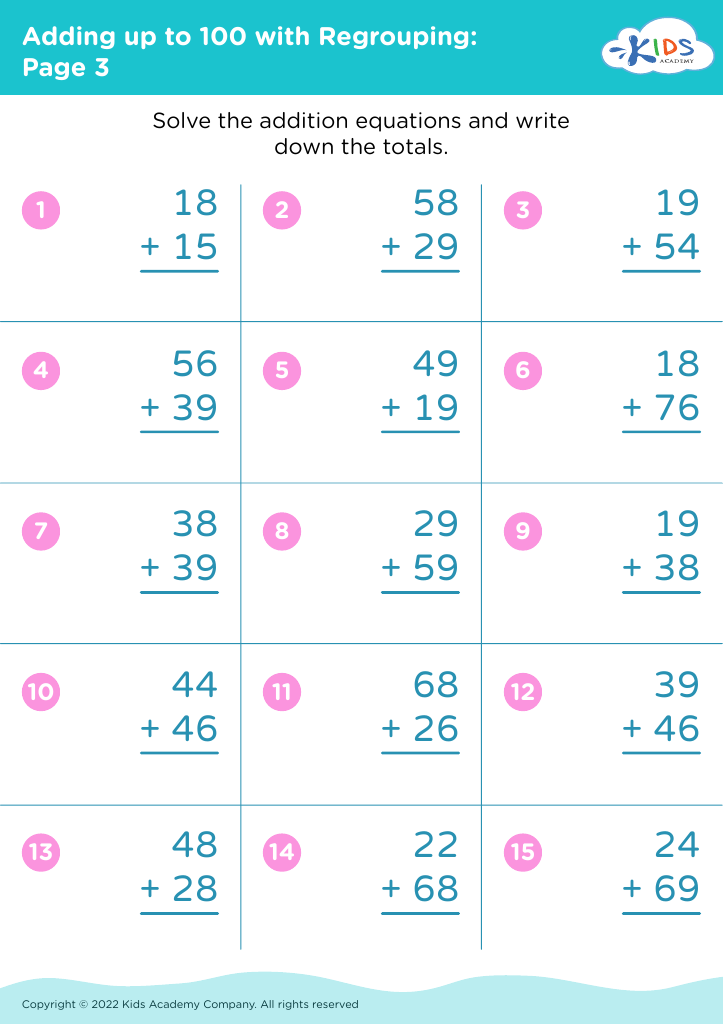
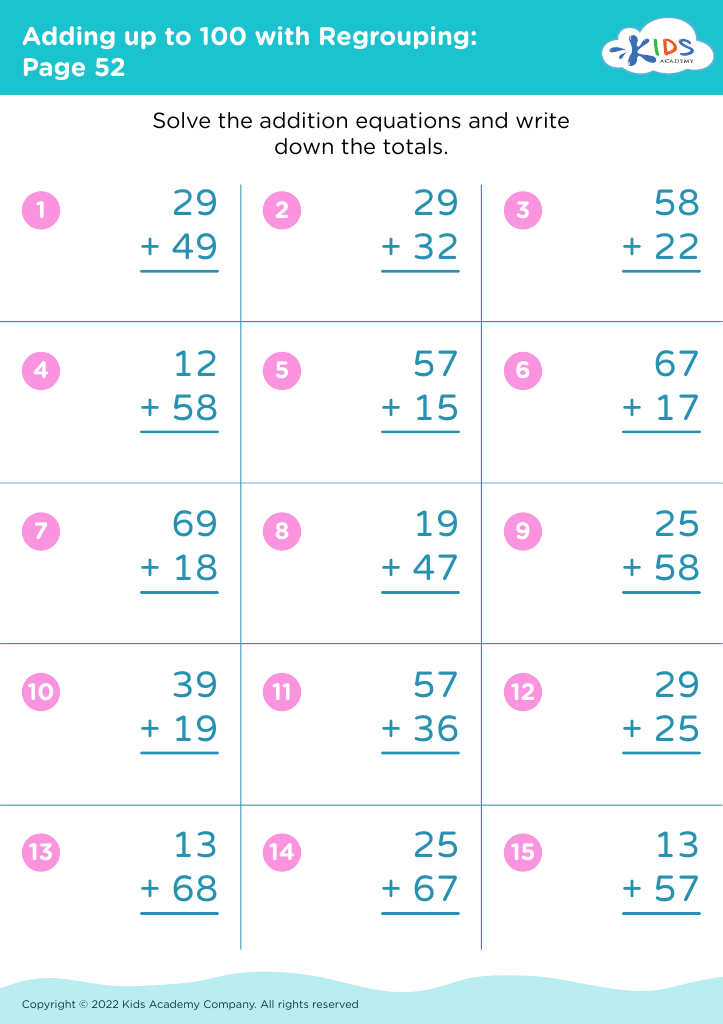
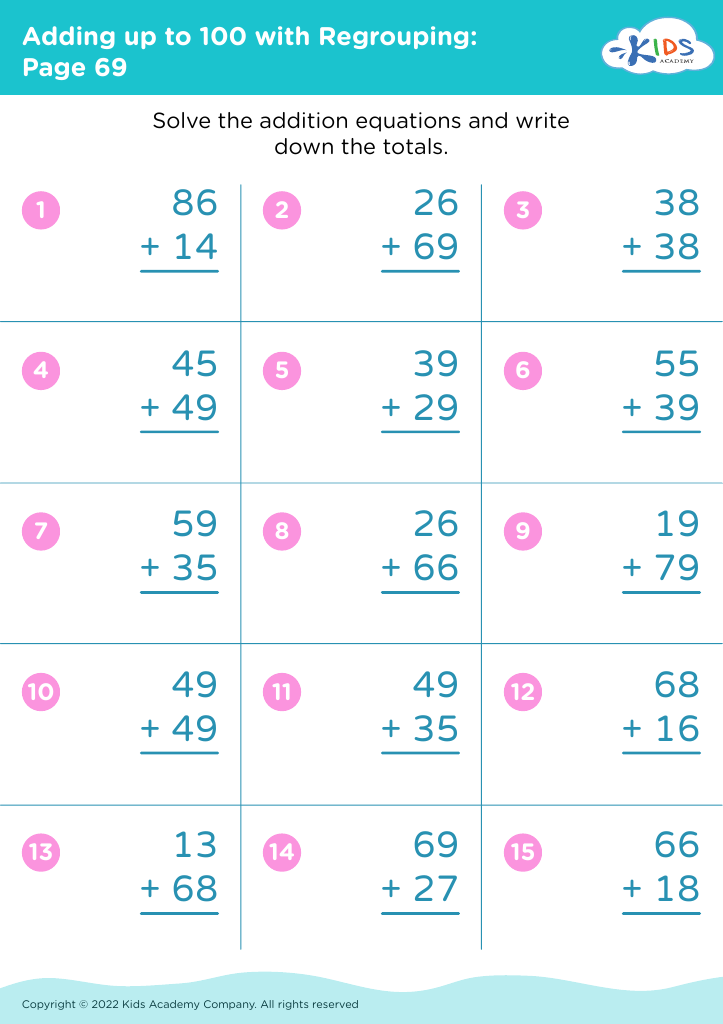
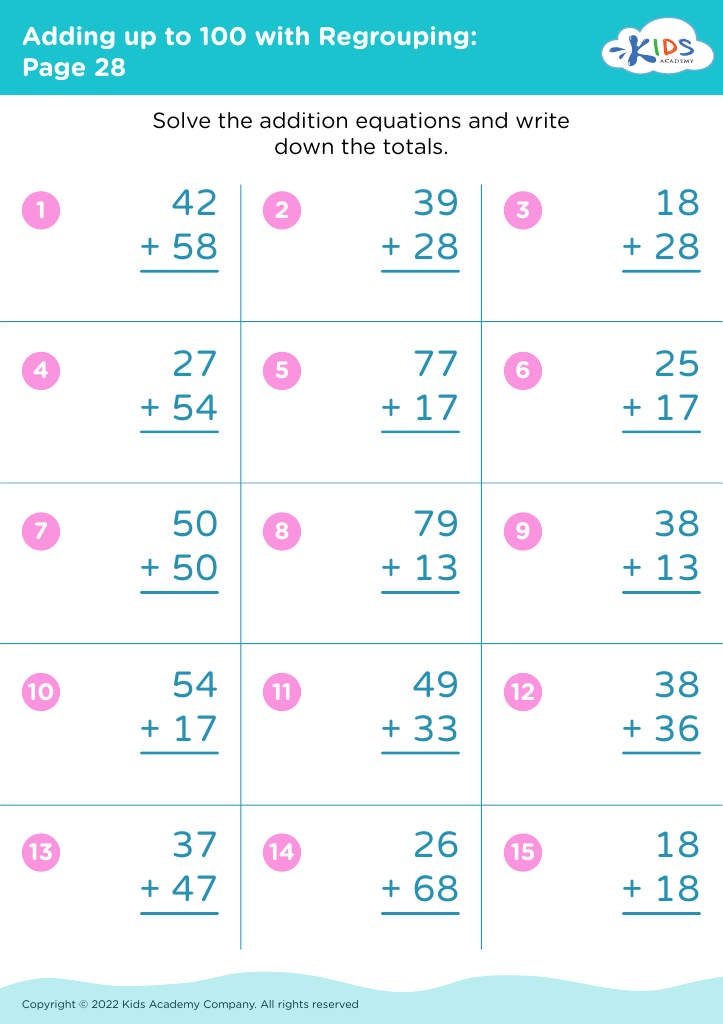
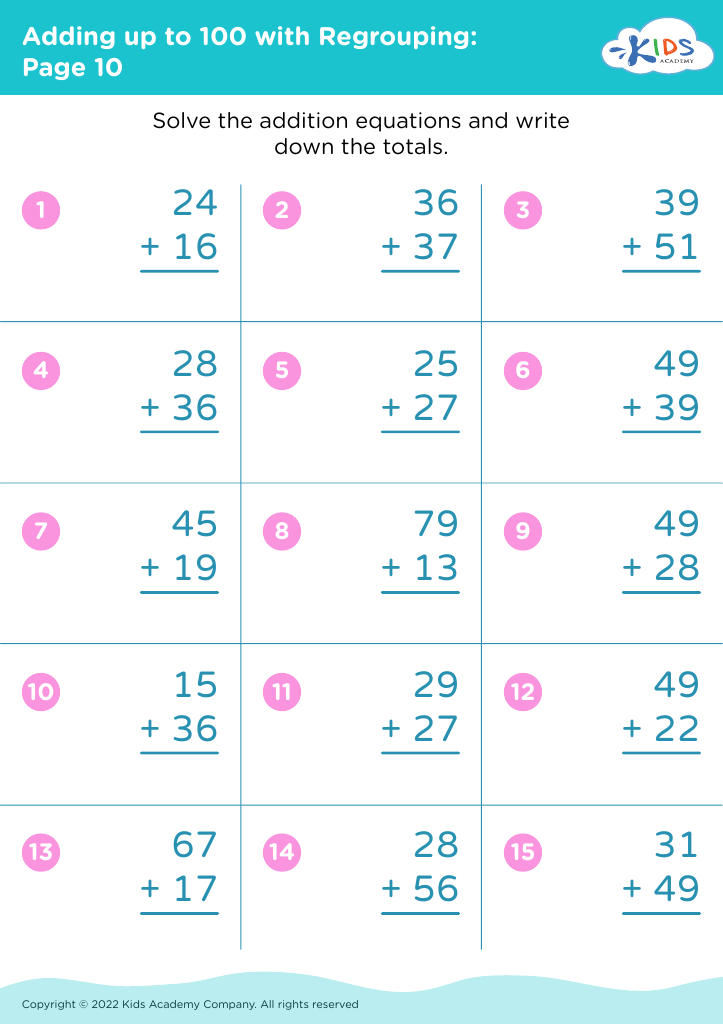
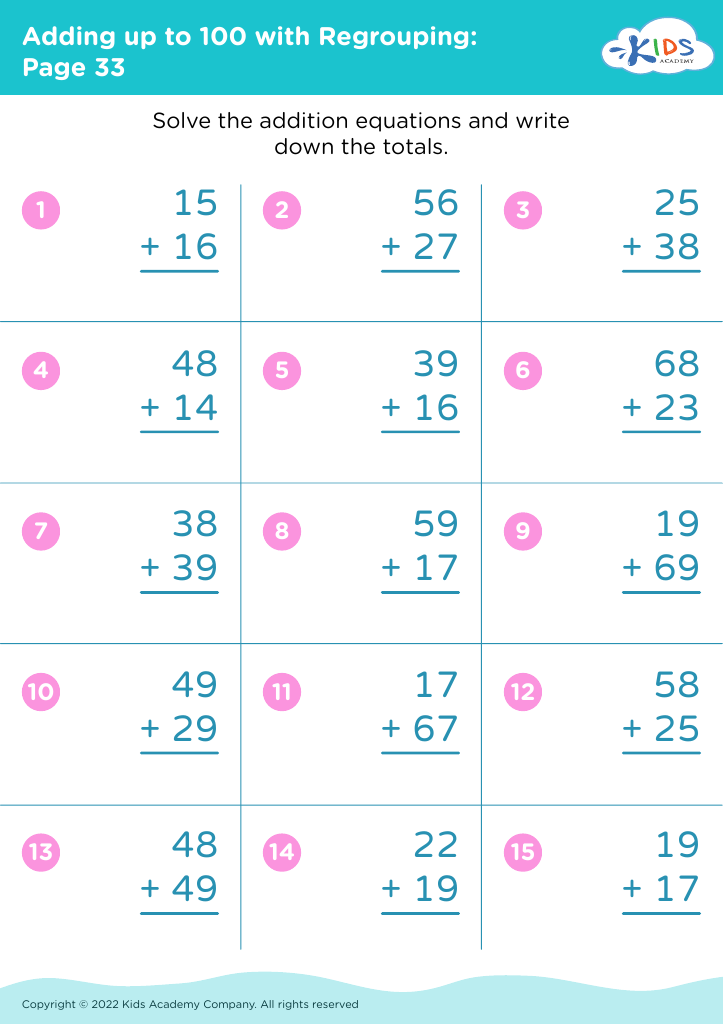




Understanding fractions and mastering the skill of adding up to 100 with regrouping are crucial mathematical competencies that build a strong foundation for more advanced mathematical concepts. For parents and teachers, ensuring that children grasp these skills is essential because they have several practical and academic benefits.
First, fractions are everywhere in daily life, from cooking recipes to dividing things into equal parts. When children comprehend fractions well, they can make better sense of such everyday situations, thereby becoming more equipped with practical problem-solving skills. Knowing how to add fractions accurately allows them to handle time, money, and quantities more efficiently, which is essential for real-world financial literacy.
Additionally, the ability to add up to 100 with regrouping, often called "carrying," enhances children's numerical fluency and arithmetic skills. This core concept is vital for understanding larger arithmetical operations, such as multiplication and division, as well as for algebraic thinking later on. It essentially strengthens their mental math capabilities, underscoring the importance of precision and logical steps in computation.
Furthermore, grasping these concepts builds confidence in their mathematical abilities, instilling a sense of achievement. In turn, this positive experience can foster a more significant interest in and a better attitude toward mathematics, promoting long-term academic success. Therefore, parents and teachers should make a concerted effort to ensure that children understand fractions and the proper methods for adding up to 100 with regrouping.