Understanding symmetry Adding up to 100 with Regrouping Worksheets
3 filtered results
-
From - To
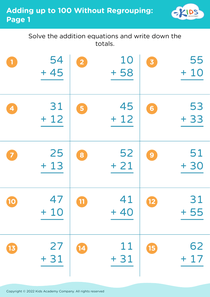
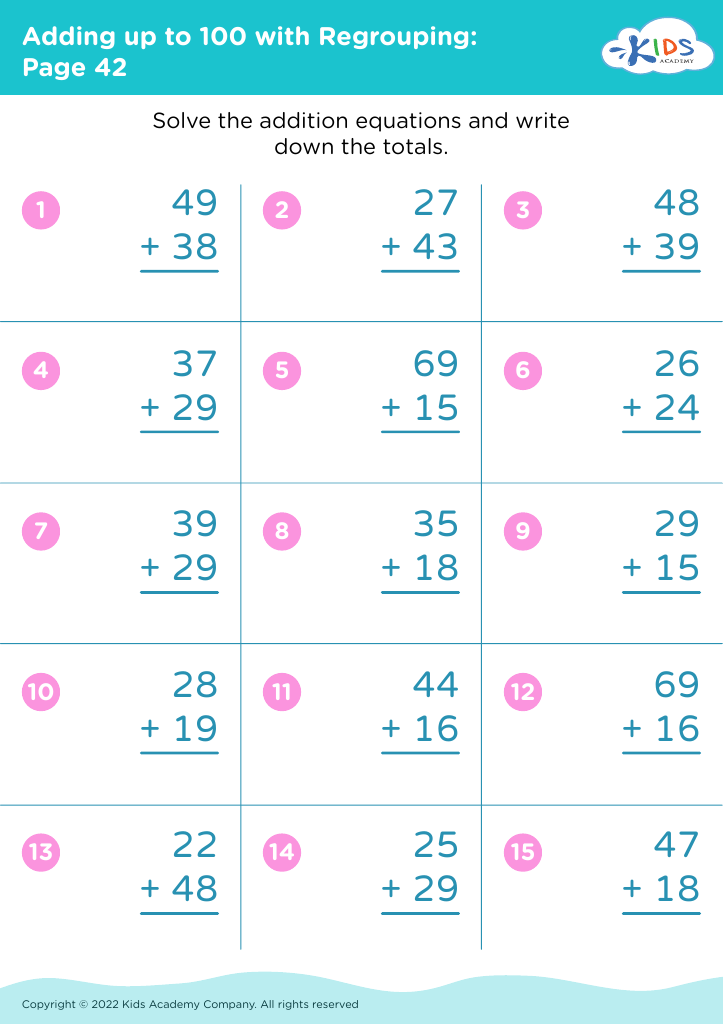
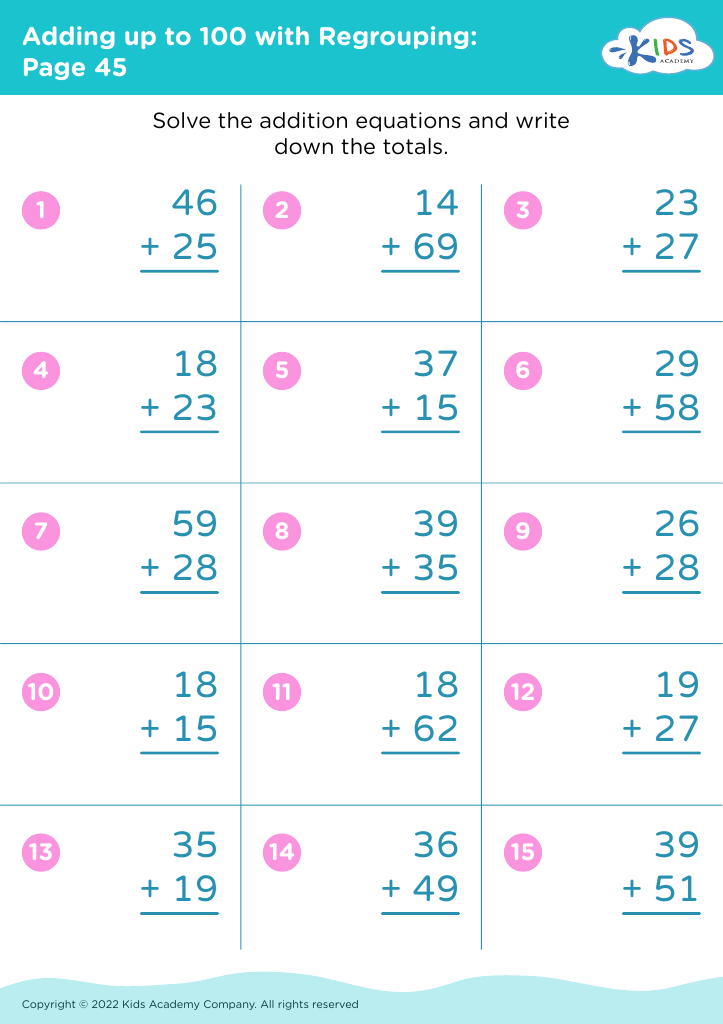
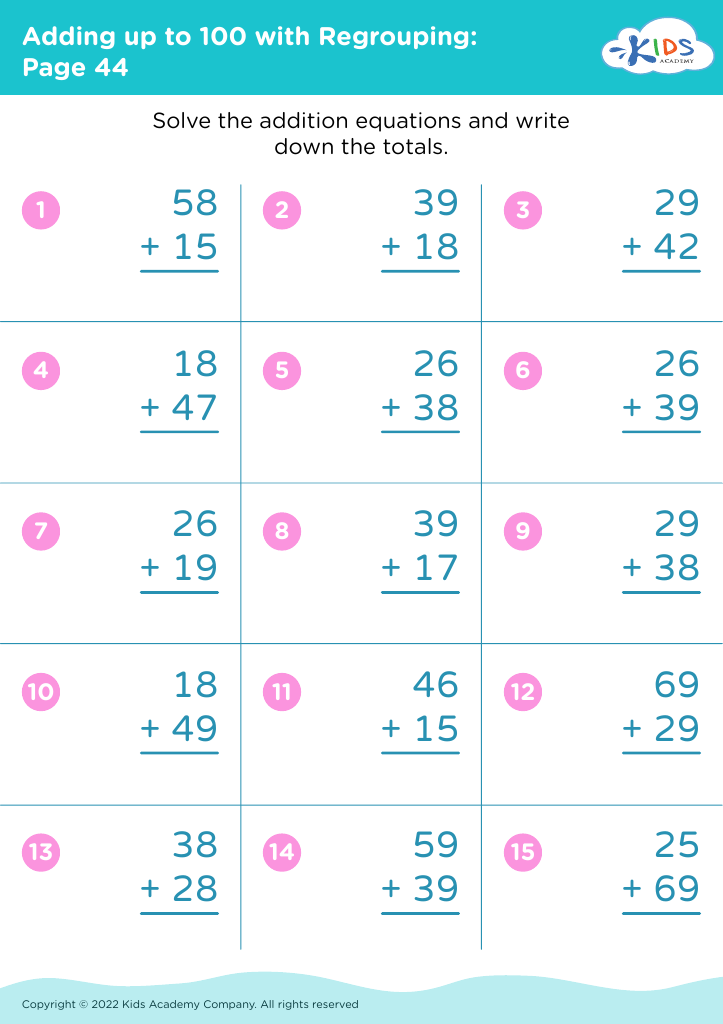
Enhance your students' mathematical skills with our "Understanding Symmetry Adding up to 100 with Regrouping Worksheets." These engaging printable activities focus on understanding symmetry while providing essential practice in addition with regrouping. Aligned with common core standards, our worksheets help kids grasp the concept of balance and symmetry through visually appealing exercises. They also challenge learners to solve addition problems that require regrouping, reinforcing their arithmetic skills. Perfect for early grade students, these worksheets are designed to make learning math fun and interactive, ensuring children develop a solid foundation for more advanced mathematical concepts. Download now for an enriching learning experience!




Understanding symmetry and adding up to 100 with regrouping are foundational concepts in early mathematics that carry lifelong significance. Symmetry introduces children to patterns and balance, fostering not just mathematical proficiency but also critical thinking and problem-solving skills. These skills are transferable across subjects and essential for understanding geometry, art, science, and the world around them.
Adding up to 100 with regrouping (or "carrying") teaches fundamental arithmetic skills that are the building blocks for more advanced math. This concept improves numerical fluency and accuracy, essential for daily life tasks, such as handling money, cooking, and schedule management. Additionally, mastering regrouping enhances a child’s ability to think in structural ways, akin to coding and computational thinking.
For parents and teachers, ensuring children grasp these concepts can build self-confidence and encourage a positive attitude toward learning. Understanding these lessons early on can prevent future struggles with math, boosting academic achievements. Furthermore, these skills encourage logical and structured thinking, which benefits young learners beyond mathematics, assisting in learning advanced concepts, maintaining organization, and approaching problems methodically. Ultimately, caring about these mathematical building blocks means nurturing well-rounded, thoughtful, and capable individuals equipped to handle various real-life challenges.