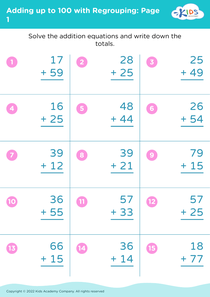
Critical Thinking Adding up to 100 Without Regrouping Worksheets
3 filtered results
-
From - To
Enhance your student's math skills with our "Critical Thinking Adding up to 100 Without Regrouping Worksheets." Designed for early learners, these engaging worksheets challenge students to practice addition while developing their analytical skills. By tackling various addition problems that sum up to 100 without requiring regrouping, kids can build confidence in their mathematical abilities. Each worksheet encourages problem-solving and critical thinking, ensuring that students not only learn to add, but also understand numerical relationships. Perfect for classroom use or at-home practice, these interactive resources will empower young learners to think critically as they master essential math skills in a fun and supportive environment.
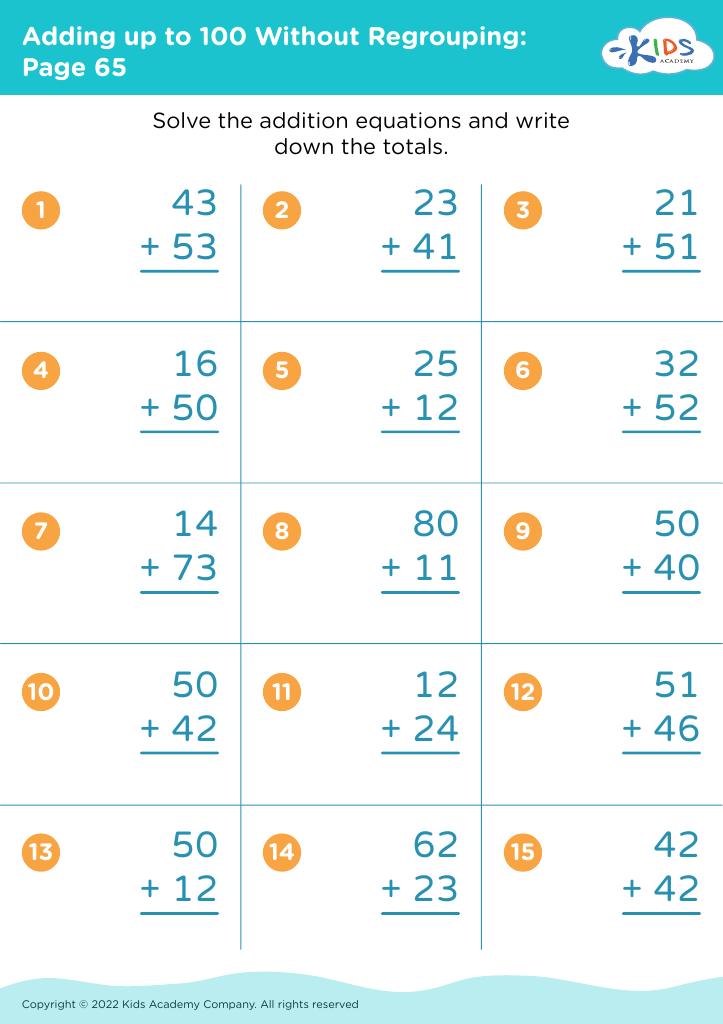
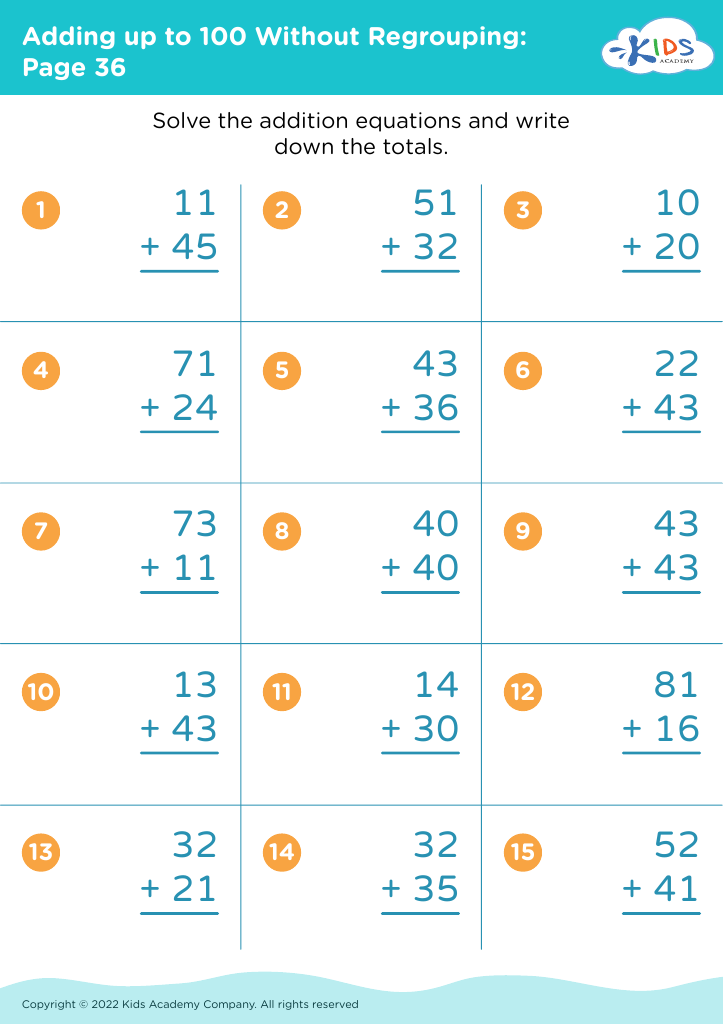
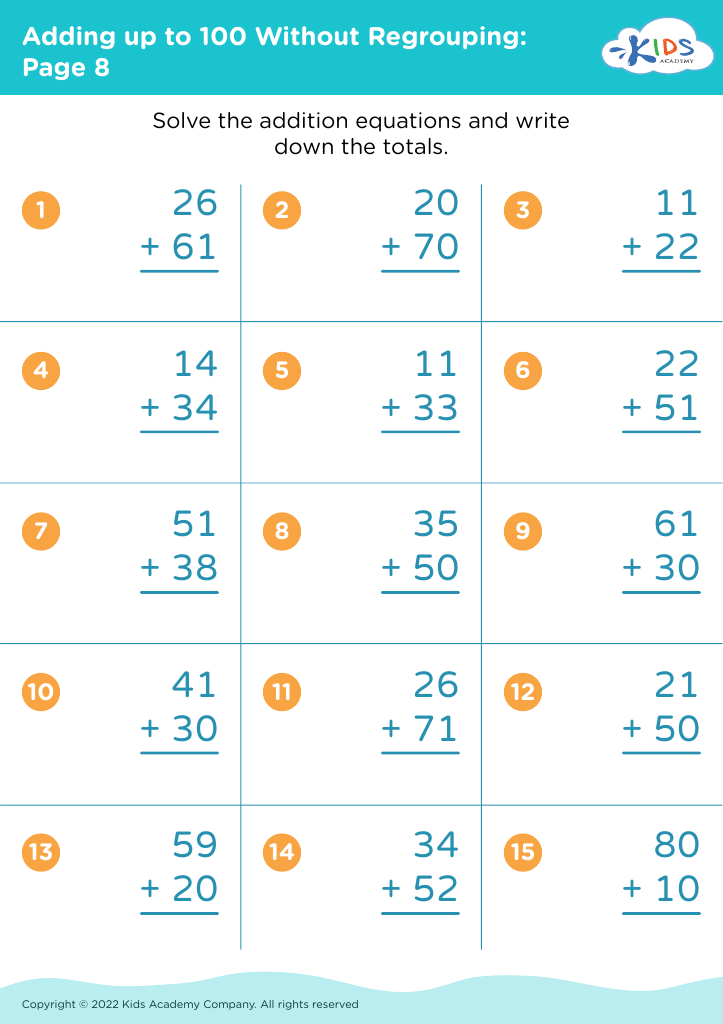




Critical thinking is a vital skill that fosters independent thought and problem-solving abilities in children. When teaching concepts like adding up to 100 without regrouping, parents and teachers should emphasize critical thinking to help students understand mathematical relationships and apply strategies effectively.
By focusing on critical thinking during this process, children learn to analyze numbers, identify patterns, and explore various methods of addition. For example, instead of simply memorizing pairs of numbers that sum to 100, they can explore combinations, such as 70 + 30 or 20 + 80, enhancing their understanding of numbers and improving mental math skills.
Additionally, promoting critical thinking nurtures a growth mindset. Children learn that making mistakes is part of the learning process, which encourages perseverance and resilience. This ability to think critically can extend beyond mathematics into other academic subjects, fostering a well-rounded educational experience.
When parents and teachers actively engage in discussions that promote critical thinking, they help cultivate a deeper comprehension of fundamental concepts, equipping children with essential skills for future challenges. Ultimately, fostering these abilities will better prepare children for not only academic success but also real-world problem-solving scenarios.