Fine Motor Skills Adding up to 100 Without Regrouping Worksheets
4 filtered results
-
From - To
Enhance your child's fine motor skills while mastering addition with our "Adding up to 100 Without Regrouping" worksheets! Designed for early learners, these worksheets combine math practice and motor skill development, offering engaging exercises that encourage precision and control. Each worksheet features colorful illustrations and fun layouts to keep students focused and entertained as they learn to add numbers together seamlessly. By integrating writing and problem-solving, children strengthen their hand-eye coordination and dexterity. Ideal for home or classroom use, these resources are perfect for reinforcing essential math concepts while cultivating essential fine motor skills. Start your child's learning journey today!
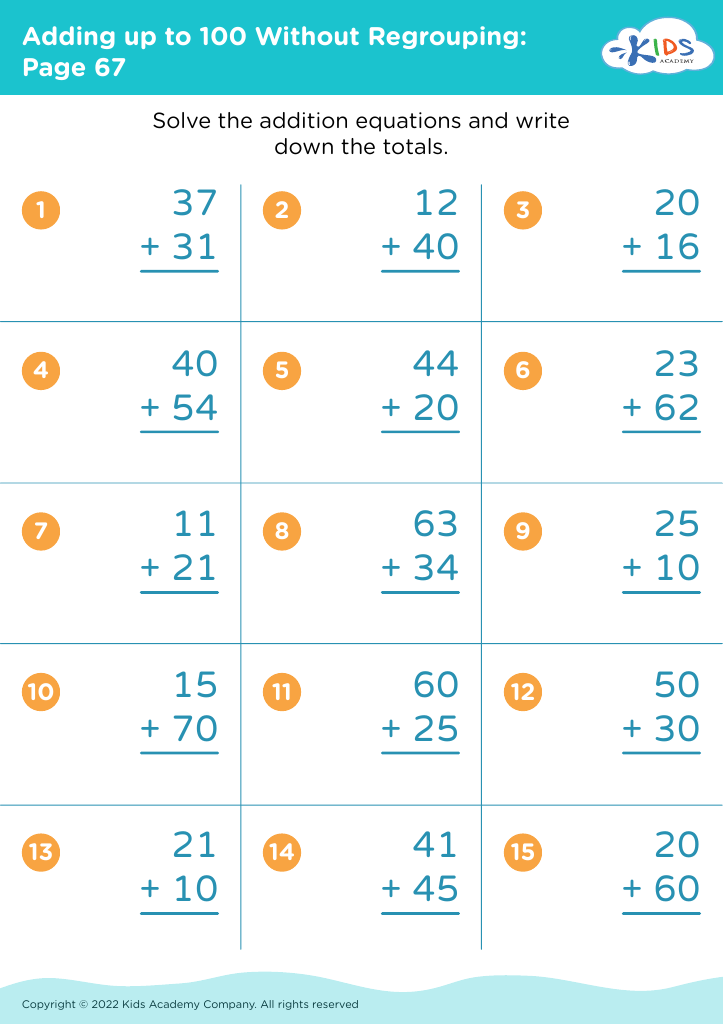
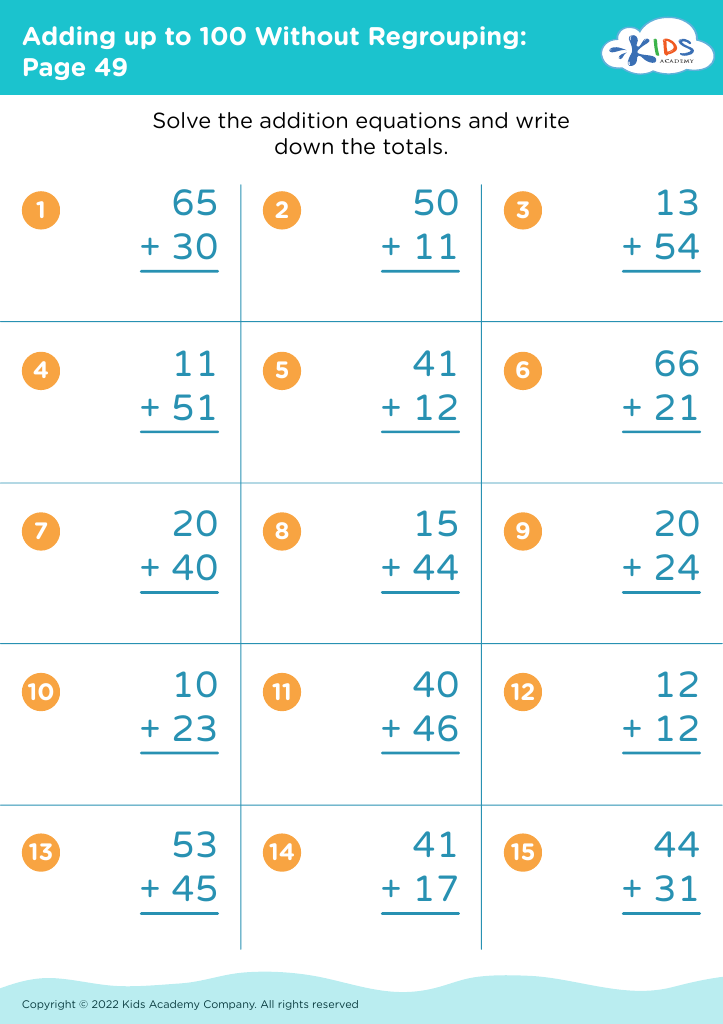
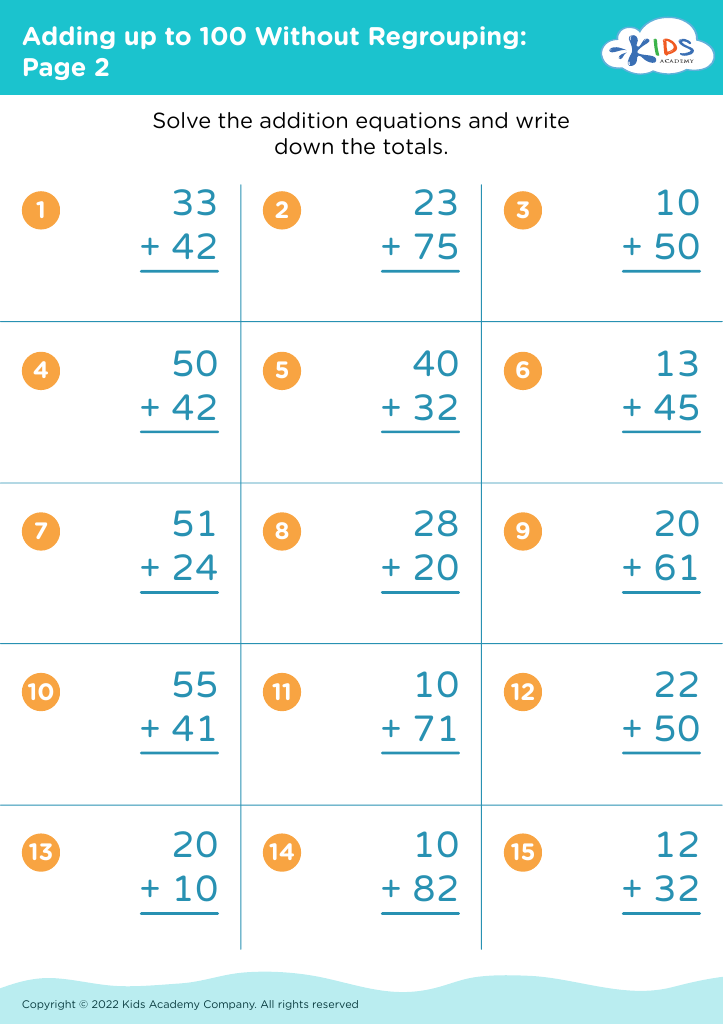
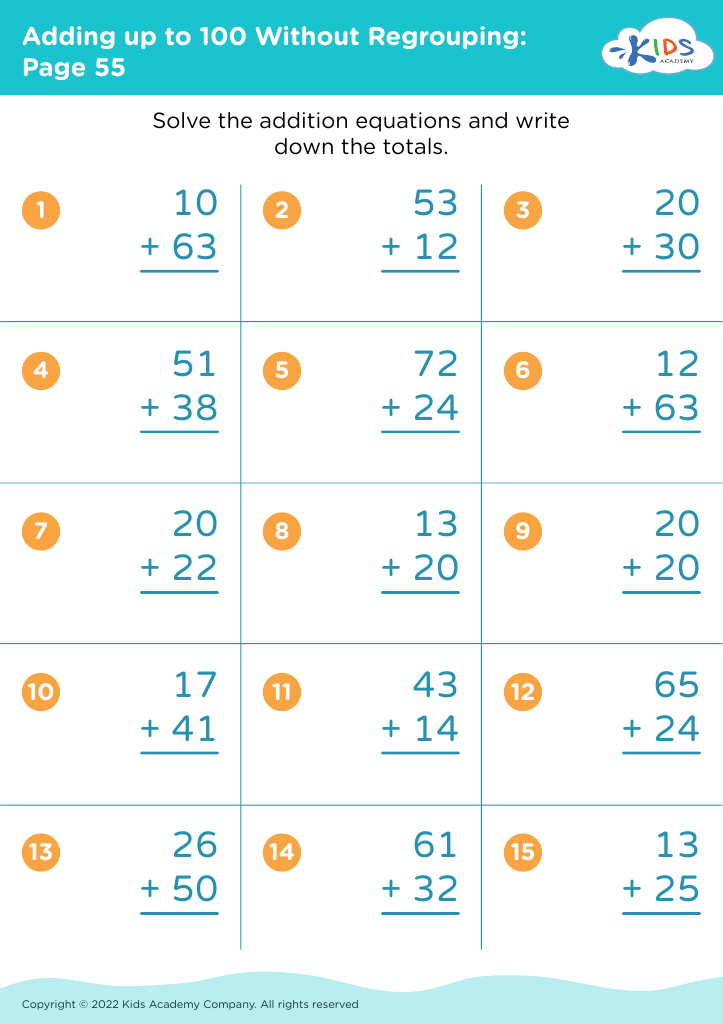




Fine motor skills and the ability to perform arithmetic without regrouping are crucial components of early childhood development and academic success. Parents and teachers should care about these skills for several reasons.
First, fine motor skills, which involve the coordination of small muscles, are essential for tasks such as writing, drawing, and manipulating objects. Developing these skills enhances hand-eye coordination, allowing children to express themselves creatively and communicate effectively through writing. Additionally, strong fine motor skills lay a foundation for independent self-care tasks, boosting children’s confidence and self-esteem.
Second, being able to add up to 100 without regrouping reflects a child’s understanding of number sense and basic arithmetic. Mastering this skill not only helps build confidence in math but also fosters problem-solving skills essential for future mathematical concepts. It requires children to understand place value and develop strategies for mental arithmetic, making it a building block for more complex operations later on.
Incorporating activities that promote fine motor skill development while practicing mathematics engages children in a holistic learning experience. When parents and teachers prioritize these skills, they equip children with essential tools for success in both academic pursuits and everyday life.