Identifying shapes Adding up to 100 Without Regrouping Worksheets
4 filtered results
-
From - To
Explore our engaging "Identifying Shapes Adding Up to 100 Without Regrouping Worksheets" designed specifically for young learners! These worksheets combine shape recognition with fun addition exercises, allowing students to enhance their math skills while reinforcing their understanding of geometric figures. Perfect for early grade classrooms, each worksheet provides a variety of thoughtfully designed activities that encourage critical thinking and boost confidence in basic math. With colorful visuals and interactive elements, students will enjoy practicing their addition to reach a total of 100 without regrouping. Dive into this creative learning experience and support your child’s mathematical journey today!
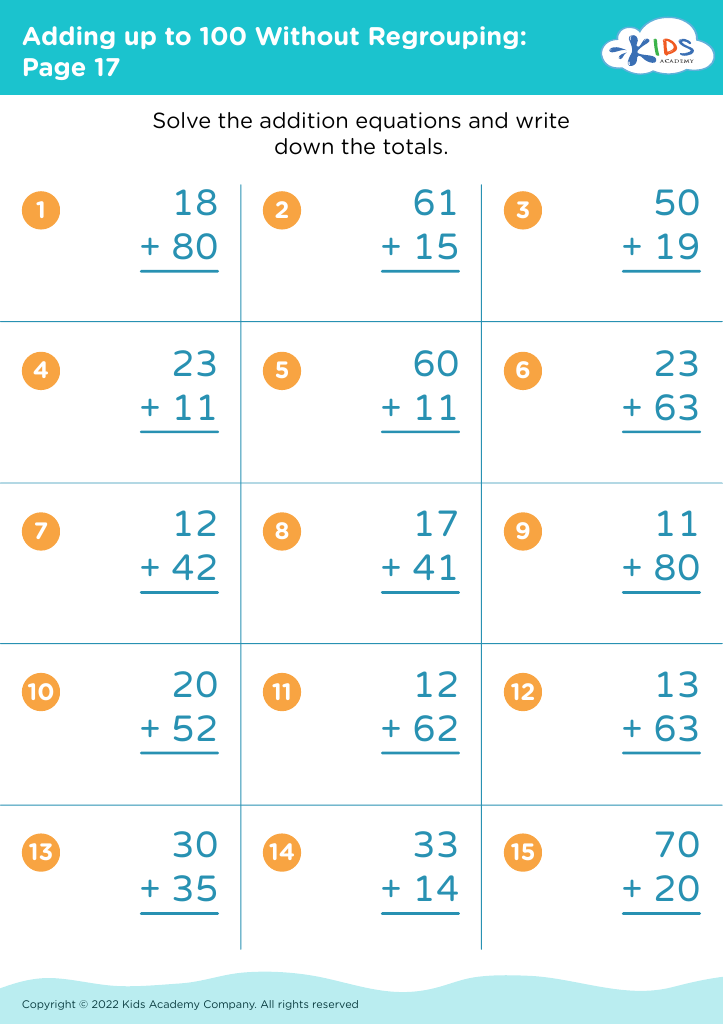
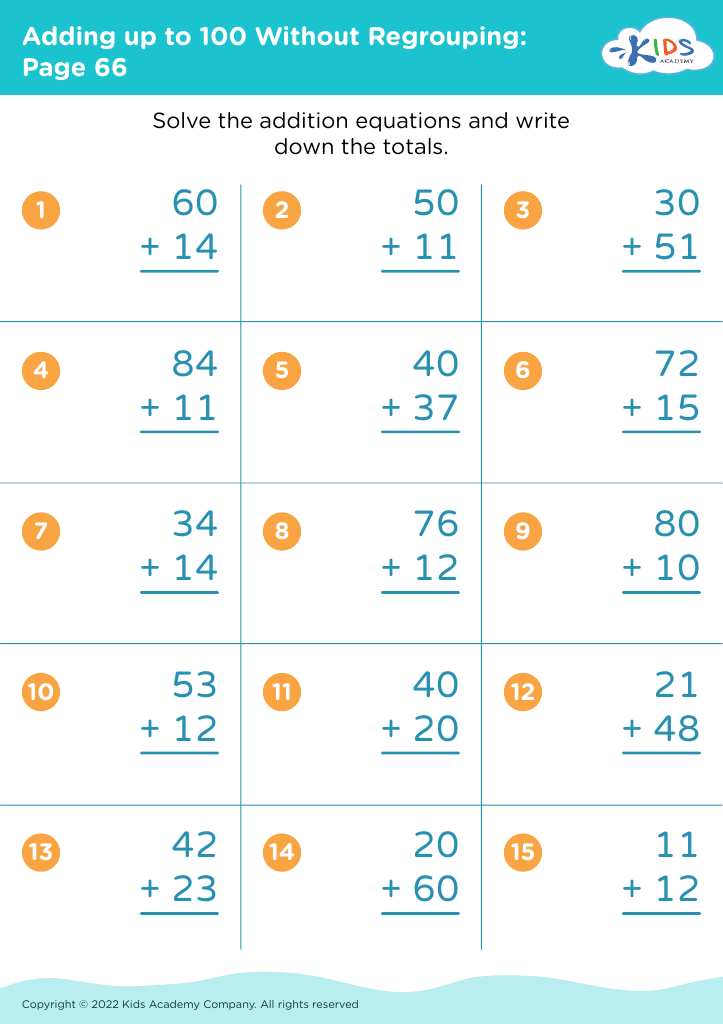
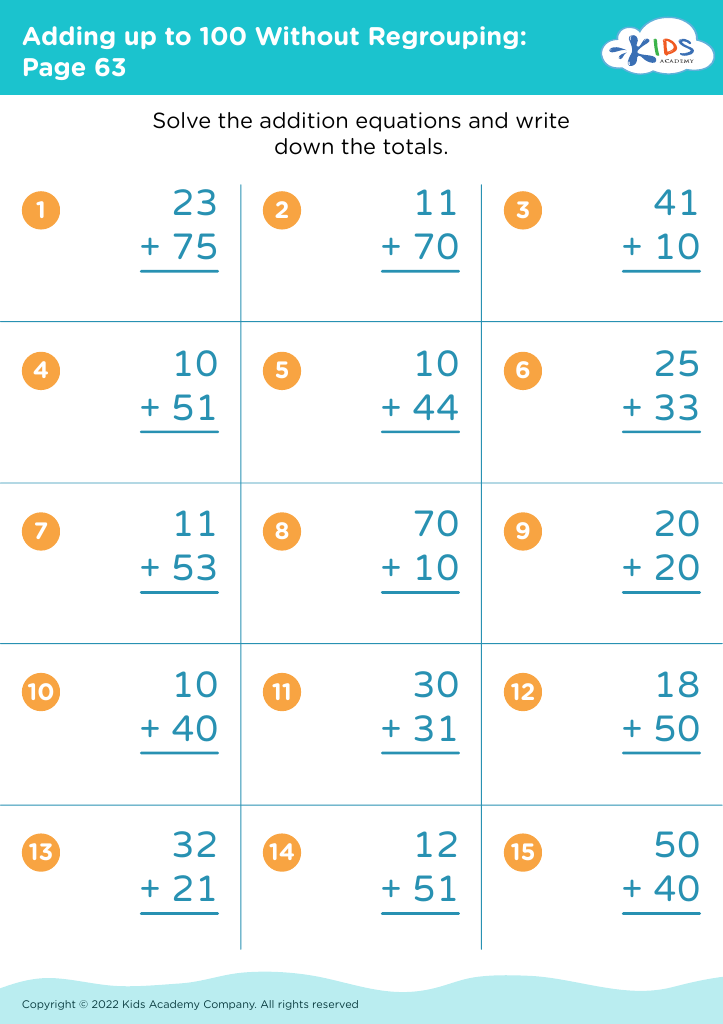
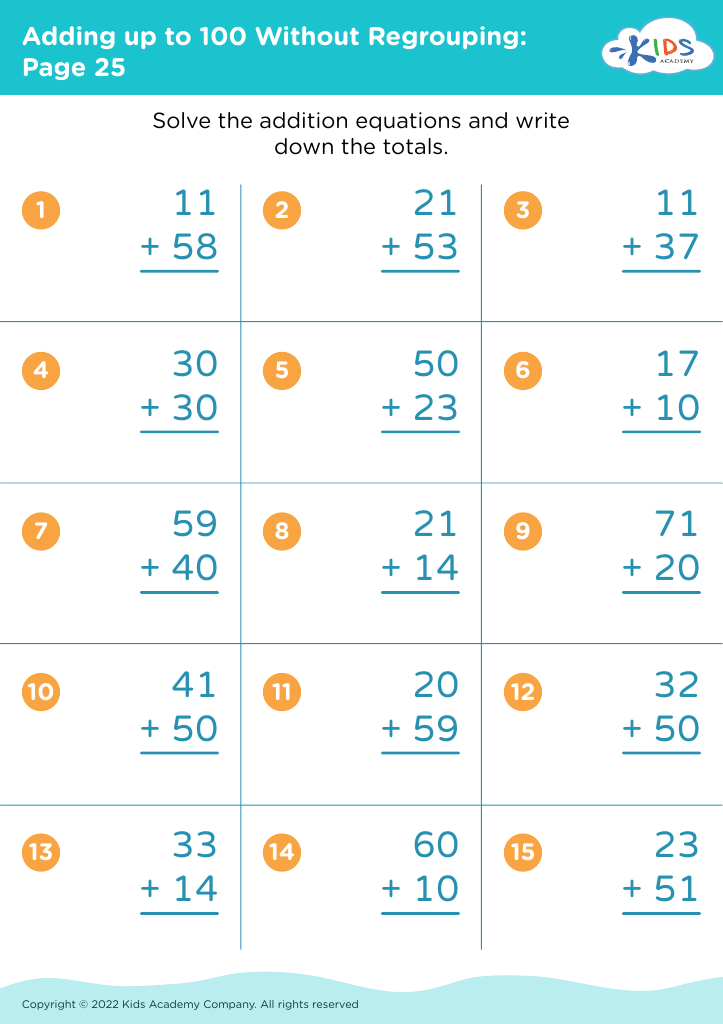




Identifying shapes and adding numbers up to 100 without regrouping are foundational skills in early mathematics that significantly influence children's cognitive development. For parents and teachers, understanding these concepts is crucial for several reasons.
First, shape identification helps children develop spatial awareness, which is essential for problem-solving and critical thinking. Shapes are all around us, and being able to recognize and categorize them lays the groundwork for more complex mathematical concepts like geometry. This skill also enhances creativity, as children learn to see relationships and patterns in both art and nature.
Second, mastering addition up to 100 without regrouping promotes numerical fluency and confidence. Early success with basic addition fosters a positive attitude towards math and encourages children to tackle more challenging concepts in the future. It also strengthens mental math skills, which are vital for everyday decisions, such as budgeting or shopping.
By focusing on these skills, parents and teachers can ensure that children not only acquire practical mathematics skills but also build analytical and reasoning abilities that will serve them throughout their educational journey. Investing in these foundational skills will undoubtedly have a lasting impact on children's academic success and overall confidence in their abilities.