Improve reading comprehension Adding up to 100 Without Regrouping Worksheets
3 filtered results
-
From - To
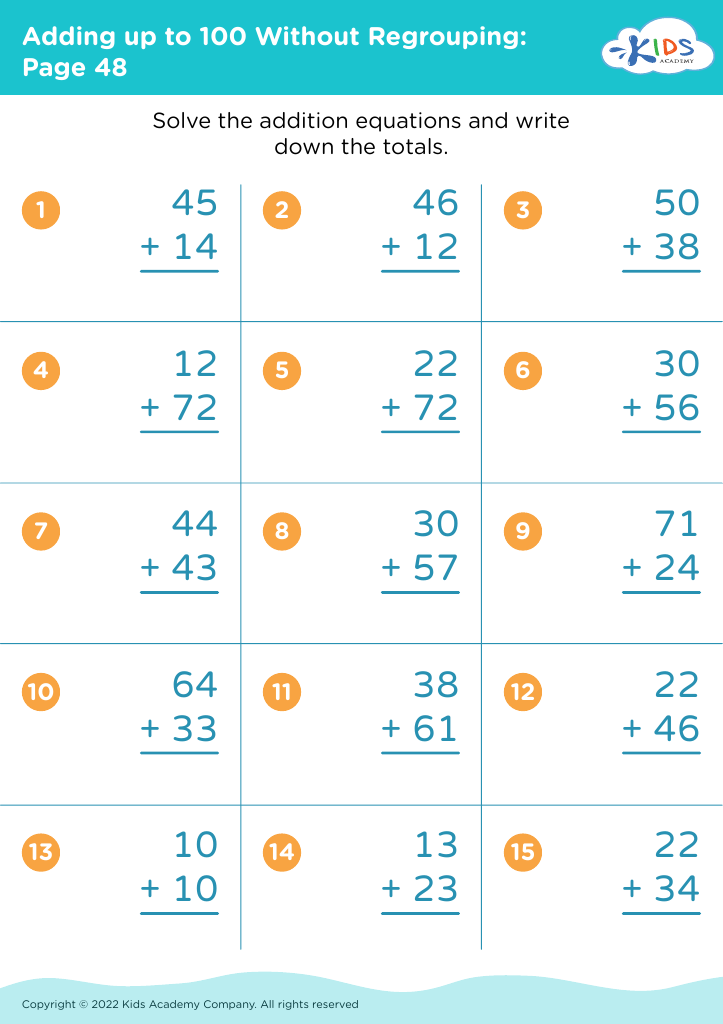
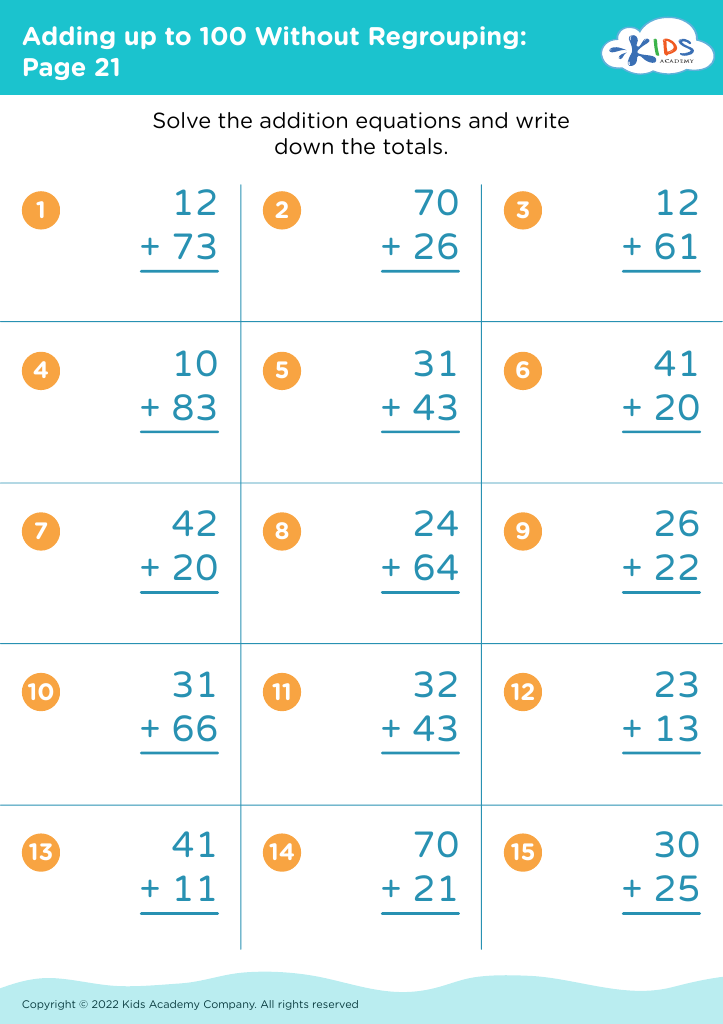
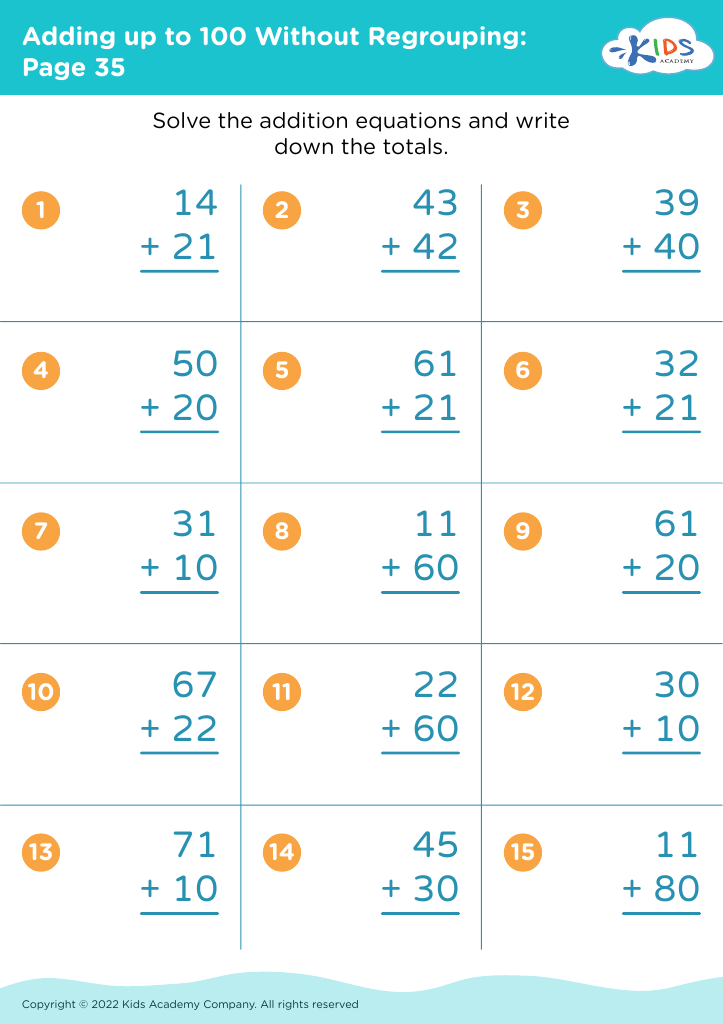
Boost your child's reading comprehension with our "Adding Up to 100 Without Regrouping" worksheets! Designed for young learners, these engaging activities help reinforce basic math skills while enhancing reading abilities. As children practice addition without regrouping, they also learn to follow directions, interpret problems, and develop critical thinking skills. Each worksheet encourages students to visualize mathematical concepts and improves their ability to understand and articulate their thought processes. Perfect for classroom use or at-home learning, these fun and educational resources support your child’s overall academic growth, making learning enjoyable and effective. Start building strong foundational skills today!




Improving reading comprehension and mastery of addition without regrouping are both essential skills for early learners, and both significantly impact a child's overall academic success. Reading comprehension is crucial because it enables children to understand, interpret, and engage with various texts, forming a foundation for lifelong learning. When children comprehend what they read, they can connect information across subjects, think critically, and build empathy through diverse narratives.
Similarly, learning addition up to 100 without regrouping cultivates essential numeracy skills. Mastery of basic addition aids children in developing problem-solving abilities and logical thinking. It forms the groundwork for more complex mathematical concepts later on, illuminating patterns in numbers and helping children navigate real-world situations, like budgeting or measuring.
Combining a strong understanding of both reading and basic math provides children with the tools they need for academic confidence. For those children struggling in one or both areas, parents and teachers should focus on targeted interventions that promote growth. Caring about these competencies fosters a holistic approach to education where children can thrive, fostering curiosity and reinforcing the idea that learning is critical and interconnected across all subjects.