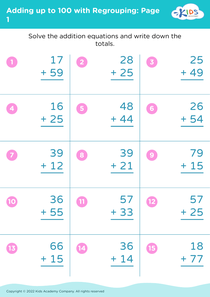
Practicing multiplication Adding up to 100 Without Regrouping Worksheets
3 filtered results
-
From - To
Explore our "Practicing Multiplication Adding Up to 100 Without Regrouping Worksheets" designed to enhance your child's math skills in a fun and engaging way! These educational resources focus on mastering multiplication facts while ensuring understanding of addition concepts. Each worksheet combines multiplication exercises with adding up to 100, allowing students to reinforce their arithmetic skills without the complexity of regrouping. Perfect for early learners, our worksheets promote confidence and fluency in math. Download and print these resources to support your child's learning journey, making math practice enjoyable and effective. Help them achieve their numeracy goals today!
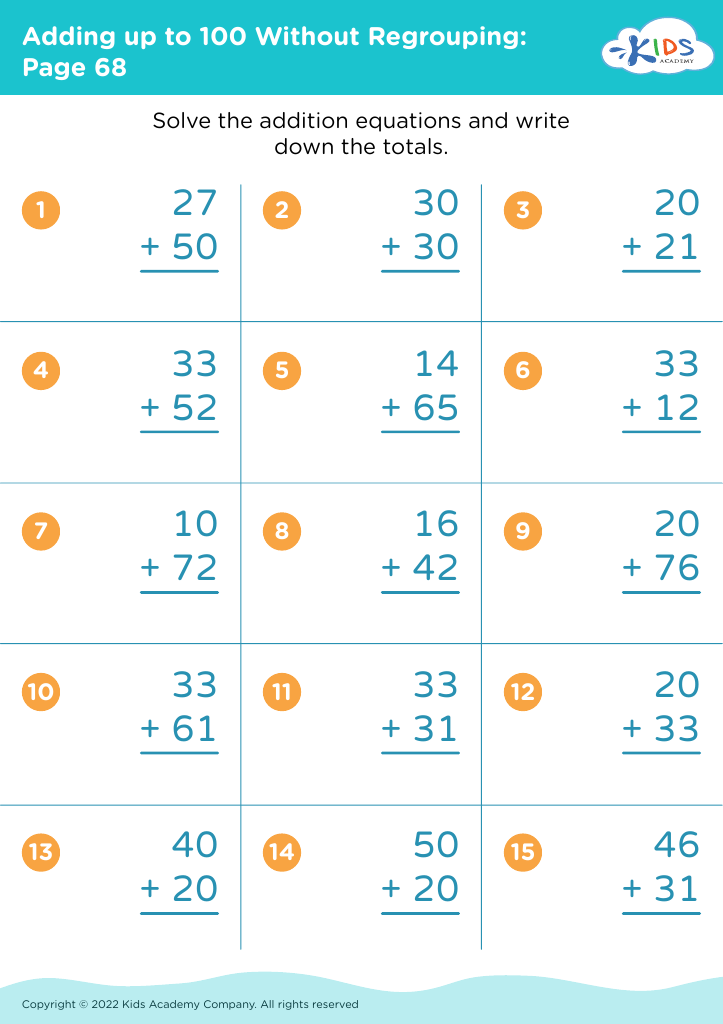
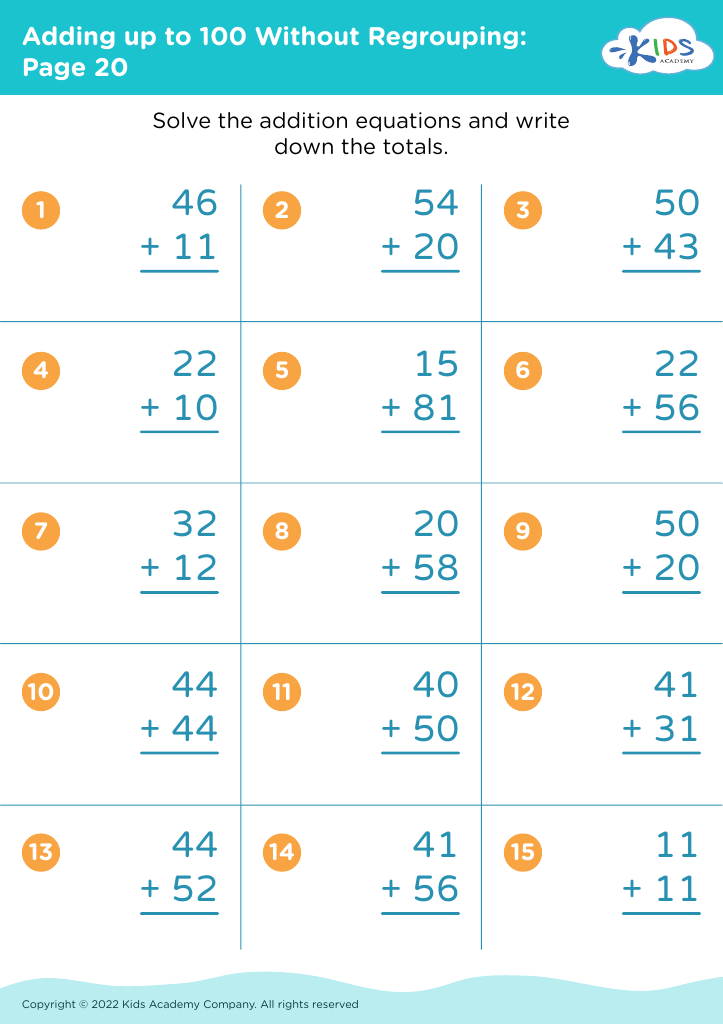
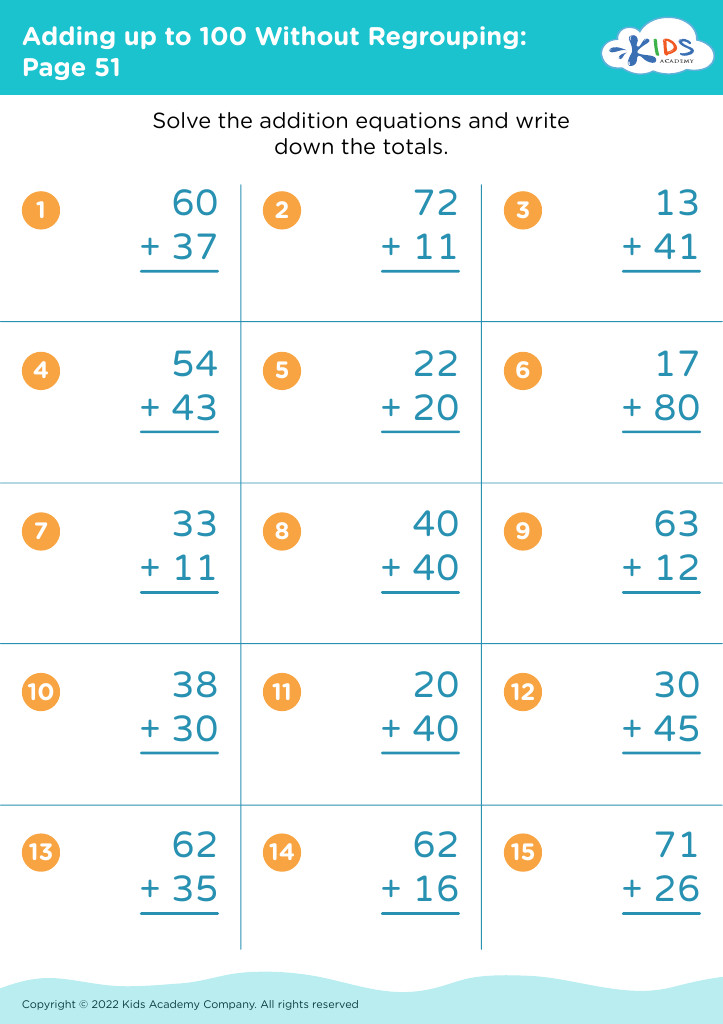




Practicing multiplication and addition without regrouping up to 100 is crucial for young learners as it builds their foundational math skills. First, these abilities promote a strong number sense, allowing children to understand relationships between numbers more profoundly. This understanding is key for problem-solving and developing higher-level math skills in the future.
Moreover, mastering multiplication and addition without regrouping not only increases computational fluency but also enhances children's confidence in their abilities. When students can perform calculations quickly and accurately, they are more likely to engage with math, reducing math anxiety and fostering a positive attitude towards the subject.
Additionally, these skills are essential for real-life applications, from budgeting money to measuring ingredients in cooking. Parents and teachers can use these practices to encourage cooperation and collaborative learning, helping to establish a supportive educational environment.
Finally, practicing these fundamental math skills can also enhance cognitive abilities, as they require focus and mental dexterity. When parents and teachers emphasize this practice, they equip children with essential tools, preparing them for future academic success and everyday problem-solving scenarios. Embracing multiplication and addition practices cultivates a generation of confident, capable learners.