Fraction comparison Adding up to 1000 Misc Worksheets
6 filtered results
-
From - To
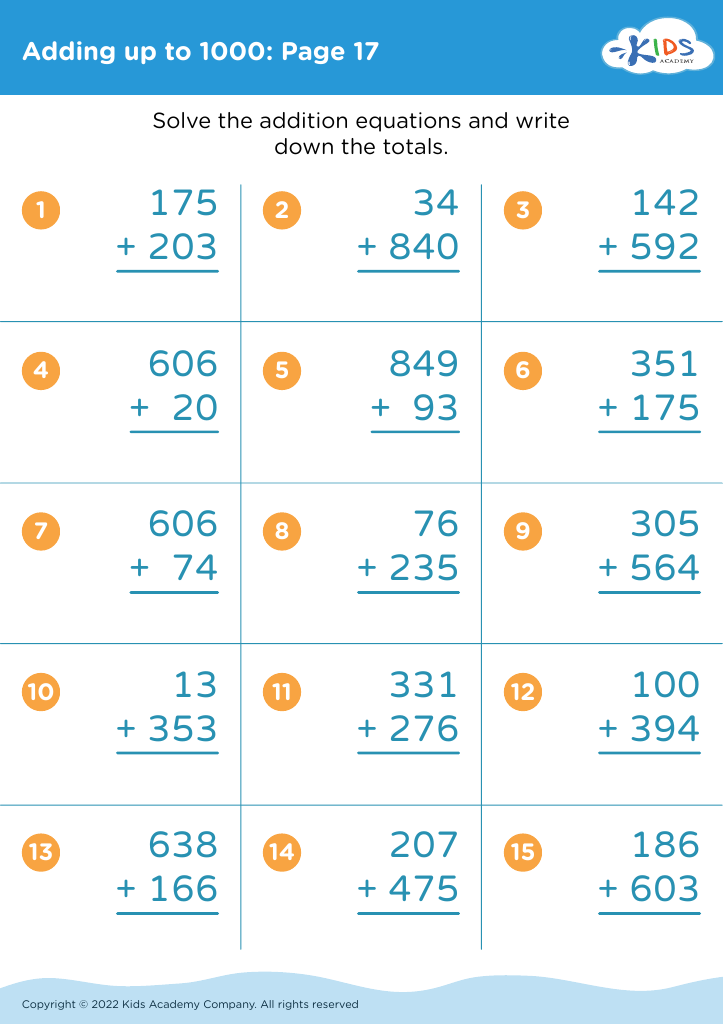
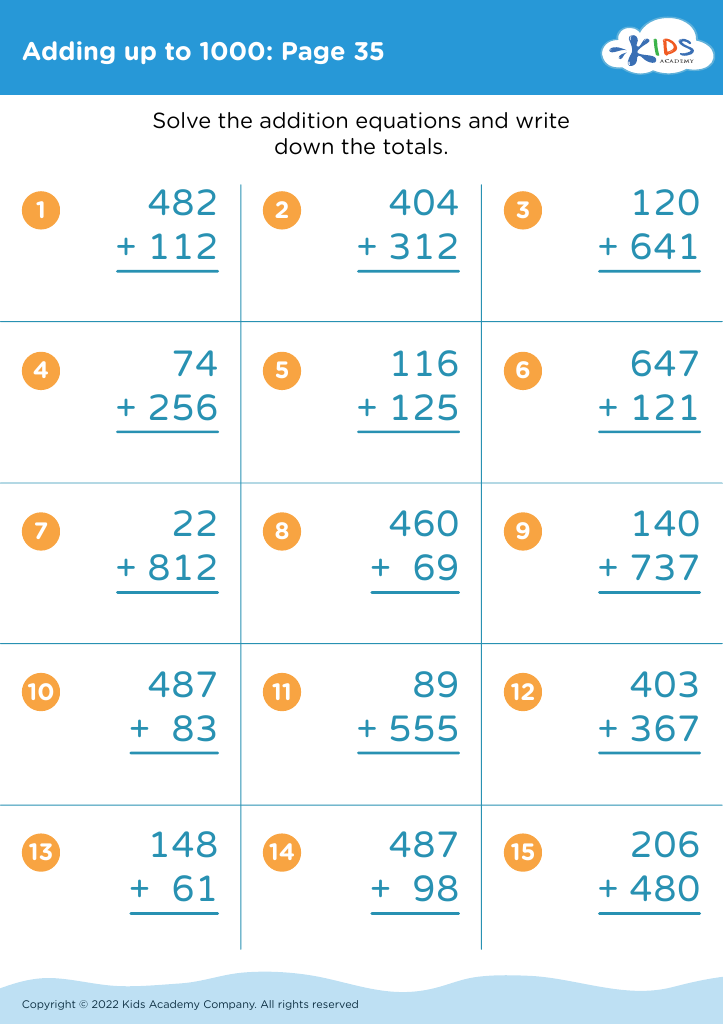
Explore our engaging "Fraction Comparison: Adding Up to 1000 Misc Worksheets" designed to enhance your child's math skills! These printable worksheets provide a fun and interactive way for young learners to grasp the concept of comparing fractions while reinforcing their addition skills. With a variety of challenging problems that combine fractions with sums adding up to 1000, students will build confidence and fluency in their mathematical abilities. Perfect for classroom use or at-home practice, these worksheets cater to diverse learning styles and help foster a strong foundation in math. Equip your child for success with our comprehensive fraction comparison resources!
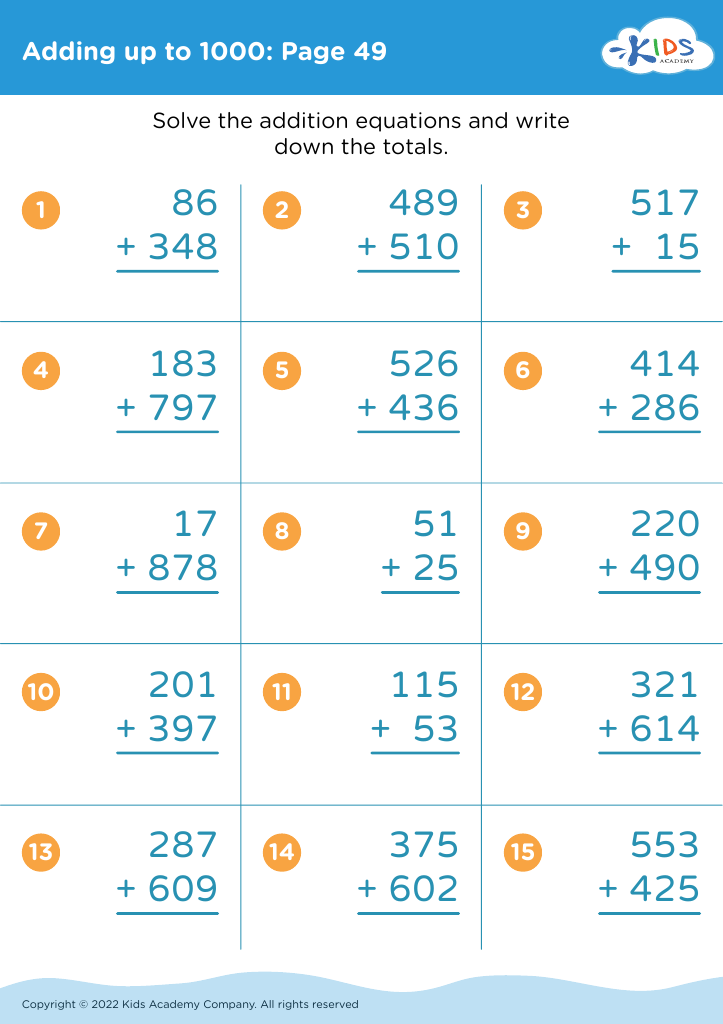
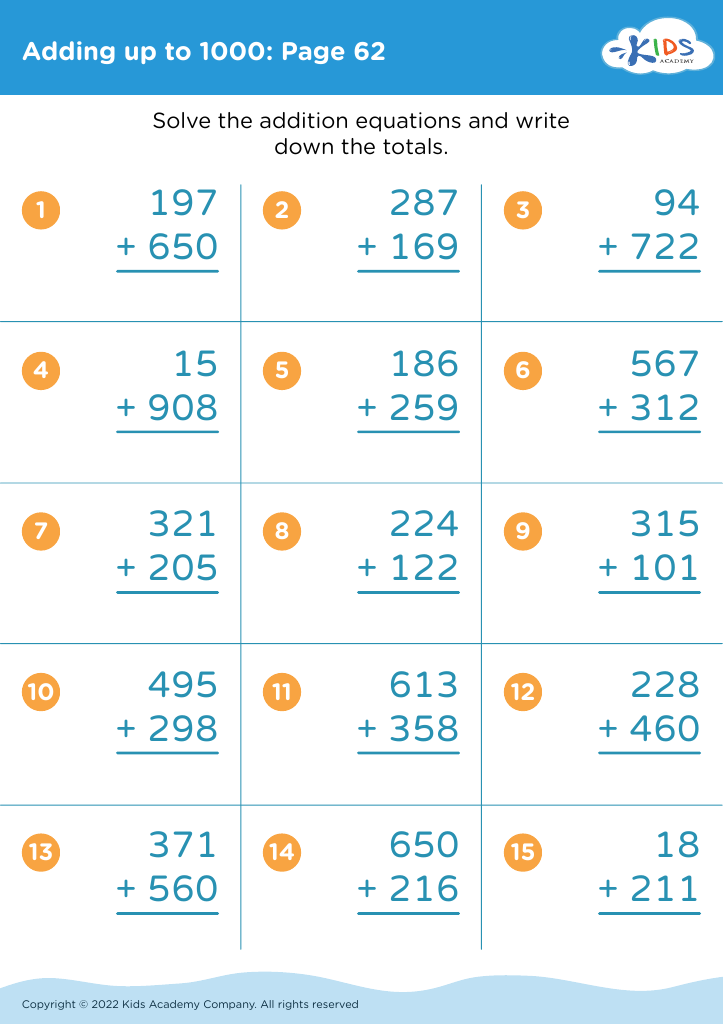
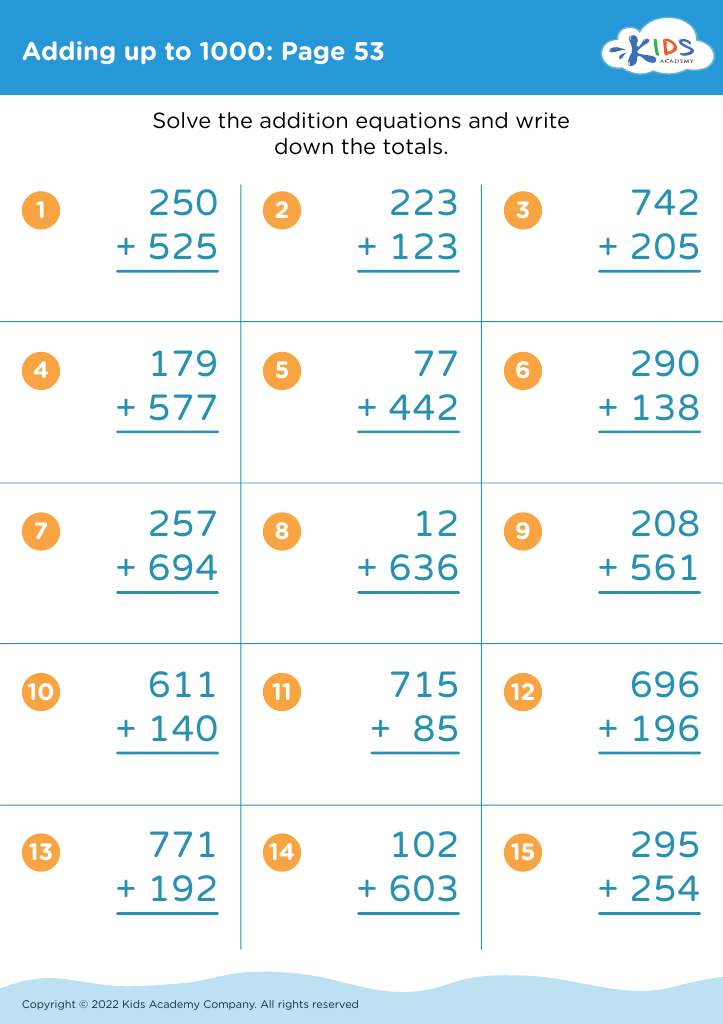
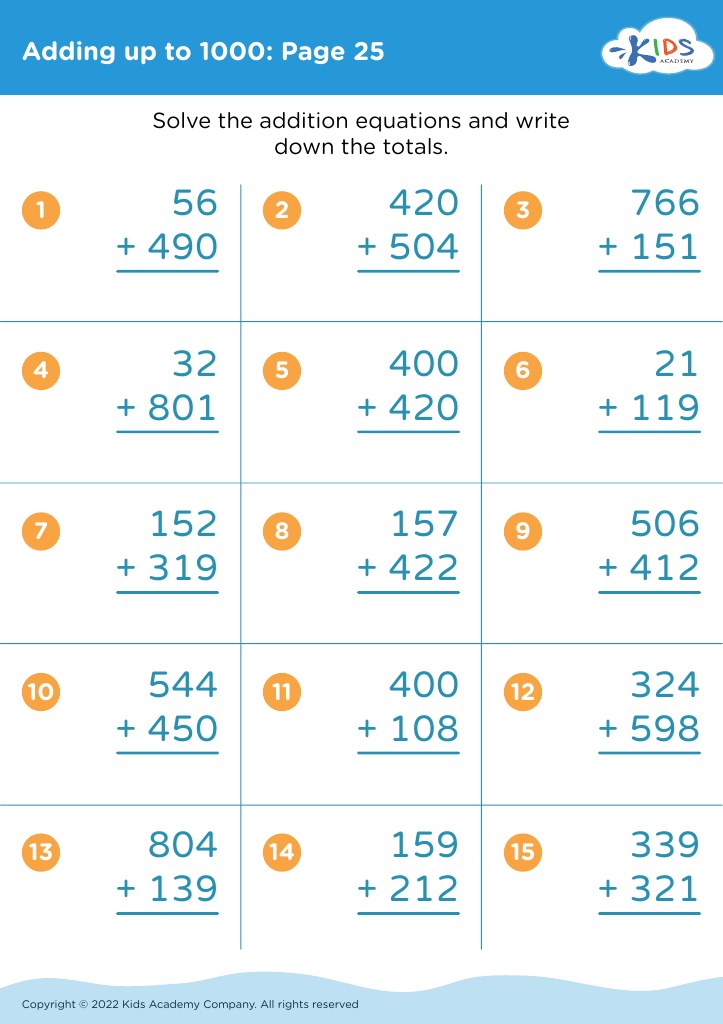


Parents and teachers should prioritize understanding fraction comparison, particularly concerning the concept of adding up to 1000, because it lays a crucial foundation for mathematical competence and real-world application. By mastering fractions, children develop critical thinking skills essential for problem solving across various subjects and daily life.
Comparing fractions helps students identify relationships between different sizes, honing their analytical abilities. When combined with the concept of adding up to 1000, they learn to make connections between fractions, whole numbers, and percentages, enriching their overall numerical literacy. This is especially relevant as students progress to more complex concepts in mathematics, such as algebra and geometry.
Moreover, understanding fractions can enhance a child's confidence in math. When parents and teachers offer support in this area, they promote a positive attitude toward learning, making children more likely to seek knowledge and embrace challenges in the future.
Additionally, these skills are transferable; real-life situations such as cooking, budgeting, or measuring all require a basic understanding of fractions. Thus, by emphasizing fraction comparison, parents and teachers equip students with valuable tools necessary for academic success and everyday problem-solving. Encouraging early mastery pays dividends, empowering children as lifelong learners.