Understand fractions Adding up to 1000 Misc Worksheets
3 filtered results
-
From - To
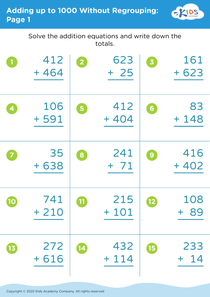
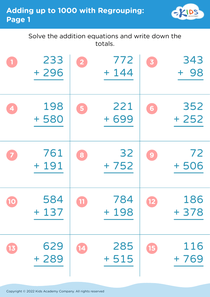
Explore our "Understand Fractions Adding Up to 1000 Misc Worksheets" page, designed to enhance students’ fraction comprehension through interactive and engaging activities. These versatile worksheets cover essential concepts, helping children grasp how fractions relate to the larger whole numbers up to 1000. Each task promotes critical thinking and problem-solving skills as students learn to visually represent and calculate fractions in various contexts. Tailored for early learners, these resources are ideal for teachers and parents who want to reinforce foundational math competencies in a fun and accessible way. Start your journey towards mastering fractions and empower young minds today!


Understanding fractions is crucial for both parents and teachers because it forms a foundational skill for students in mathematics and broader life experiences. Fractions help children comprehend concepts of parts and wholes, which are essential in everyday situations such as cooking, shopping, and time management. Mastering fractions also prepares students for more complex mathematical concepts like ratios, percentages, and algebra.
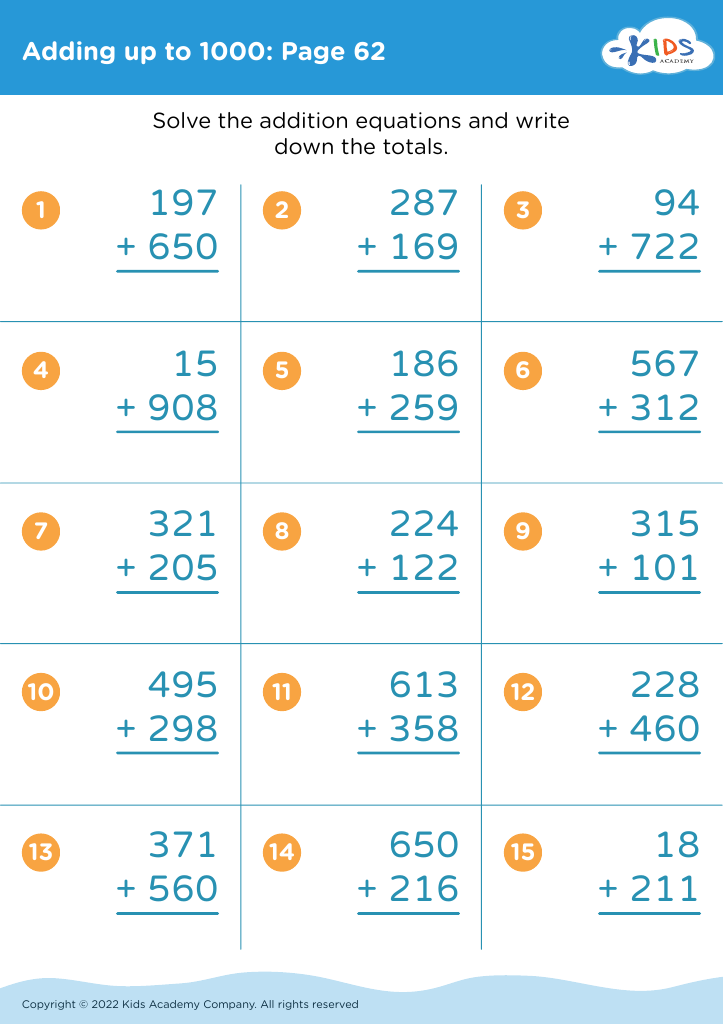
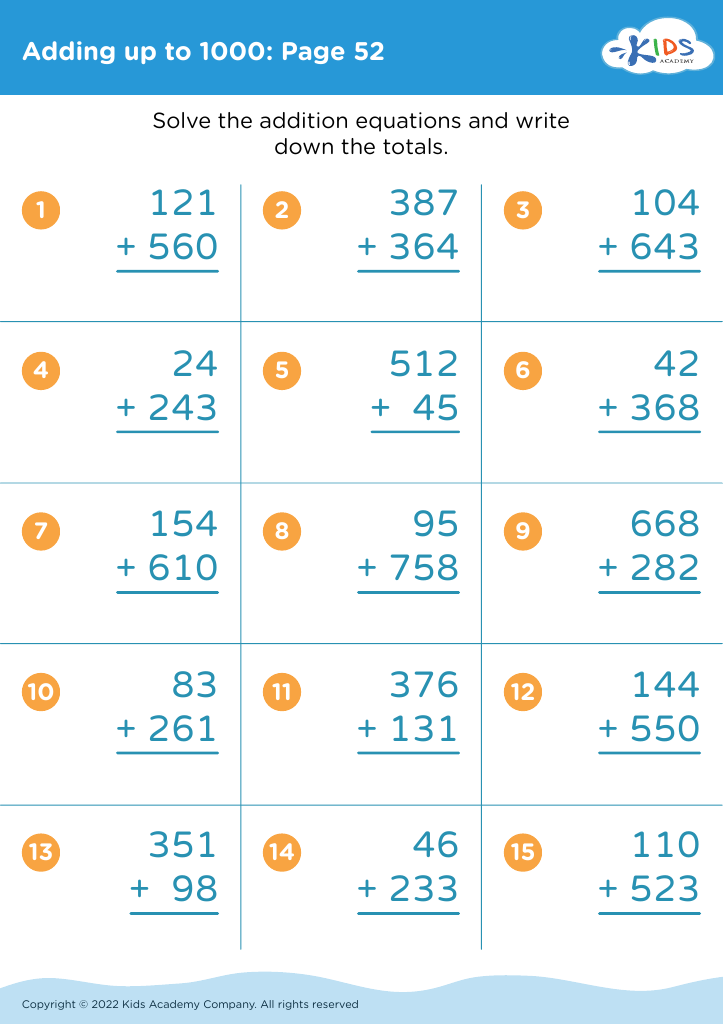
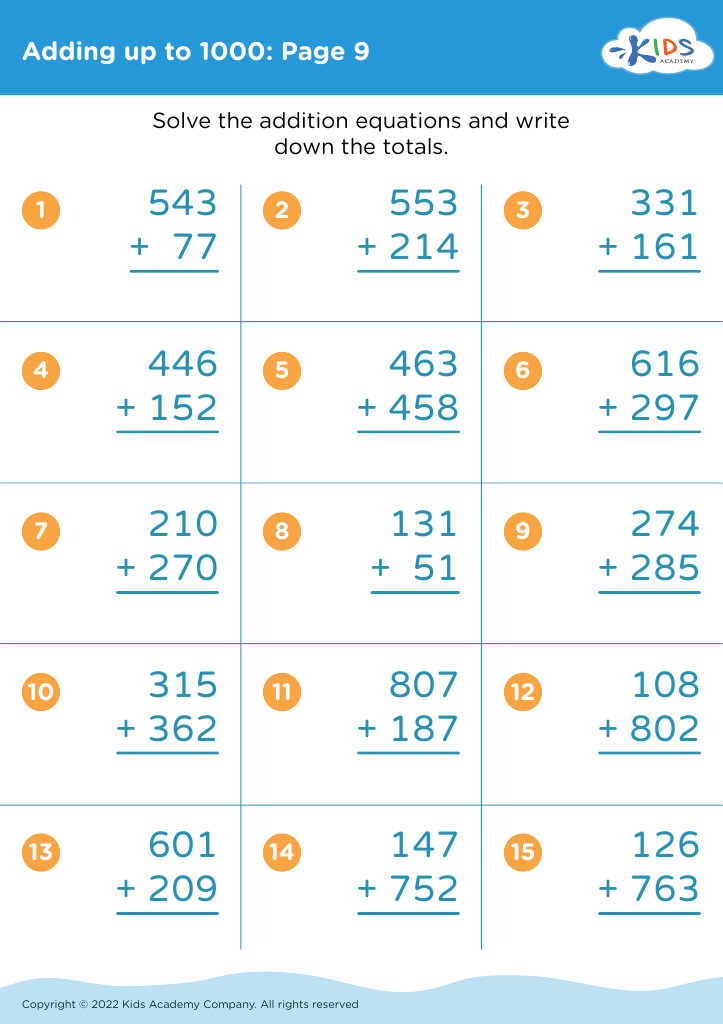
Adding up to 1000 introduces students to the importance of numerical fluency. It enhances their ability to efficiently manage larger numbers, promoting problem-solving, critical thinking, and analytical skills. These skills are vital not just in mathematics but in science, finance, and data interpretation.
When parents and teachers emphasize these concepts, they provide children with a strong math foundation that fosters confidence and competence. Furthermore, these skills are vital for academic success and future career paths, where numeracy is increasingly important.
Ultimately, caring about a child’s understanding of fractions and their ability to work with numbers up to 1000 helps them navigate daily life and equips them with tools needed for future educational endeavors and professional tasks. By investing time and attention in these areas, adults ensure that children are prepared for a world that increasingly necessitates mathematical literacy.