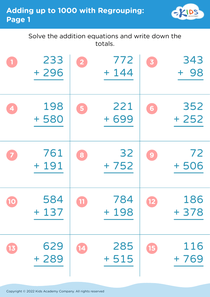
Enhance comprehension Adding up to 1000 Without Regrouping Worksheets
4 filtered results
-
From - To
Boost your students' math skills with our "Enhance Comprehension Adding up to 1000 Without Regrouping Worksheets." These carefully crafted worksheets are designed to reinforce addition skills, helping young learners to comfortably sum figures up to 1000 without needing to regroup. Each exercise focuses on enhancing comprehension through engaging, easy-to-follow problems that promote critical thinking and mastery of addition concepts. Perfect for classroom use or extra practice at home, these worksheets cater to various skill levels while making math fun and accessible. Equip your children with the tools they need for success in mathematics with our comprehensive resources!
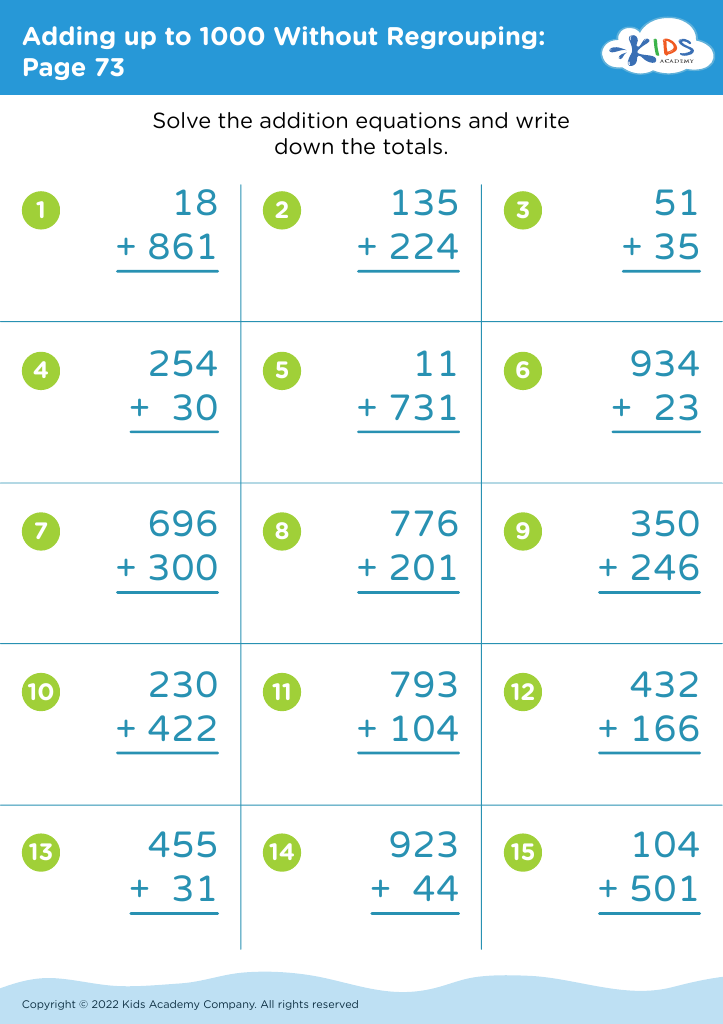
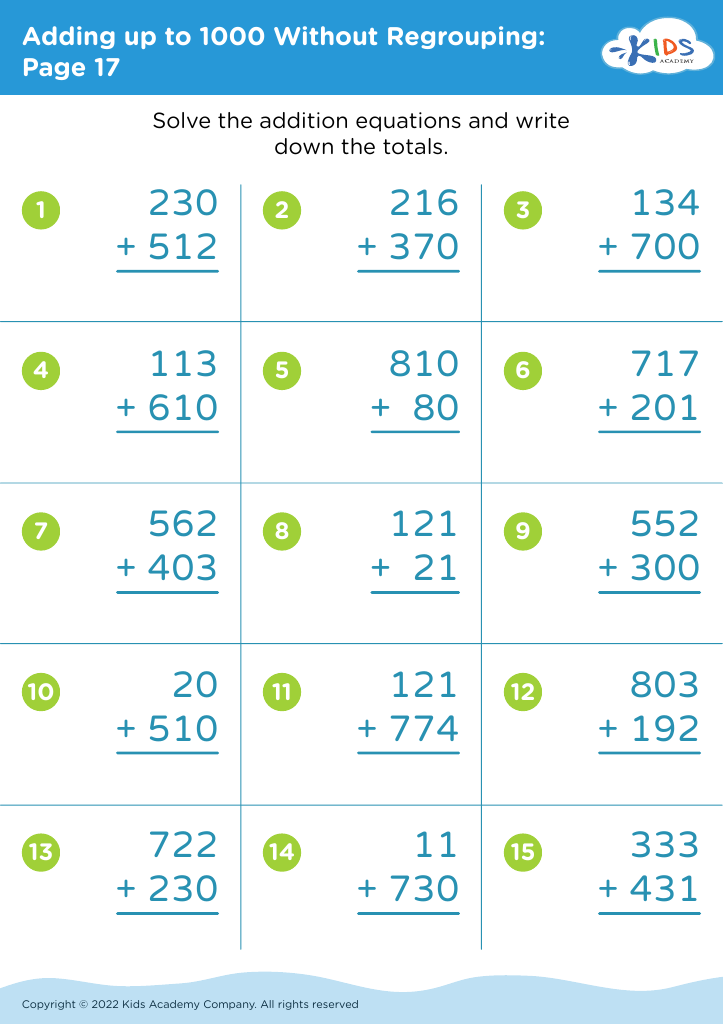
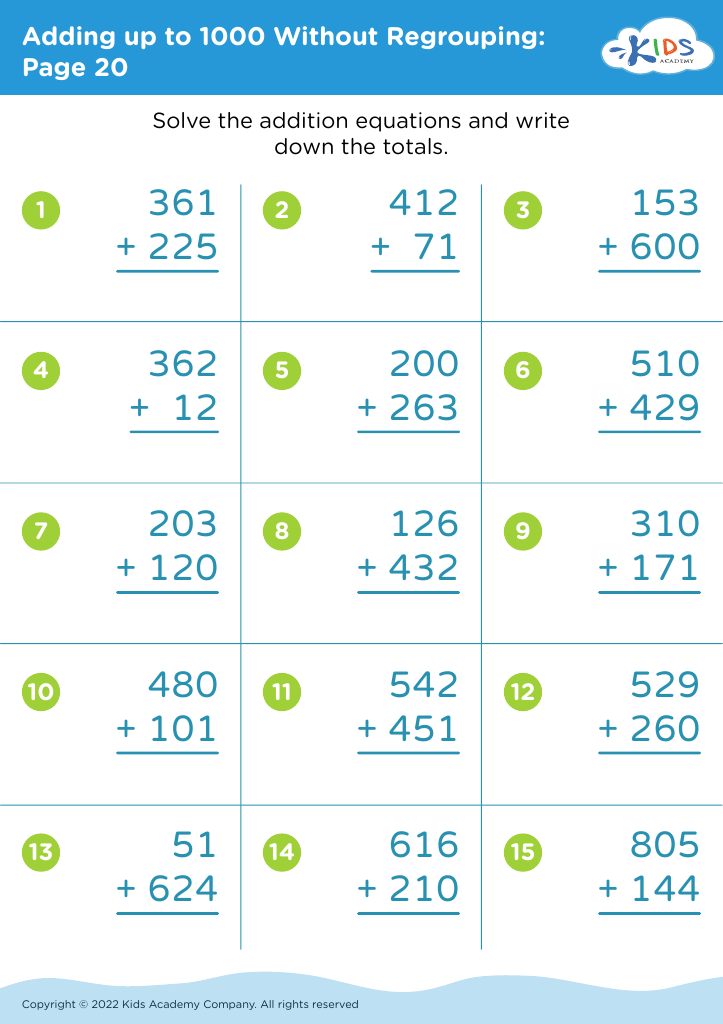
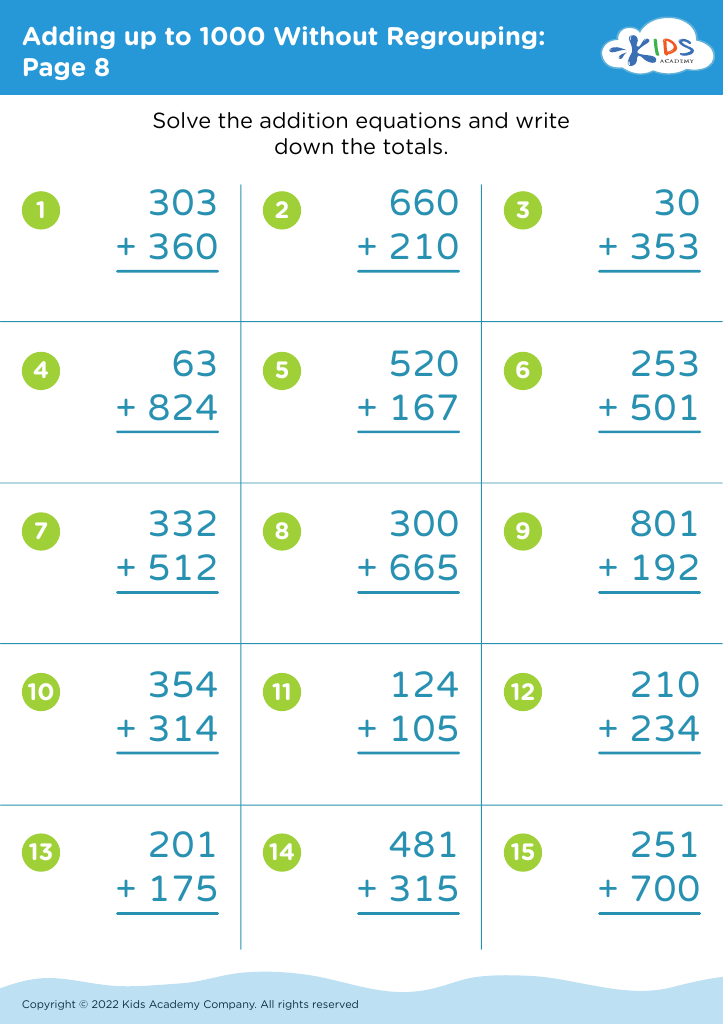


Parents and teachers play a crucial role in fostering a child's mathematical comprehension, particularly when it comes to concepts like "Adding up to 1000 Without Regrouping." Understanding this concept is vital for building a strong mathematical foundation.
First, early mastery of addition helps children develop confidence in their problem-solving abilities. When children can add numbers up to 1000 without regrouping, they engage with larger numbers and begin to see patterns, which enhances their overall numeracy skills.
Moreover, comprehension of addition lays the groundwork for more complex mathematical operations, such as subtraction, multiplication, and division. Parents and teachers must invest their time in this fundamental skill to ensure students do not struggle with more advanced concepts later on.
Additionally, knowing how to add without regrouping strengthens mental math skills, which is crucial for everyday activities like budgeting or measuring ingredients, and supports children's ability to tackle real-world problems.
Lastly, developing a solid grasp of such fundamental principles cultivates a positive attitude toward math. This engagement can foster a lifelong appreciation and interest in the subject, making learning more enjoyable and effective, and ultimately contributing to a child’s success in academics and beyond.