Understanding fractions Adding up to 1000 Without Regrouping Worksheets
13 filtered results
-
From - To
Understanding fractions and adding up to 1000 without regrouping can be a fun and engaging learning experience with our specialized worksheets. These resources are designed to help students grasp the basics of fractions and practice addition without the need for regrouping. Interactive and challenging, they offer plenty of opportunities for learners to sharpen their skills while building confidence in their math capabilities. Ideal for young students, each worksheet incorporates colorful visuals and step-by-step problems that make learning math both easier and enjoyable. Join us to enhance your child's understanding of fractions and mastering addition up to 1000.
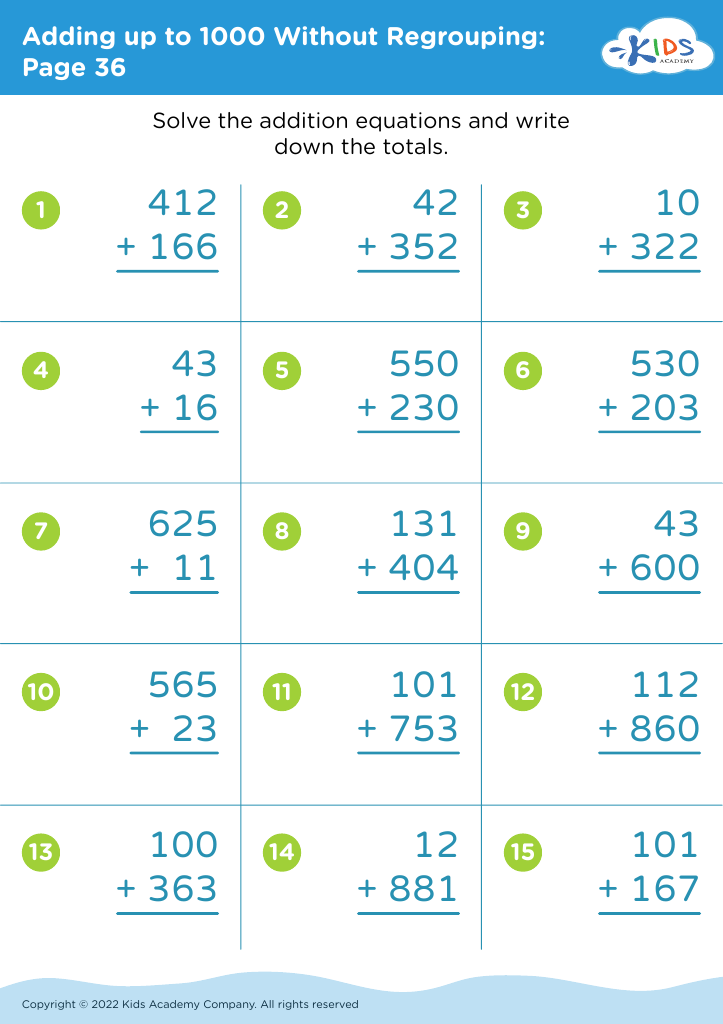
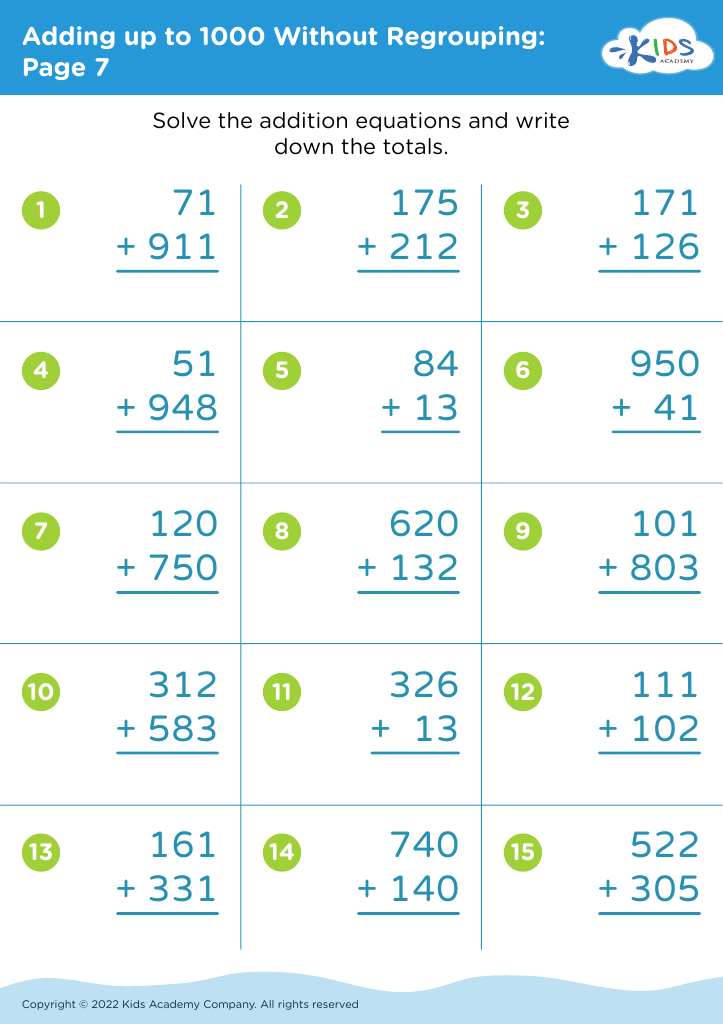
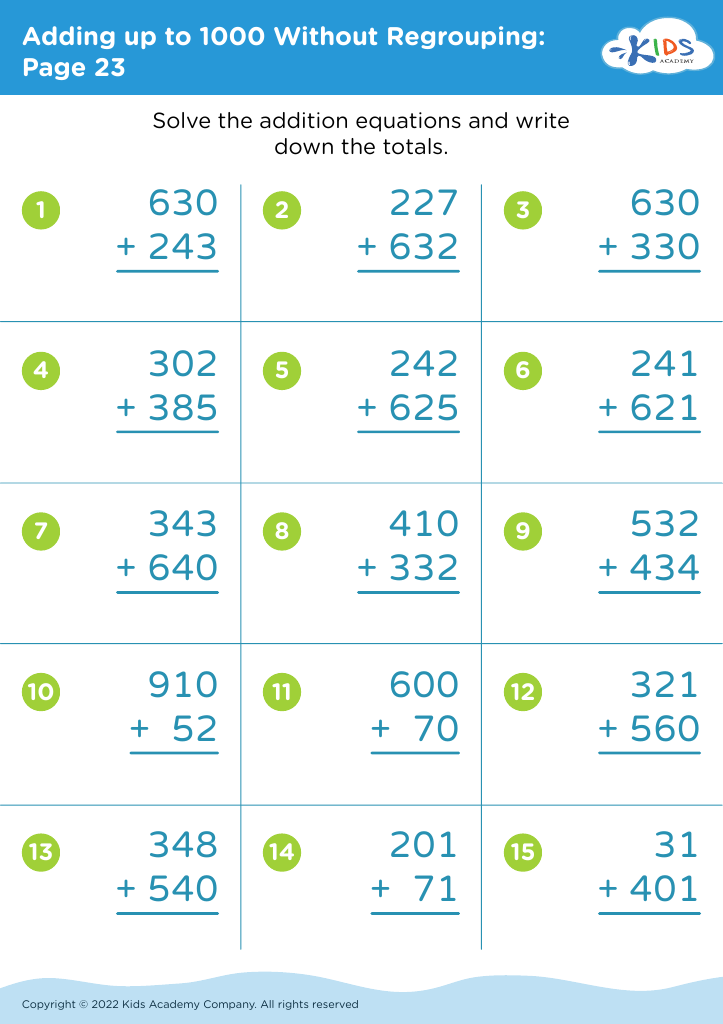
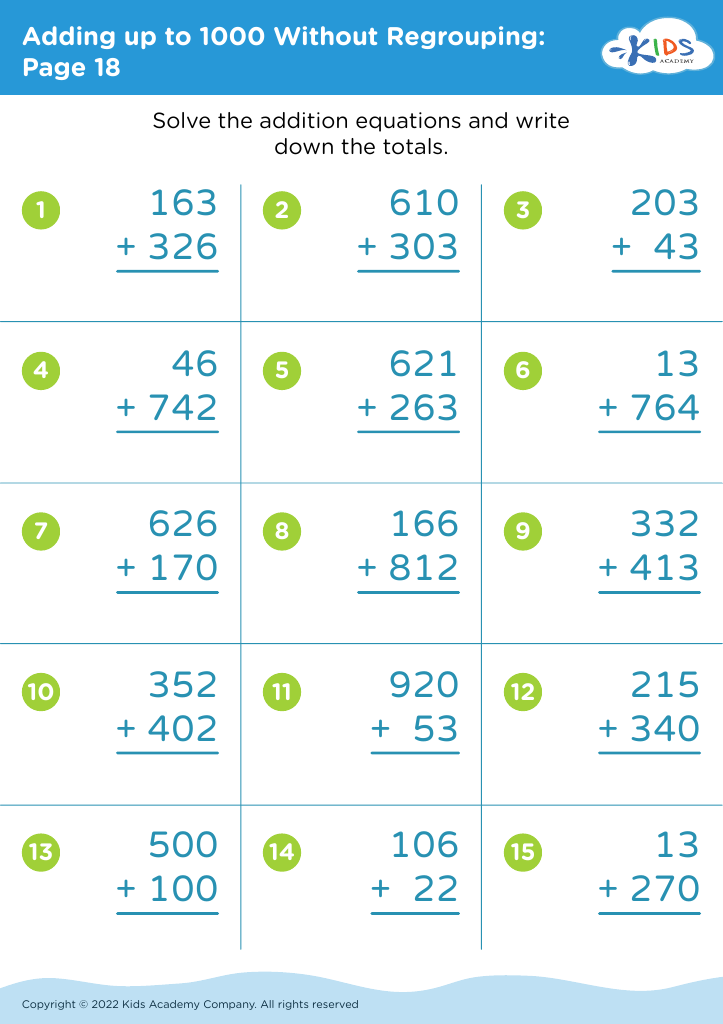
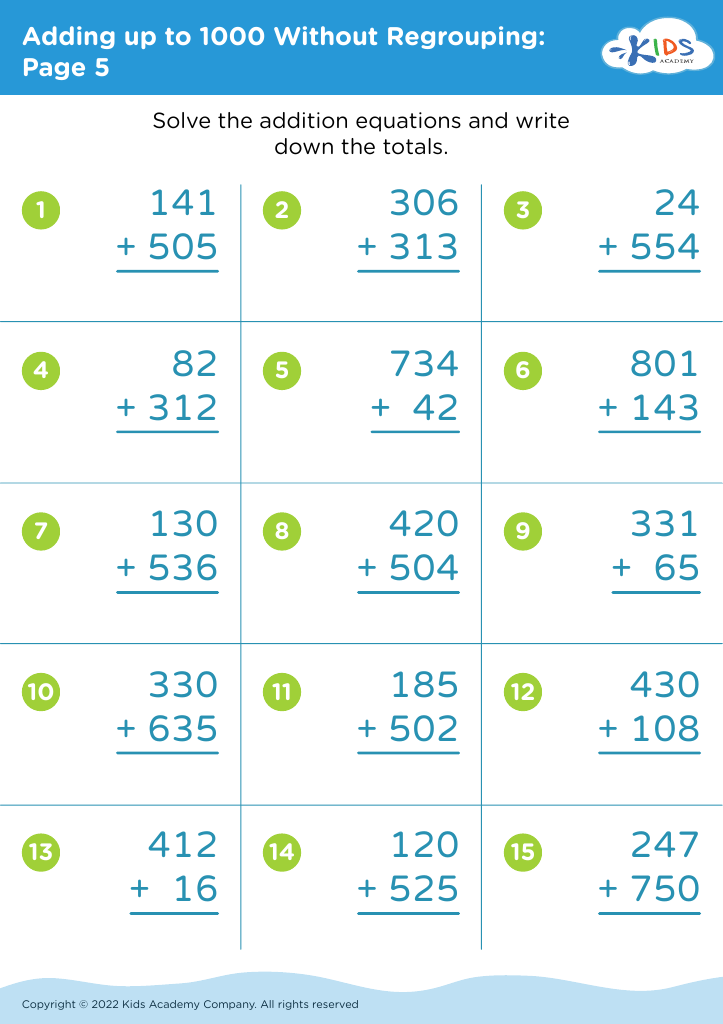
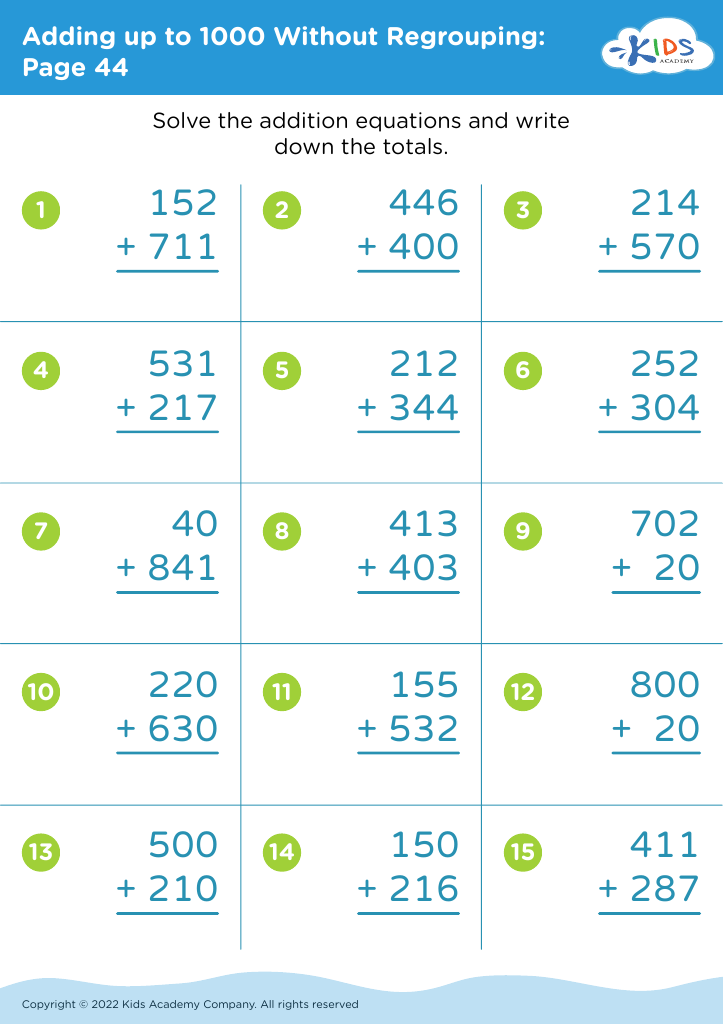
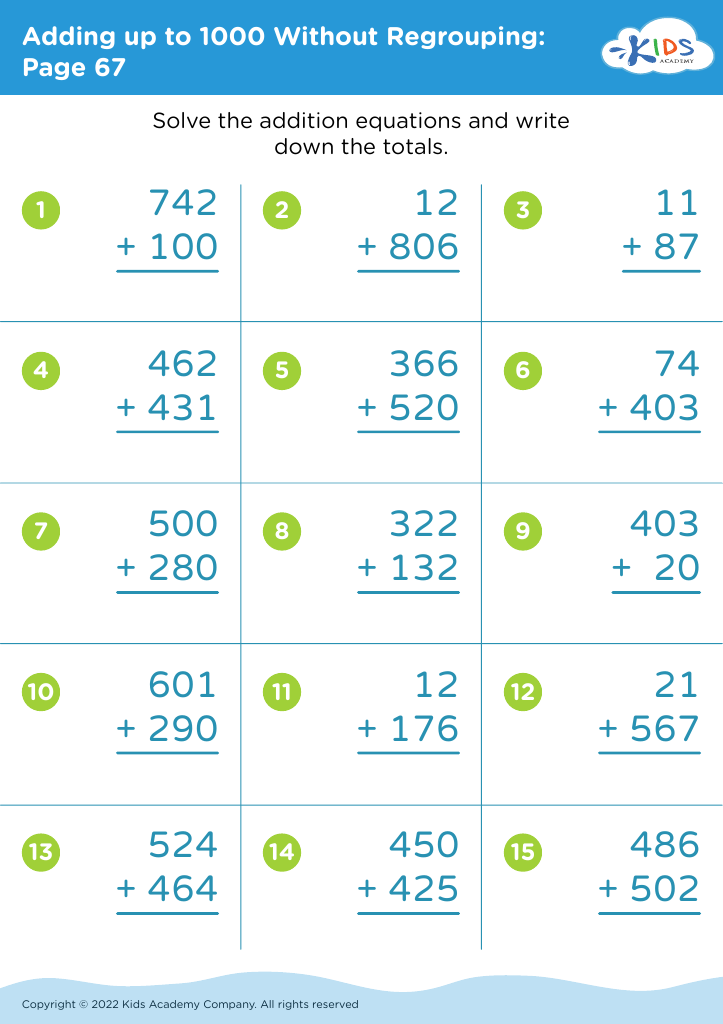
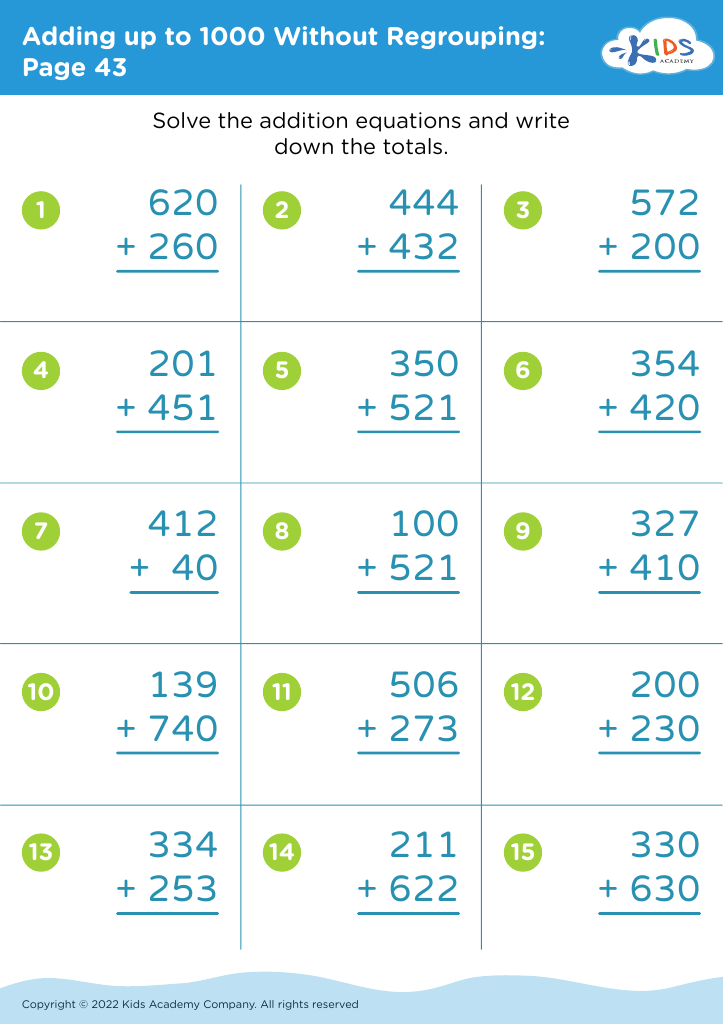
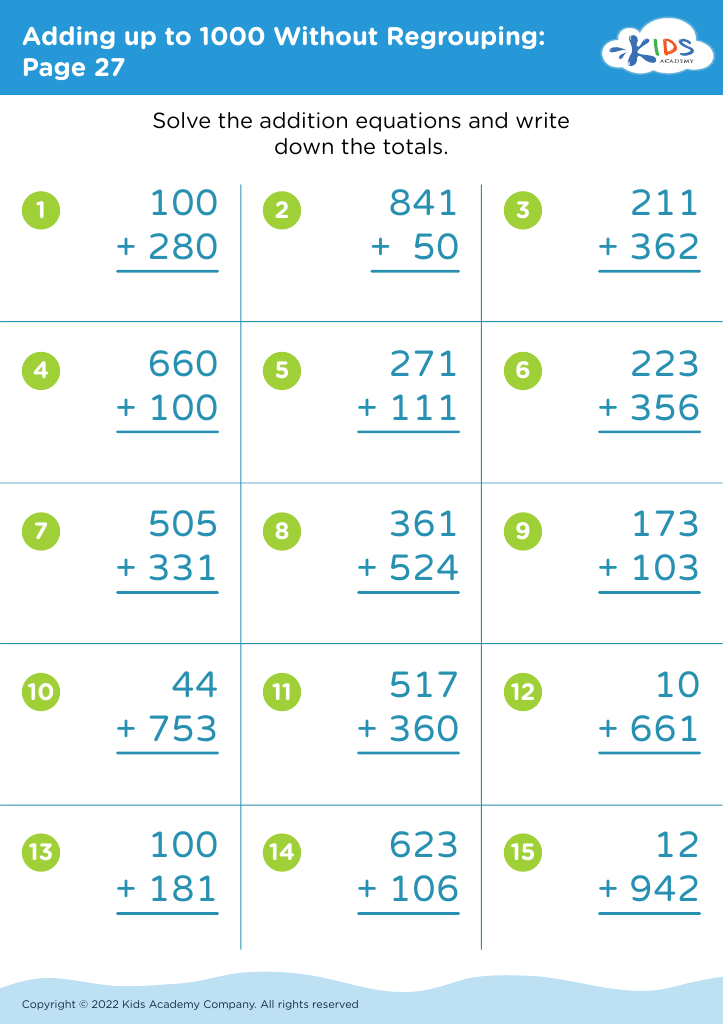
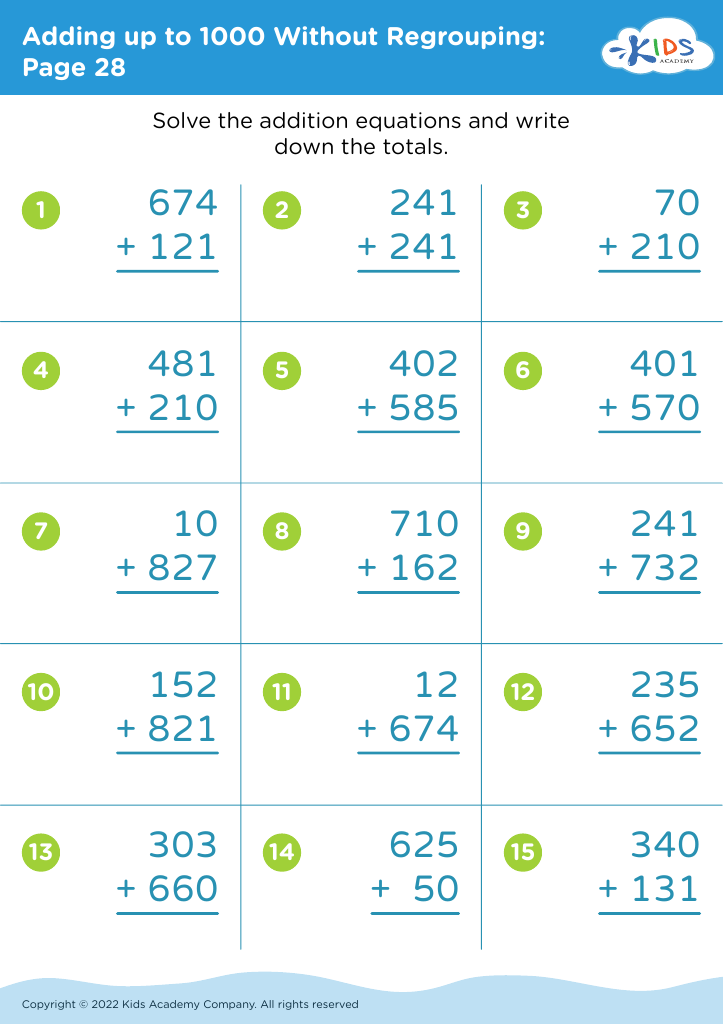
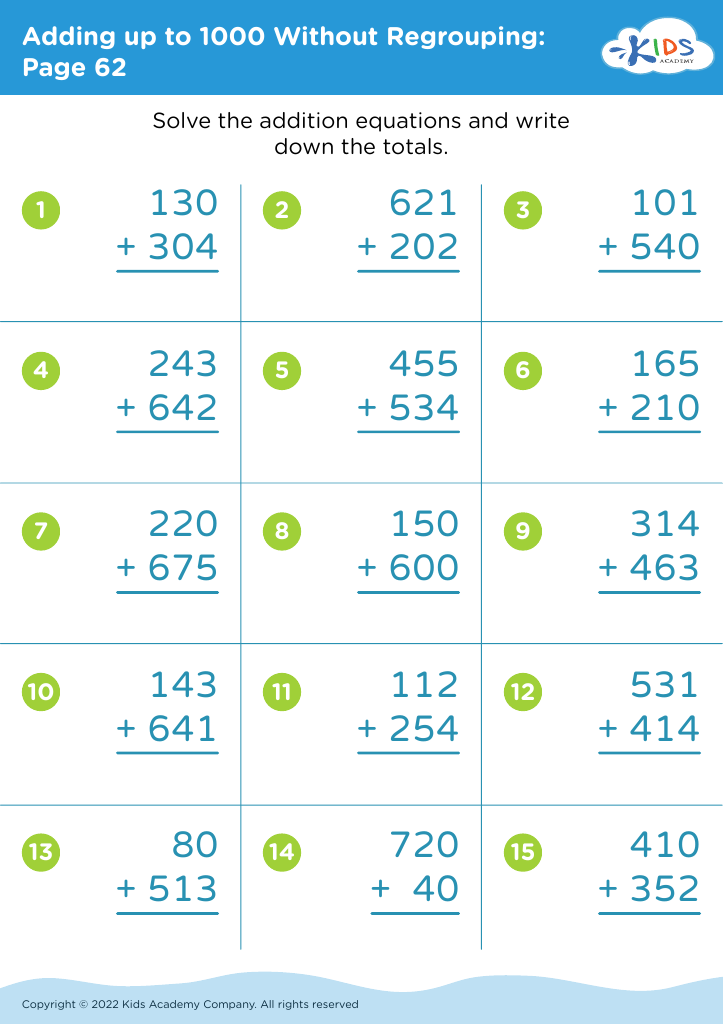
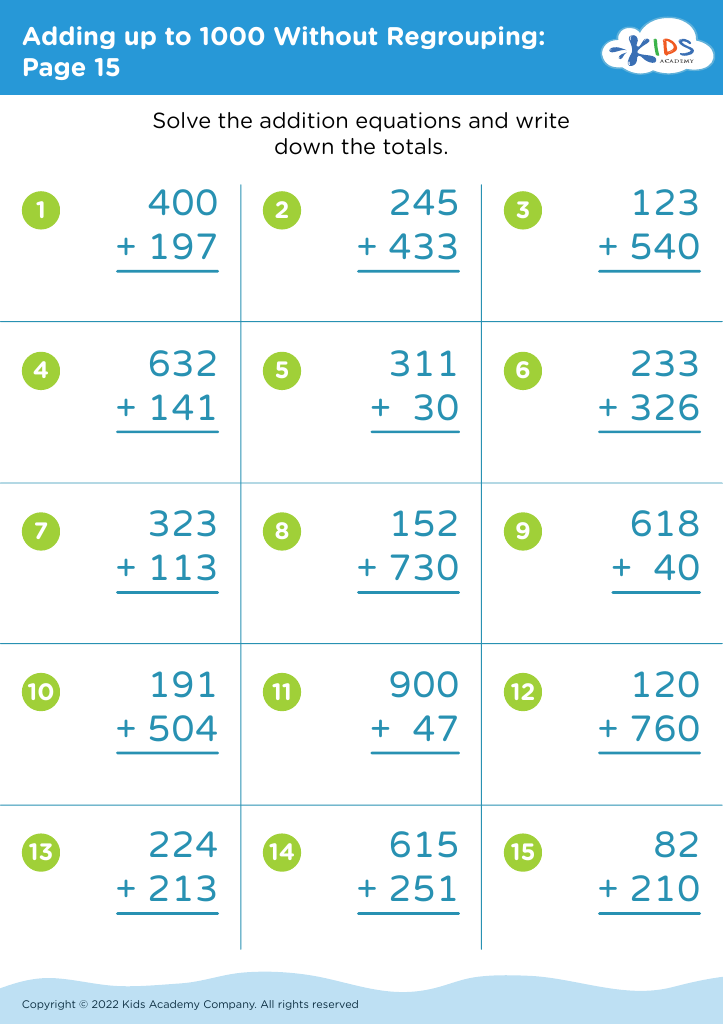
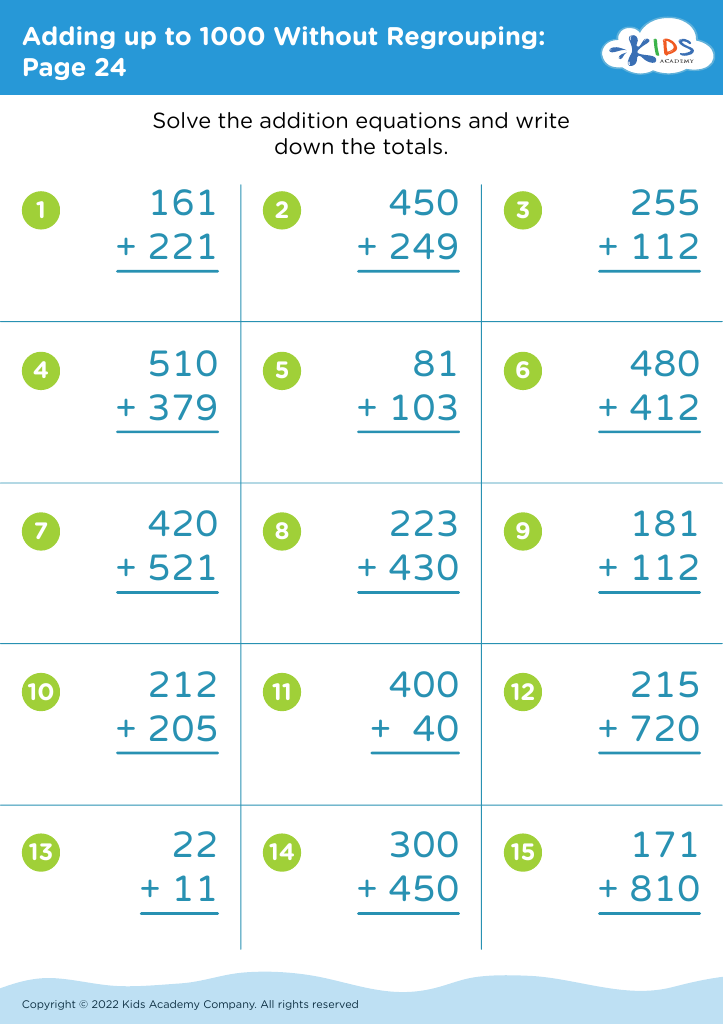


Understanding fractions and adding numbers up to 1000 without regrouping are essential skills that can benefit children in various aspects of their education and daily lives. For starters, mastering fractions is fundamental for working with proportions, ratios, and percentages. This knowledge is indispensable when tackling real-life scenarios, such as cooking recipes, budgeting finances, and understanding measurement units. It also lays the groundwork for more advanced math concepts that children will encounter in higher grades.
Turning to addition without regrouping, this foundational skill enhances mental arithmetic and boosts a child's confidence in math, fostering a positive attitude towards the subject. It encourages clear logical thinking and ensures basic arithmetic fluency, which is crucial for more complex problem-solving tasks. Being proficient in simple addition also aids in managing daily tasks with ease, whether it be counting money, planning time, or dividing resources.
For parents and teachers, promoting these skills helps children build a sturdy mathematical foundation, enabling them to tackle more advanced topics with greater ease and confidence. By fostering a deep understanding of these basic concepts, adults can help children develop critical thinking skills, improve academic performance, and equip them with practical tools they will use throughout their lives.








