Simplifying Fractions Adding up to 1000 Worksheets
6 filtered results
-
From - To
Discover our engaging "Simplifying Fractions Adding up to 1000 Worksheets," designed for early grade students to master the concept of simplifying fractions with ease. This resource provides a structured approach to help young learners refine their fraction skills while practicing addition. Each worksheet features clear explanations, interactive exercises, and colorful visuals to captivate young minds. As children work through these worksheets, they will enhance their critical thinking and problem-solving abilities while building a solid foundation in mathematics. Perfect for classroom use or home practice, these worksheets make learning fun and effective, ensuring your child’s success in simplifying fractions!
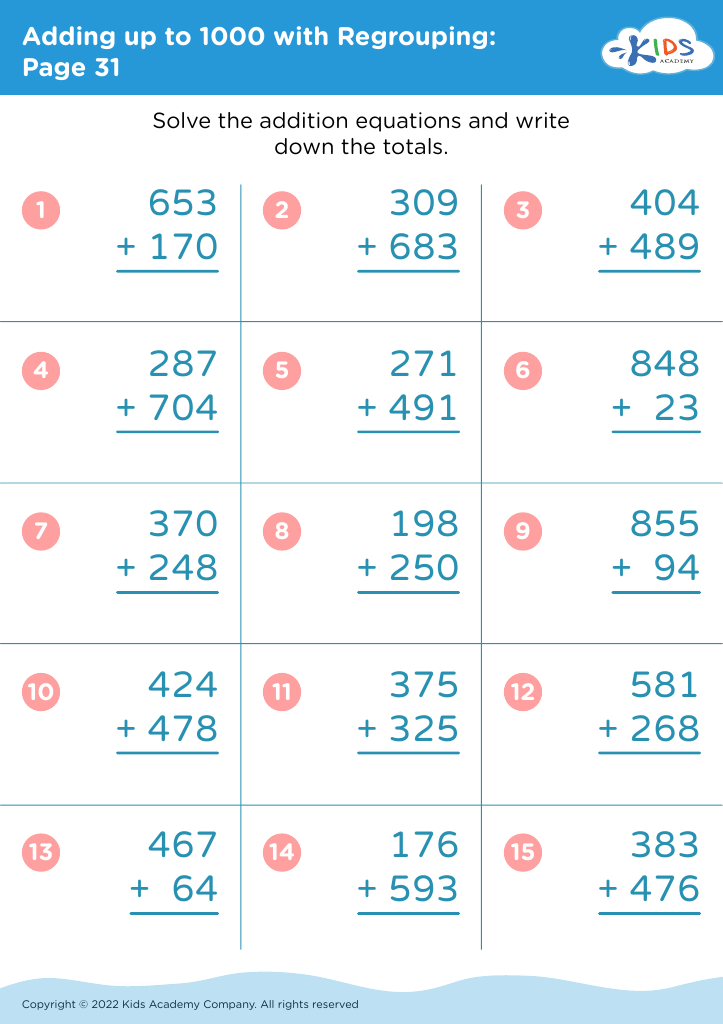
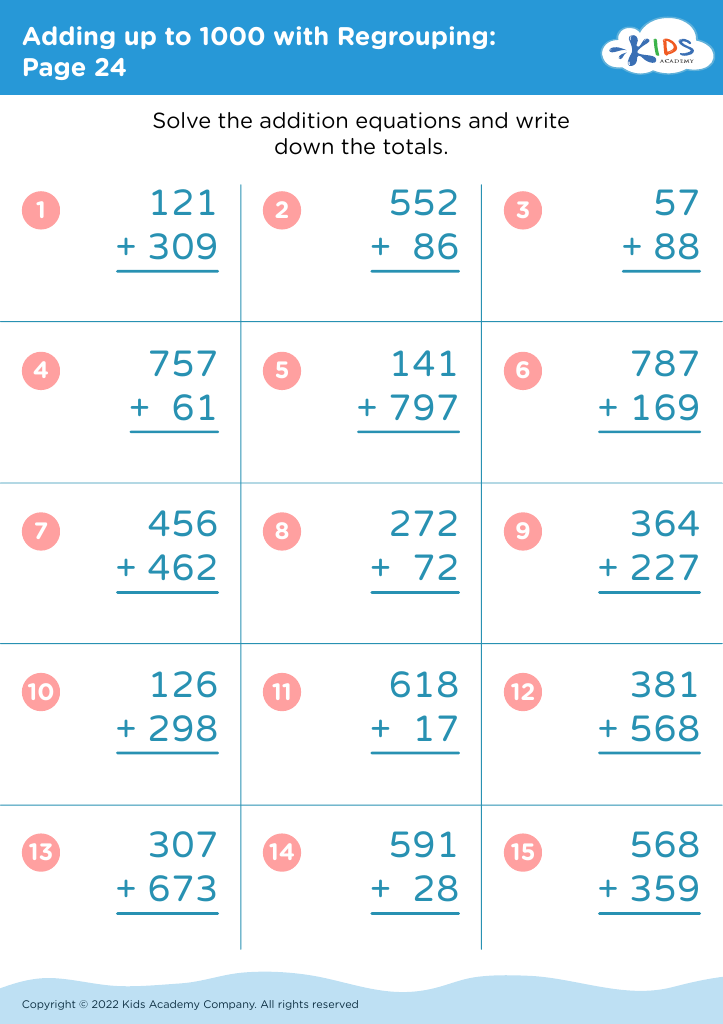
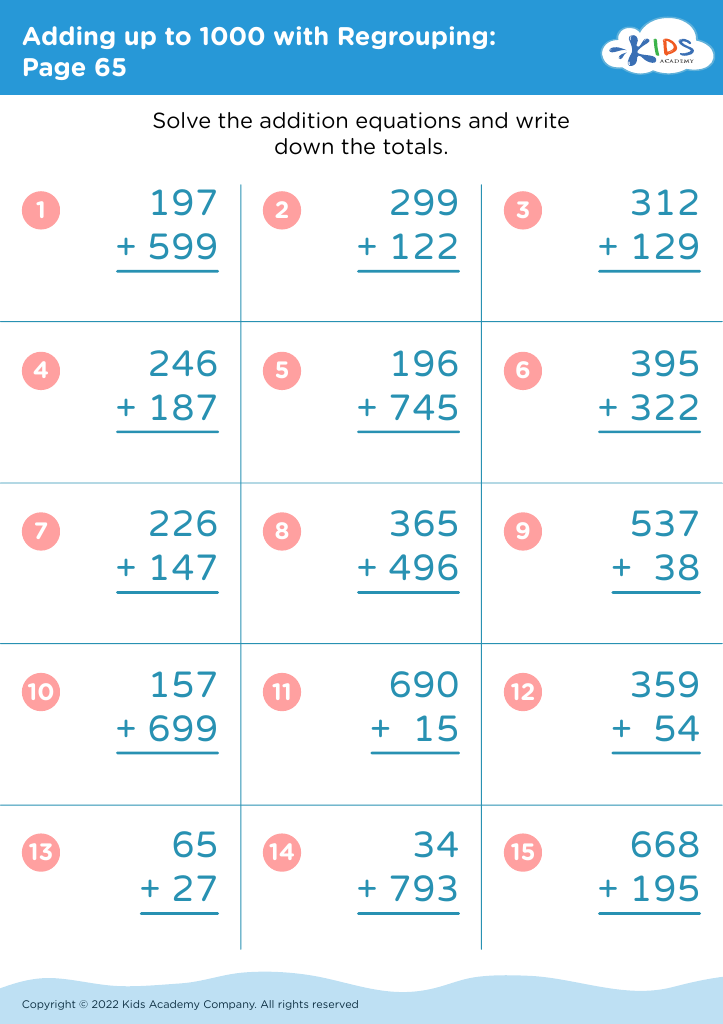
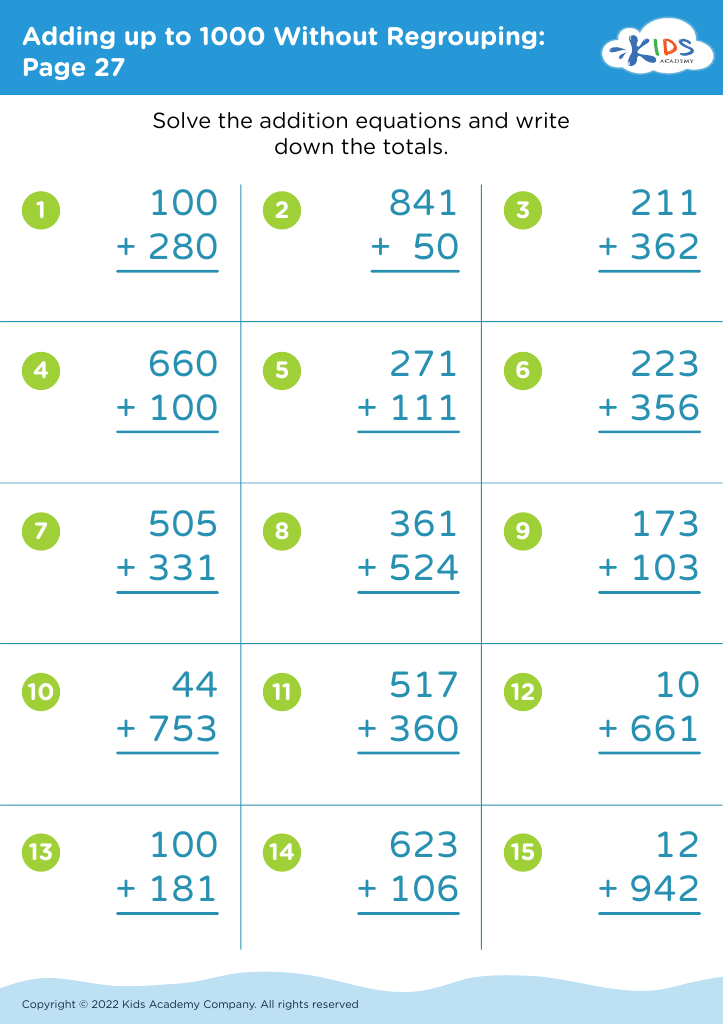
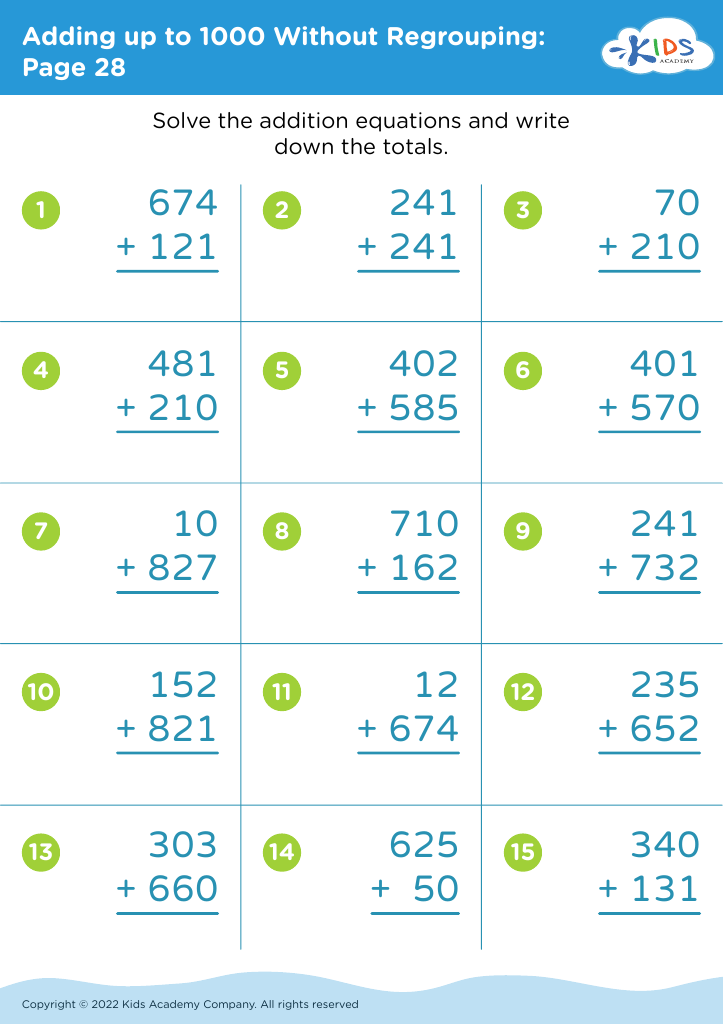
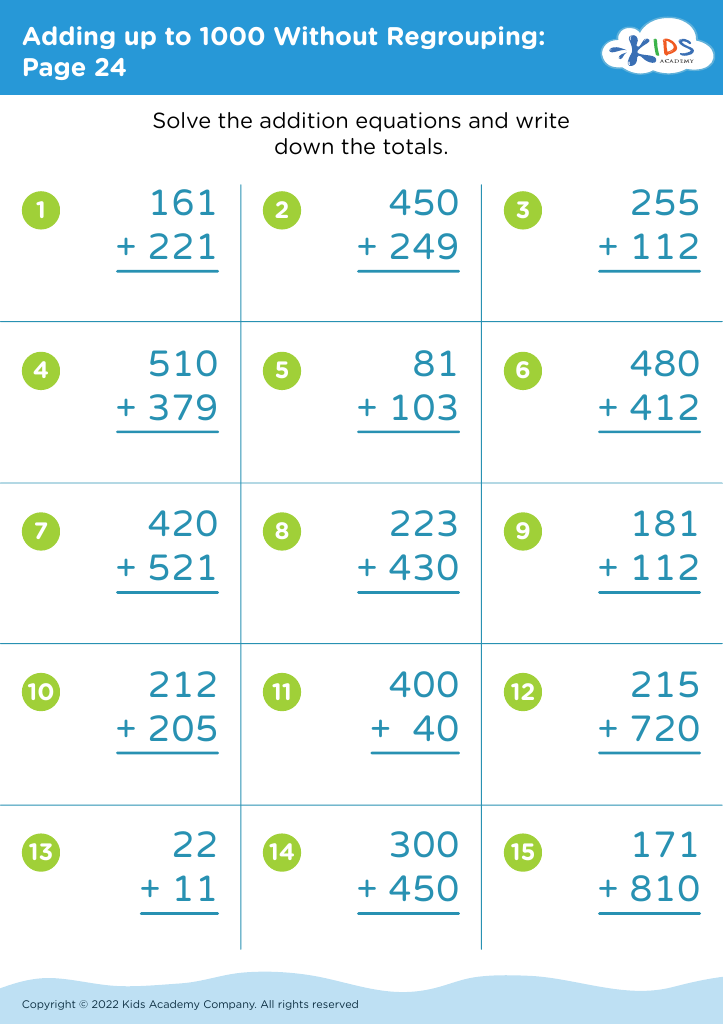



Parents and teachers should prioritize understanding "Simplifying Fractions Adding up to 1000" because it lays a foundational understanding of both fractions and overall numerical reasoning. Mastery of simplification fosters a deeper grasp of proportionality and ratios, which are pivotal in everyday situations, such as cooking, budgeting, and measurement.
When fractions are simplified, students can easily visualize relationships between parts of a whole, making concepts like division and multiplication more intuitive. Additionally, learning to work with fractions prepares students for more complex mathematical operations they will encounter in higher grades, including algebra and geometry.
Furthermore, addressing the concept of numbers summing up to 1000 encourages students to think critically about equivalencies and enhances their problem-solving skills. This critical thinking is essential not only for math but also bolsters their science and analytical studies.
For parents, engaging with this material can foster meaningful conversations about math, enhancing their child’s confidence and interest in the subject. Ultimately, simplifying fractions is more than just a math skill; it’s a gateway to developing logical reasoning and lifelong analytical capabilities, benefitting students throughout their education and daily lives.








