Understand fractions Adding up to 1000 Worksheets
4 filtered results
-
From - To
Explore our "Understand Fractions Adding up to 1000 Worksheets," designed to enhance students' grasp of fractions within the context of whole numbers. These engaging worksheets offer a variety of activities that help young learners visualize and apply fraction concepts alongside addition skills. With clear instructions and colorful illustrations, children will enjoy practicing how to combine fractions, recognize equivalent fractions, and understand while adding up to 1000. Ideal for classrooms or at-home learning, these resources make fraction learning enjoyable and interactive. Empower your students to master fractions, boosting their confidence and proficiency in math with our comprehensive and appealing worksheets!
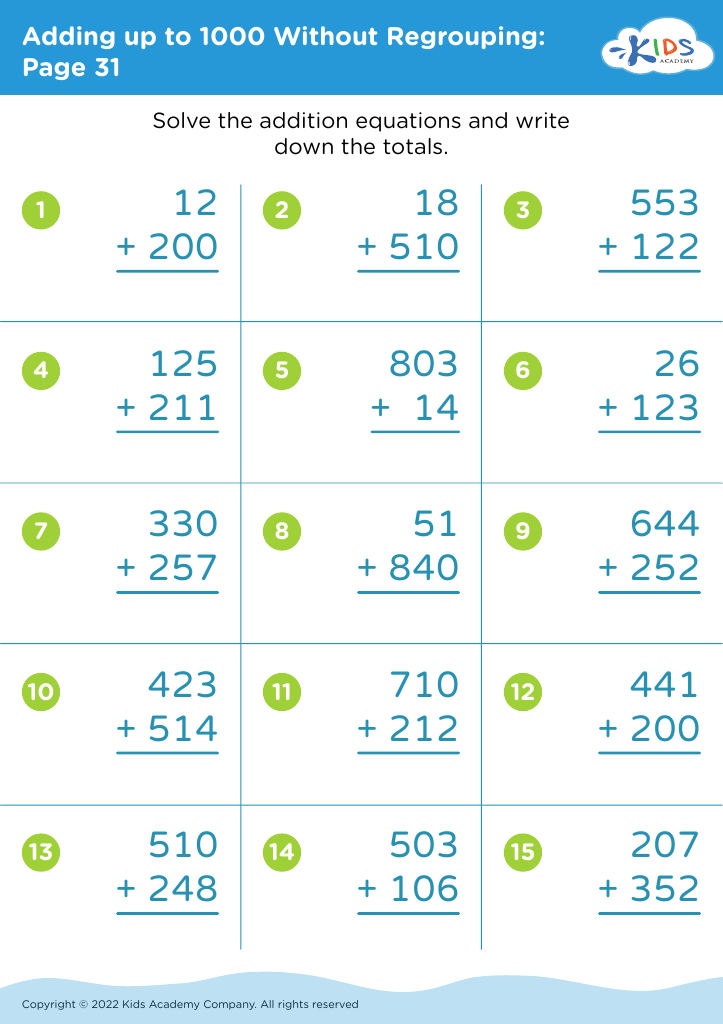
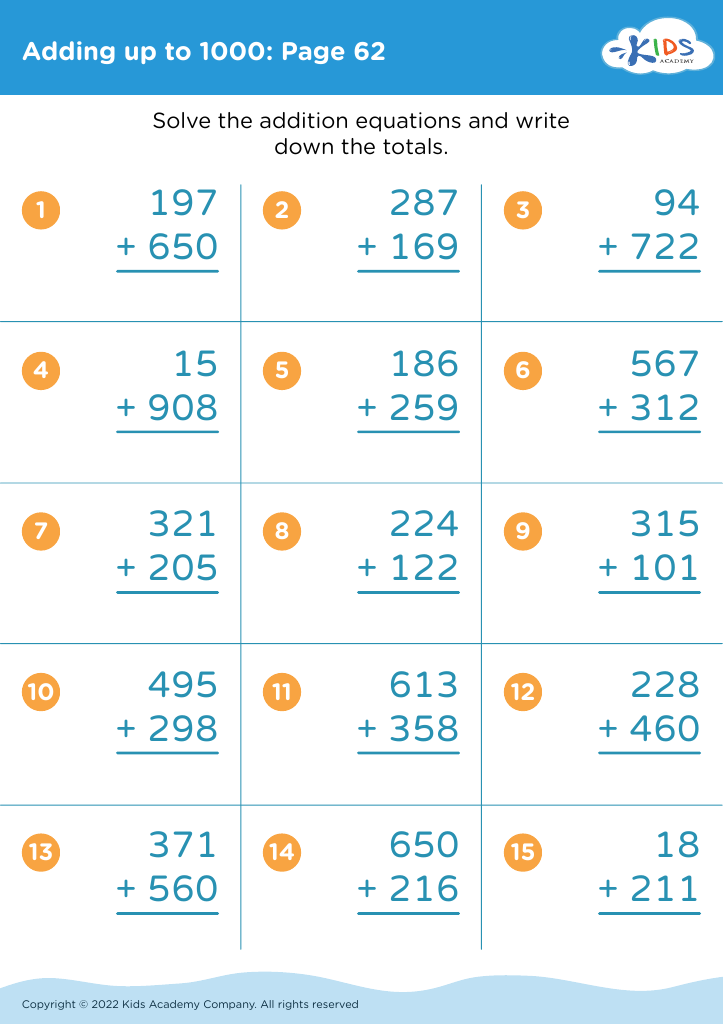
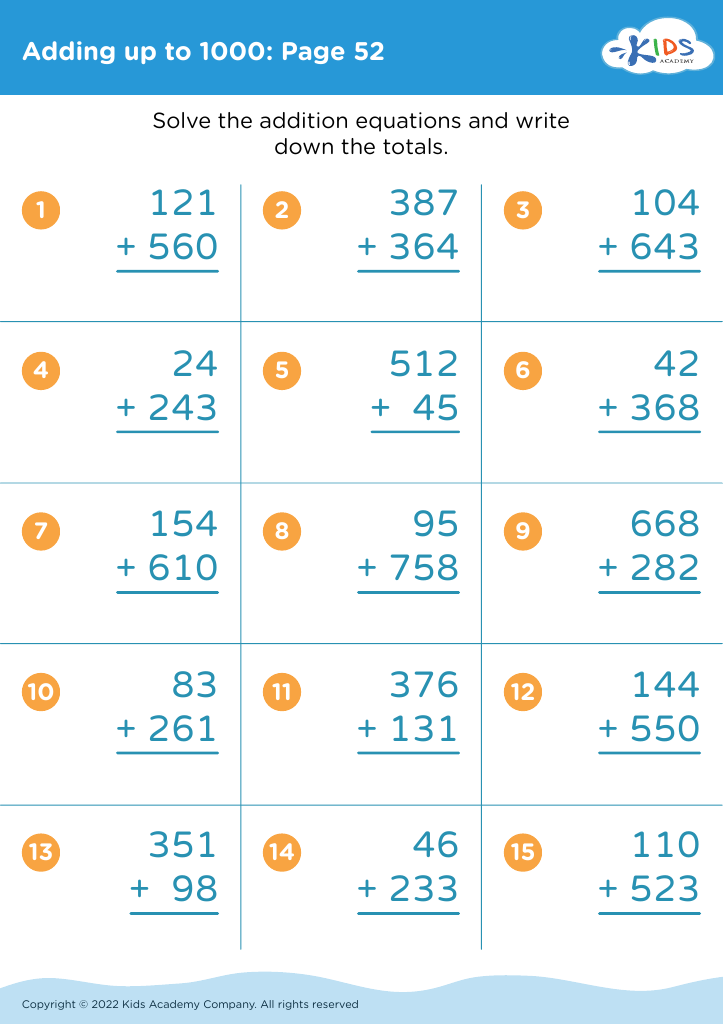
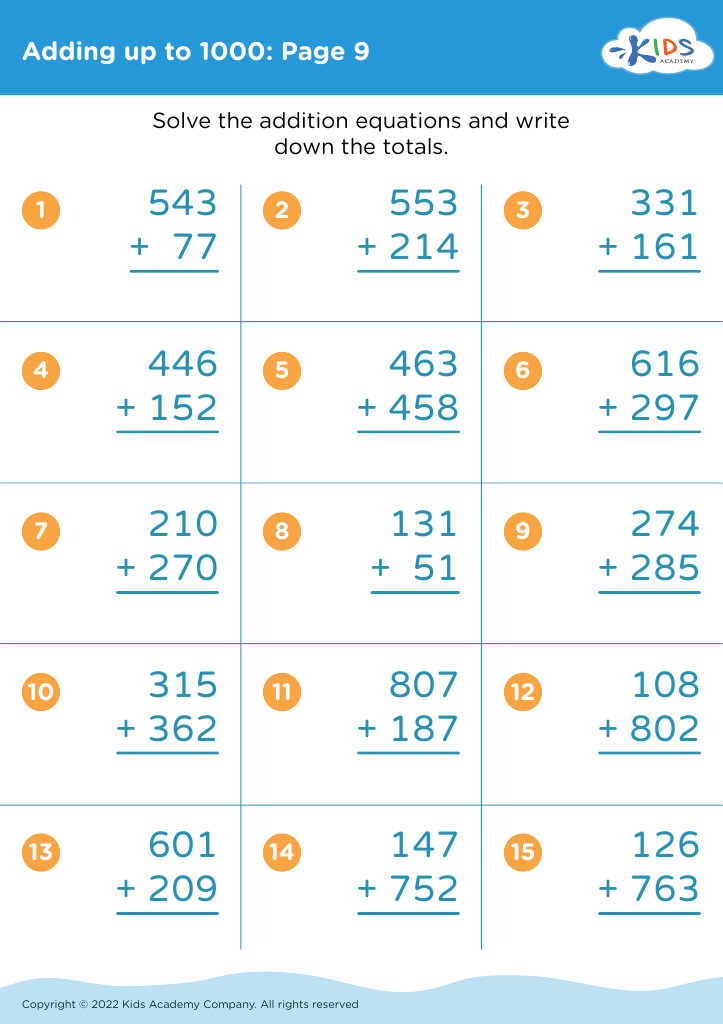



Understanding fractions and their relation to whole numbers, such as adding up to 1000, is vital for students’ overall mathematical development. Fractions are foundational for various advanced concepts in math, science, and everyday life. When parents and teachers emphasize fraction comprehension, children develop critical thinking and problem-solving skills. Mastery in this area fosters confidence, enabling students to tackle more complex mathematical challenges as they progress through their education.
Moreover, fractions play a significant role in real-world applications, such as cooking, budgeting, and measuring. For example, understanding how to add fractions in relation to whole numbers can prepare students to manage finances, grasp measurements in recipes, or analyze data effectively. By making connections between fractions and whole numbers, educators can help children visualize and quantify the world around them.
Focusing on adding fractions up to 1000 also reflects a systemic approach to building mathematical fluency. The skills gained from working with fractions resonate throughout later concepts, including ratios, proportions, and percentages. In summary, engaging children with fractions equips them with essential skills, supports their academic journey, and prepares them for real-life challenges, underscoring why parents and teachers should value this critical area of learning.








