Filters

44 filtered results

Clear all filters
Favorites
With answer key
Interactive

44 filtered results

Difficulty Level

Grade


Check out this FREE Trial Lesson on Adding up to 1000!

H

Favorites
With answer key
Interactive
  • Understanding fractions
  • Adding up to 1000
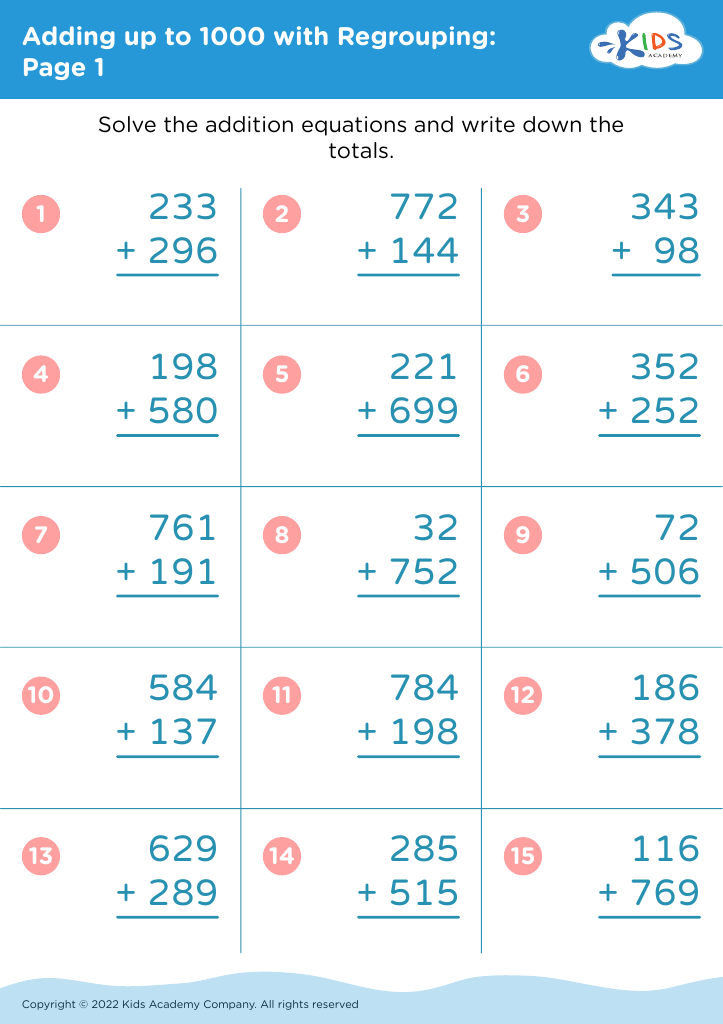
Adding up to 1000 with Regrouping: Page 1
Worksheet
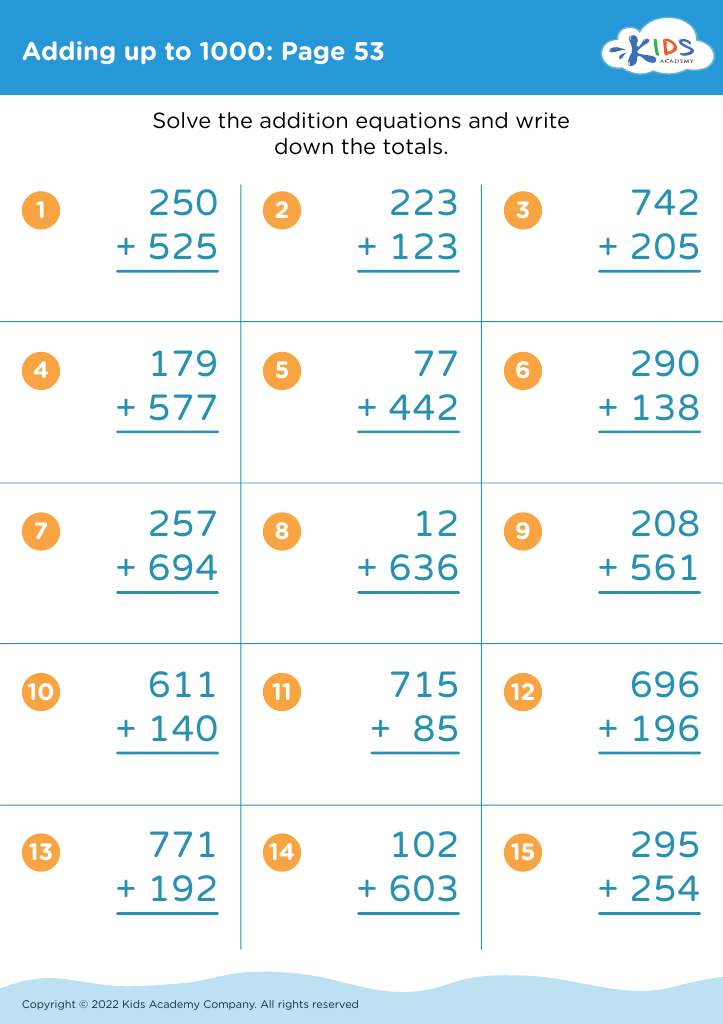
Adding up to 1000: Page 53

Adding up to 1000: Page 53

Adding up to 1000: Page 53
Worksheet
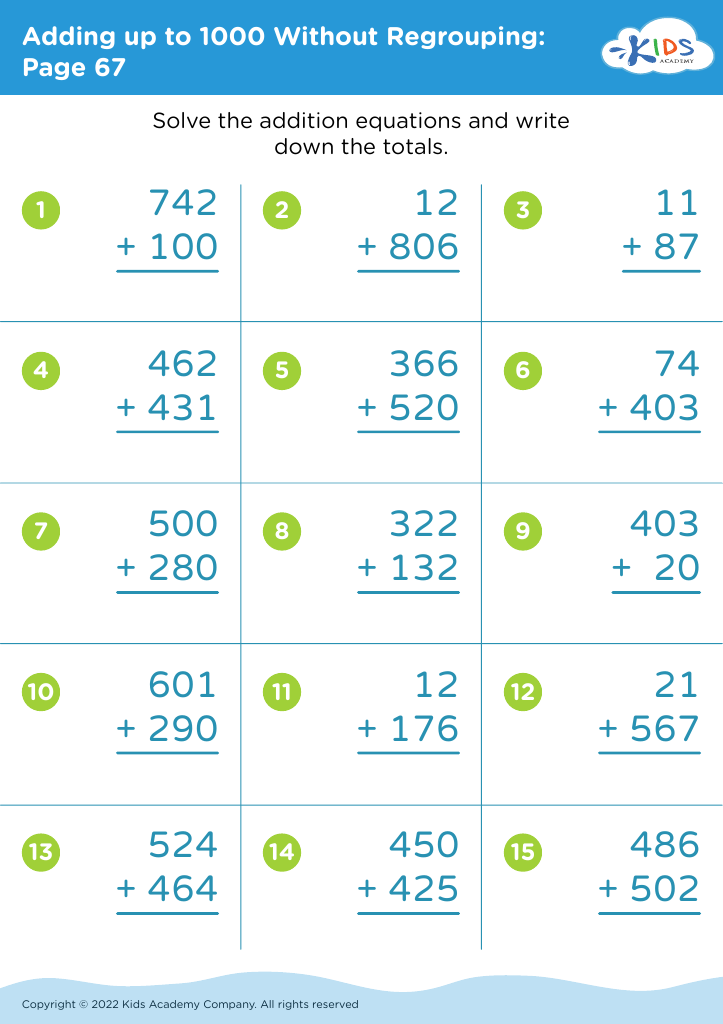
Adding up to 1000 Without Regrouping: Page 67
Worksheet
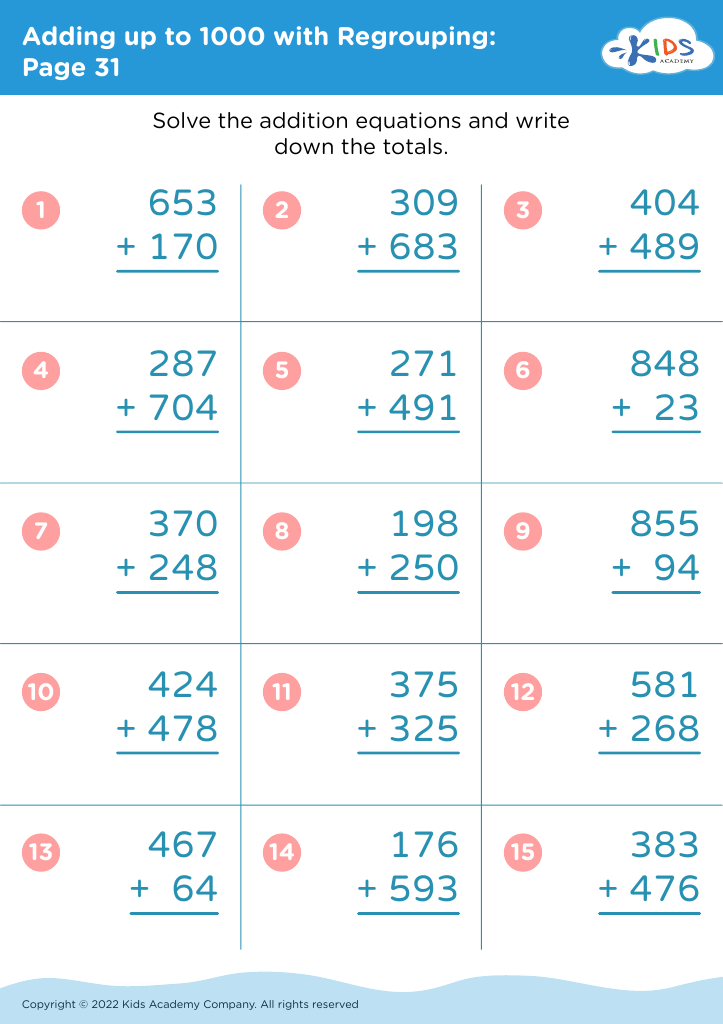
Adding up to 1000 with Regrouping: Page 31
Worksheet
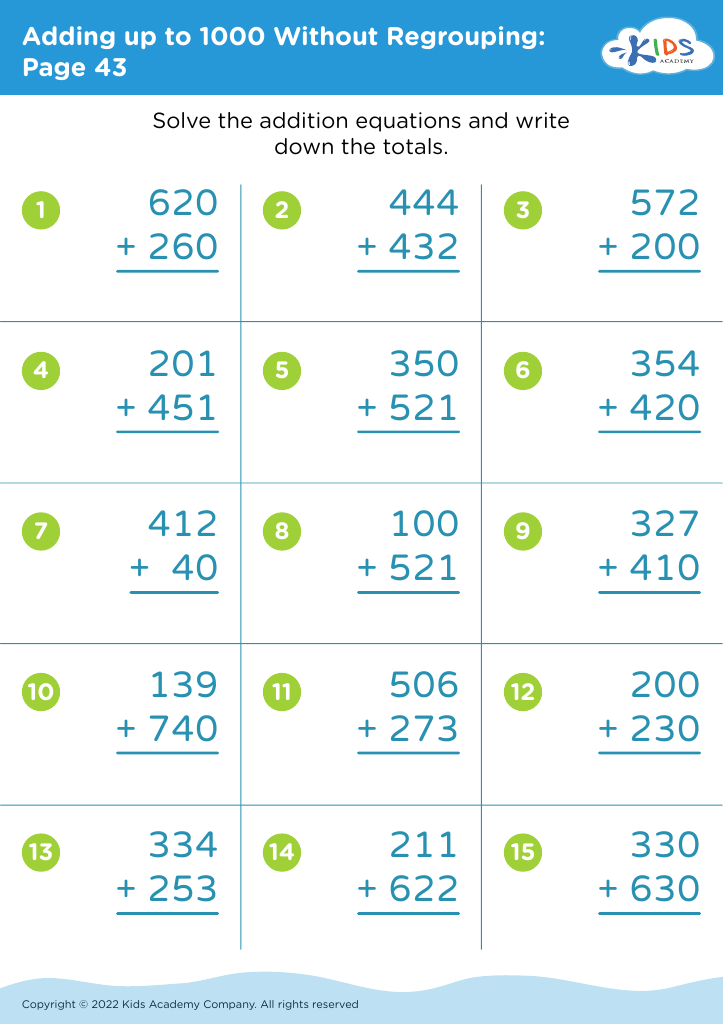
Adding up to 1000 Without Regrouping: Page 43
Worksheet
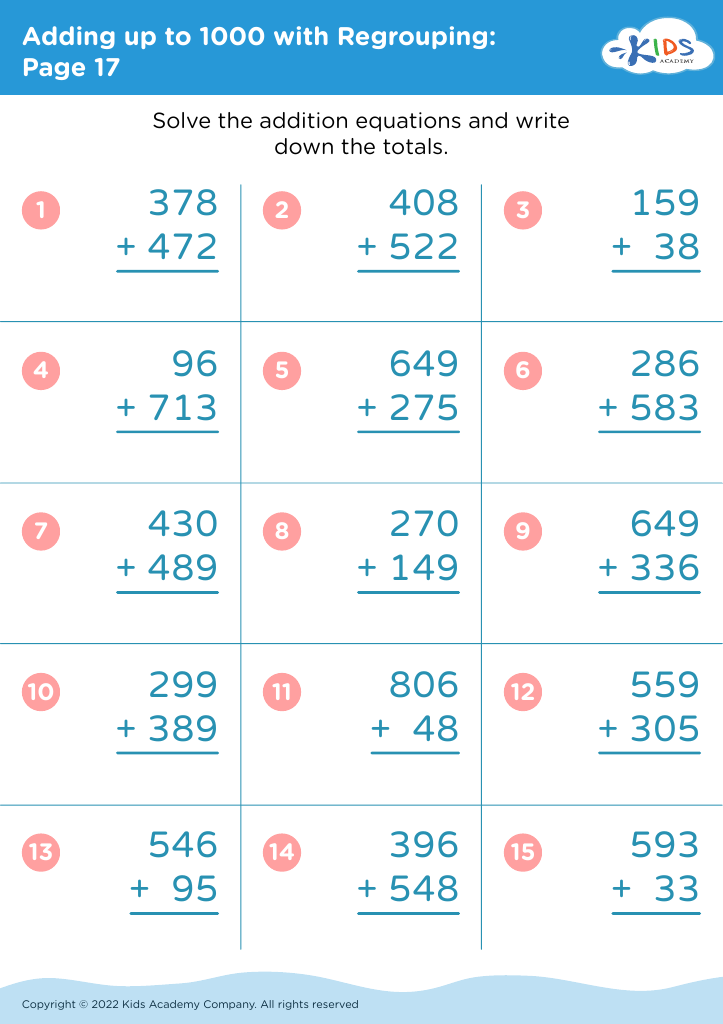
Adding up to 1000 with Regrouping: Page 17
Worksheet
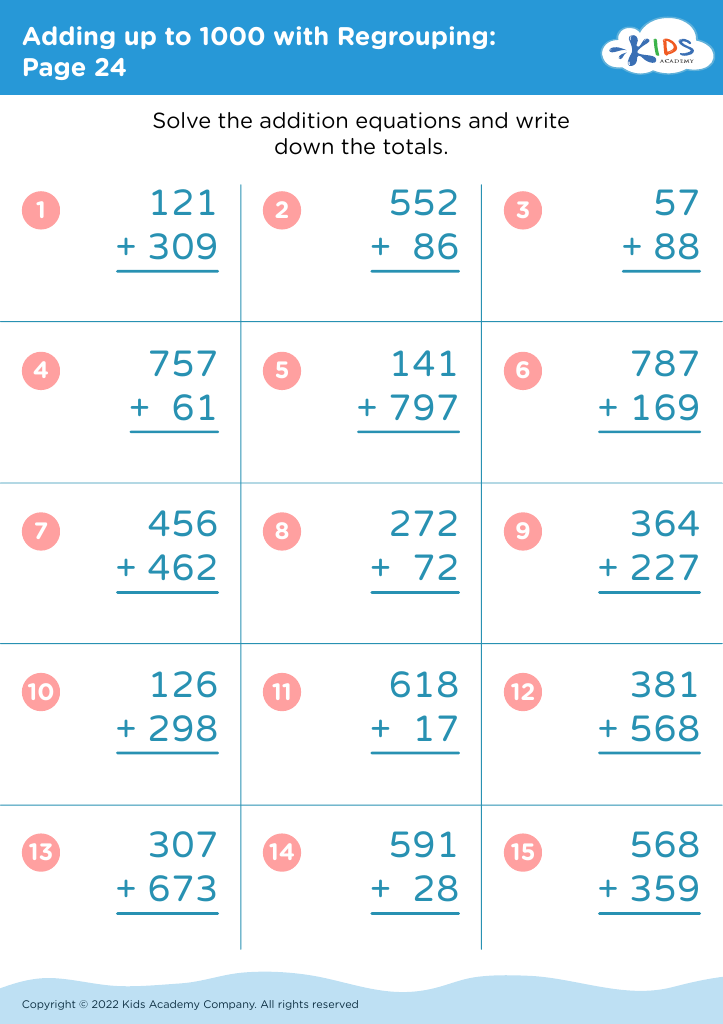
Adding up to 1000 with Regrouping: Page 24
Worksheet
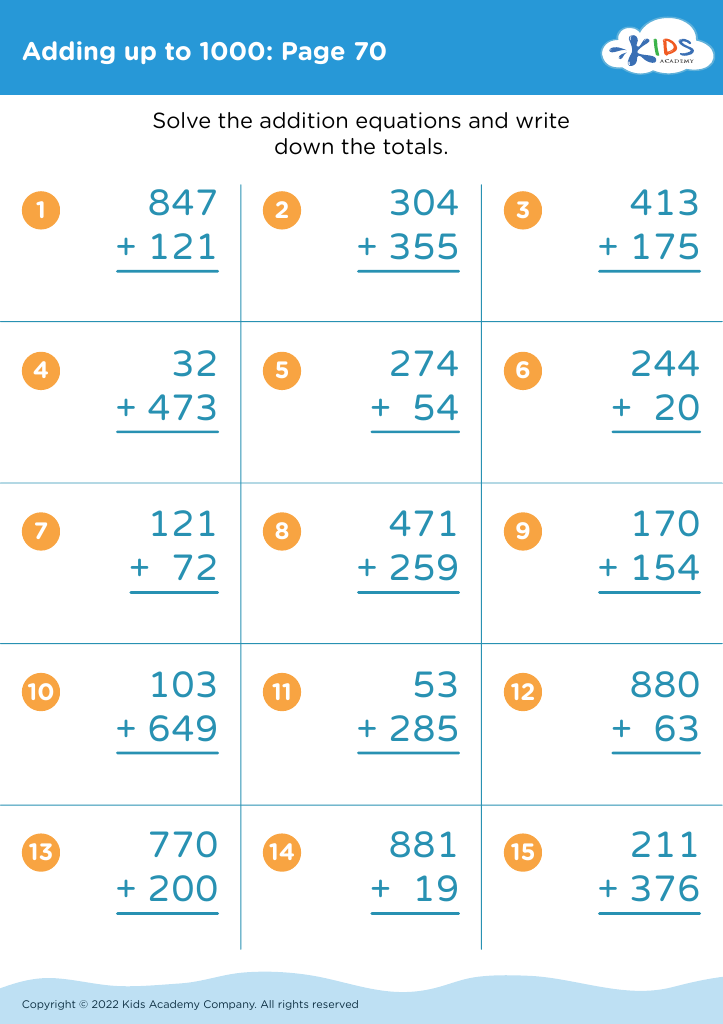
Adding up to 1000: Page 70

Adding up to 1000: Page 70

Adding up to 1000: Page 70
Worksheet
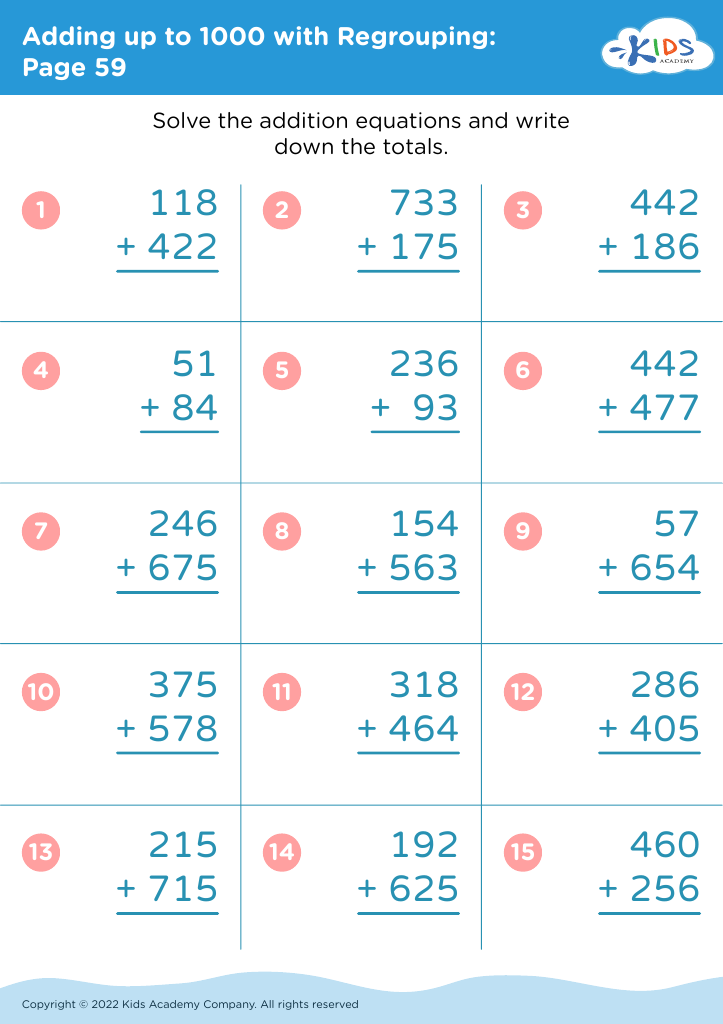
Adding up to 1000 with Regrouping: Page 59
Worksheet
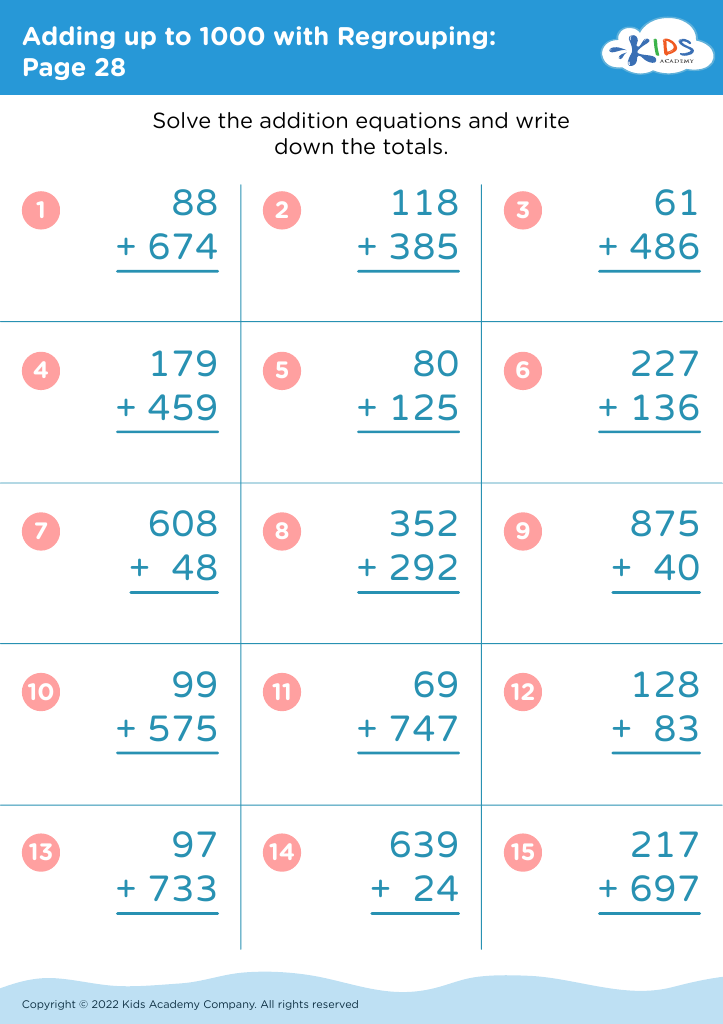
Adding up to 1000 with Regrouping: Page 28
Worksheet
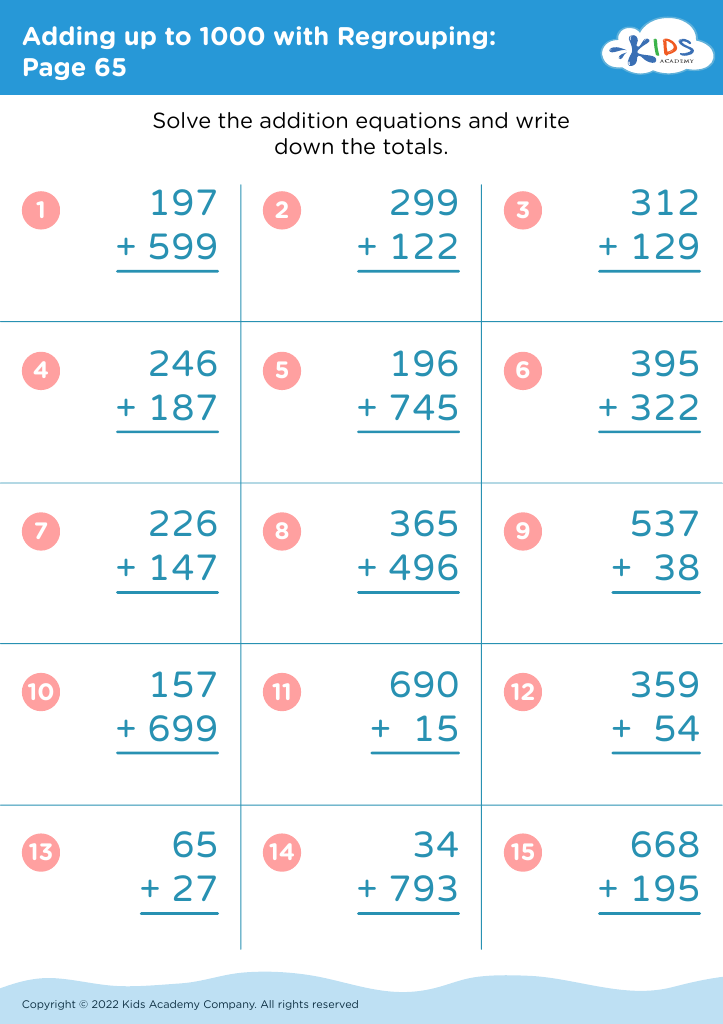
Adding up to 1000 with Regrouping: Page 65
Worksheet
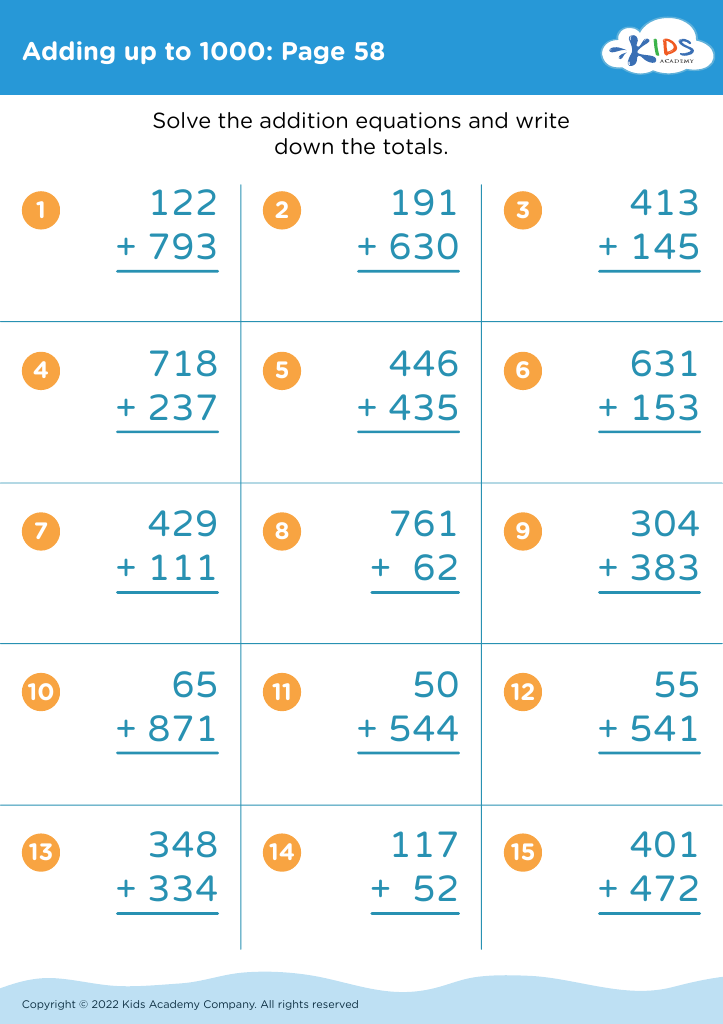
Adding up to 1000: Page 58

Adding up to 1000: Page 58

Adding up to 1000: Page 58
Worksheet
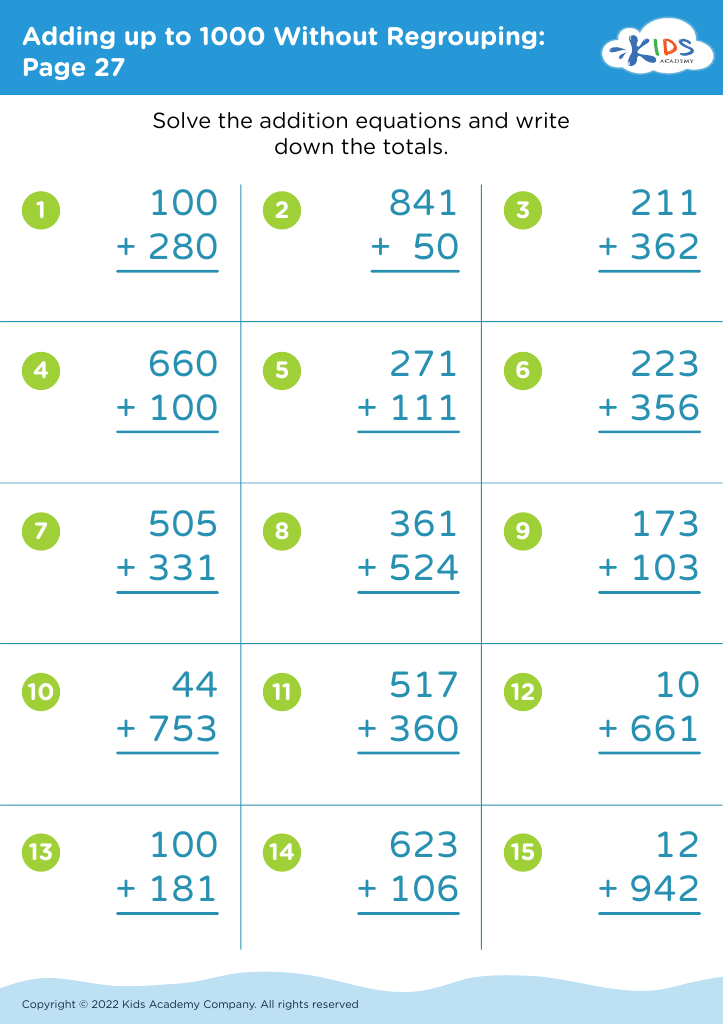
Adding up to 1000 Without Regrouping: Page 27
Worksheet
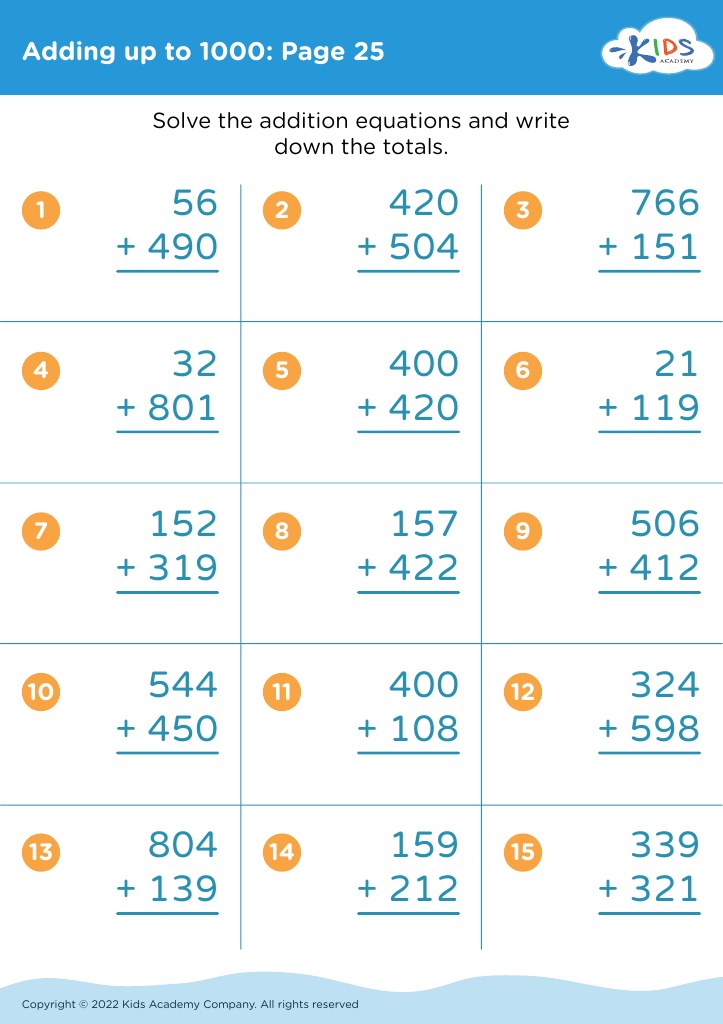
Adding up to 1000: Page 25

Adding up to 1000: Page 25

Adding up to 1000: Page 25
Worksheet
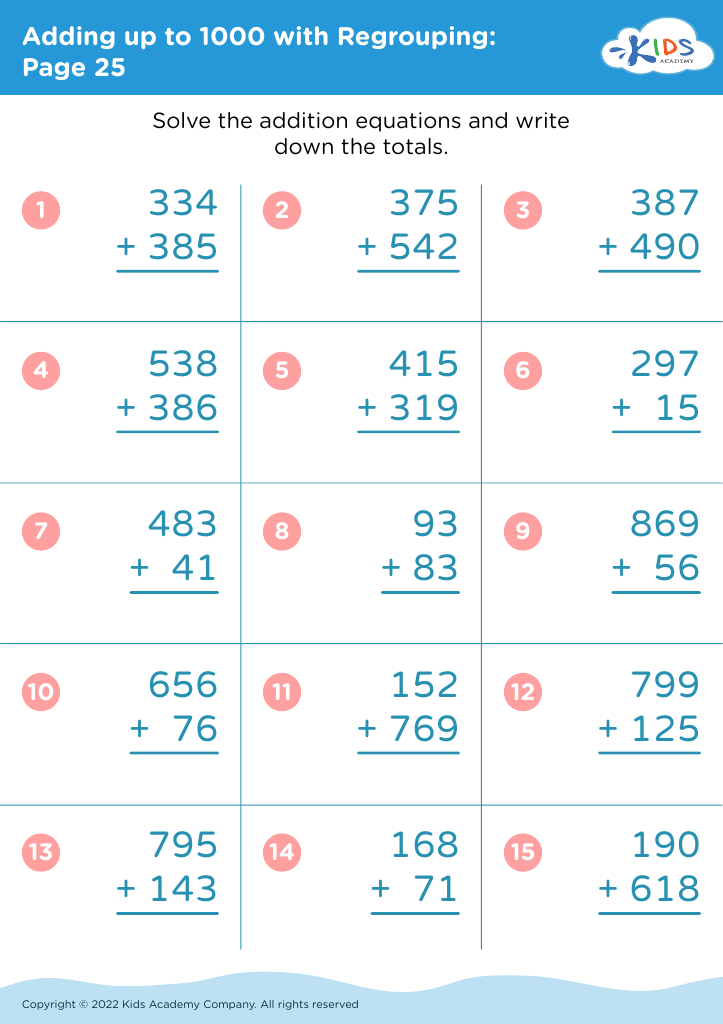
Adding up to 1000 with Regrouping: Page 25
Worksheet
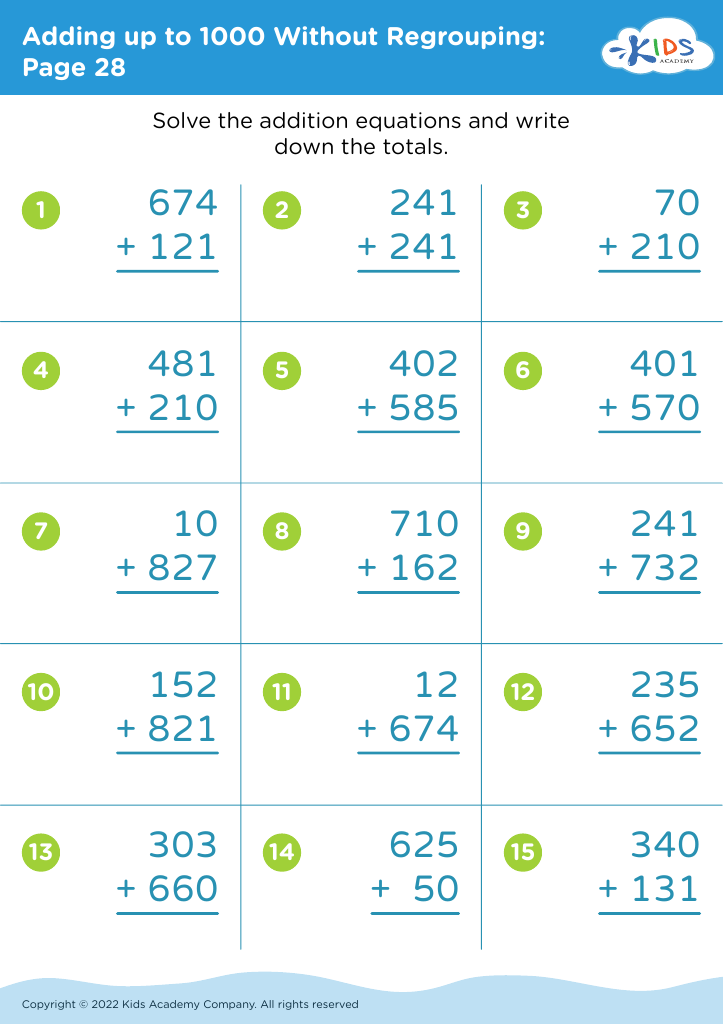
Adding up to 1000 Without Regrouping: Page 28
Worksheet
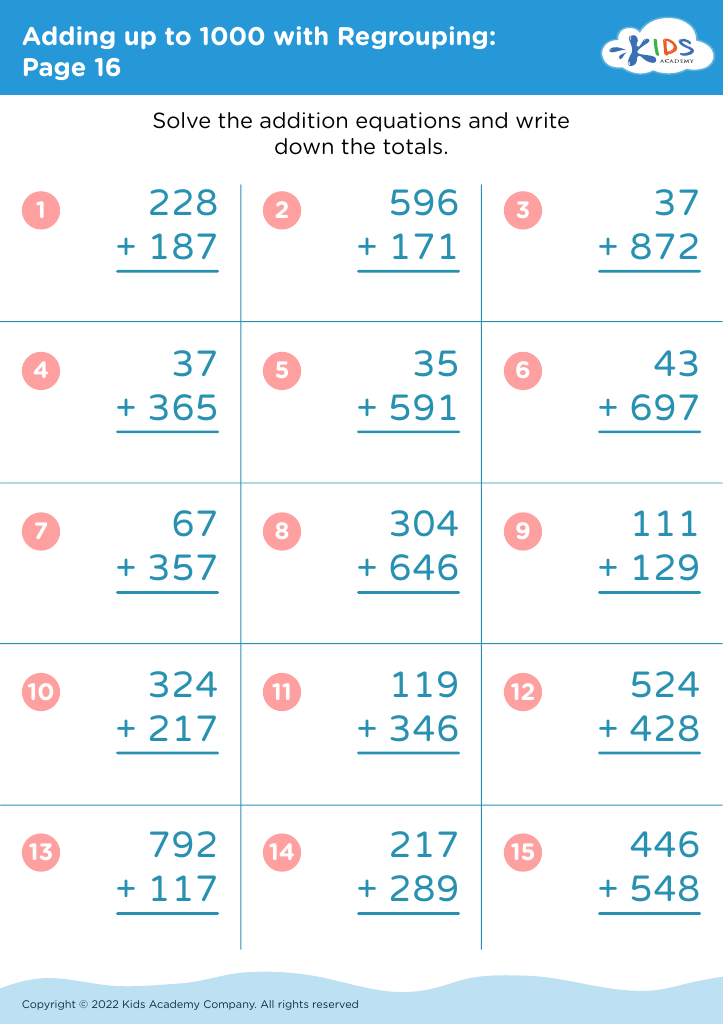
Adding up to 1000 with Regrouping: Page 16
Worksheet
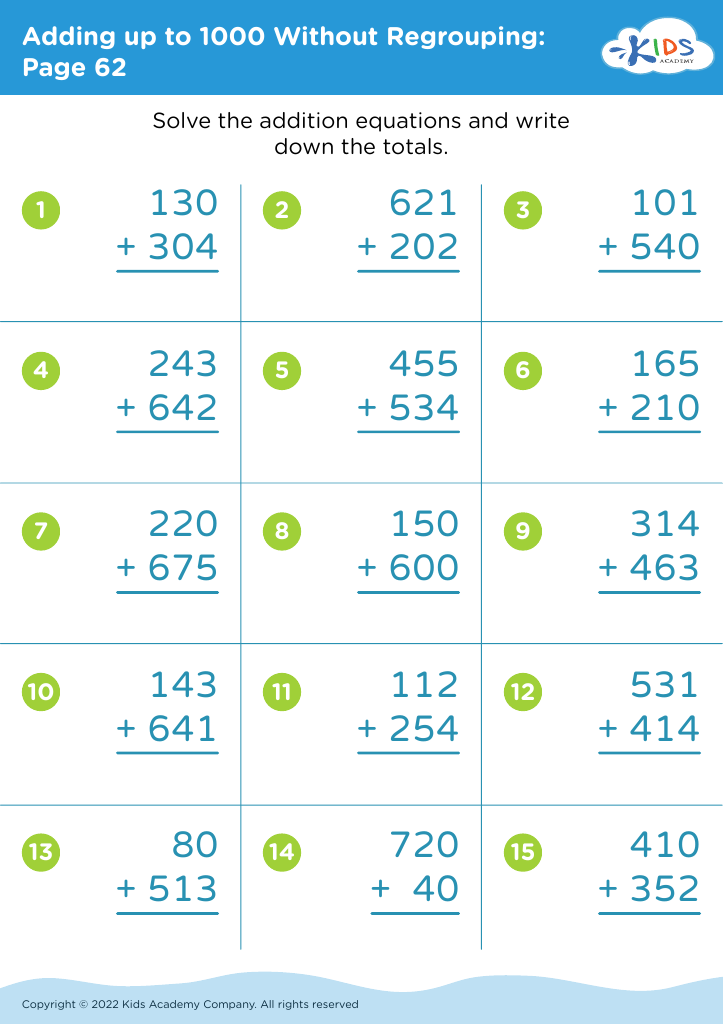
Adding up to 1000 Without Regrouping: Page 62
Worksheet
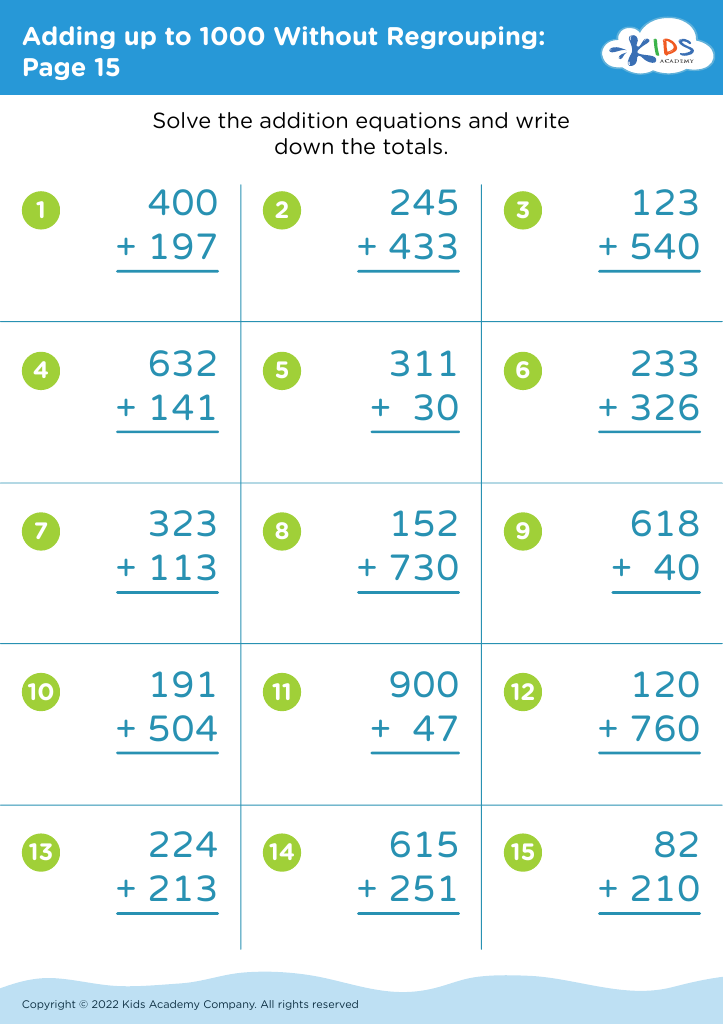
Adding up to 1000 Without Regrouping: Page 15
Worksheet
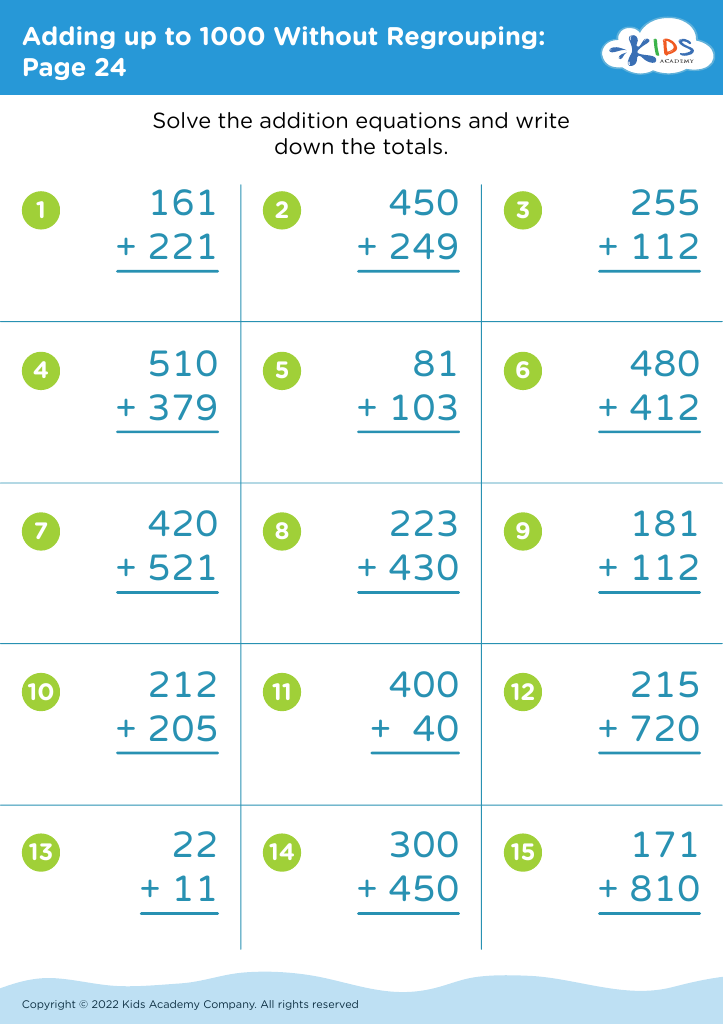
Adding up to 1000 Without Regrouping: Page 24
Worksheet


Understanding fractions and their relation to whole numbers is a critical foundational math skill for early grade students, and studying fractions in the context of larger numbers (like adding up to 1000) can be immensely beneficial. Fractions represent parts of a whole, and grasping this concept allows children to understand proportions, ratios, and division, which are essential for more advanced math topics they will encounter later.

When parents or teachers emphasize the importance of fractions, they help students develop strong number sense and reasoning skills. This eliminates the common fear or difficulty students have with mathematics as they advance. Linking fractions to larger sums like 1000 not only reinforces their understanding of fractions as parts of a whole but also promotes confidence in handling big numbers, an essential skill in real-world problem-solving.

Furthermore, practical understanding assists in everyday situations, such as cooking recipes, dividing resources, or managing finances. Associating fractions with large totals and understandings like this embeds intuitive problem-solving skills early on. Therefore, nurturing comprehension in this area promotes overall mathematical literacy, critical thinking, and equips children with tools for academic and lifelong success.