


.jpg)




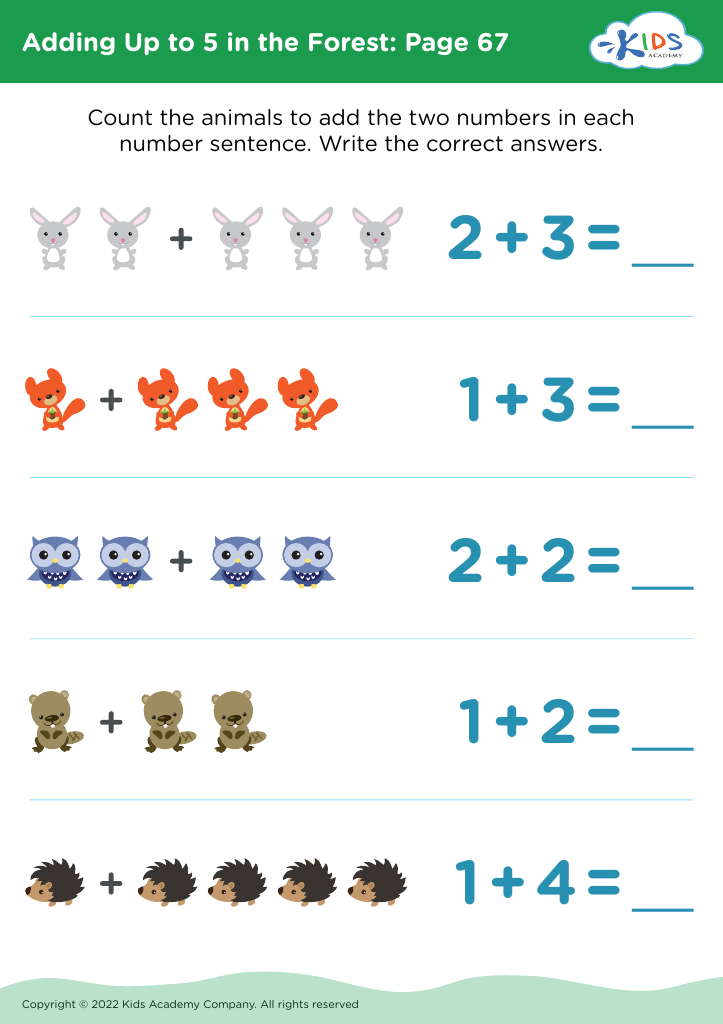
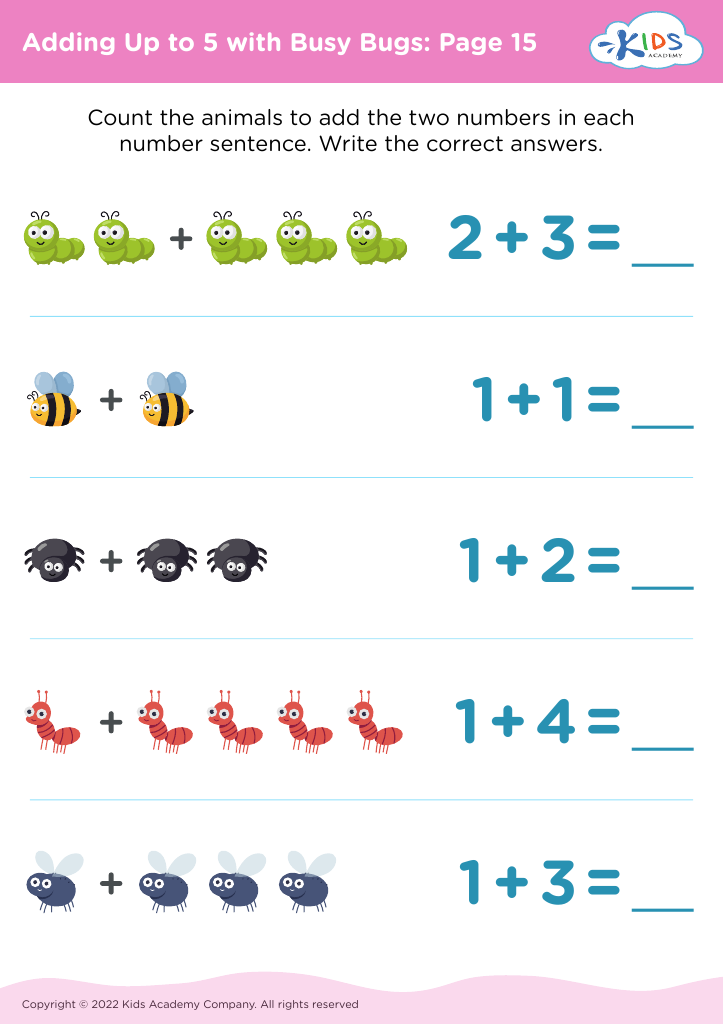
Addition practice, particularly for adding up to 5, is a crucial early mathematical skill that forms the foundation for future learning. For parents and teachers, fostering this skill is essential for several reasons.
Firstly, mastering addition within this small range helps children develop number sense, which is the ability to understand and manipulate numbers. It builds confidence, making students more comfortable with math as they progress to larger numbers and complex concepts.
Secondly, addition practice encourages cognitive development. Through repetitive exercises, children enhance critical thinking and problem-solving skills as they learn to recognize patterns and relationships between numbers.
Additionally, this foundational practice aids in connecting mathematical concepts to real-life situations. For example, counting objects, sharing snacks, or playing simple board games encourages active learning that reinforces these skills organically.
Furthermore, a strong understanding of addition sets the stage for more advanced topics such as subtraction, multiplication, and even basic algebra.
Thus, engaging in consistent addition practice not only benefits academic performance but also equips students with essential life skills. Parents and teachers play vital roles in providing support and encouragement in this foundational stage, ensuring a solid mathematical base for future success.








