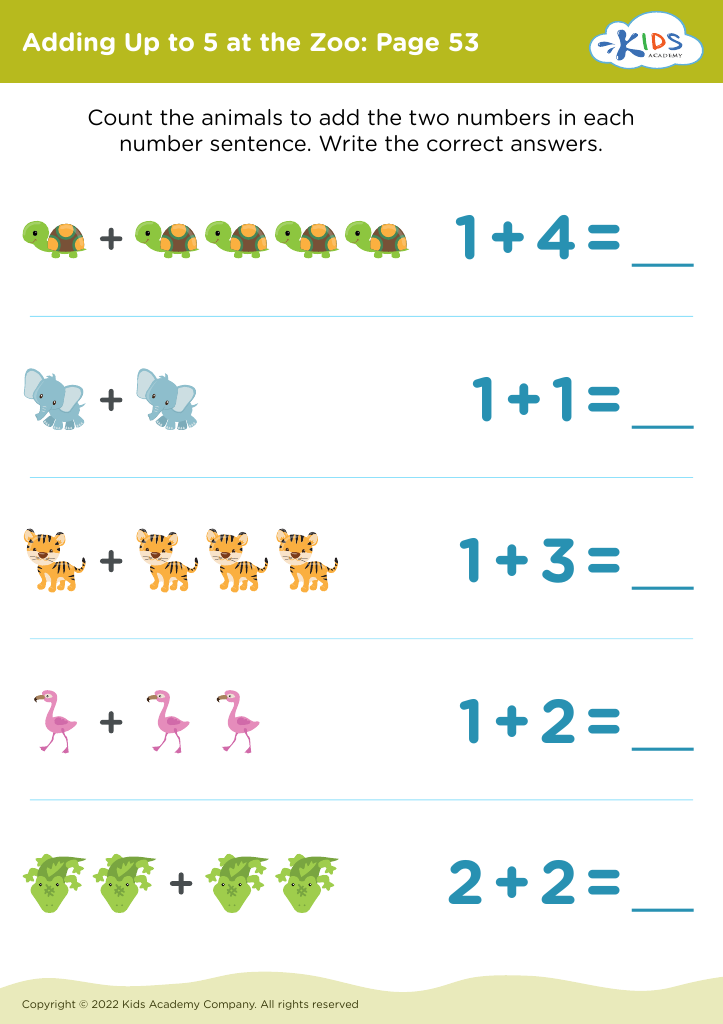
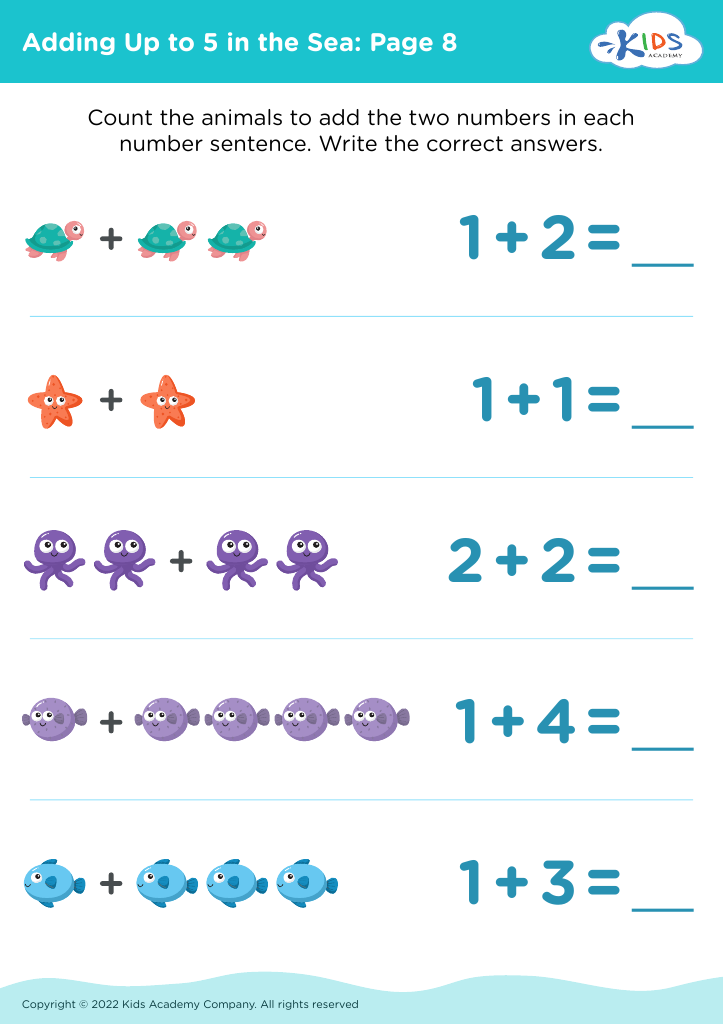
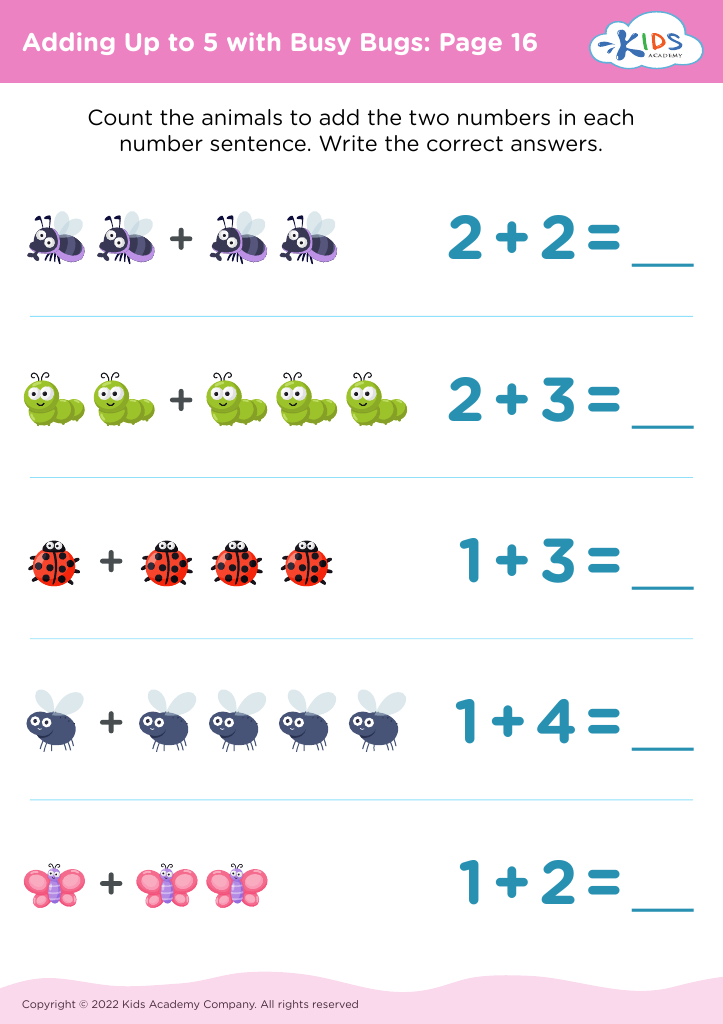
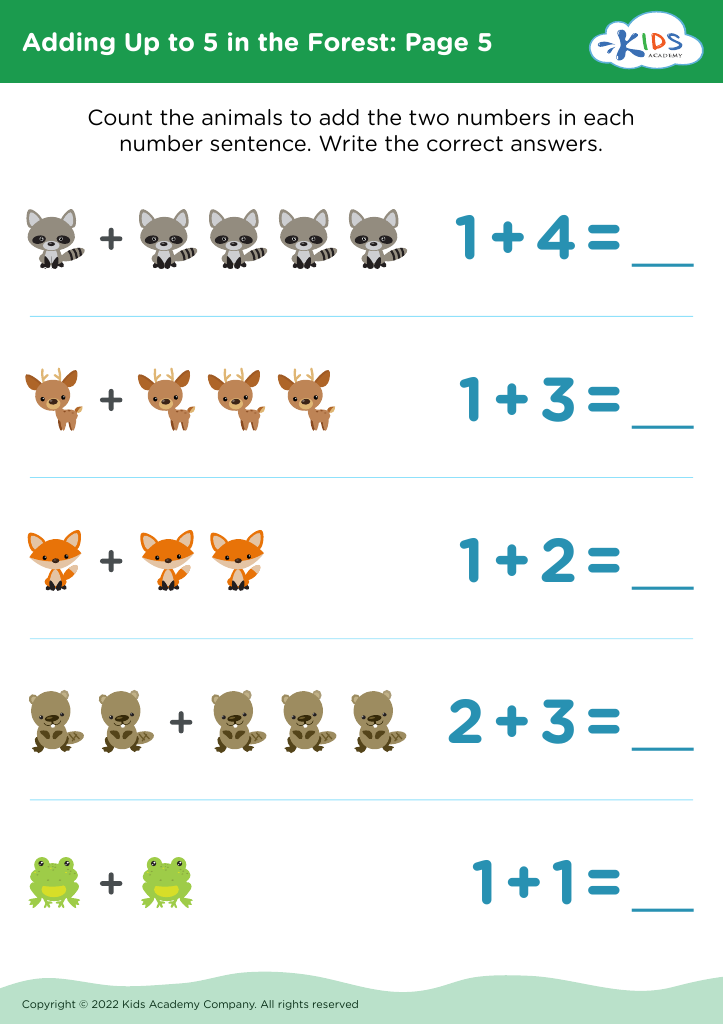
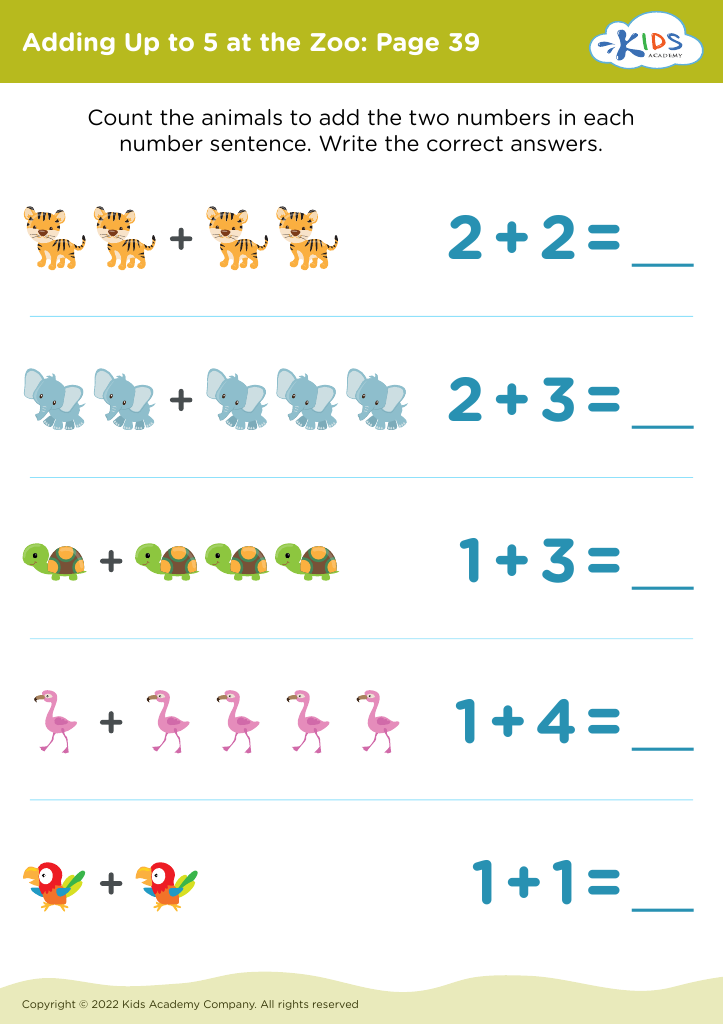
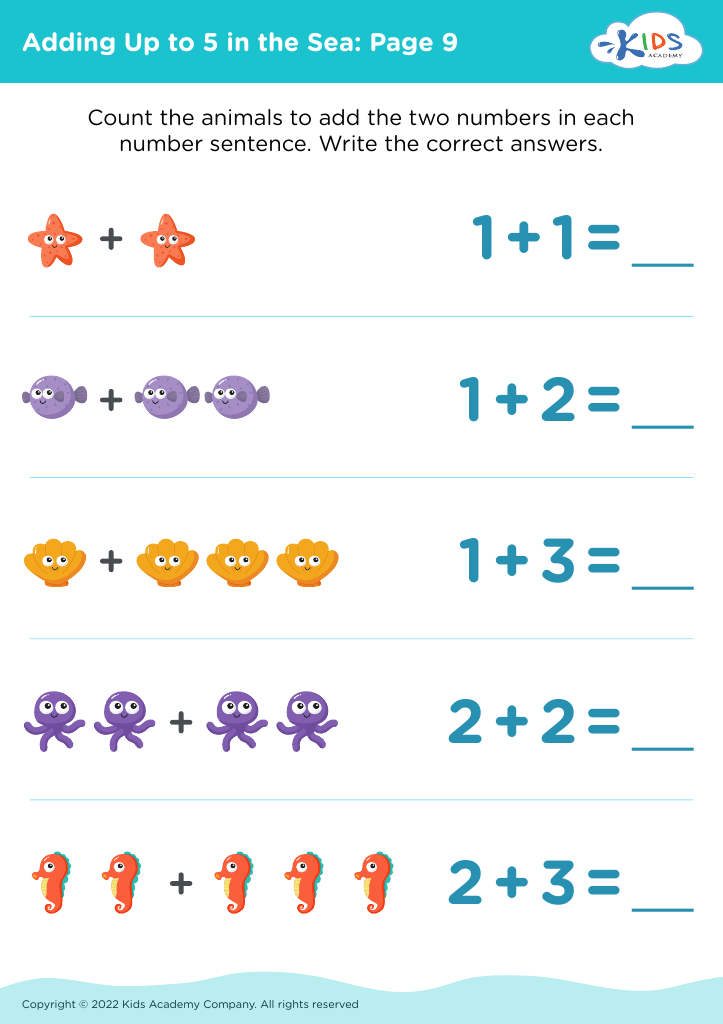








Addition skills, particularly adding up to 5, are foundational for young learners. This stage not only introduces mathematical concepts but also nurtures critical thinking and problem-solving abilities. Mastering addition within this range sets the groundwork for future mathematical learning, such as understanding larger numbers and complex calculations.
For parents and teachers, focusing on addition skills to 5 enhances children's confidence in math. This accomplishment can foster a positive attitude towards learning, paving the way for greater exploration of mathematical concepts later on. Moreover, these skills integrate smoothly into everyday activities, making learning practical and relatable.
Socially, as children work together on adding games or puzzles, they develop collaborative skills and learn to communicate their thought processes effectively. These interactions boost not only their math proficiency but also their social-emotional skills, making them well-rounded learners.
Finally, early mastery of addition contributes to greater academic success in a child's future schooling. Children who struggle with basic math operations are at risk for lagging behind in later grades. Therefore, prioritizing addition skills up to 5 is crucial for laying a solid educational foundation that supports lifelong learning and development.








