Basic Arithmetic Adding Up to 5 Worksheets - Page 2
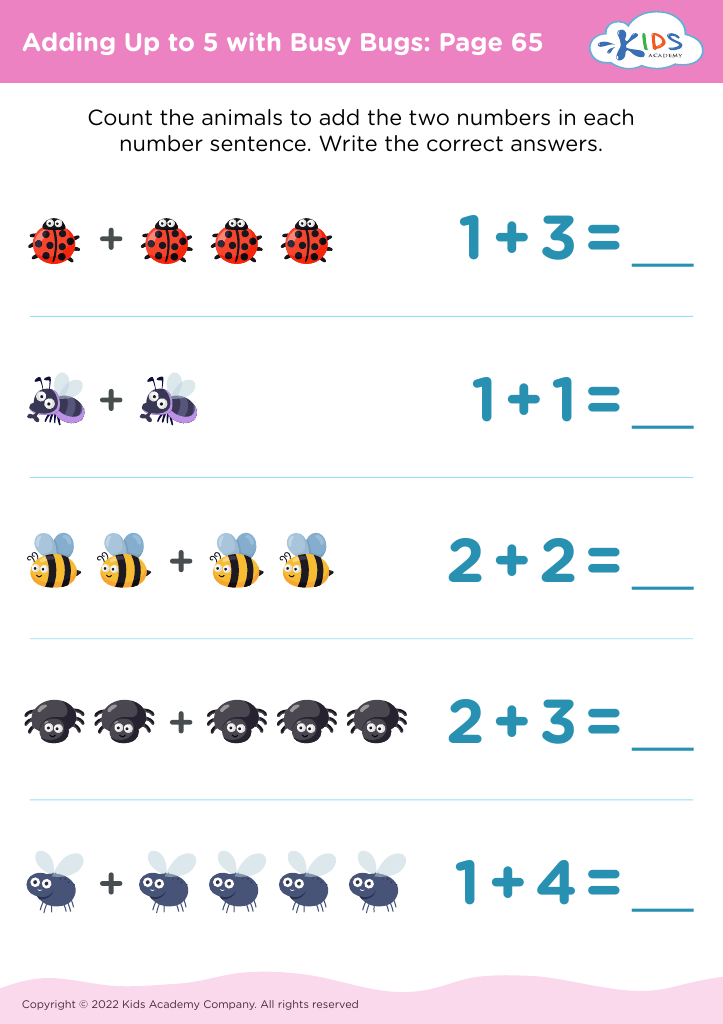
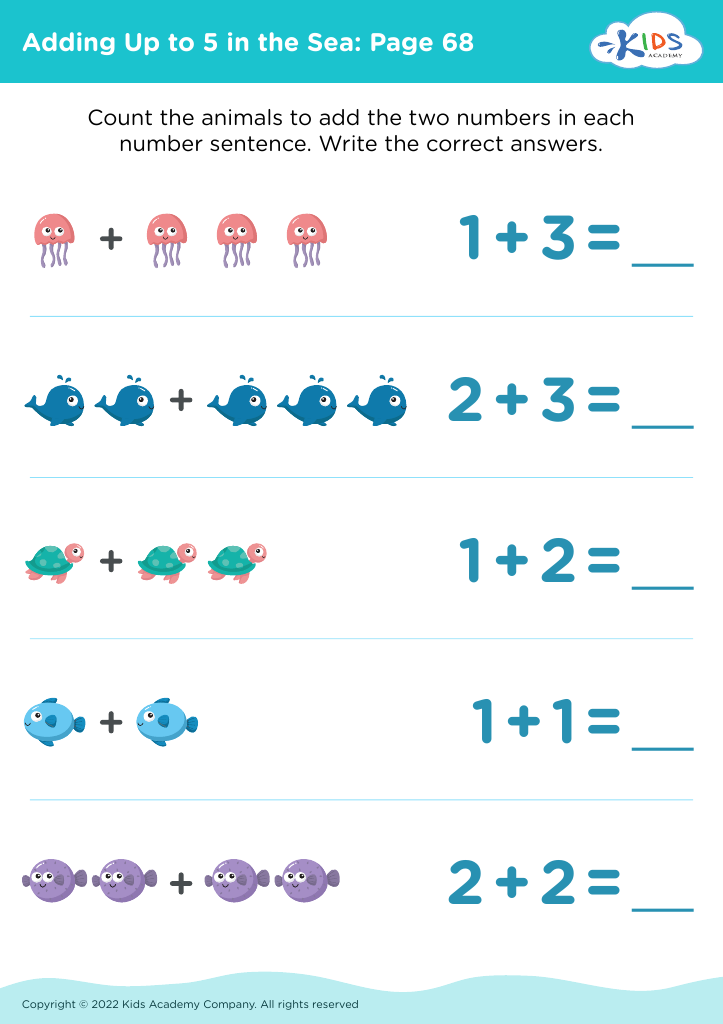
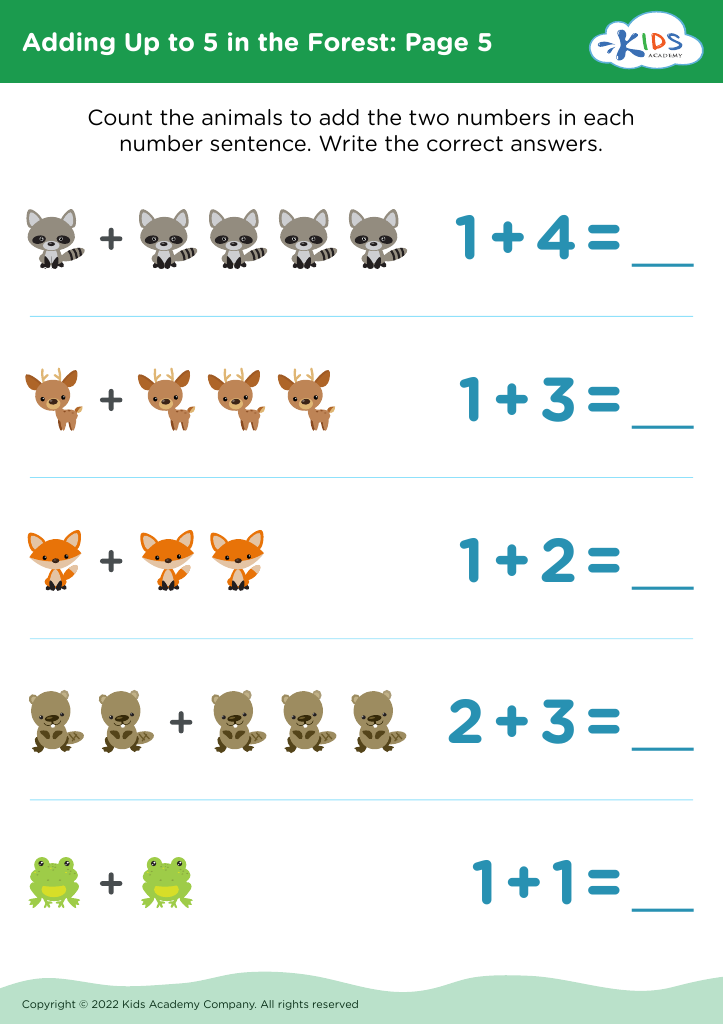
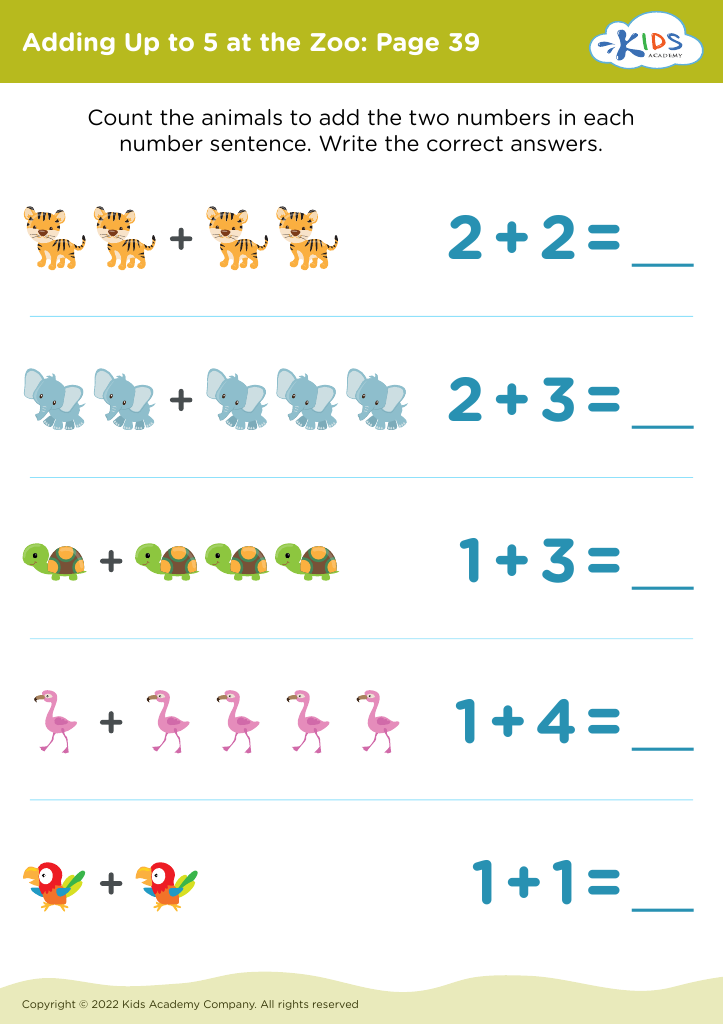
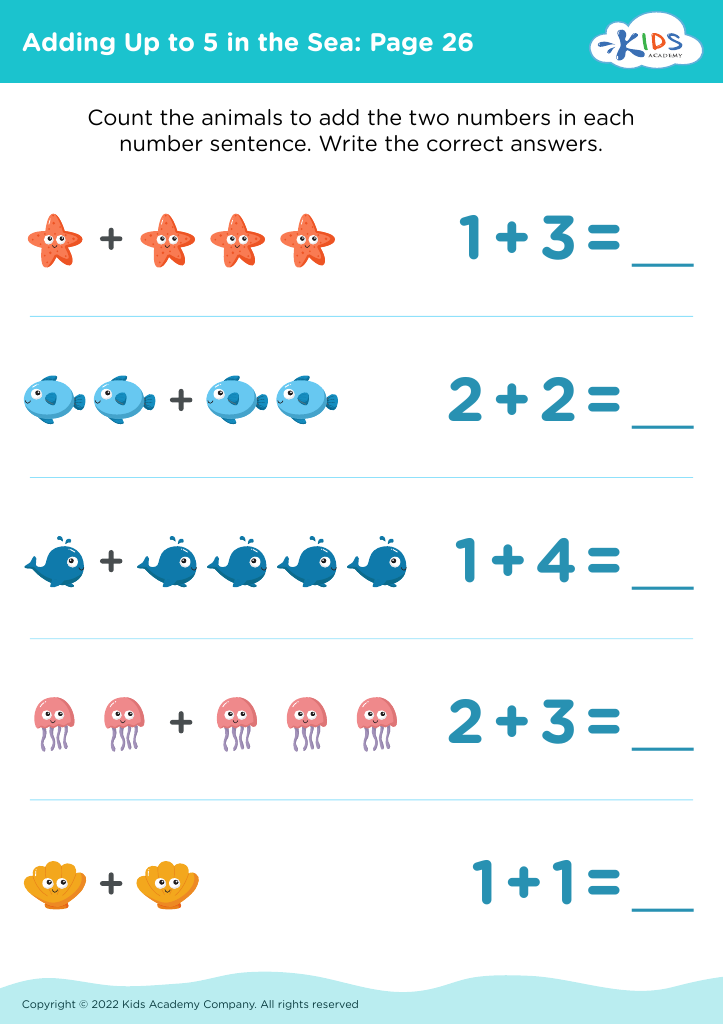
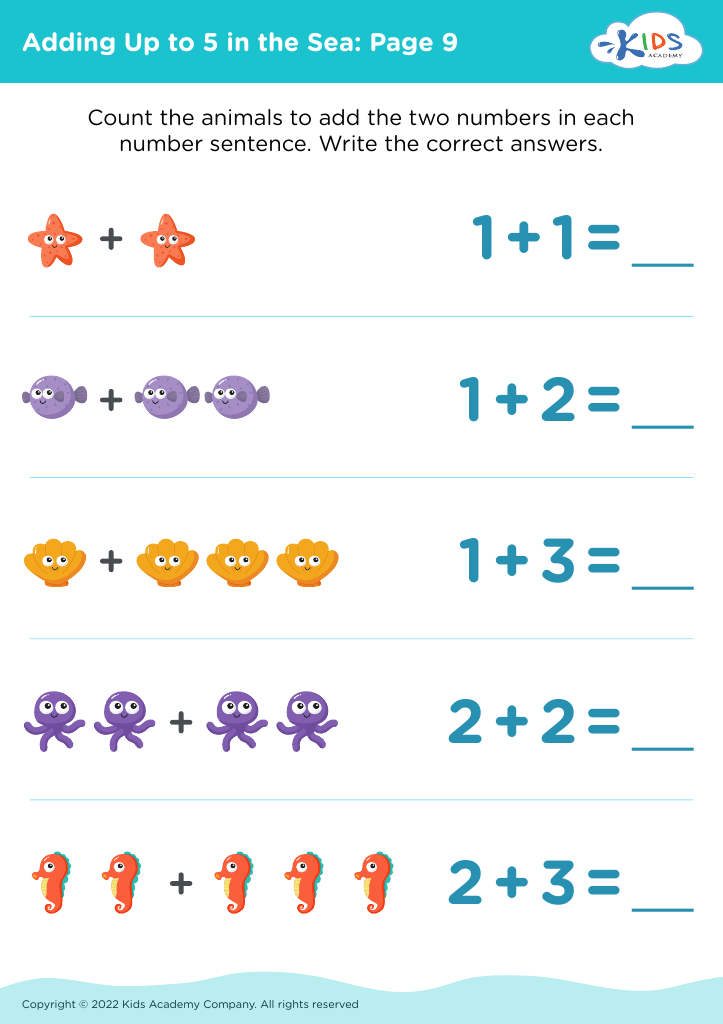








Basic arithmetic, particularly mastering addition up to 5, lays the foundation for future mathematical understanding. When parents and teachers emphasize this concept, they equip children with essential skills that support mathematical fluency, critical thinking, and problem-solving abilities. Understanding how to add numbers up to 5 helps young learners grasp the idea of quantity, number relationships, and the importance of counting.
Furthermore, these early skills promote confidence and a positive attitude towards math. Children who feel secure in their arithmetic abilities are more likely to engage with and enjoy mathematical challenges in the future. This foundational understanding also links to real-world applications; children learn to manage their resources, share, and comprehend basic concepts of time and money.
Moreover, strong early arithmetic skills correlate with academic success, enhancing performance in subjects such as science and economics later on. When parents and teachers actively participate in developing these skills, they contribute to a child’s holistic growth, reinforcing the importance of math in daily life. Encouraging collaborative activities like games and visual aids can further engage children, making learning fun while promoting social and cognitive development. Thus, investing time and effort in basic arithmetic is essential for shaping confident, skilled learners.








