Basic Math understanding Adding Up to 5 Worksheets
7 filtered results
-
From - To
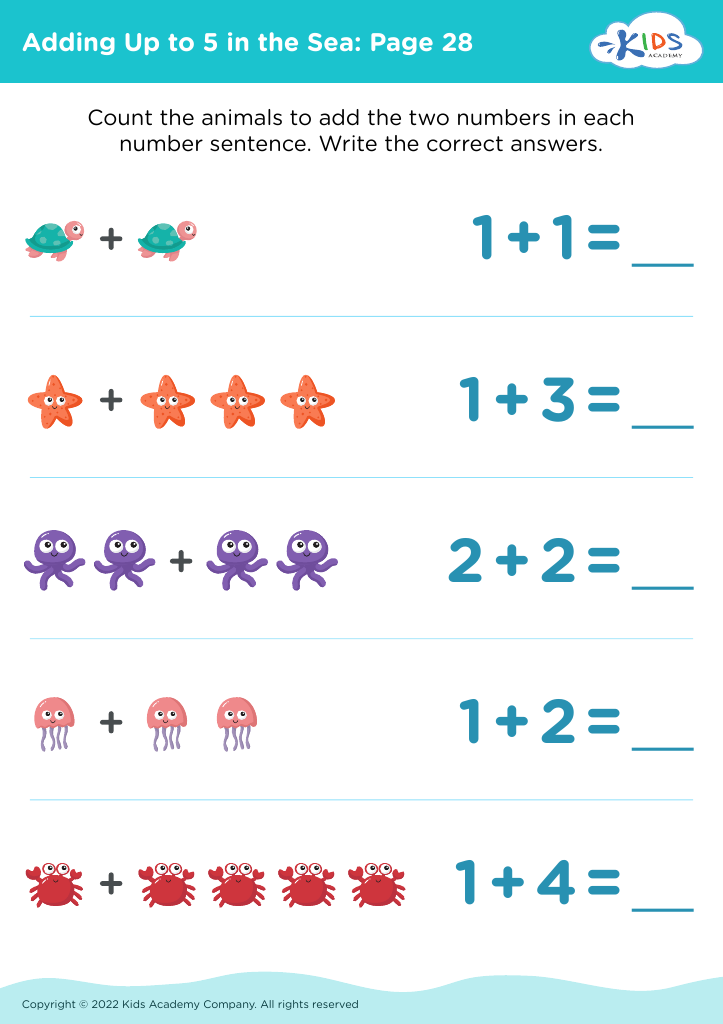
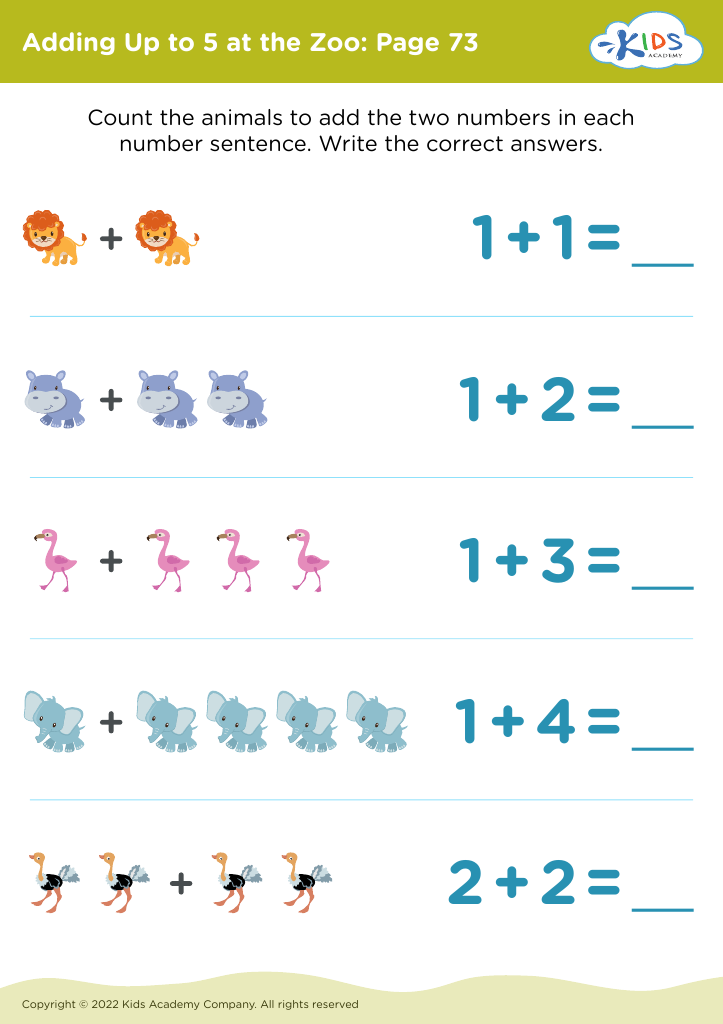
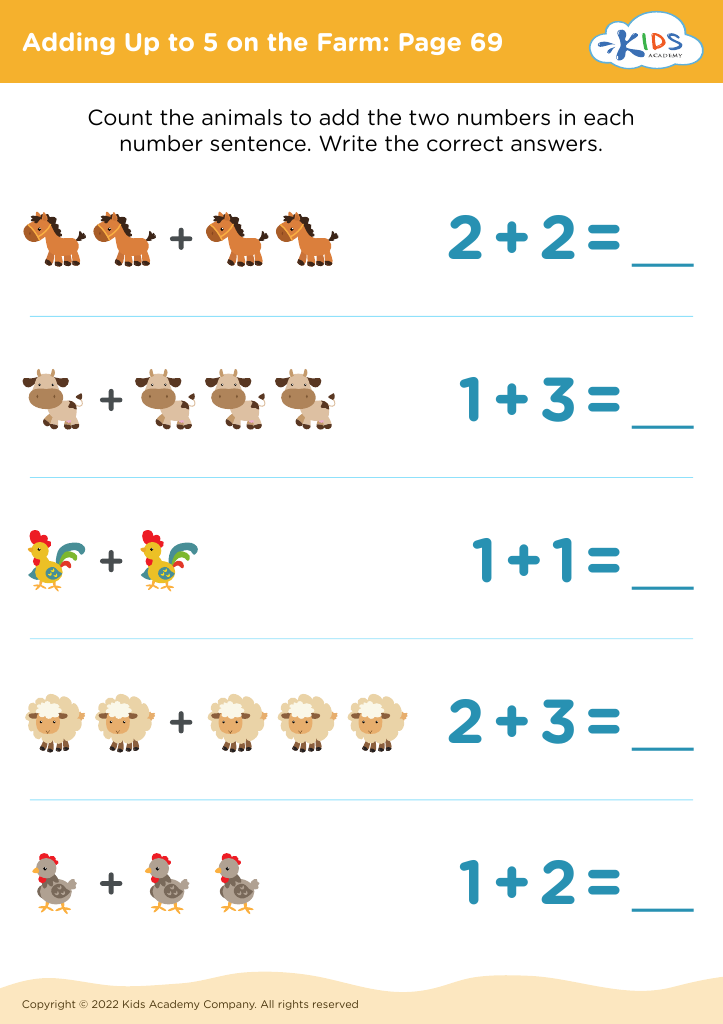
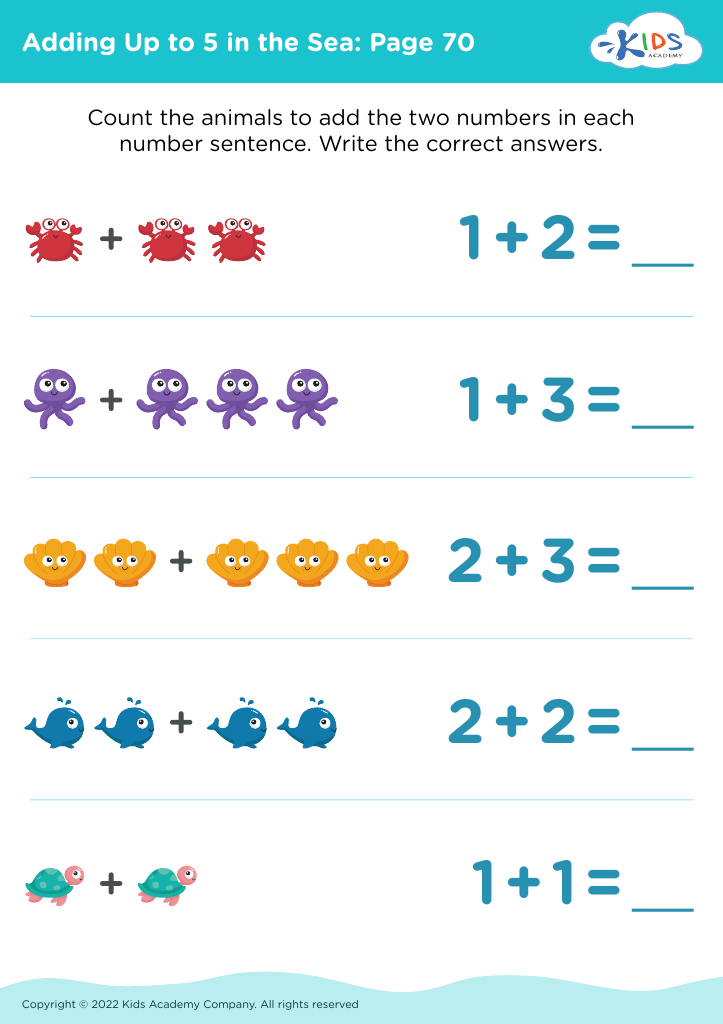
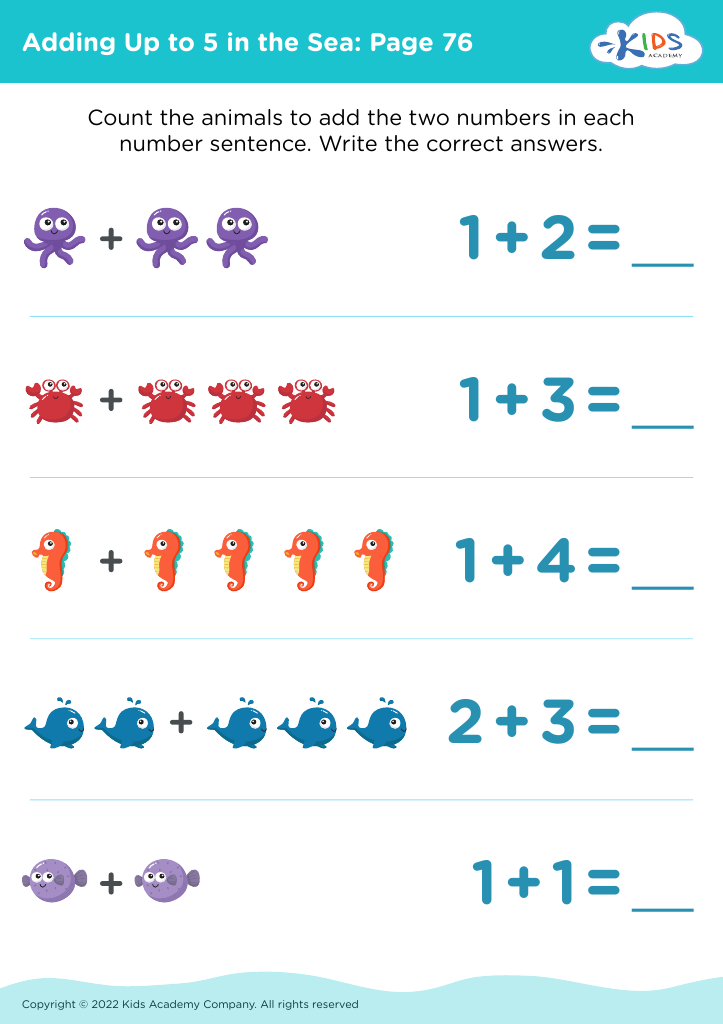
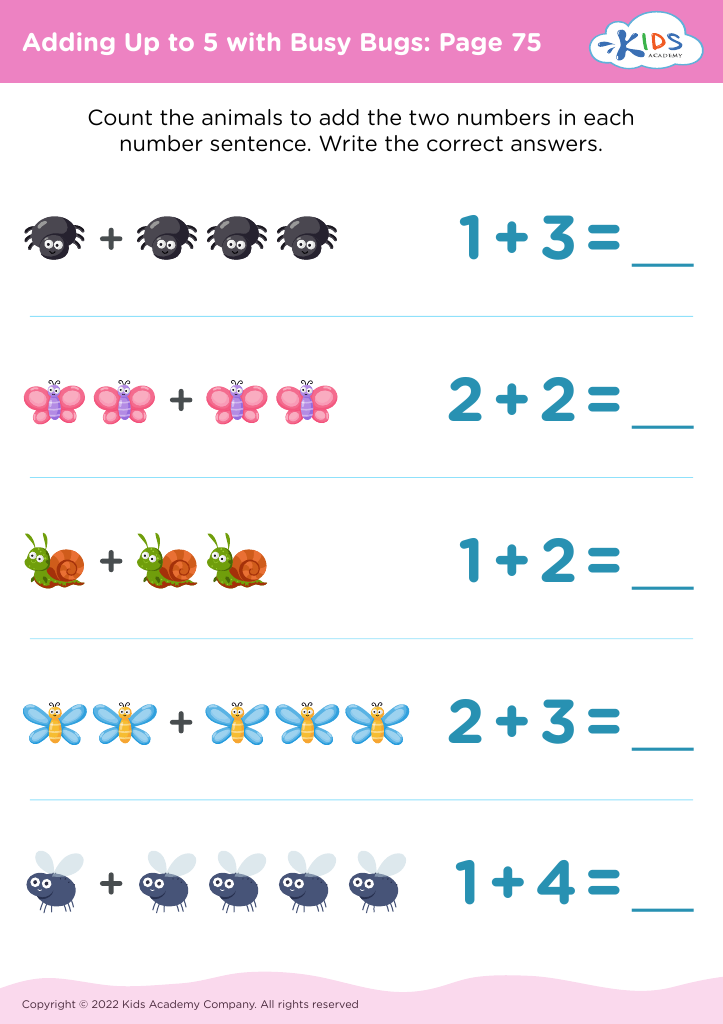
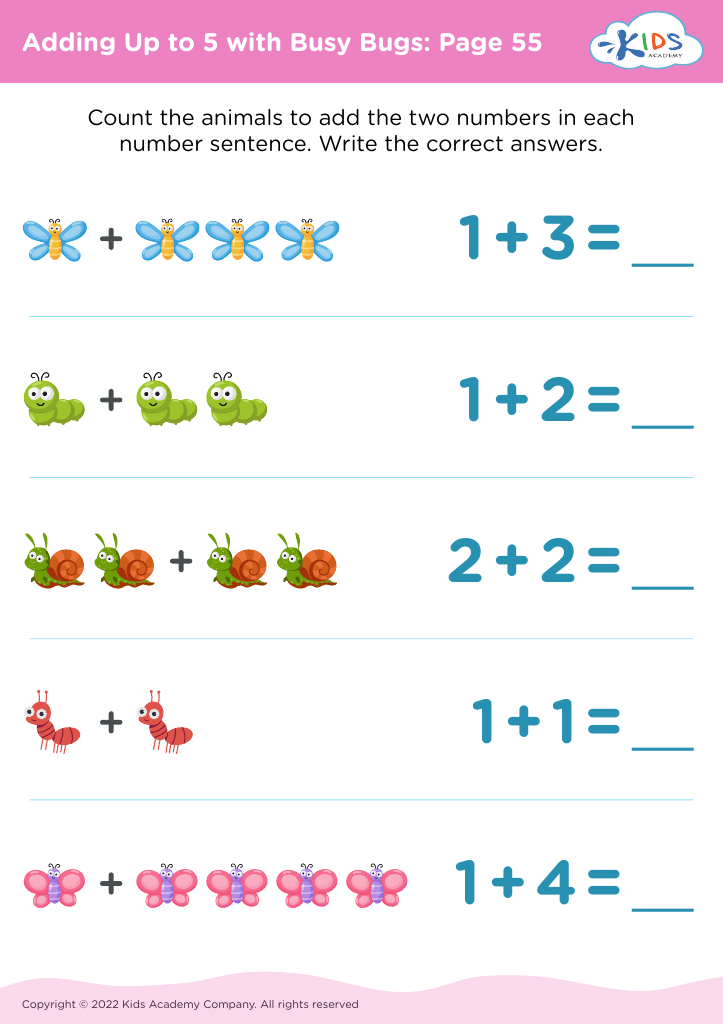
Explore our "Basic Math Understanding: Adding Up to 5" worksheets designed for young learners! These engaging printable activities help children develop foundational addition skills through colorful illustrations and hands-on practice. Each worksheet introduces simple problems that encourage counting, number recognition, and critical thinking. Ideal for preschool and kindergarten classrooms, our materials are perfect for both guided instruction and independent learning. By mastering addition within five, students build confidence and prepare for more advanced math concepts. Download these fun and educational worksheets today to enrich your child’s math journey and foster a love for learning!





%20(1).jpg)


Understanding basic math concepts, such as addition up to 5, is foundational for young learners and is critical for their overall cognitive and academic development. Parents and teachers should care about this early math understanding for several reasons.
First, mastering addition up to 5 helps build essential problem-solving skills. By learning to combine quantities, children begin to grasp fundamental mathematical principles, which set the stage for more complex concepts in the future.
Moreover, early math skills foster confidence. When children successfully add numbers, even small sums, they experience a sense of accomplishment which encourages them to tackle more challenging problems later on. This positive reinforcement can cultivate a lifelong love for mathematics.
Additionally, strong math skills are directly linked to better performance in various subjects beyond math, including science and even literacy. By integrating math into daily activities, parents can help children see its relevance in their daily lives.
Finally, promoting a child’s understanding of basic addition contributes to their critical thinking and analytical skills, necessary for effective decision-making. Ultimately, by prioritizing basic math understanding, parents and teachers empower children to thrive both academically and personally.








