Counting skills Adding Up to 5 Worksheets - Page 5
102 filtered results
-
From - To
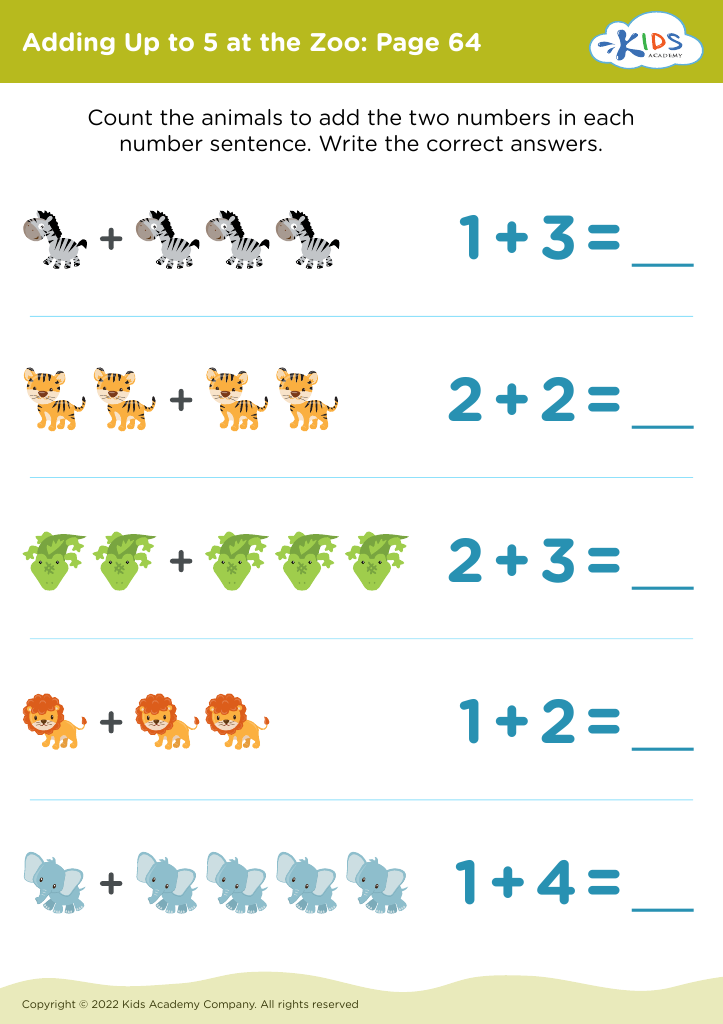
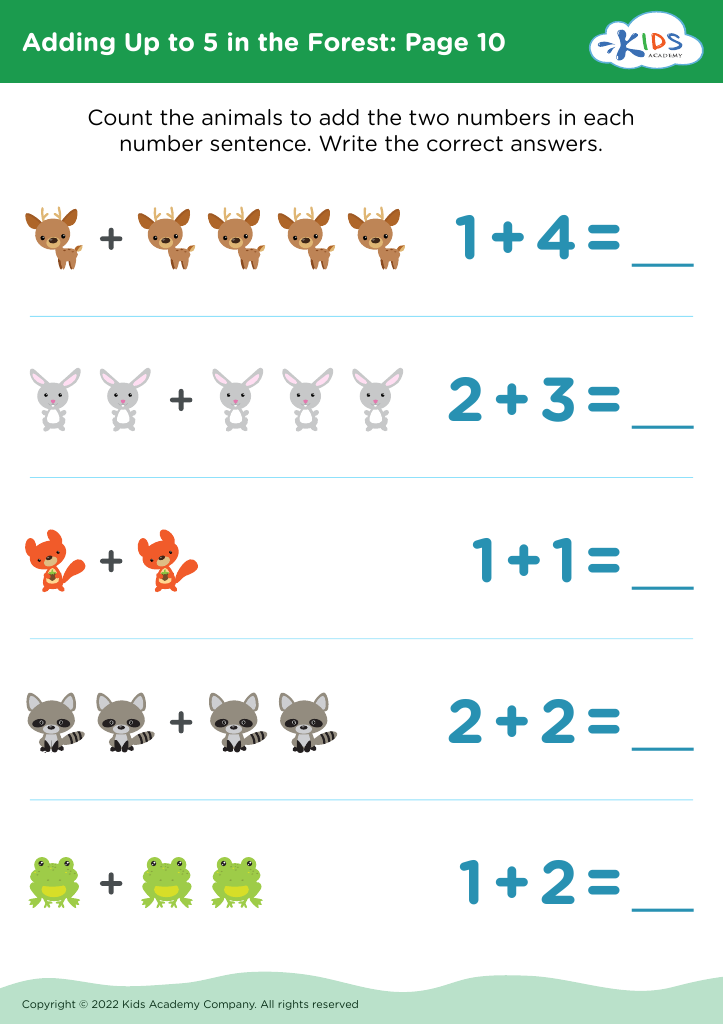
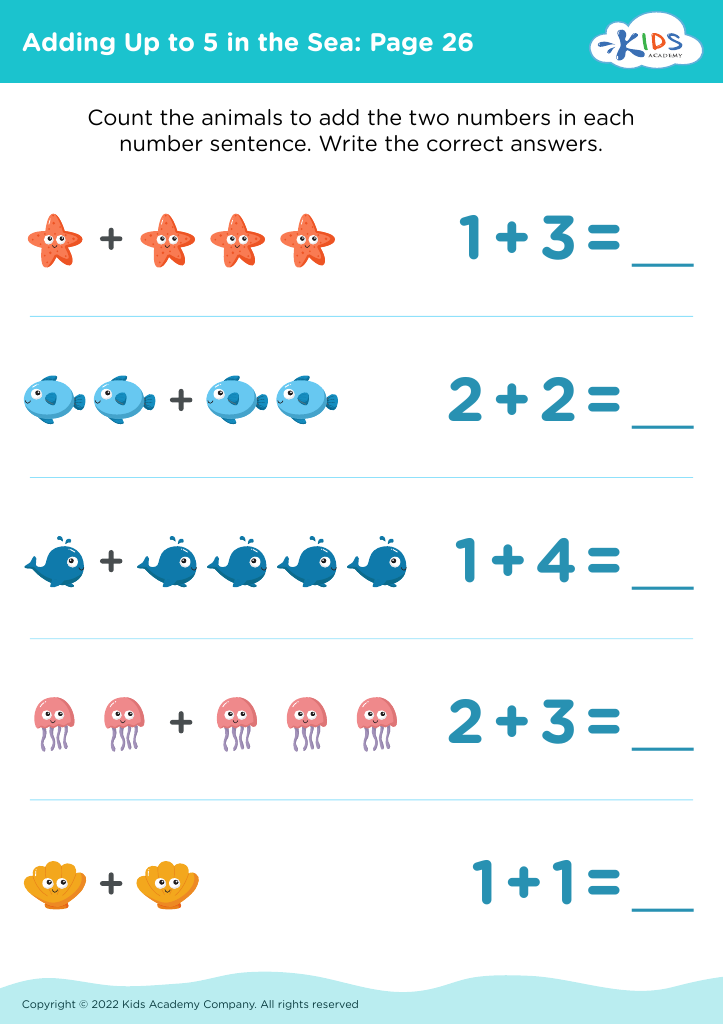
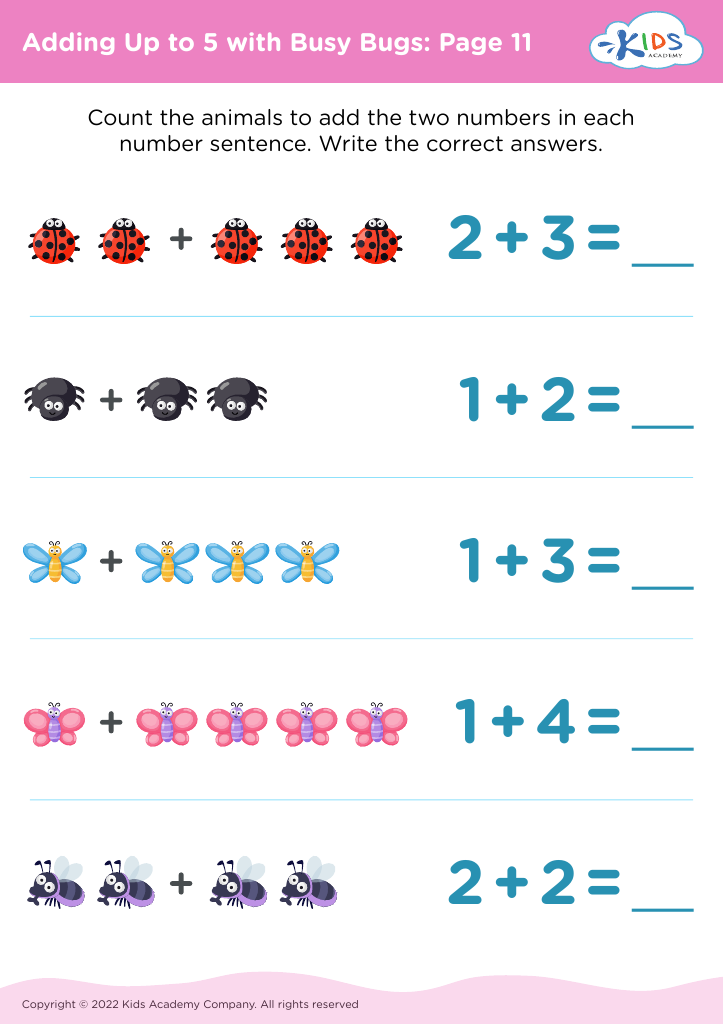
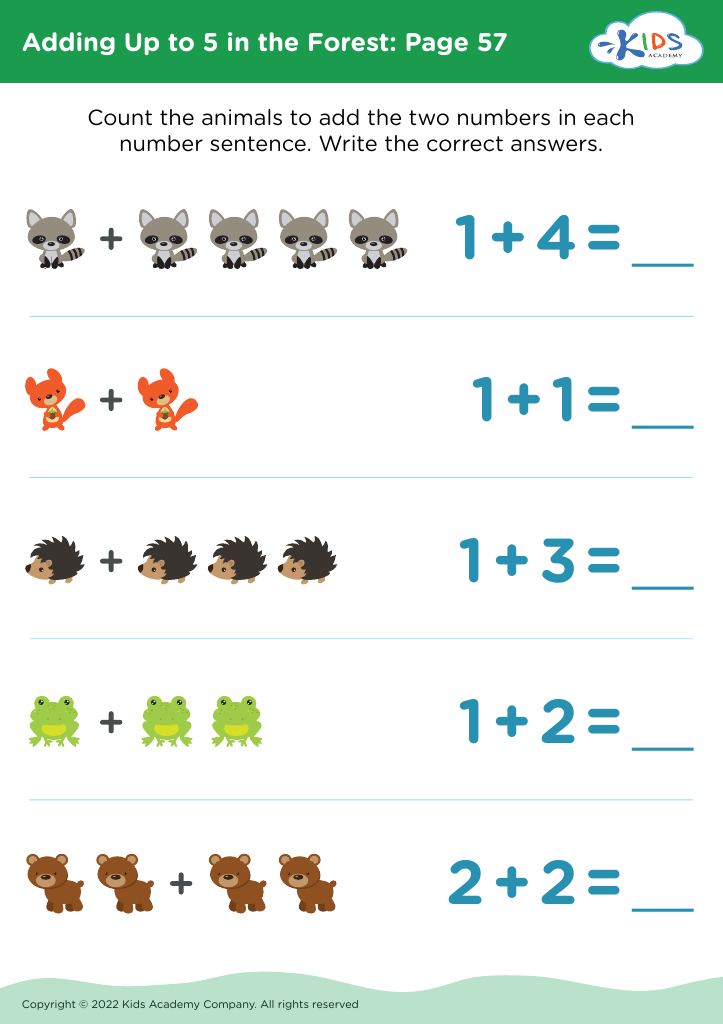
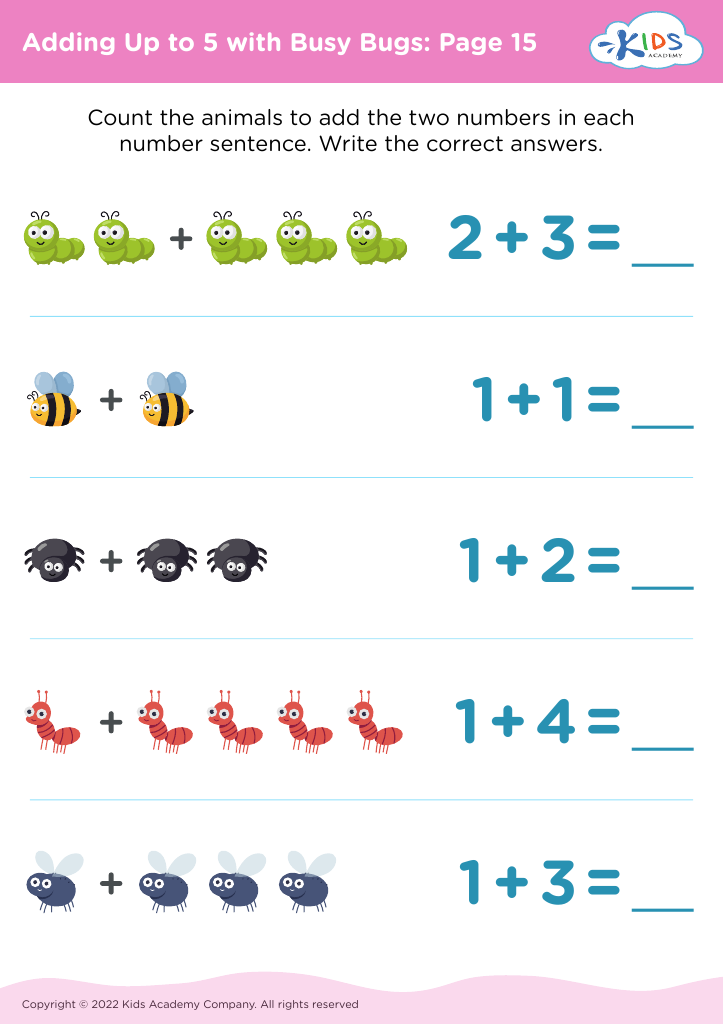








Counting skills are fundamental to early childhood education because they lay the groundwork for numeracy and mathematical understanding. For young learners, developing the ability to count and add up to 5 is crucial for several reasons. First, it helps children grasp the concept of numbers and their relationships. By counting objects and adding small quantities, kids become familiar with the idea that numbers represent specific quantities, which is a vital step towards more complex math skills.
Moreover, counting and simple addition foster cognitive development, including memory, attention, and problem-solving skills. These activities encourage children to observe, think critically, and make logical connections, all of which are essential for academic success across various subjects.
In addition, counting up to 5 is often children’s first experience with basic math principles such as one-to-one correspondence (matching objects to numbers) and the understanding of addition as “putting together.” This early exposure boosts their confidence and reduces math anxiety, making them more likely to approach future math challenges positively.
Furthermore, these basic counting skills are integral in everyday life. They help children understand time (clocks), money, and even basic measurements, contributing to their independence and daily functioning. Thus, both parents and teachers should place importance on mastering these basic counting skills to ensure a strong educational and developmental foundation.








