Fine motor skills (writing) Adding Up to 5 Worksheets - Page 2
32 filtered results
-
From - To
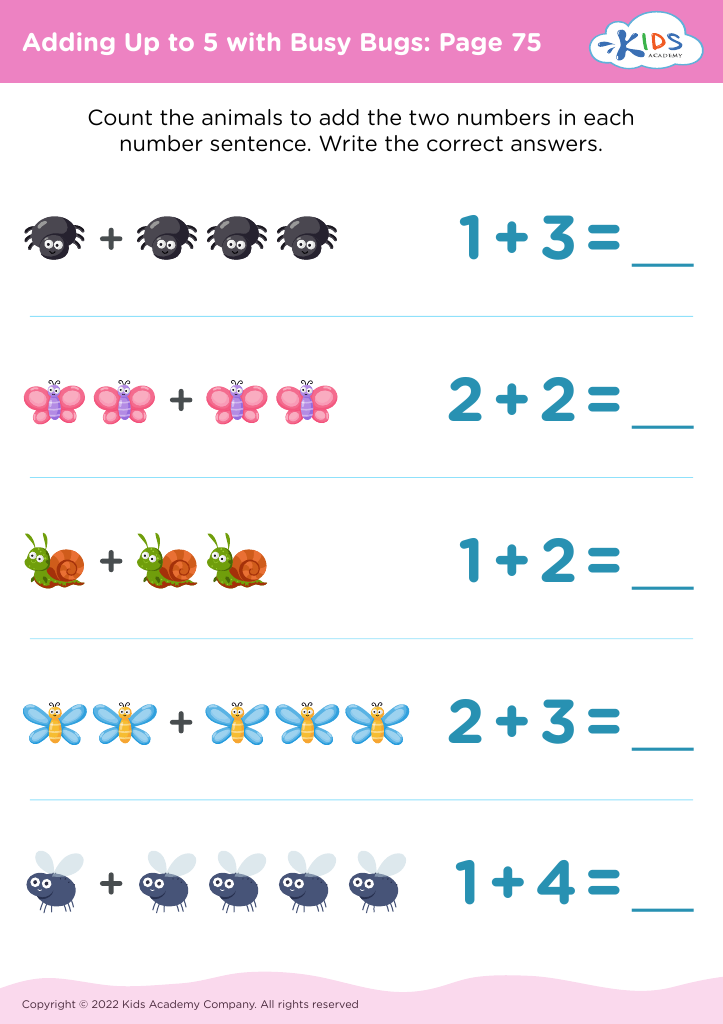
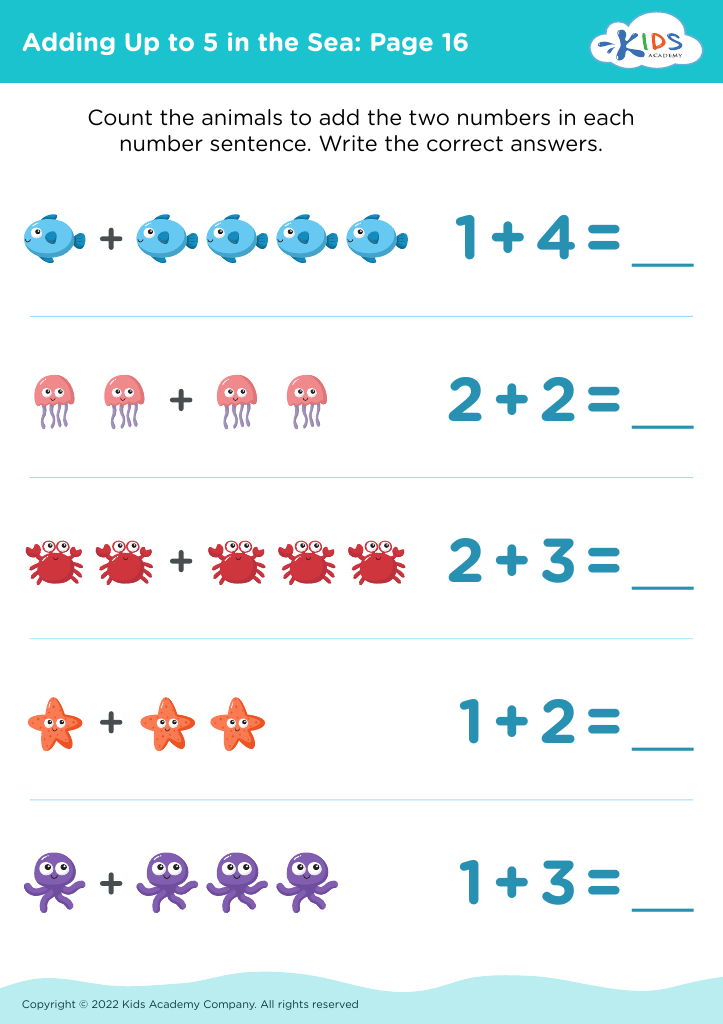
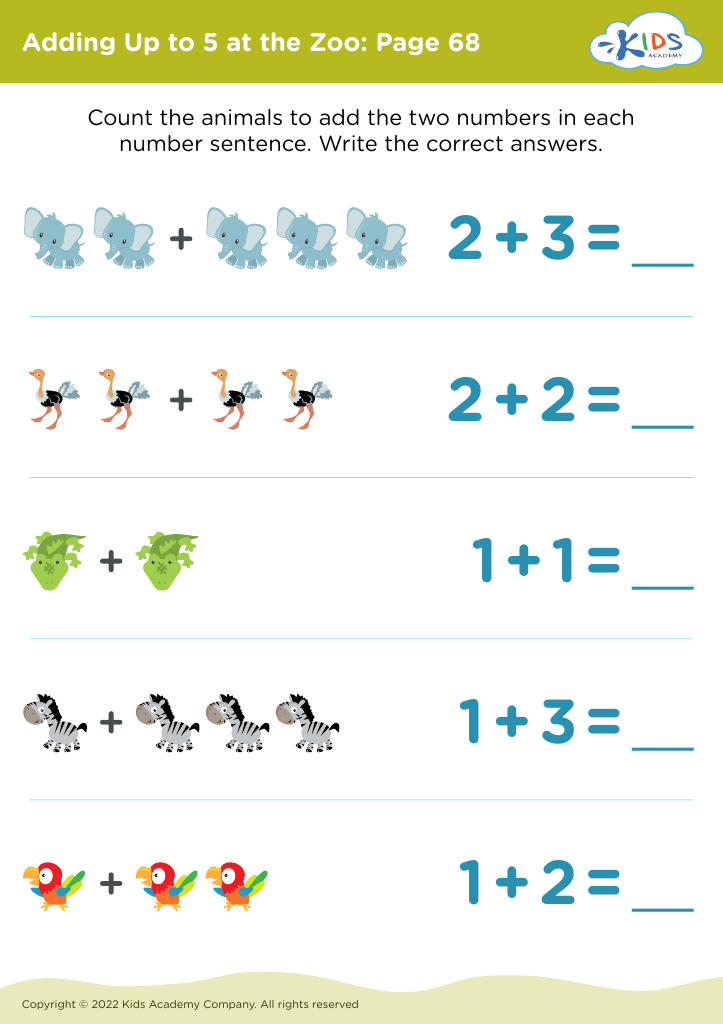
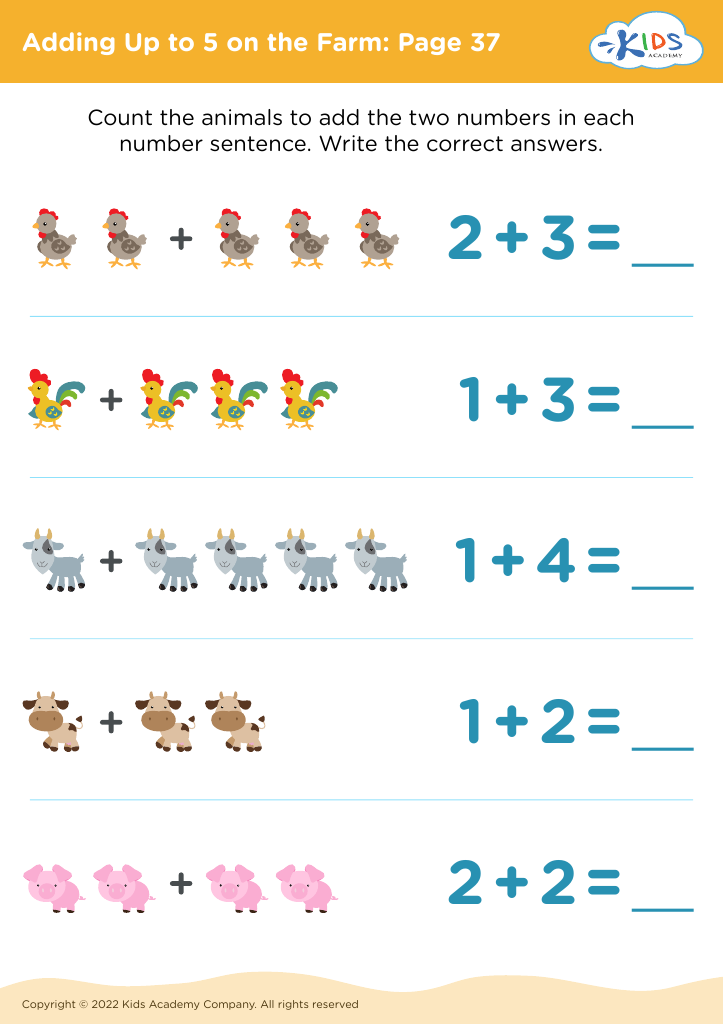
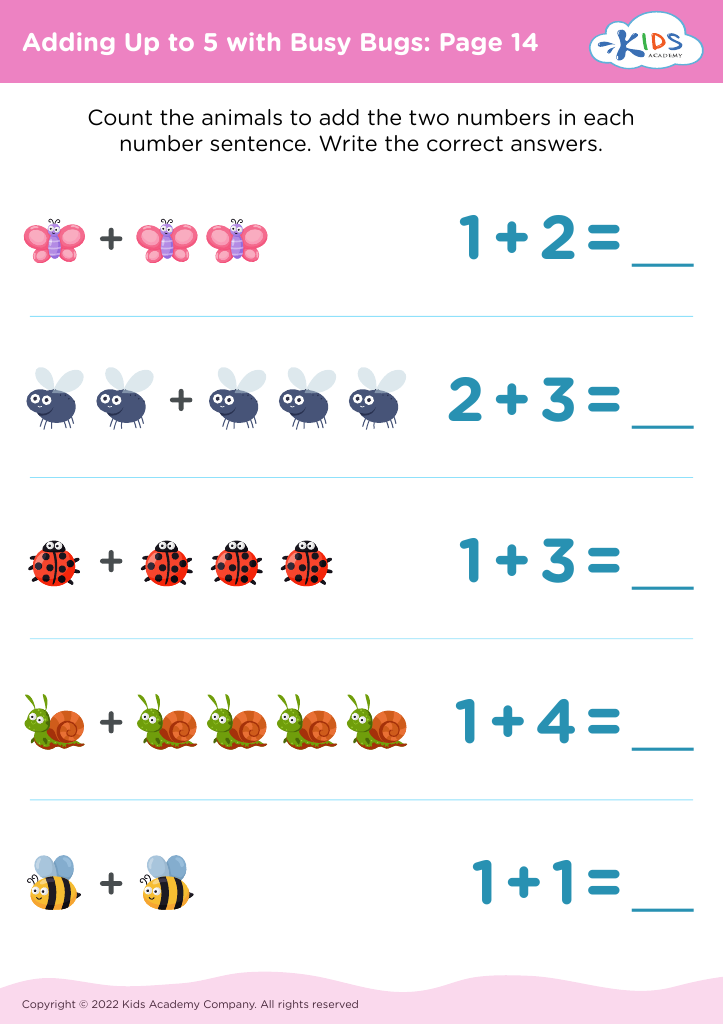
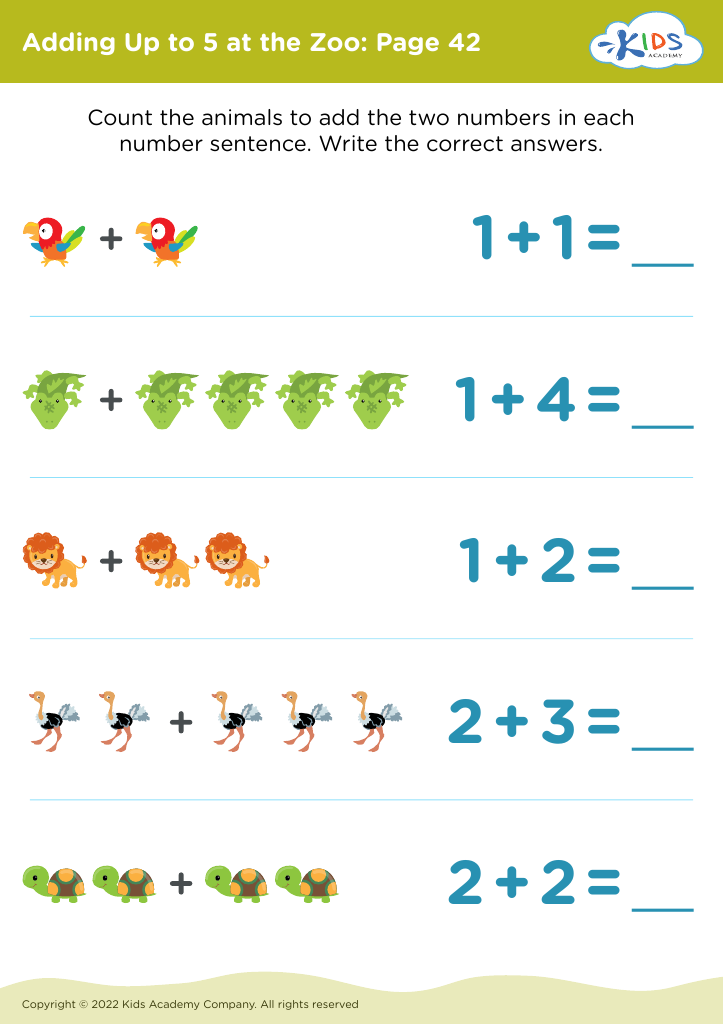
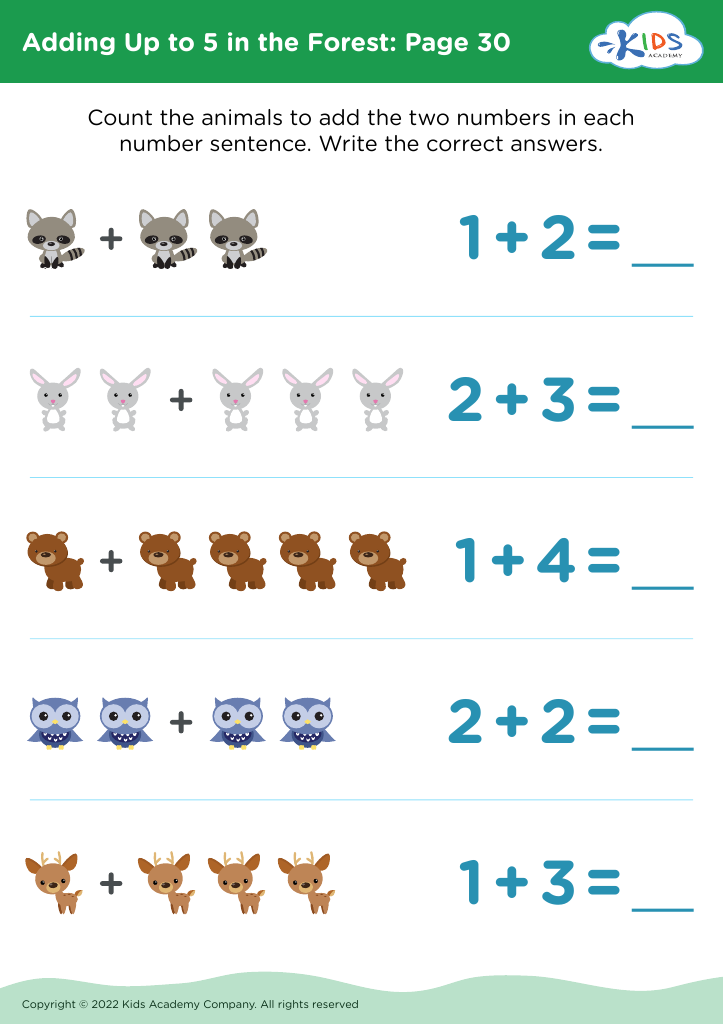
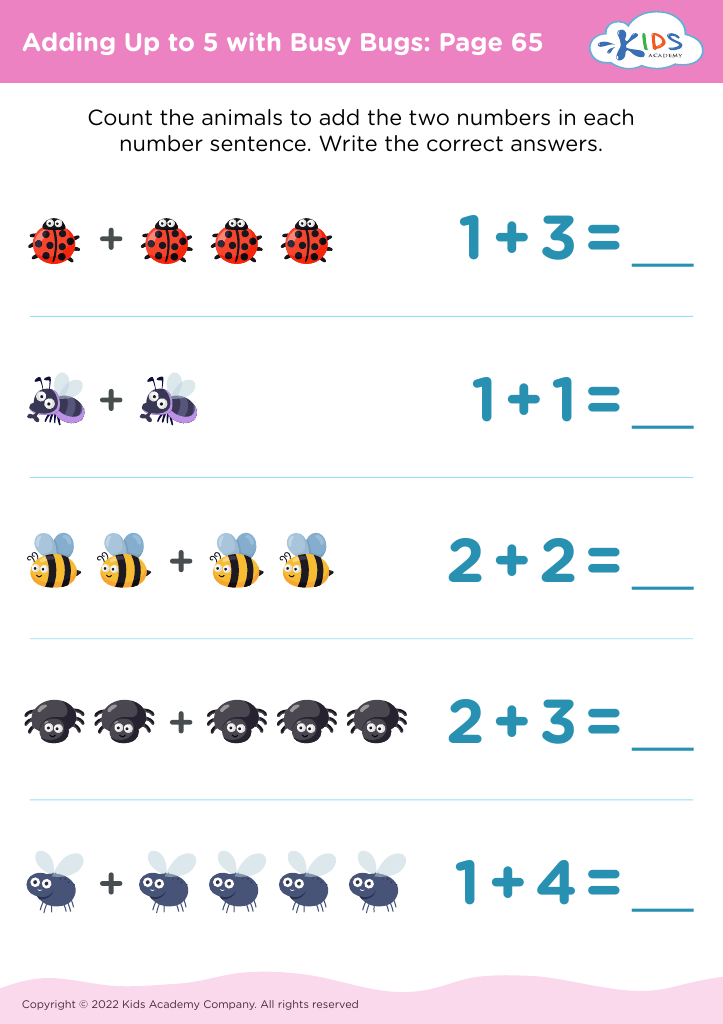








Fine motor skills are essential for young learners, particularly for activities like writing and counting. When parents and teachers prioritize these skills, they help children develop the hand-eye coordination necessary for effective writing. Mastering fine motor control allows children to grip writing instruments correctly, which enhances their ability to express thoughts on paper clearly and confidently.
Furthermore, fine motor skills contribute to the cognitive development required for grasping concepts like addition. Simple tasks involving adding numbers up to 5 can be effectively executed when children can manipulate small objects, such as counters or their fingers. Engaging in these activities not only builds numerical understanding but also reinforces the connection between physical and cognitive tasks.
Fostering fine motor skills from an early age facilitates a smoother transition to more complex tasks like reading, advanced math, and even art, enhancing overall academic performance. Additionally, when parents and teachers work together to support these skills through games, crafts, and structured learning, they encourage a holistic approach to a child’s development. In short, nurturing fine motor skills lays a vital foundation for a child's educational journey, ensuring they are equipped for future challenges.








