Math problem-solving Adding Up to 5 Worksheets
3 filtered results
-
From - To
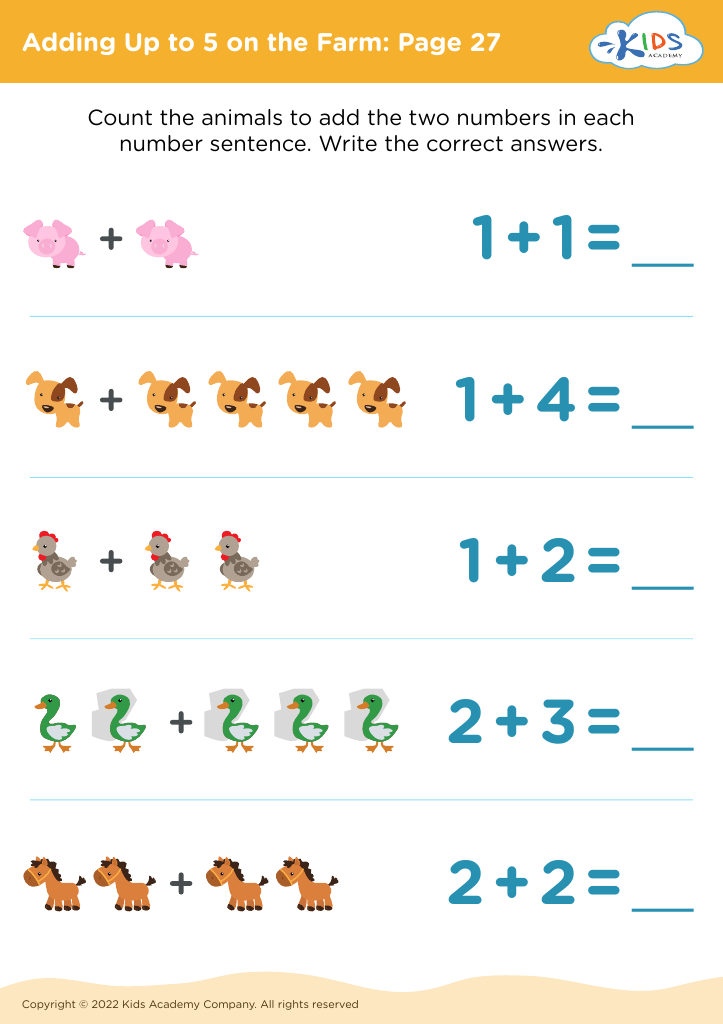
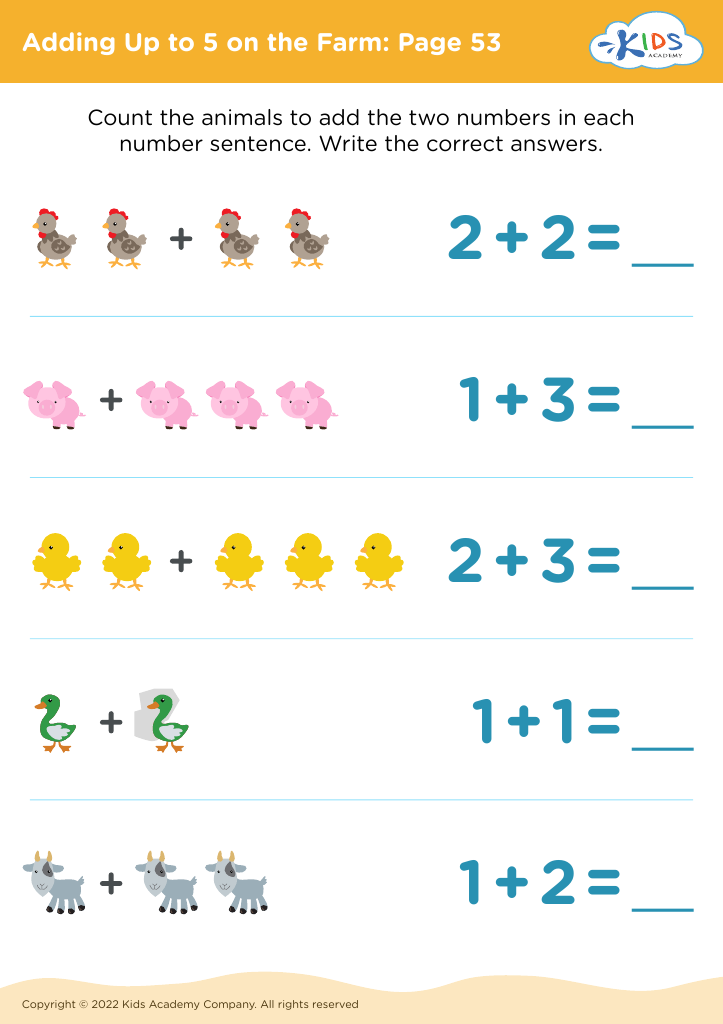
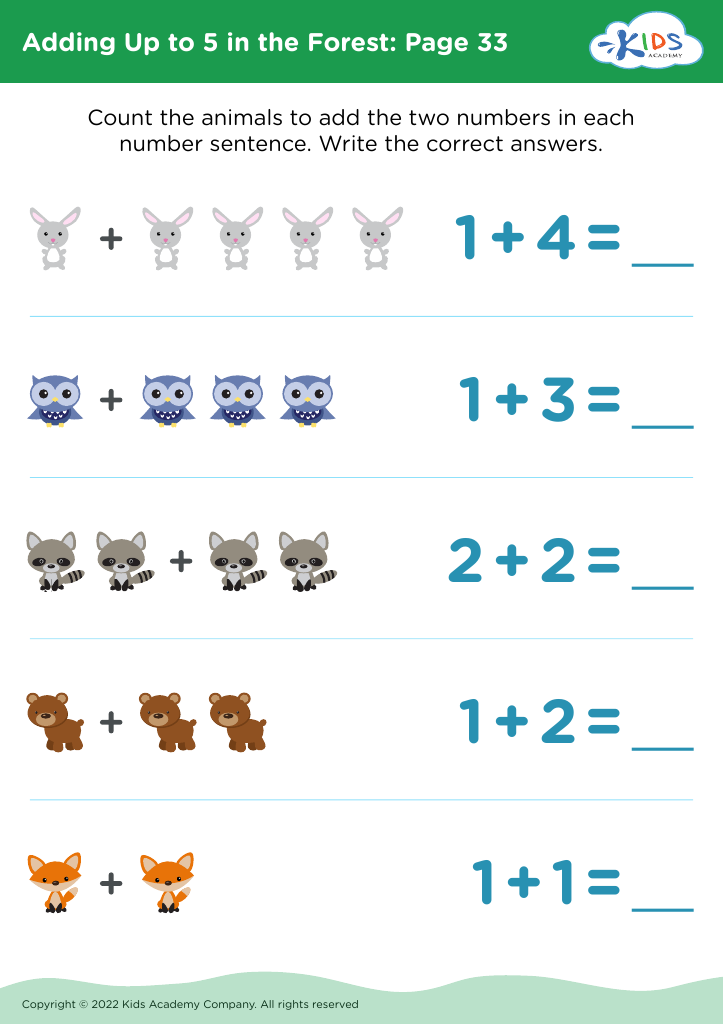
Boost your child's math skills with our "Math Problem-Solving Adding Up to 5 Worksheets"! Designed for early learners, these worksheets provide engaging activities that make learning addition fun and effective. Perfect for preschool and kindergarten students, each worksheet encourages critical thinking while helping kids practice their addition skills in a hands-on way. With colorful illustrations and varied exercises, children will enjoy solving problems that reinforce their ability to add numbers up to 5. Download these printable worksheets today and watch your child gain confidence and proficiency in math as they master fundamental problem-solving techniques! Ideal for both classroom and at-home learning.


%20(1).jpg)





Parents and teachers should care about math problem-solving, especially concepts like "Adding Up to 5," because it lays the foundation for a child's mathematical understanding and critical thinking skills. Early proficiency in basic addition not only fosters confidence in young learners but also sets the stage for more complex math concepts in the future.
Understanding how to add up to 5 helps children recognize numerical relationships and develop their cognitive skills. This foundational knowledge promotes mental math abilities, which are essential for everyday situations such as budgeting, cooking, and time management. Engaging with problem-solving exercises encourages curiosity and resilience when faced with challenges, traits that are beneficial beyond mathematics.
Moreover, when parents and teachers actively participate in this learning process, they create a supportive environment where children feel safe to explore and make mistakes. This partnership enhances a child's motivation, making math enjoyable instead of daunting. Ultimately, caring about these early math experiences helps establish a love for learning, equipping children with the skills needed to thrive in academic settings and real-life situations. In summary, supporting children in math from an early age is crucial for their overall development and future success.








