Understanding number relationships Adding Up to 5 Worksheets
3 filtered results
-
From - To
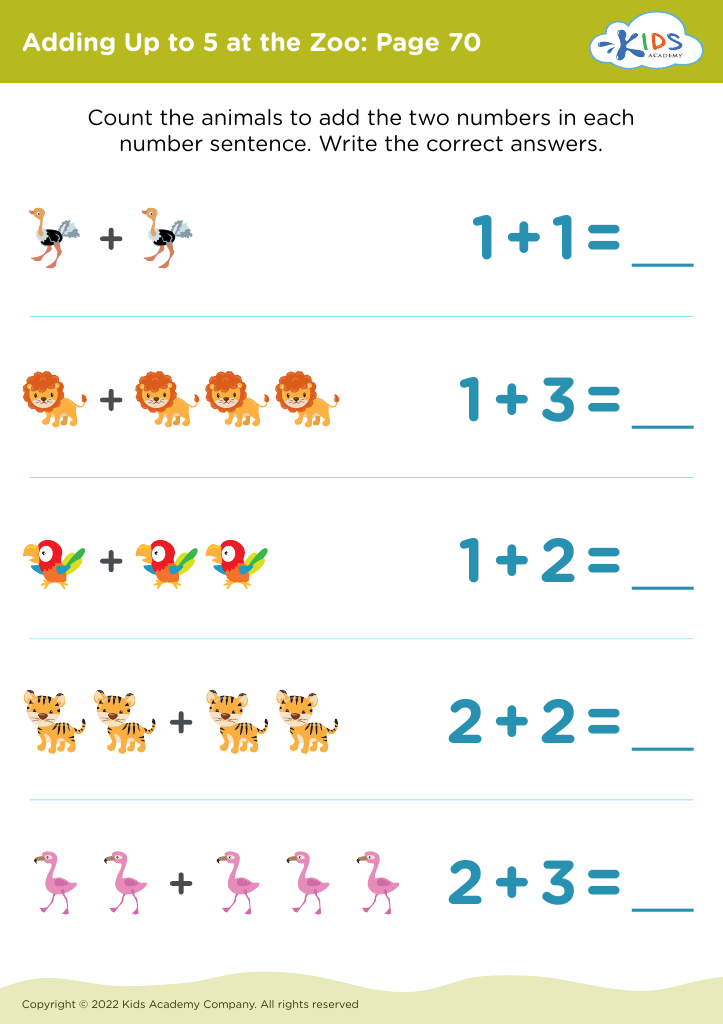
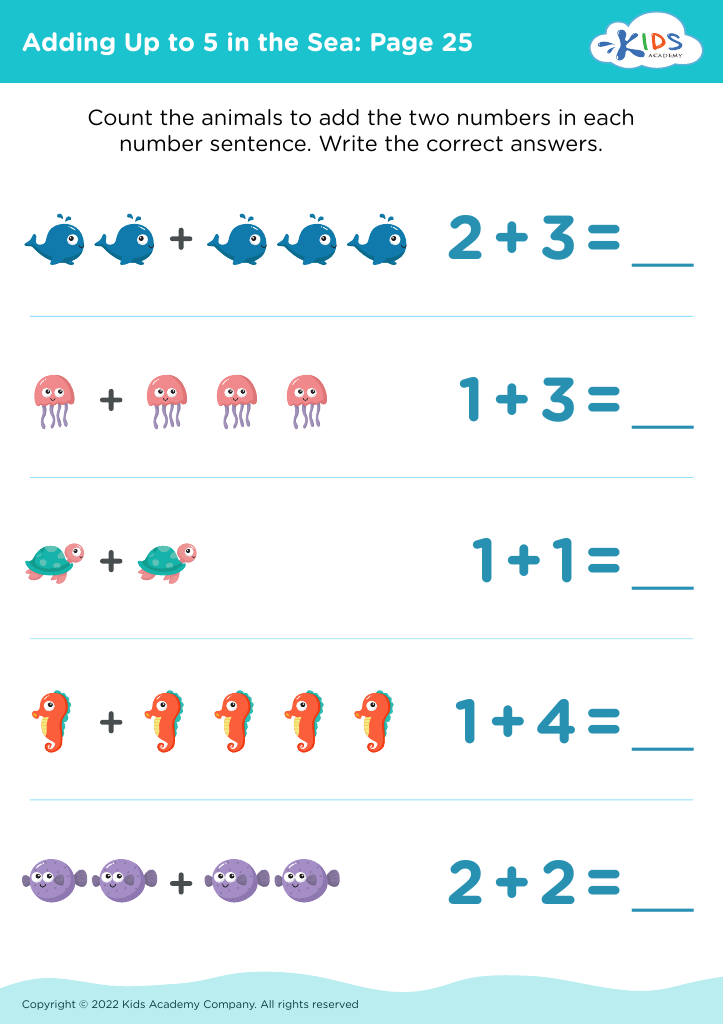
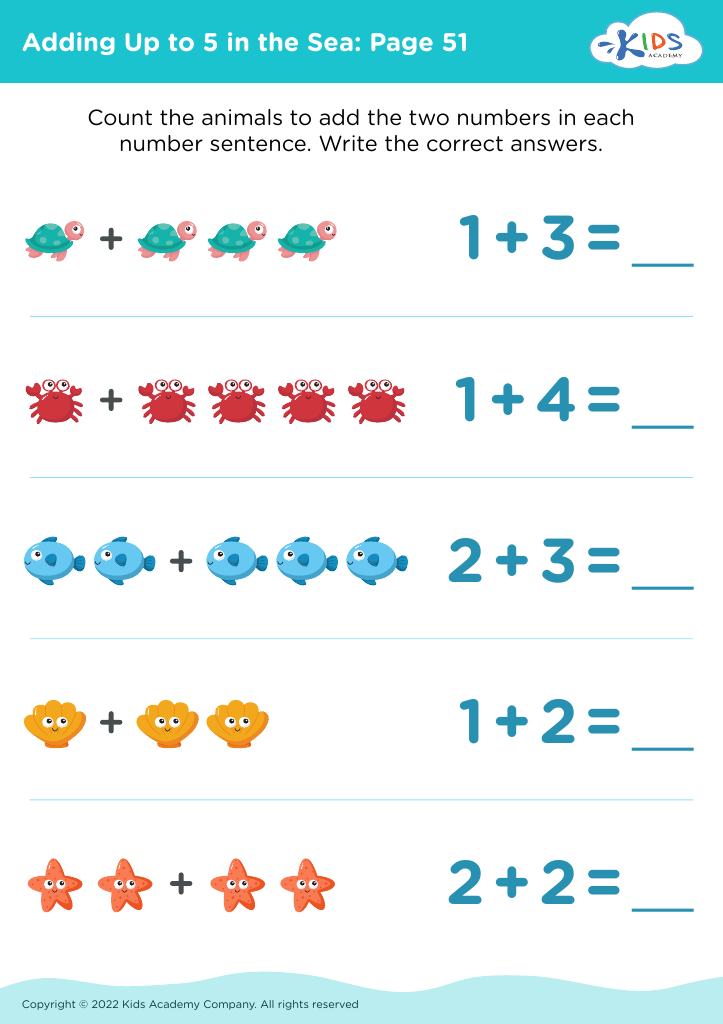
Explore our "Understanding Number Relationships: Adding Up to 5 Worksheets" designed to enhance early math skills! These engaging worksheets simplify the concept of addition, helping young learners grasp how numbers relate to one another. With a focus on combining quantities up to five, children will enhance their counting, sorting, and basic addition abilities. Ideal for preschool and kindergarten, these resources support foundational math learning through fun activities and interactive exercises. Empower your child’s numerical comprehension and encourage a love for math with our colorful and captivating worksheets. Download now to make learning about numbers an enjoyable adventure!




%20(1).jpg)
.jpg)


Understanding number relationships, particularly with numbers adding up to 5, is crucial for young learners as it forms the foundation for their mathematical development. This concept helps children identify and recognize quantities, supporting their ability to perform basic addition and subtraction. By grasping how different combinations can make 5 (such as 2 + 3 or 4 + 1), children develop critical thinking and problem-solving skills that are essential for more complex mathematics in later grades.
Moreover, these foundational skills encourage a strong number sense, enabling students to make connections between numbers and improve their confidence in handling mathematical concepts. Teachers and parents should also recognize that understanding number relationships promotes cognitive growth. It fosters a learning environment where children are willing to explore different mathematical ideas, enhancing their overall engagement in learning.
In addition, mastering simple number relationships lays the groundwork for understanding patterns and operations, making it easier for children to tackle more challenging tasks in the future. Investing time in nurturing this understanding ultimately leads to greater academic success, promoting a lifelong appreciation for mathematics and problem-solving. Fostering these skills early on equips children with the tools they need to navigate mathematical challenges competently.








