Understanding numeracy Adding Up to 5 Worksheets
4 filtered results
-
From - To
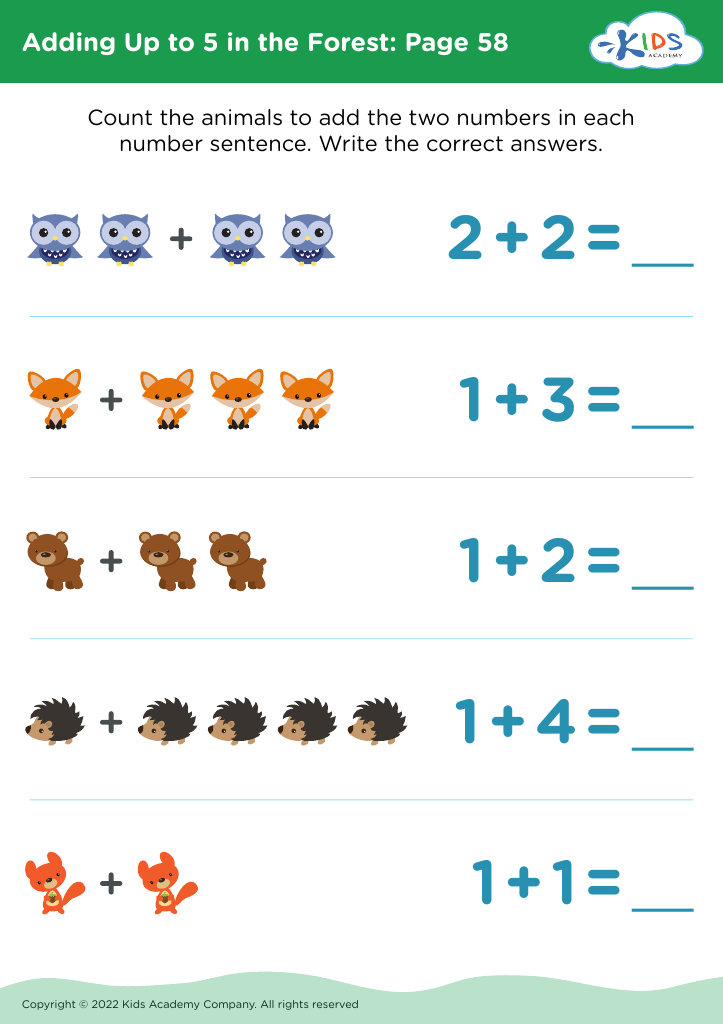
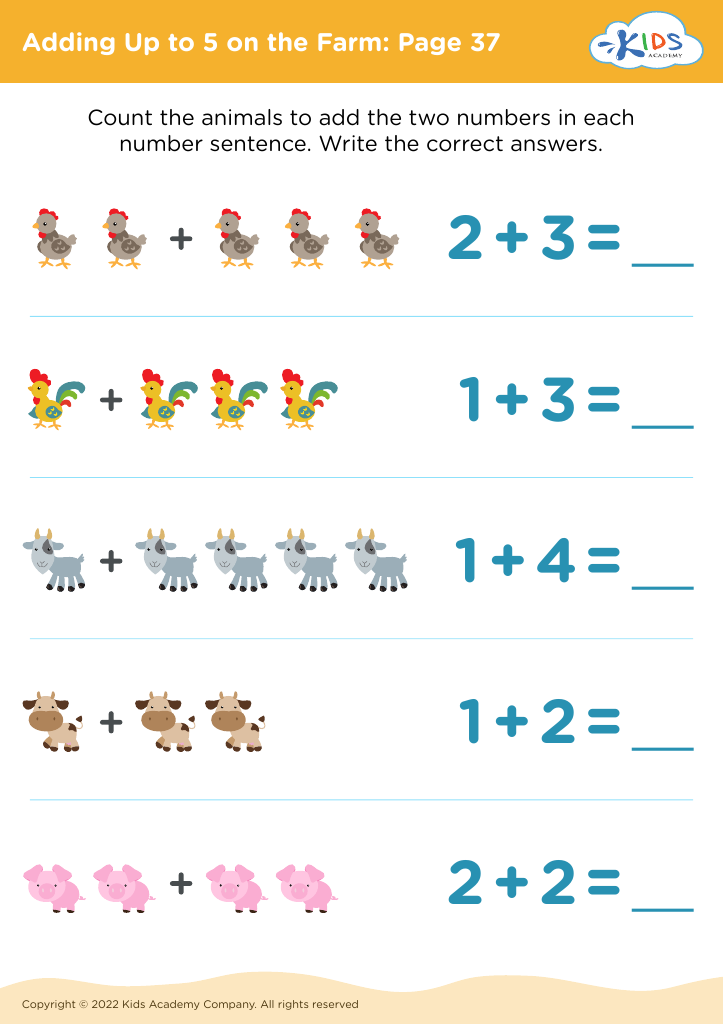
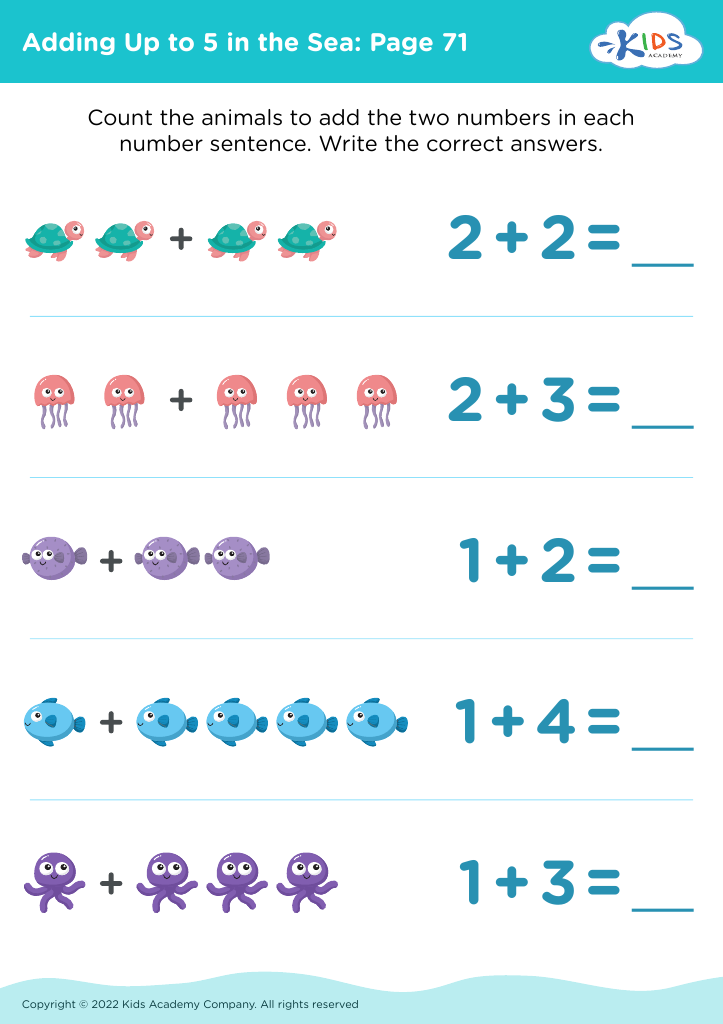
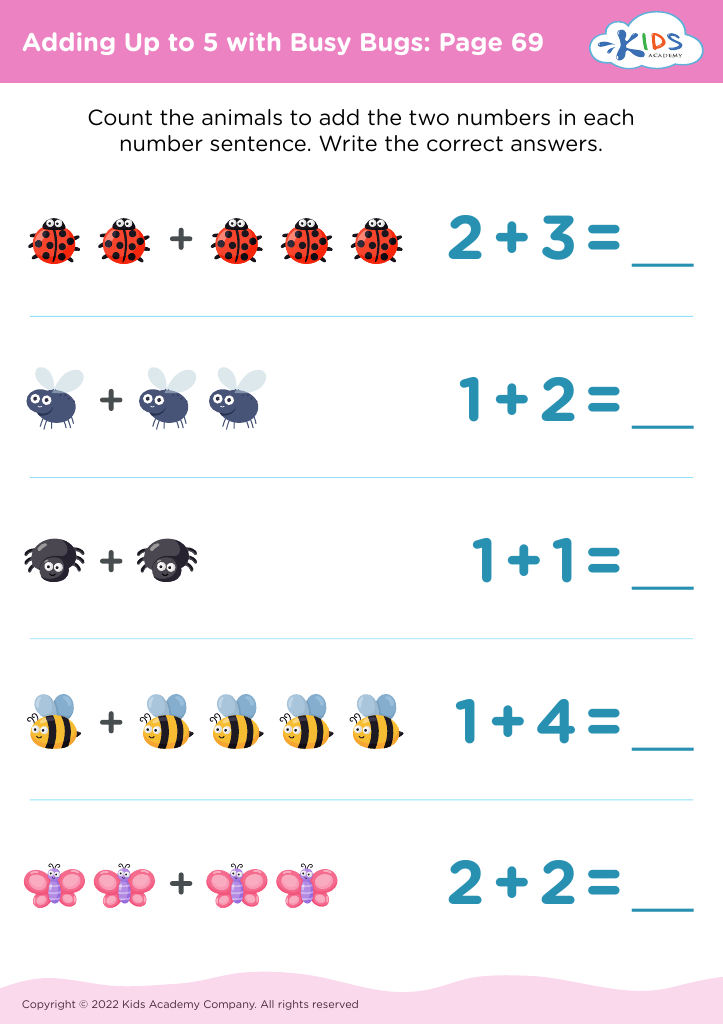
Enhance your child's early math skills with our 'Understanding Numeracy: Adding Up to 5 Worksheets'. These printable activities are expertly designed to help young learners grasp the fundamentals of addition in an engaging and approachable way. Suitable for Kindergarten and Pre-K, each worksheet features captivating visuals and intuitive exercises that make learning fun. By practicing with sums up to 5, children will build a solid foundation in numeracy, boosting their confidence and preparing them for more advanced mathematical concepts. Our resources are perfect for both classroom and home environments. Unlock your child's potential in math today with Kids Academy.








Understanding numeracy—especially foundational concepts like adding up to 5—is critical for young children's overall cognitive development. For parents and teachers, investing in this early math skill offers numerous benefits that go beyond simple arithmetic.
First and foremost, early numeracy skills form the groundwork for more complex mathematical thinking. When children grasp the concept of adding numbers up to 5, they begin to understand basic addition and develop problem-solving strategies. This foundational knowledge is crucial because future math concepts build upon these early skills.
Secondly, early math skills, like basic addition, significantly contribute to academic success across various subjects. Studies have shown that early numeracy skills are strong predictors of later academic achievements. Thus, ensuring that children have a solid understanding of these concepts can set them up for long-term educational success.
Additionally, mastering simple addition fosters confidence and promotes a positive attitude toward math. Children are more likely to engage in and enjoy learning when they feel competent in their abilities.
Finally, numeracy skills are not just academic tools but also practical life skills. Understanding basic addition helps children navigate everyday situations, like sharing objects, understanding time, and handling money.
In summary, focusing on adding up to 5 builds essential skills that influence future academic performance, self-confidence in learning, and practical problem-solving abilities, making early numeracy understanding a critical area of concern for parents and teachers.








