Understanding numerical values Adding Up to 5 Worksheets
4 filtered results
-
From - To
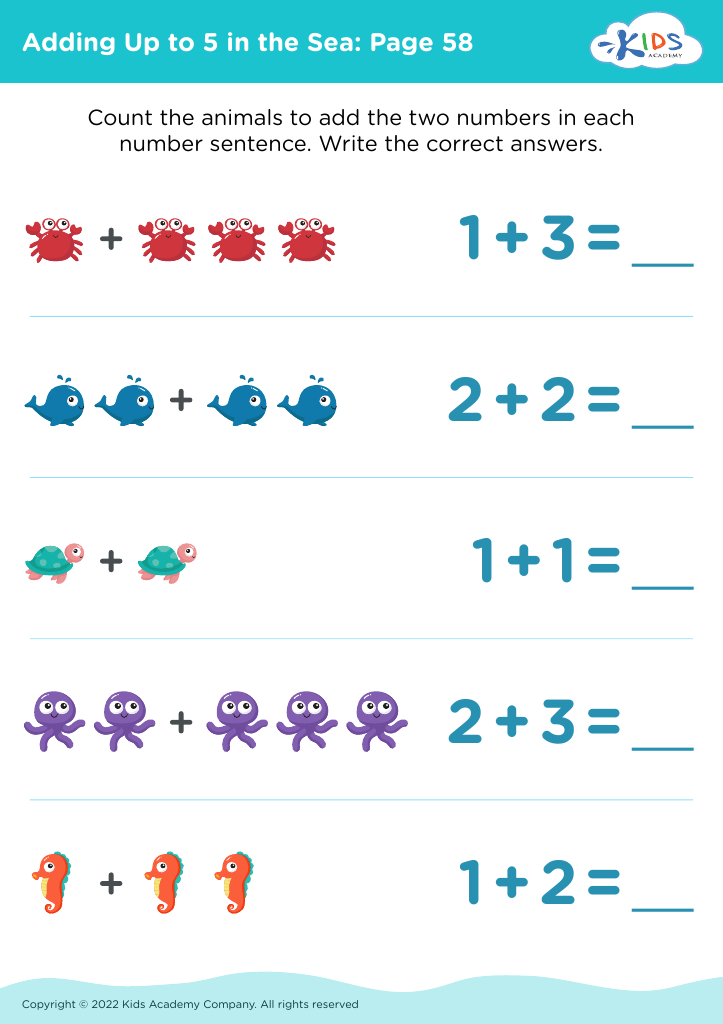
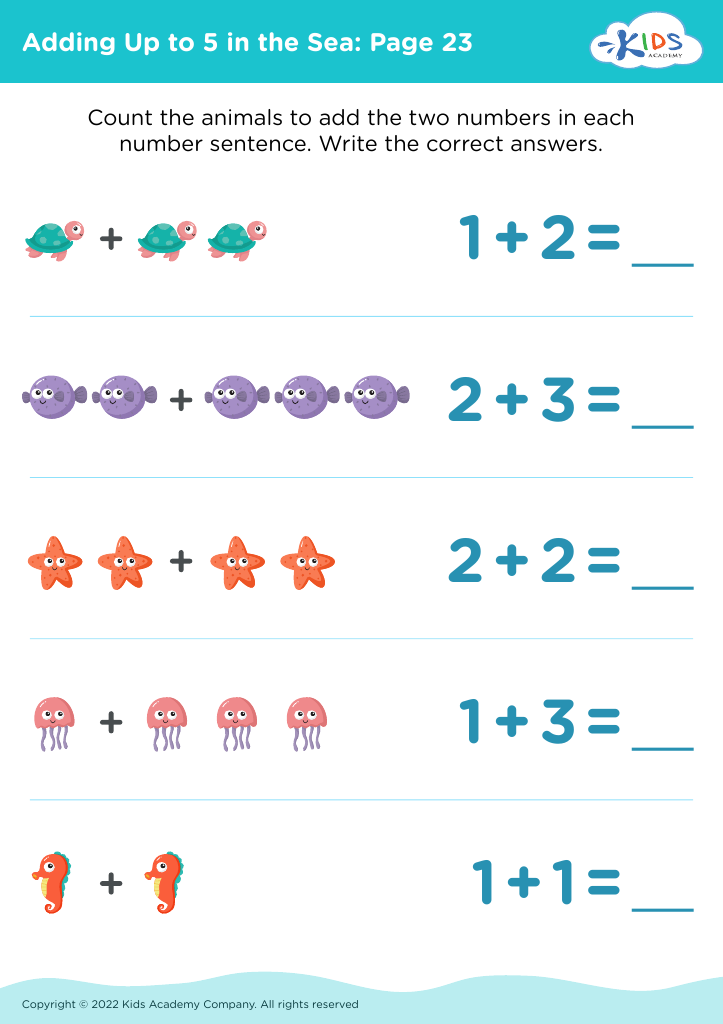
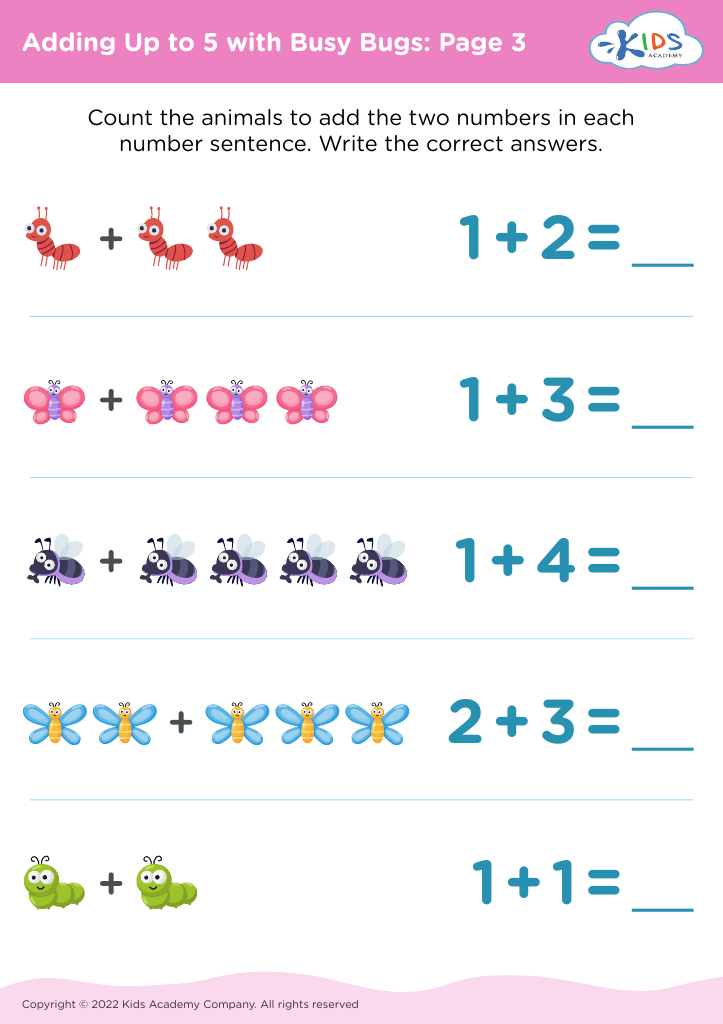
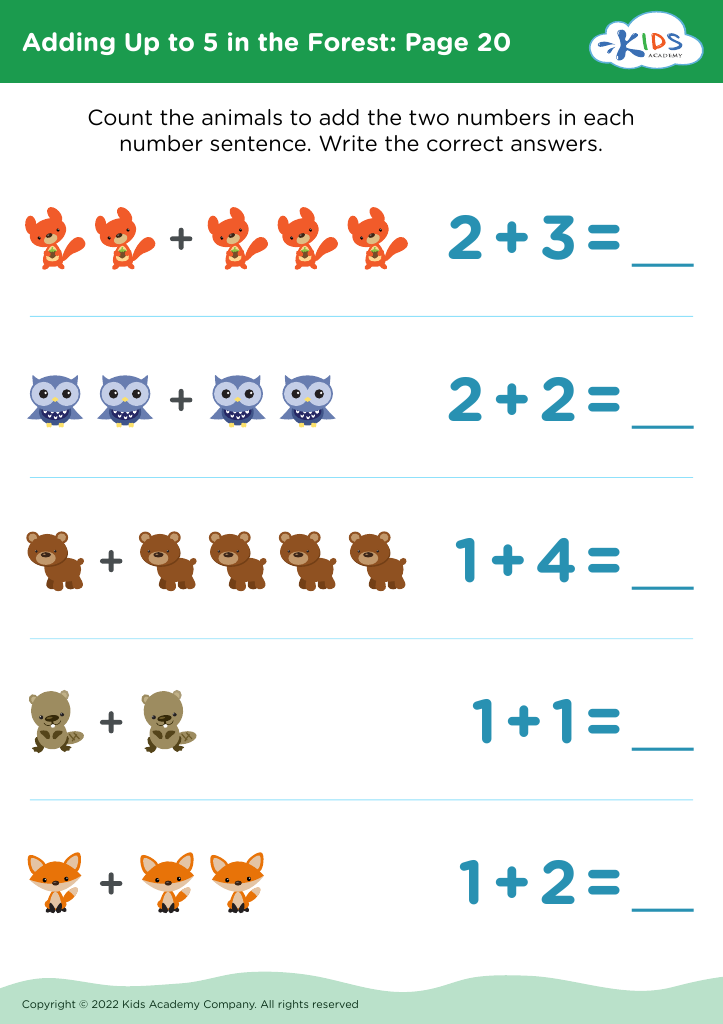
Welcome to our "Understanding Numerical Values: Adding Up to 5" worksheets! Designed for young learners, these engaging printables help children grasp the concept of numbers and addition in a fun, interactive way. Through colorful illustrations and simple exercises, students will explore numerical values up to 5, practicing their counting and addition skills. Each worksheet encourages hands-on learning and reinforces the fundamental concepts of early mathematics. Perfect for preschool and kindergarten classrooms, these resources promote confidence in young learners as they develop essential skills for future math success. Start your child's math journey today with our easy-to-use, effective worksheets!



%20(1).jpg)




Understanding numerical values and the concept of adding up to 5 is foundational in early mathematics education. For parents and teachers, grasping this concept is essential for several reasons.
Firstly, mastering the addition of small numbers helps children develop crucial math skills that serve as building blocks for more complex mathematical operations. When children understand how numbers combine to make 5, they gain confidence in their ability to solve problems, which can positively impact their overall attitude towards math.
Secondly, the significance of numerical values extends beyond academic achievement; it fosters critical thinking and logic skills. Children learn to analyze problems, reason logically, and make connections between numbers, all of which are crucial skills not just in math but in everyday decision-making.
Moreover, comprehending the addition of small numbers lays the groundwork for understanding larger concepts, such as addition, subtraction, and even early algebraic thinking. It becomes easier for children to grasp more complex ideas later on if they have a solid understanding of these fundamentals.
Finally, by focusing on this key understanding, parents and teachers can work together to create a supportive learning environment that encourages exploration, curiosity, and a positive view towards learning math, thereby enriching the child's educational experience.








