Visual perception improvement Adding Up to 5 Worksheets
5 filtered results
-
From - To
Enhance your child's visual perception skills with our engaging "Adding Up to 5" worksheets! Designed for early learners, these activities focus on improving visual discrimination, spatial awareness, and observation skills through colorful illustrations and interactive exercises. Each worksheet encourages children to recognize numbers and quantity relationships, laying a strong foundation for future math concepts. Perfect for classroom or home use, our resources cater to various learning styles, ensuring children stay motivated as they practice. Equip your child with essential skills for academic success while having fun with our thoughtfully crafted worksheets! Download now and watch their confidence soar in math!
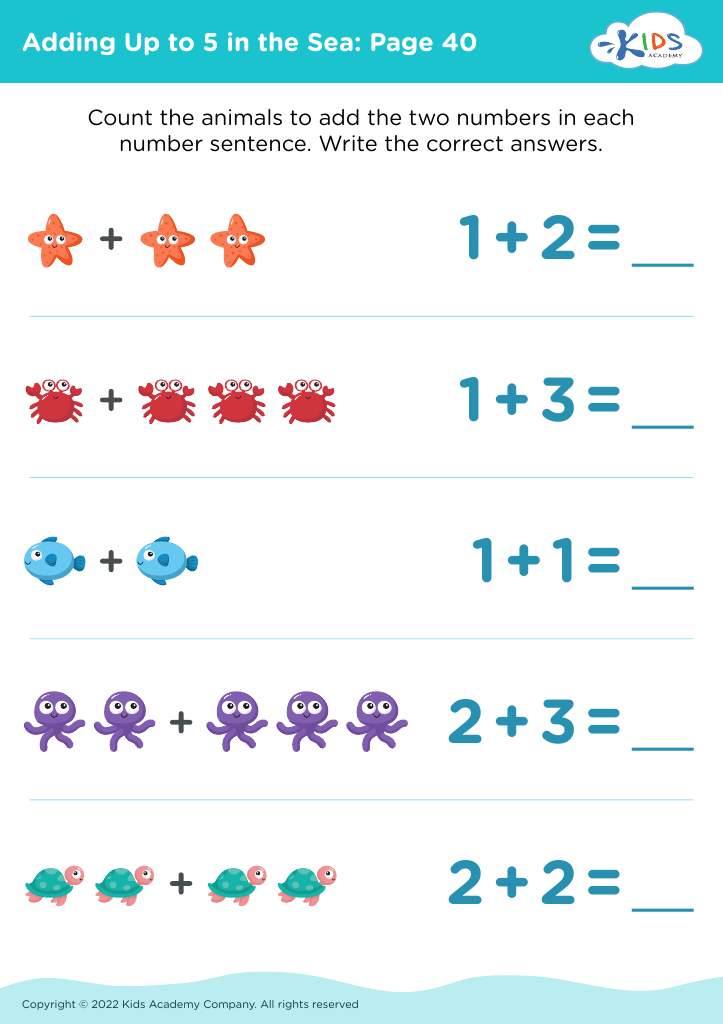
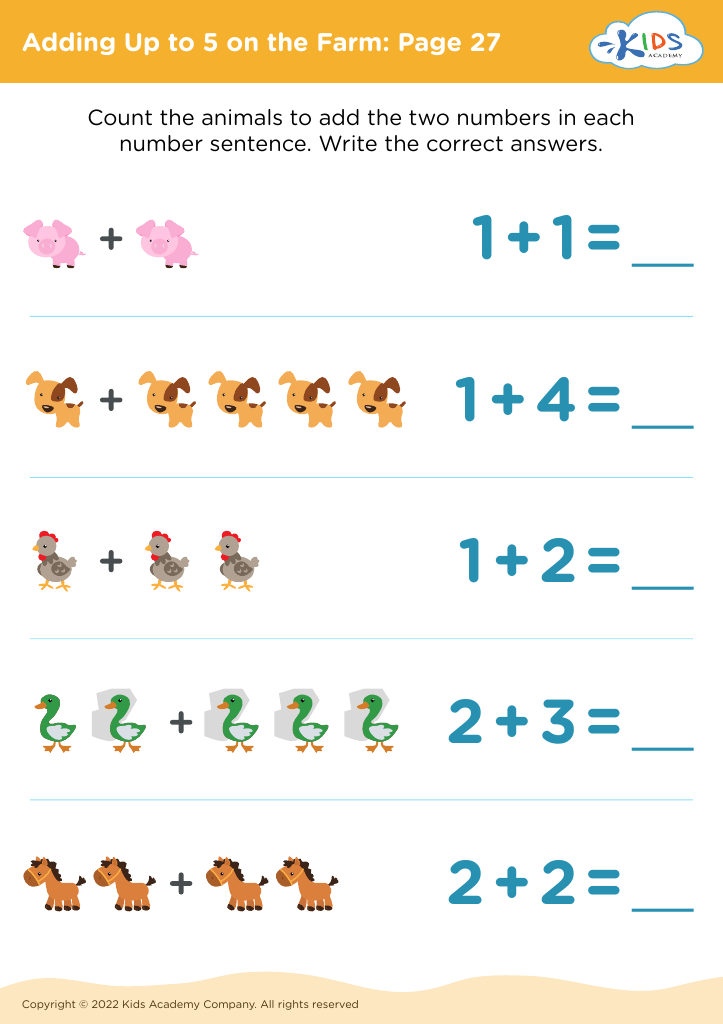
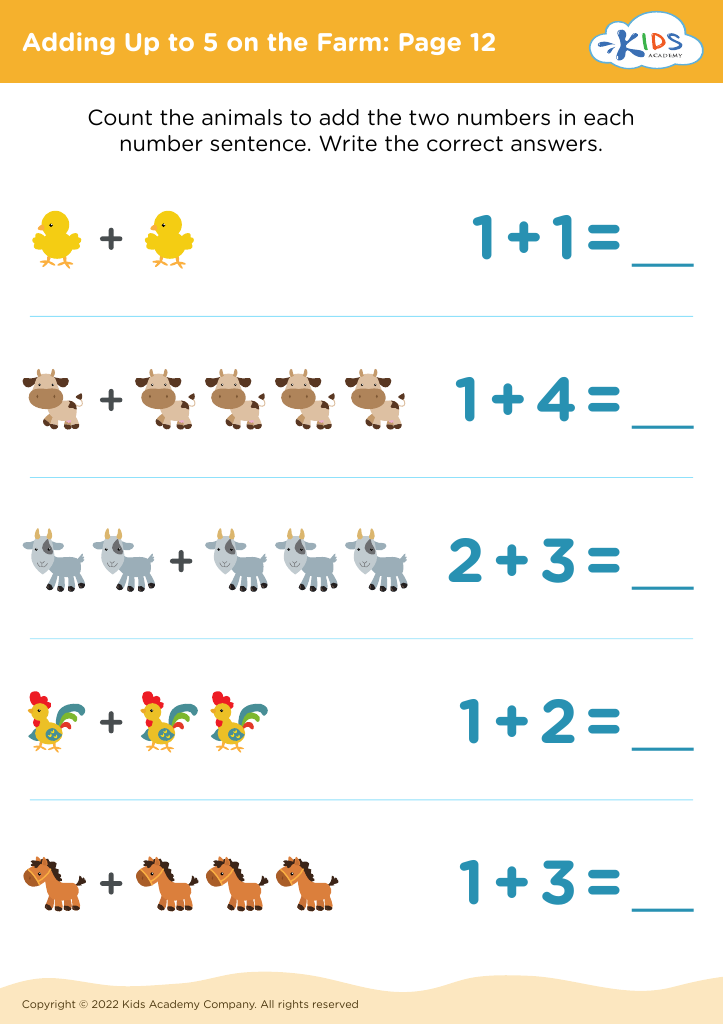
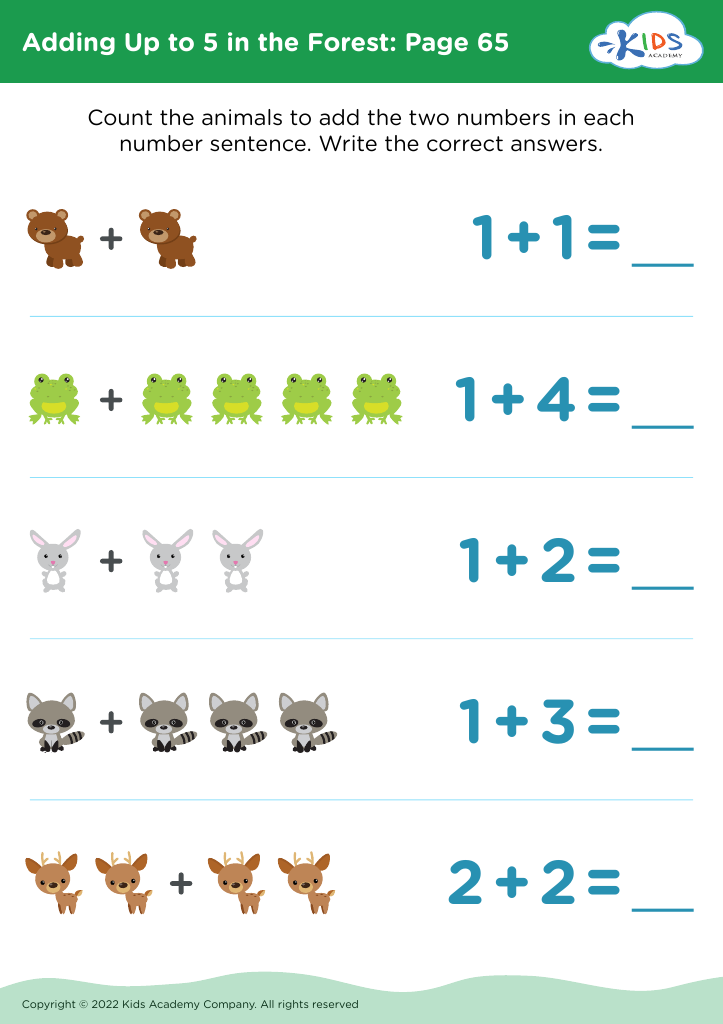
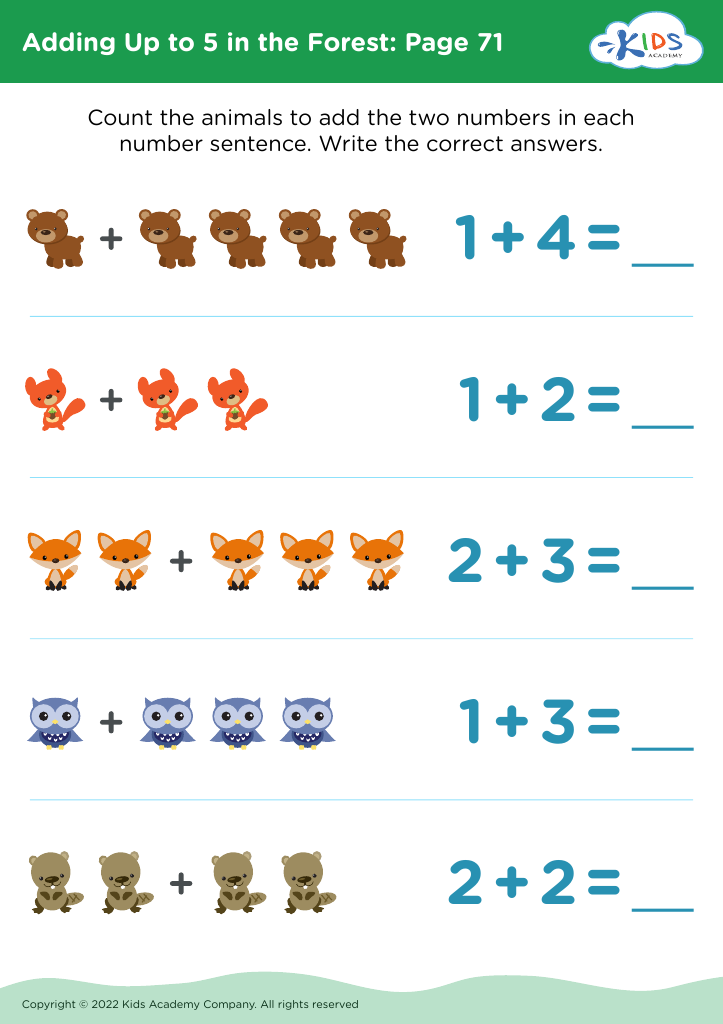





.jpg)


Visual perception plays a crucial role in early childhood education, impacting a child's learning abilities significantly. When children can effectively perceive and interpret visual information, they are better positioned to master skills like addition, particularly when practicing math concepts such as adding up to 5.
Improving visual perception enhances a child's ability to recognize numbers, count objects, and differentiate between shapes and sizes, all of which are foundational for understanding math. For example, when adding numbers or objects, a child with strong visual perception can more easily visualize the grouping of items, making the computation more intuitive. This can lead to greater confidence and enthusiasm for math activities.
Additionally, developing visual perception supports broader educational success. Skills such as reading, writing, and problem-solving are intertwined with visual processing, influencing a child's overall academic performance. Parents and teachers should prioritize visual perception improvement not only to support mathematical skills but also to foster a love for learning and exploration.
Investing effort in enhancing a child's visual perception equips them with necessary tools for future learning challenges, paving the way for a strong foundation in both math and overall cognitive development. Embracing this focus ultimately nurtures well-rounded, capable learners.








