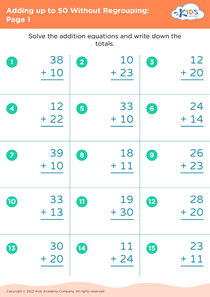
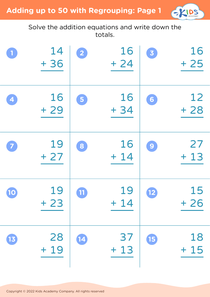
Counting practice Adding up to 50 Misc Worksheets
5 filtered results
-
From - To
At Kids Academy, our "Counting Practice Adding up to 50 Misc Worksheets" provide a fun and educational way for young learners to enhance their math skills. These engaging worksheets guide students through practical exercises to practice adding numbers up to 50. With vibrant visuals and thoughtfully designed activities, children build confidence while developing essential addition skills. Perfect for both classroom and home use, these printables help kiddos progress at their own pace. Empower your child’s mathematical journey with our expertly crafted counting practice worksheets, tailored to support early math learners in mastering their counting and addition skills up to 50.
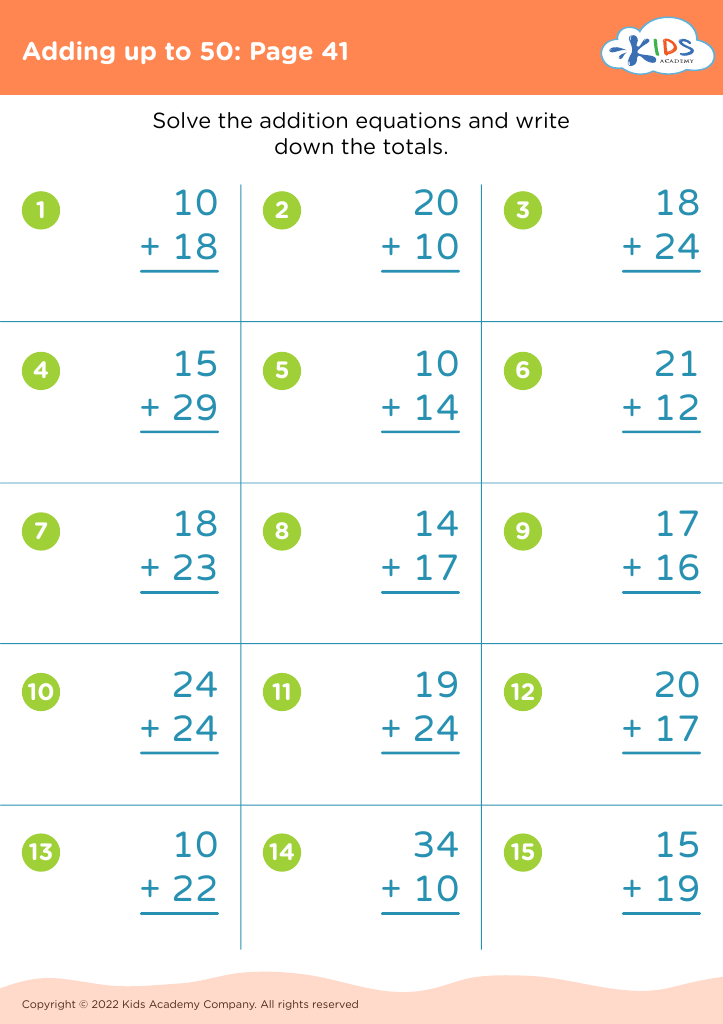
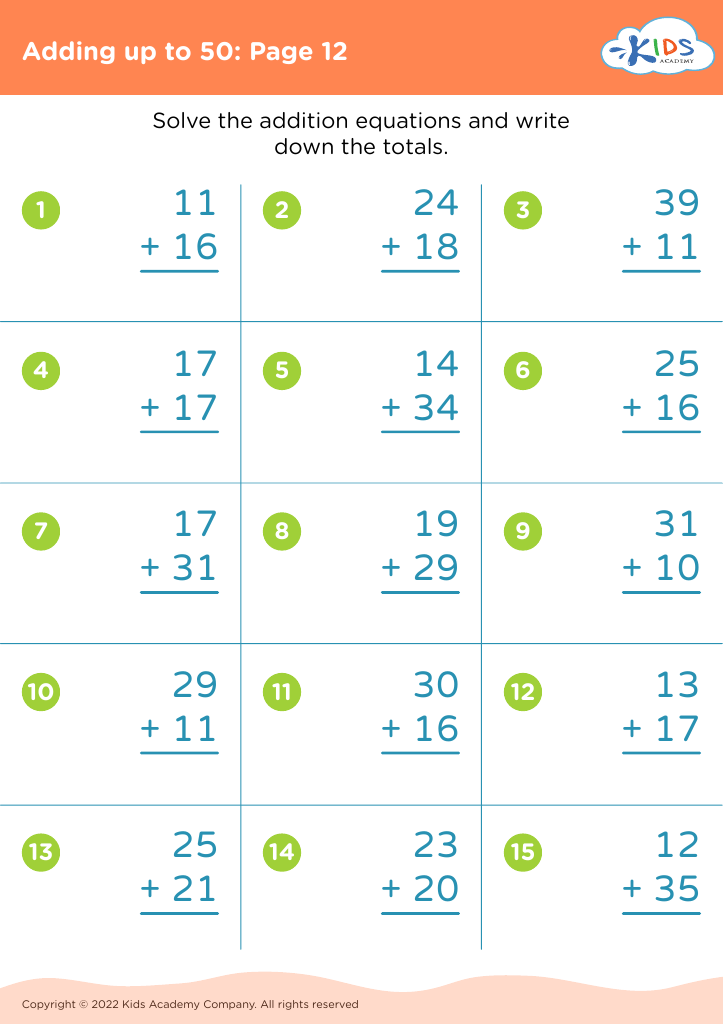
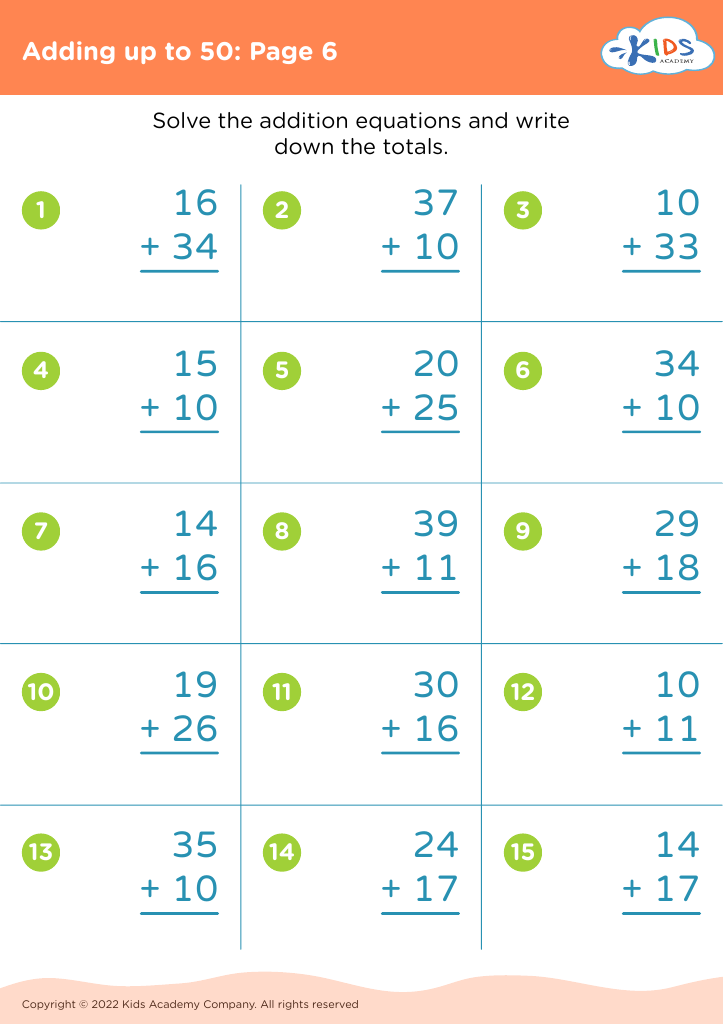
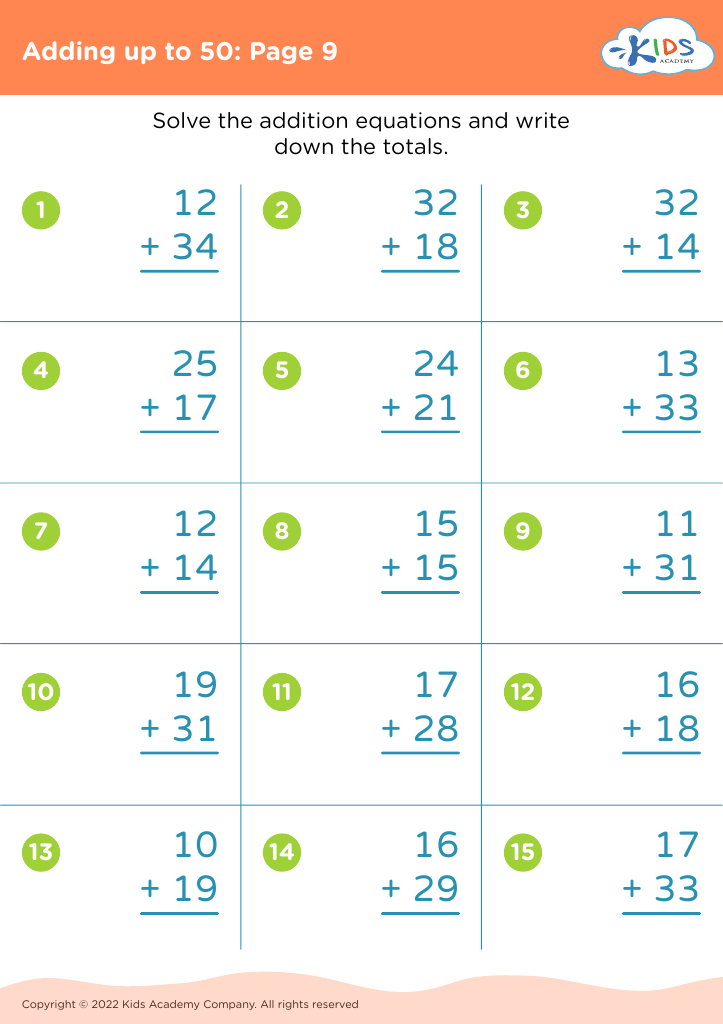
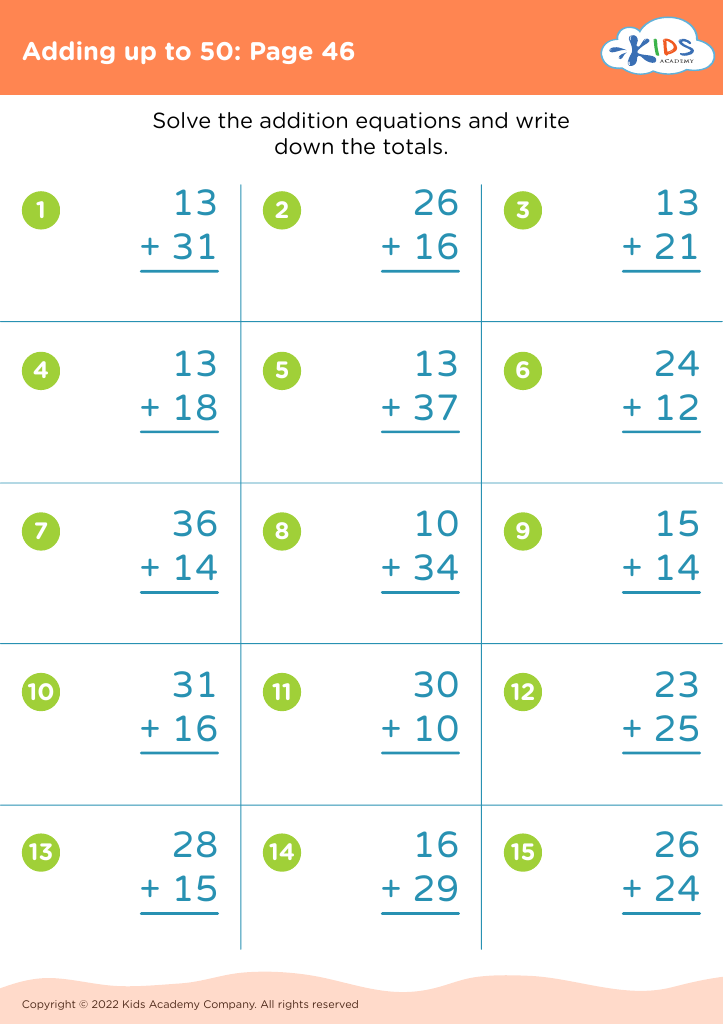


Counting practice and adding up to 50 are foundational mathematical skills that parents and teachers should prioritize for early grade students. These skills are crucial for multiple reasons.
First, they serve as the building blocks for more advanced mathematical concepts. By mastering basic counting and addition, children develop number sense—a deep understanding of how numbers work. This foundation makes it easier for them to grasp more complex topics like subtraction, multiplication, and division later on.
Second, counting and simple addition exercises enhance a child's problem-solving skills. When children practice these activities, they learn to see patterns, make connections, and apply logical thinking. This not only benefits their mathematical aptitude but also strengthens their cognitive abilities in general.
Third, early proficiency in math can boost a child’s confidence and foster a positive attitude towards the subject. When children achieve small milestones, such as correctly adding numbers up to 50, they experience a sense of accomplishment that encourages them to tackle more challenging tasks with enthusiasm.
Lastly, these skills have practical real-world applications. From managing allowances to understanding time and measurement, everyday life demands a certain level of numerical proficiency.
Thus, engaging children in counting practice and addition activities prepares them for academic success and everyday tasks.