Understanding symmetry Adding up to 50 Misc Worksheets
3 filtered results
-
From - To
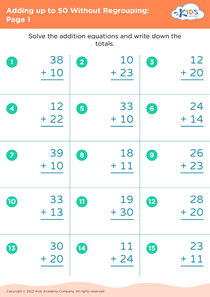
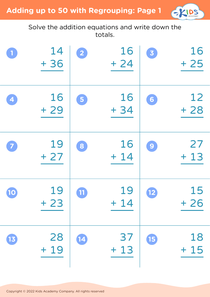
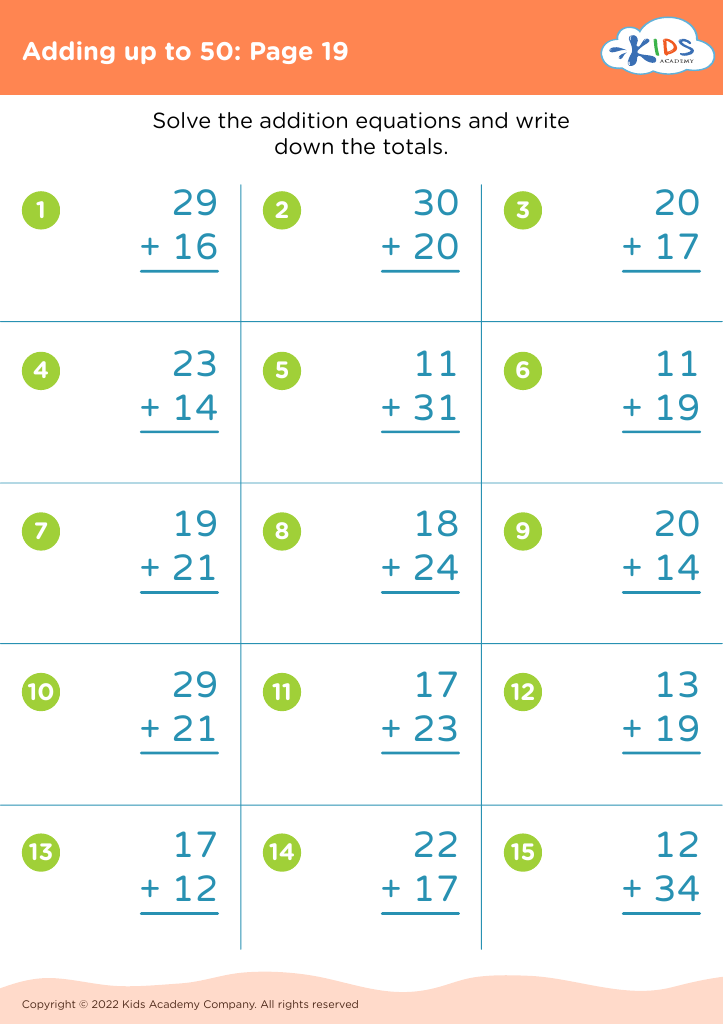
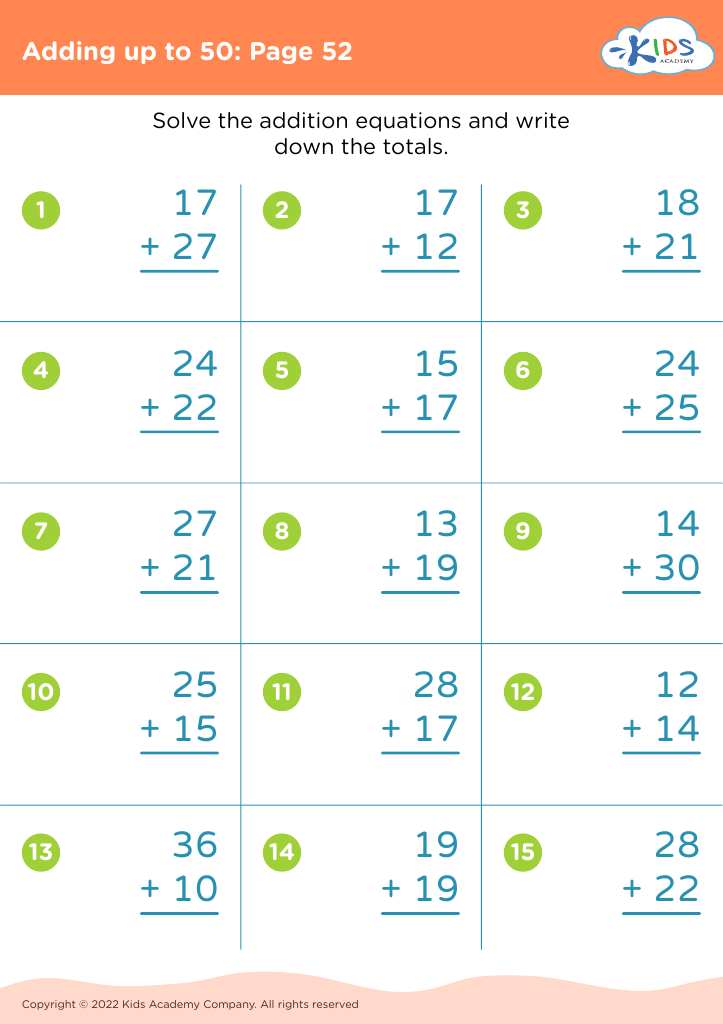
Explore our comprehensive "Understanding Symmetry: Adding Up to 50 Misc Worksheets" designed for young learners. These engaging printables combine fundamental skills in understanding symmetry and mastering addition up to 50. Each worksheet provides visually appealing activities to help children recognize symmetrical patterns while practicing their math skills. Ideal for teachers and parents, these fun exercises foster critical thinking and enhance problem-solving abilities in a playful manner. Suitable for use in classrooms or at home, our worksheets support a foundational understanding in both symmetry and basic arithmetic, ensuring an interactive and educational experience for kids.
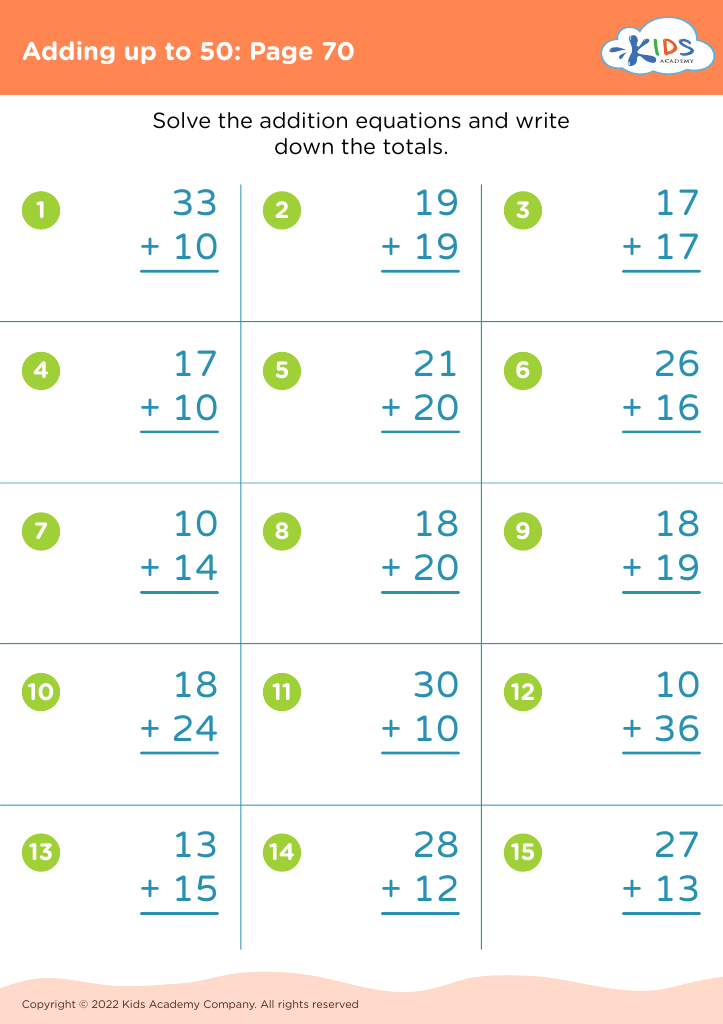


Understanding symmetry and basic addition is essential for early learning, and both parents and teachers should care as these concepts lay critical foundations in math and cognitive development. Symmetry plays a crucial role in spatial awareness, as it helps children easily recognize patterns and structures. Recognizing symmetry also fosters design and artistic skills, supporting creativity. These spatial skills are key predictors of future success in STEM fields.
On the other hand, mastering addition up to 50 builds fundamental arithmetic abilities. Early addition skills are vital for problem-solving and developing logical thinking. It ensures a solid grasp of basic numbers and aids in understanding more complex arithmetic operations in subsequent grades. Fluent adding also accelerates learning in related areas like multiplication and fractions. Both these skills relate directly to everyday situations such as understanding shapes in nature or sharing items in small numbers. This practical aspect underlines the real-world relevance, helping children see the usefulness of what they learn.
In addition, both areas, symmetry and adding up to 50, support cognitive development, enhancing a child's ability to think, reason, and work systematically. Ensuring children grasp these early concepts can foster a love for learning and a solid foundation in varied fields, making future educational endeavors more approachable.