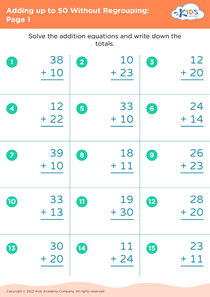
Comparing Fractions Adding up to 50 with Regrouping Worksheets
12 filtered results
-
From - To
Unlock your child's potential with our "Comparing Fractions Adding up to 50 with Regrouping Worksheets". Perfect for early graders, these engaging exercises enhance math skills and foster a solid understanding of fractions and regrouping. Each worksheet offers varied problems that challenge students to compare and combine fractions, making learning math both fun and educational. Our carefully designed worksheets not only help in building mathematical fluency but also develop critical thinking. Easy-to-follow instructions and vibrant visuals keep kids motivated and eager to learn. Download now to provide your child with effective practice and grant them a deeper comprehension of essential math concepts.
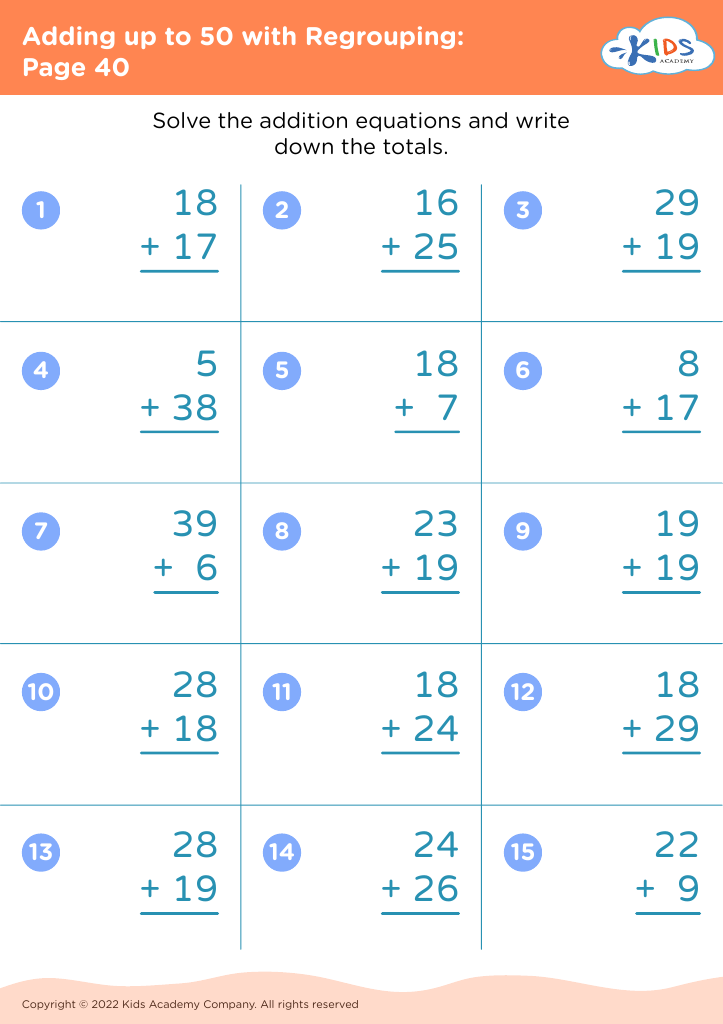
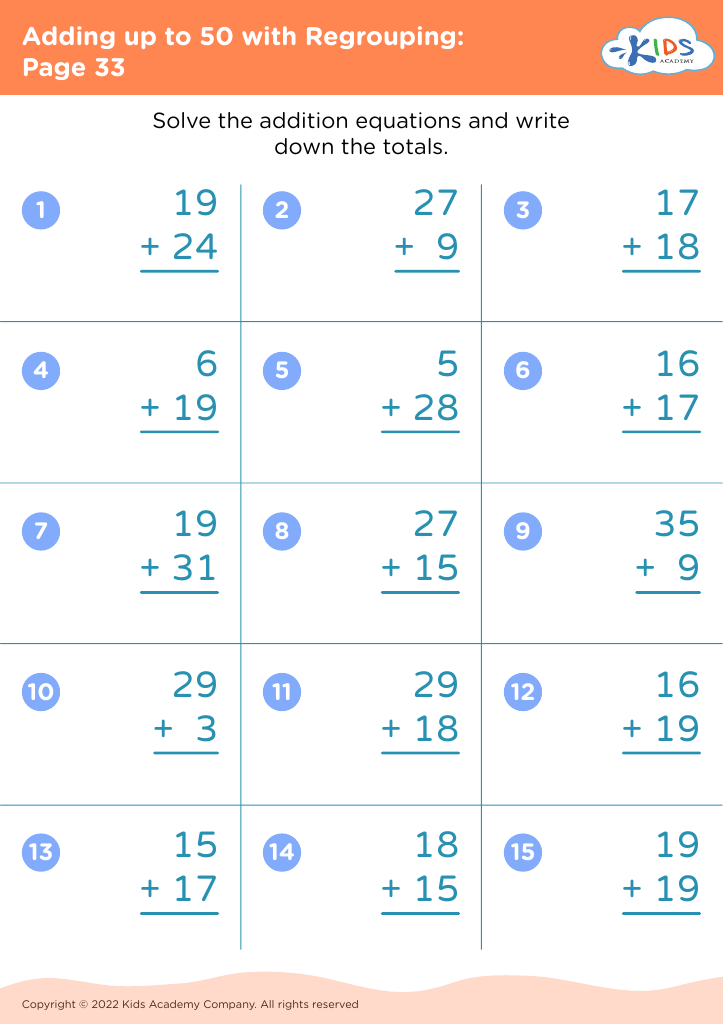
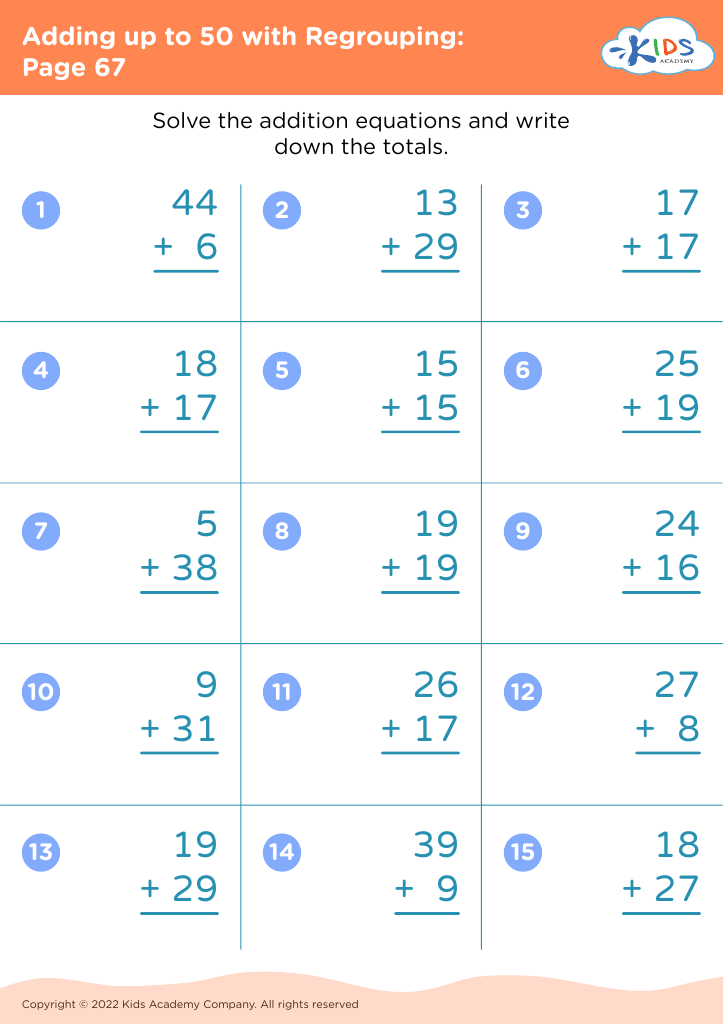
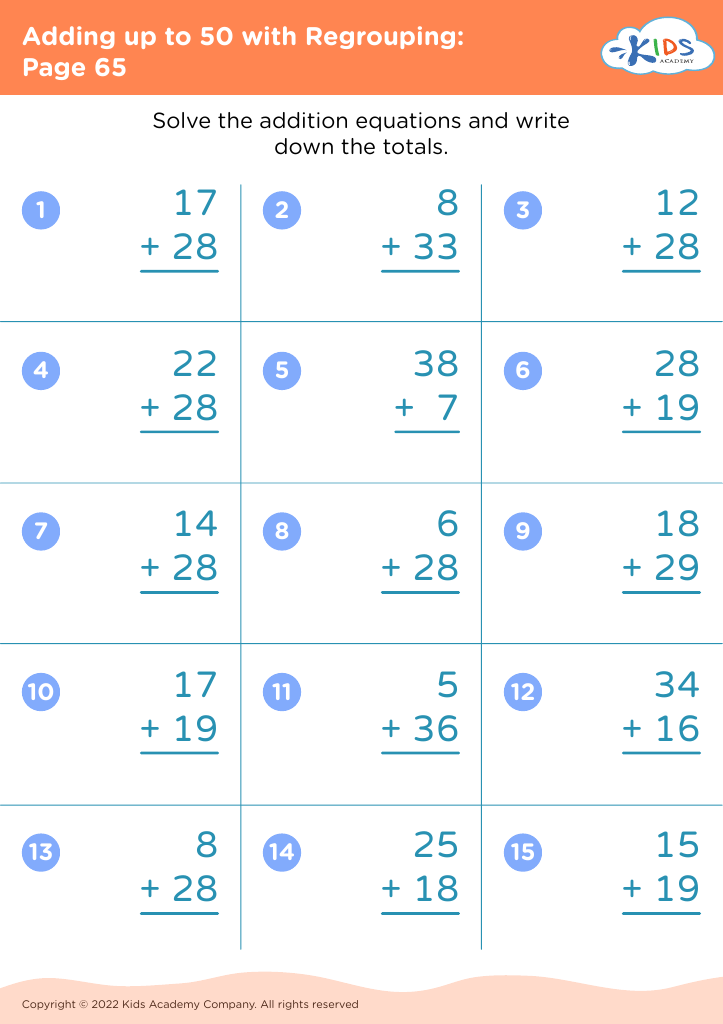
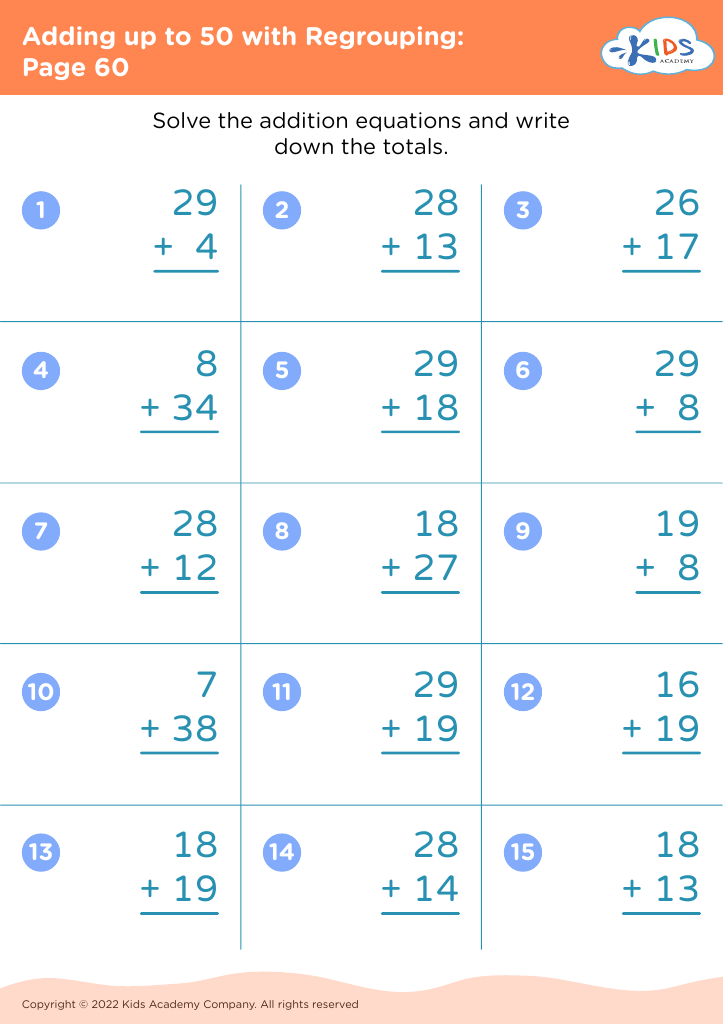
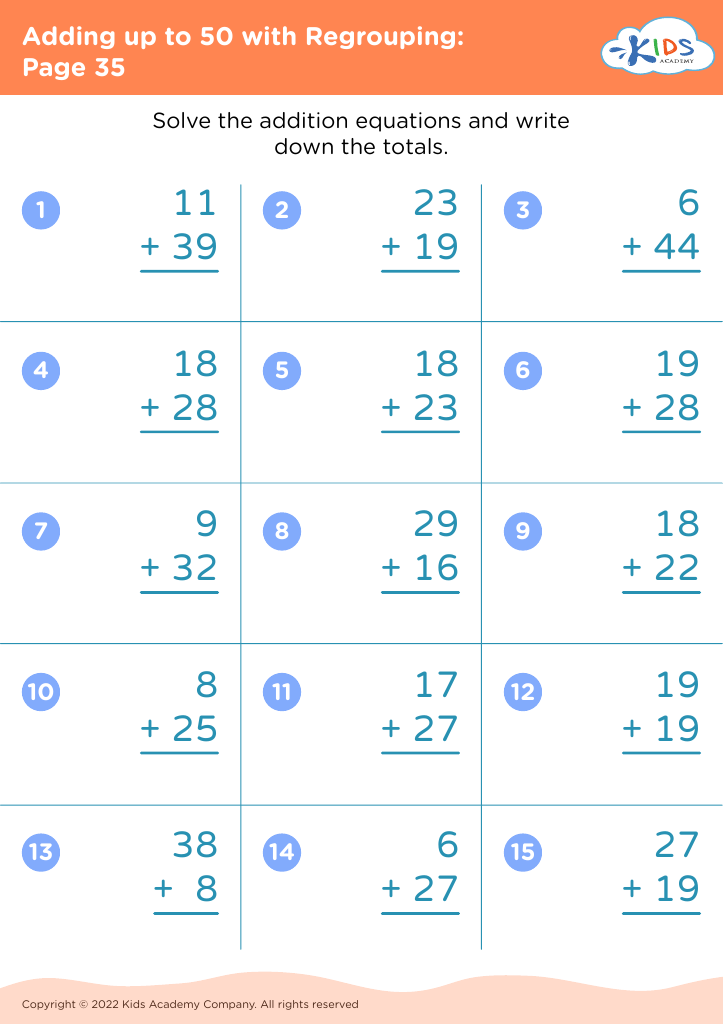
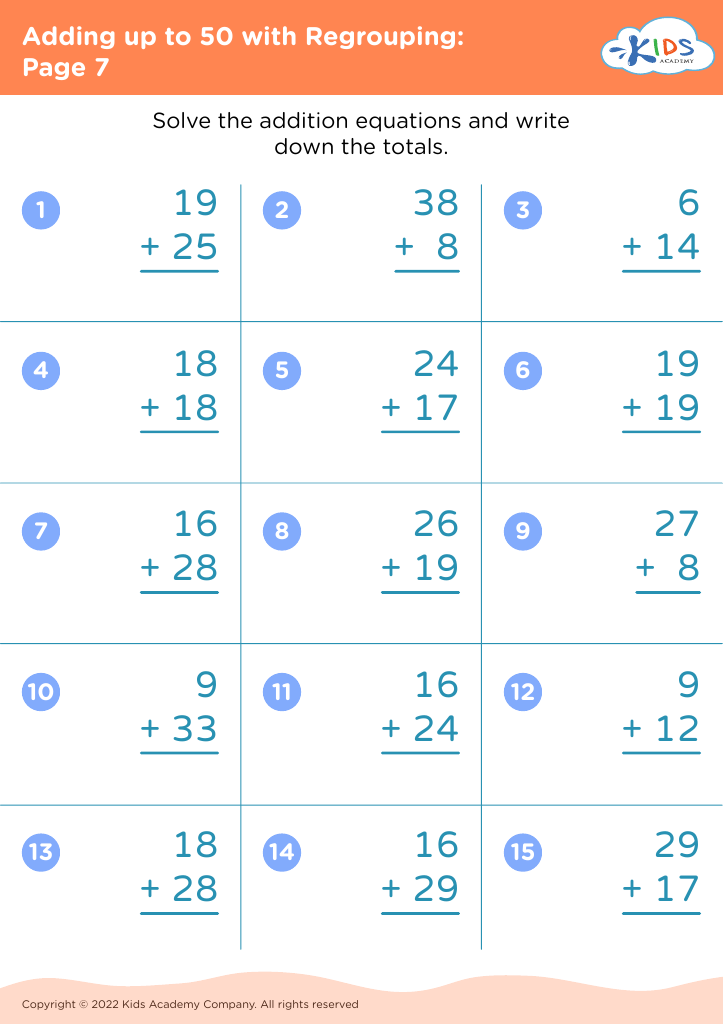
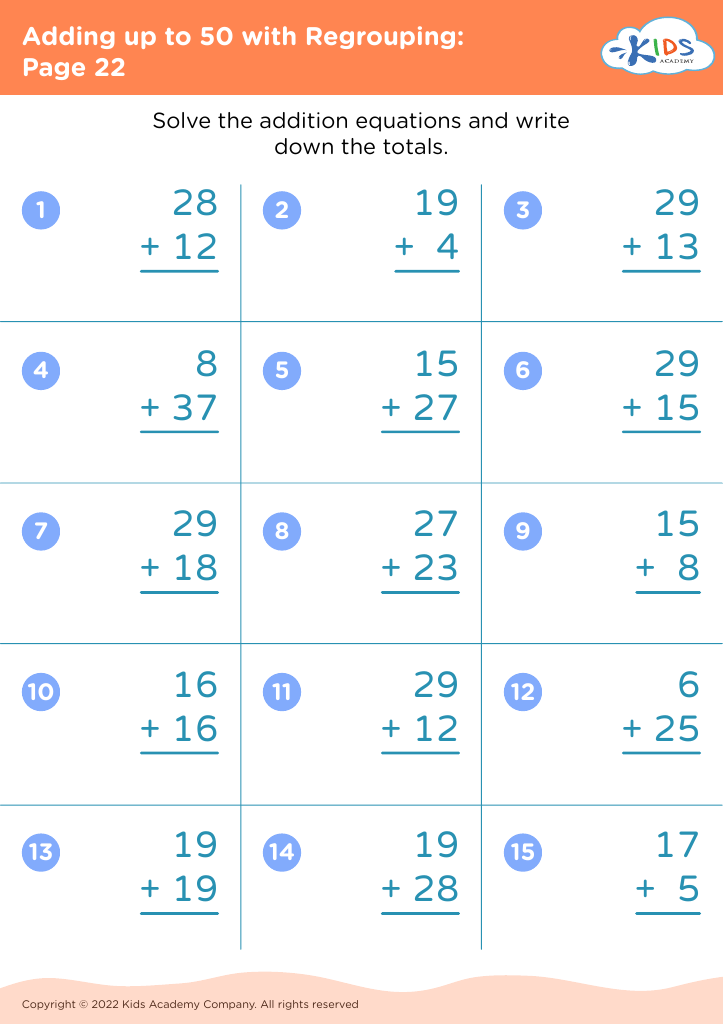
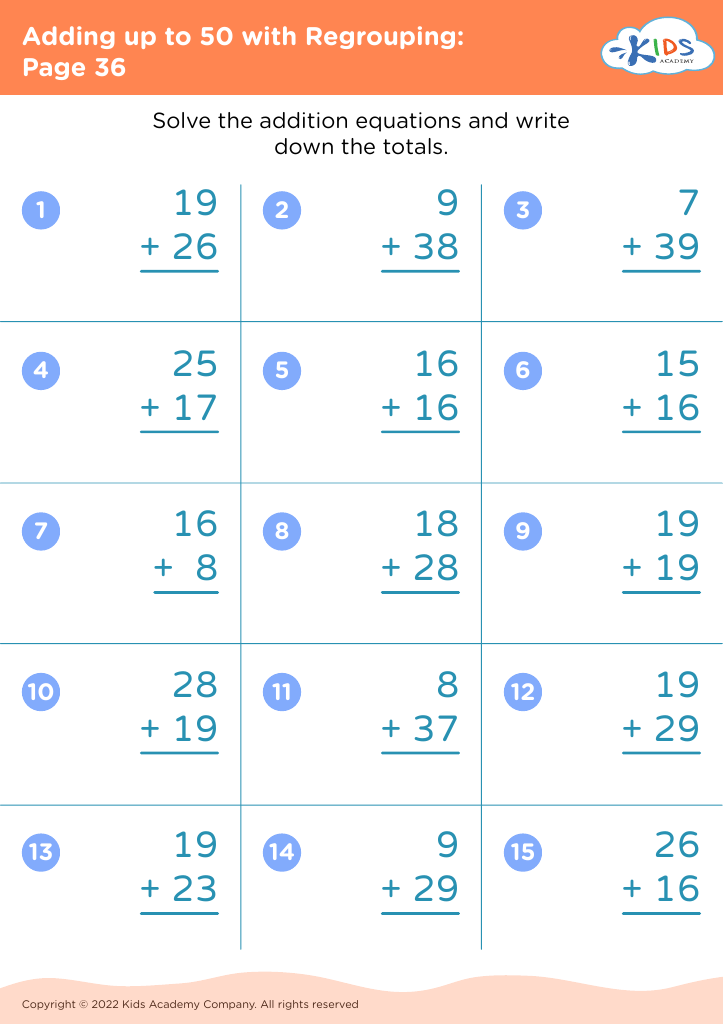
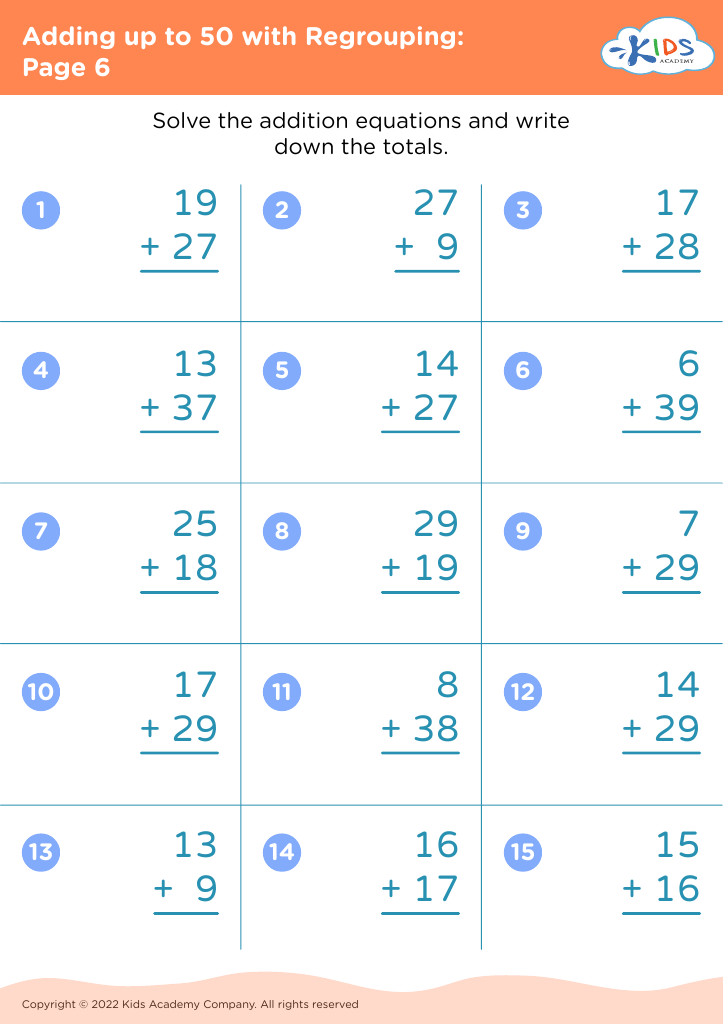
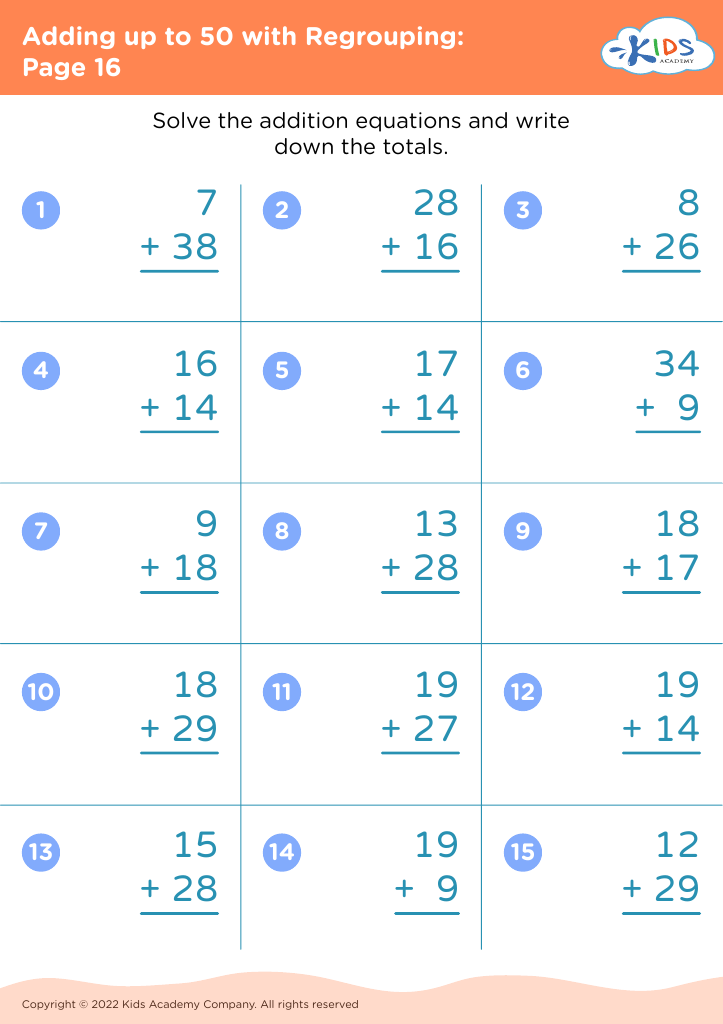
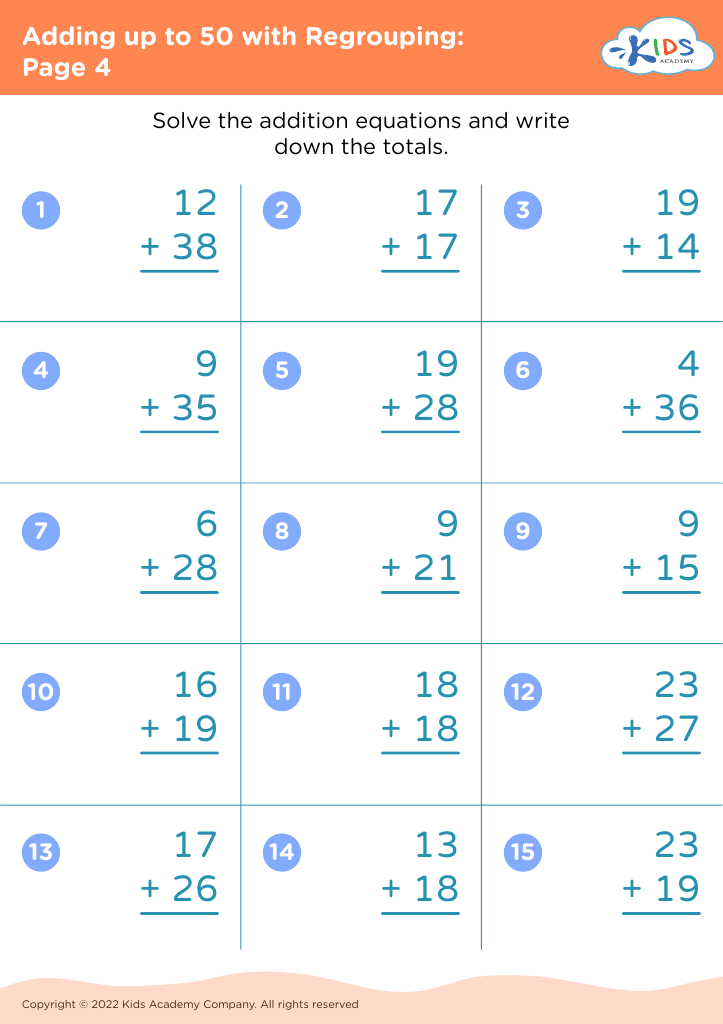


When teaching early math concepts, it’s essential for parents and teachers to emphasize comparing fractions and adding numbers up to 50 with regrouping. These foundational skills are crucial for several reasons. First, they lay the groundwork for advanced mathematical concepts. Understanding how to compare fractions builds critical thinking skills about proportionality and number relationships, while adding numbers up to 50 with regrouping fosters proficiency in basic arithmetic.
Second, mastering these skills enhances problem-solving abilities. When children learn to carefully compare fractions and manage the process of carrying over in addition, they become adept at tackling complex problems in the future. This ability to dissect and solve problems extends beyond math, influencing other subjects and everyday decision-making.
Third, these activities promote cognitive development. Working with fractions requires multiple steps: understanding what fractions represent, comparing their magnitudes, and deciding which fraction is larger or smaller. Likewise, regrouping in addition involves planning steps ahead and ensuring accuracy, thus enhancing focus and attention to detail.
Finally, fostering these skills builds confidence. As children navigate through these early math challenges, they experience a sense of accomplishment that boosts their self-esteem. When teachers and parents prioritize these skills, they set children up for long-term academic and personal success.