Fraction simplification Adding up to 50 Without Regrouping Worksheets
7 filtered results
-
From - To
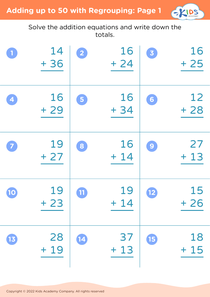
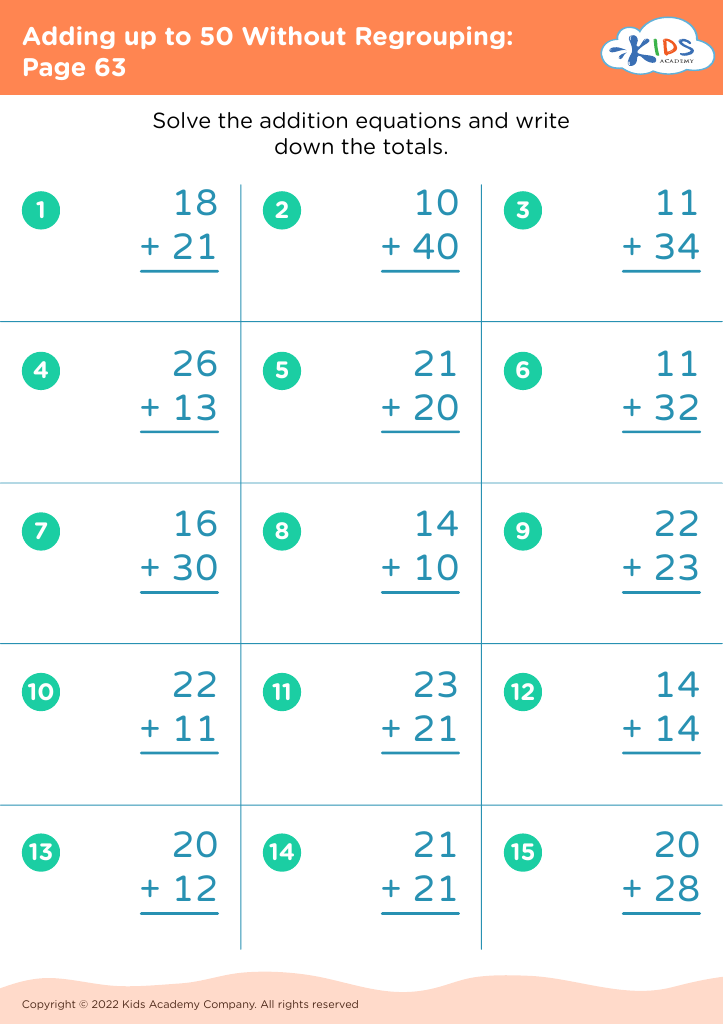
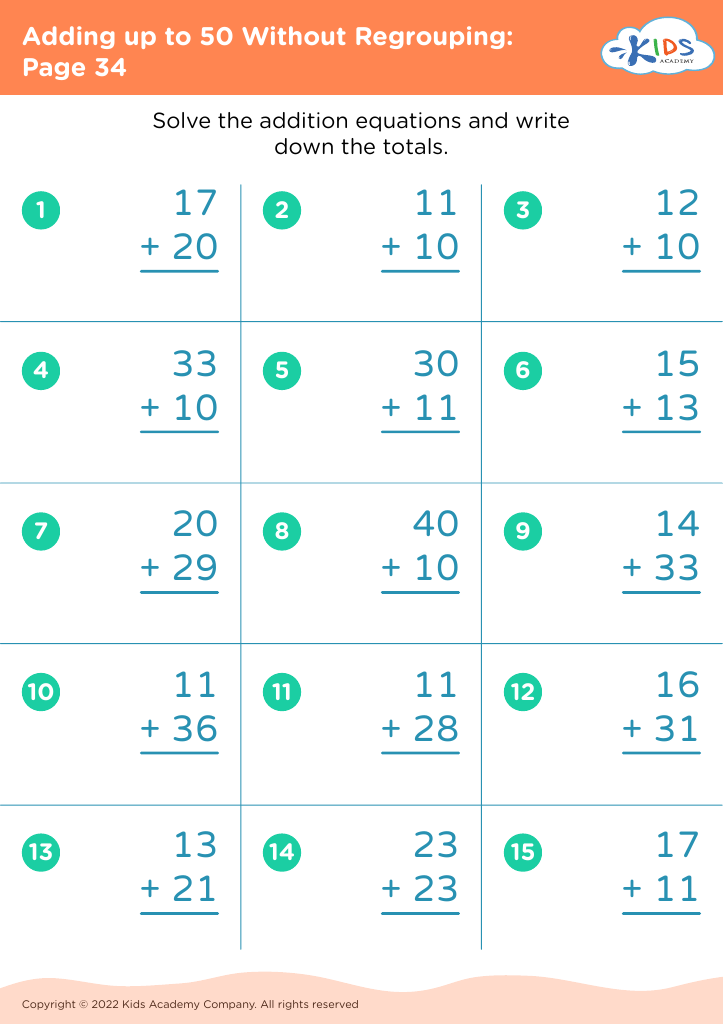
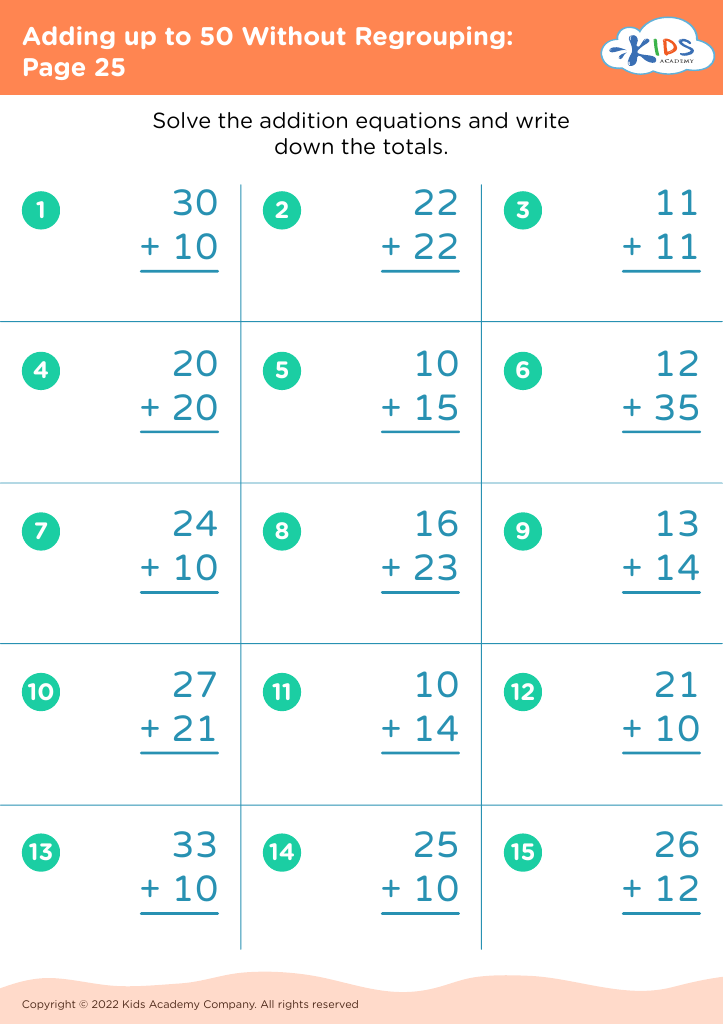
Discover our "Fraction Simplification Adding Up to 50 Without Regrouping" worksheets, designed to strengthen your child's understanding of fractions and addition. These engaging resources provide students with practical exercises that allow them to simplify fractions while adding numbers up to 50 without the need for regrouping. With a variety of interactive problems, students will build confidence in their math skills and enhance their ability to work with fractions in a fun and educational way. Perfect for early grade learners, these worksheets support skill development and promote a solid mathematical foundation. Download and make math learning enjoyable today!
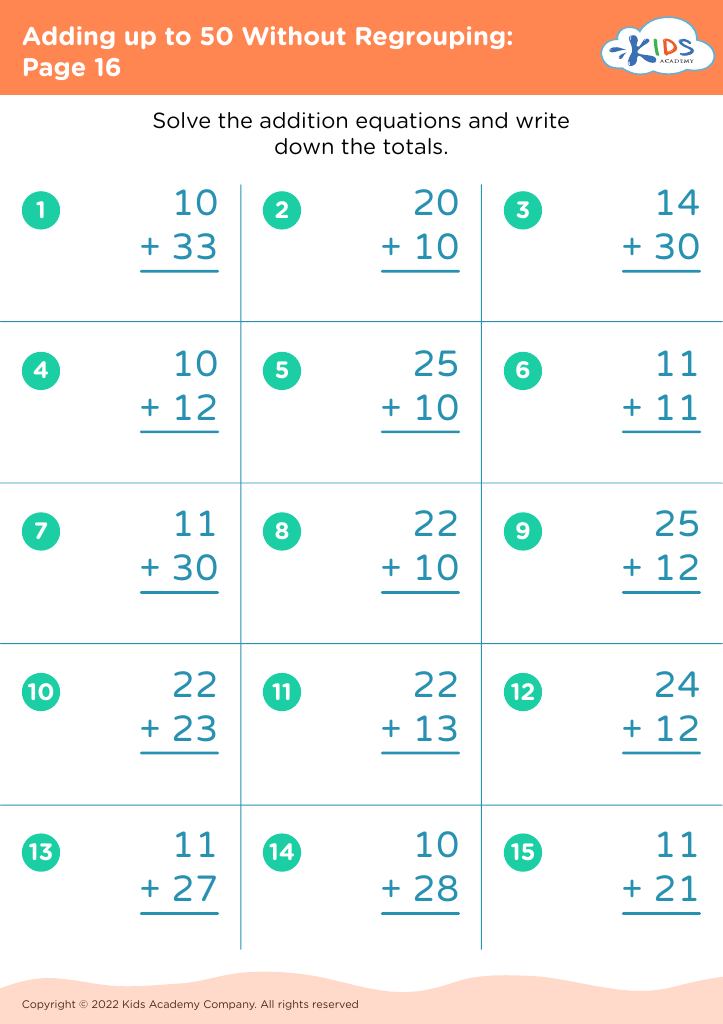
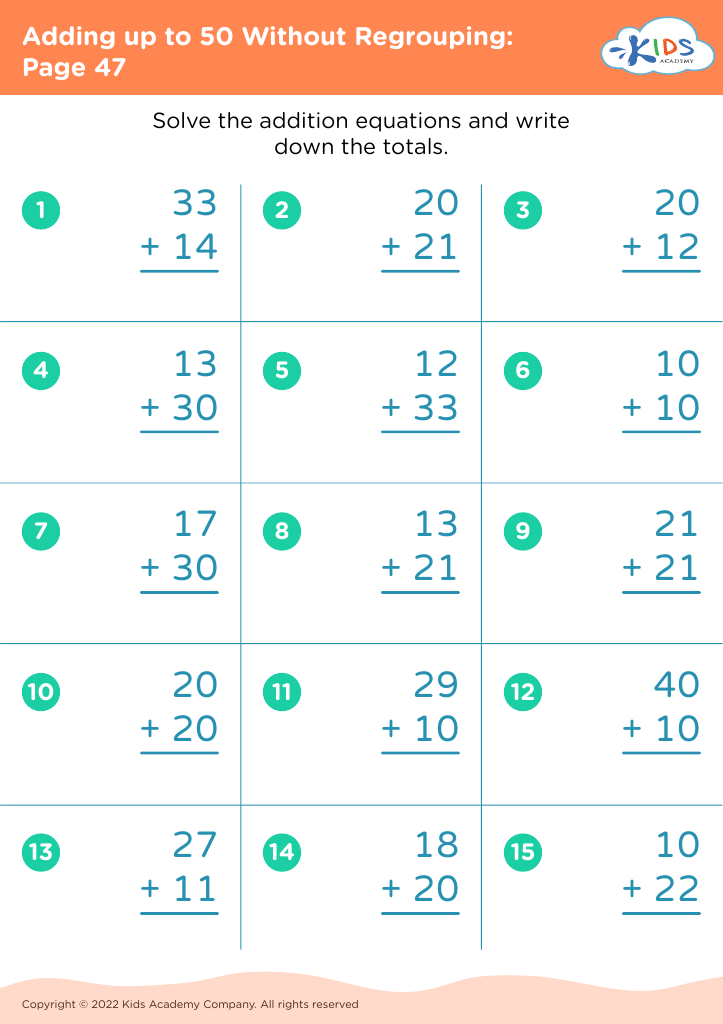
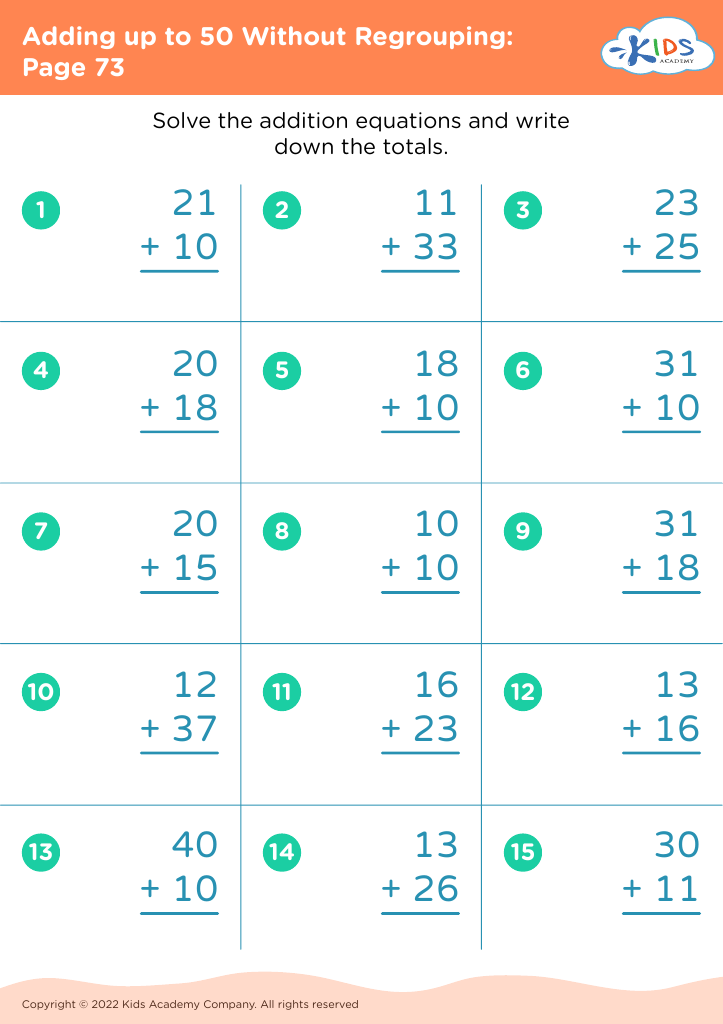
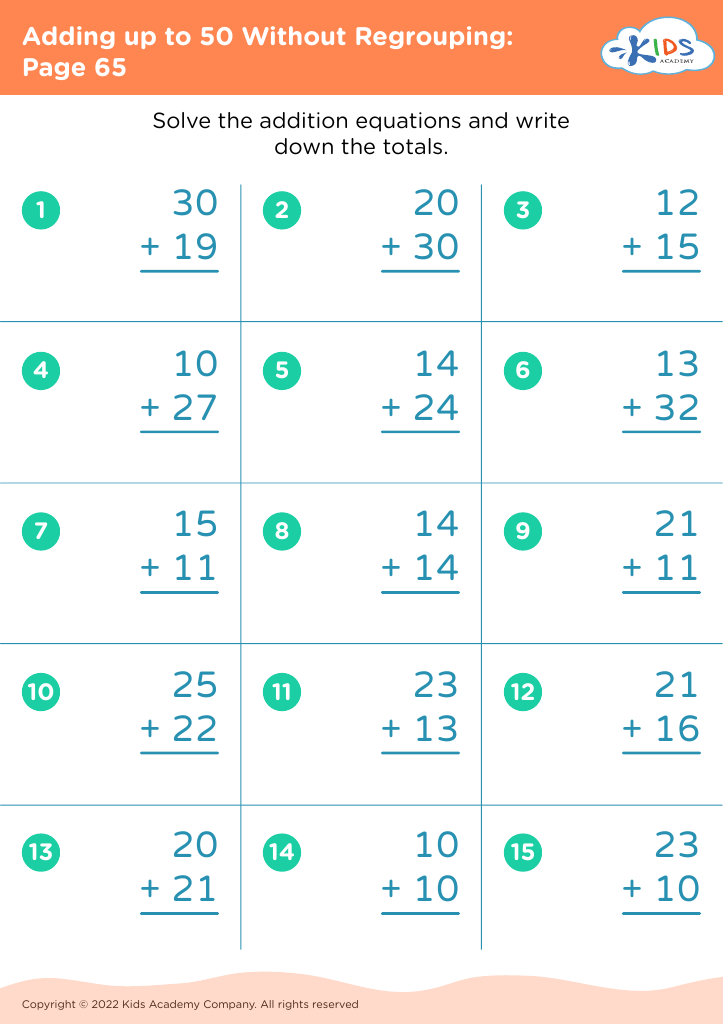


Fraction simplification and addition without regrouping are vital concepts in early mathematics that deserve the attention of parents and teachers. Understanding fraction simplification helps students grasp the core idea of equivalence, facilitating comparisons and operations involving fractions. It lays the foundation for more advanced mathematical concepts, encouraging critical thinking and problem-solving skills.
When students learn to add numbers without regrouping up to 50, they cultivate a sense of number sense and confidence in their arithmetic abilities. This skill allows for quicker calculations and minimizes errors, as students can focus on understanding the mechanics of addition rather than dealing with the complexities of regrouping.
By emphasizing these skills, educators and parents foster positive attitudes toward mathematics rather than fear or frustration. They enhance students' ability to approach math problems independently and effectively, preparing them for higher levels of education.
Furthermore, mastering these concepts can be remarkably empowering for children, as they experience success in grasping challenging tasks early on. Schools and homes that engage in and reinforce these mathematical principles create an environment of support and encouragement, boosting students' overall learning experience and attitude toward mathematics. Ultimately, these early skills create a strong foundation for lifelong mathematical proficiency.