Filters

15 filtered results

Clear all filters
Favorites
With answer key
Interactive

15 filtered results

Difficulty Level

Grade


Subject

    Enhance your students' math skills with our engaging "Number Recognition Adding Up to 50 Without Regrouping Worksheets." Designed for early learners, these worksheets provide a fun and interactive way to help children recognize numbers while mastering addition up to 50 without regrouping. Each worksheet features captivating illustrations and a variety of addition problems that promote number sense and boost confidence. As students practice adding two or three numbers together, they will develop essential math skills in a supportive environment. Perfect for classroom use or at-home practice, our worksheets are an excellent resource for fostering numerical understanding and engaging young minds in mathematics!
    Check out this FREE Trial Lesson on Adding up to 50 Without Regrouping!

    Exactly the Same, or Not

    Favorites
    With answer key
    Interactive
    • Number Recognition
    • Adding up to 50 Without Regrouping
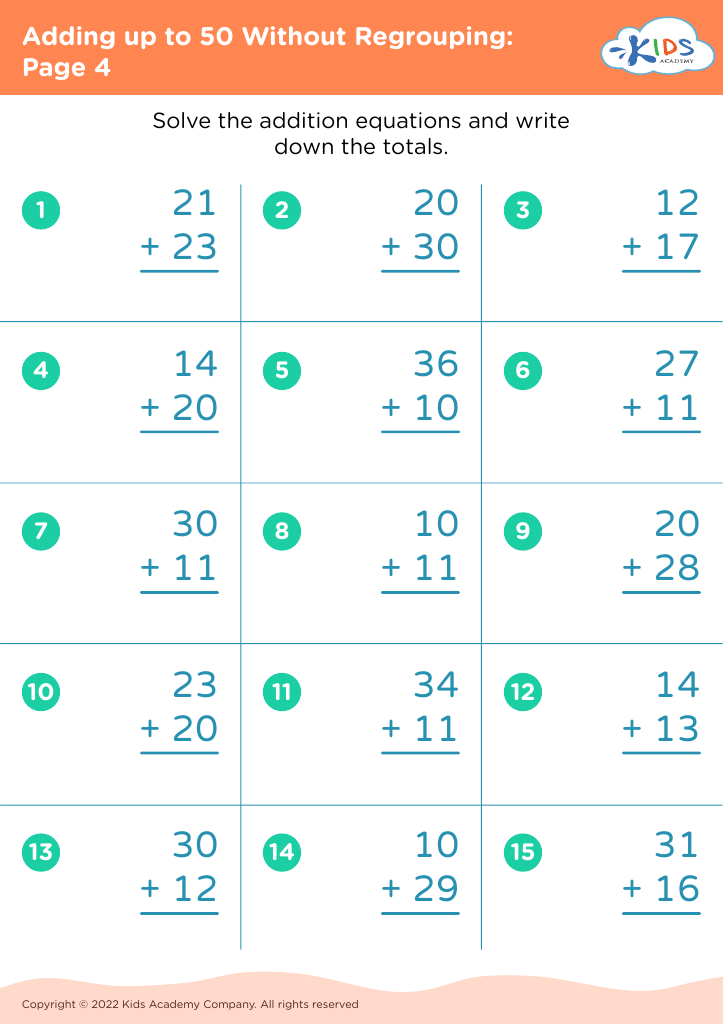
    Adding up to 50 Without Regrouping: Page 4
    Adding up to 50 Without Regrouping: Page 4
    Adding up to 50 Without Regrouping: Page 4
    Worksheet
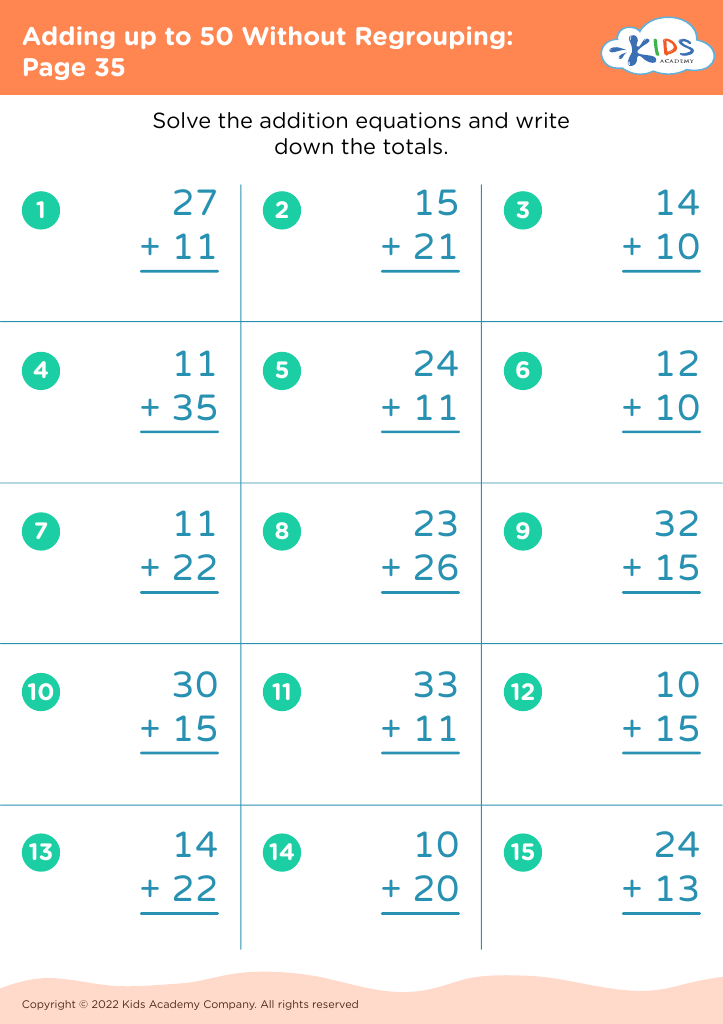
    Adding up to 50 Without Regrouping: Page 35
    Adding up to 50 Without Regrouping: Page 35
    Adding up to 50 Without Regrouping: Page 35
    Worksheet
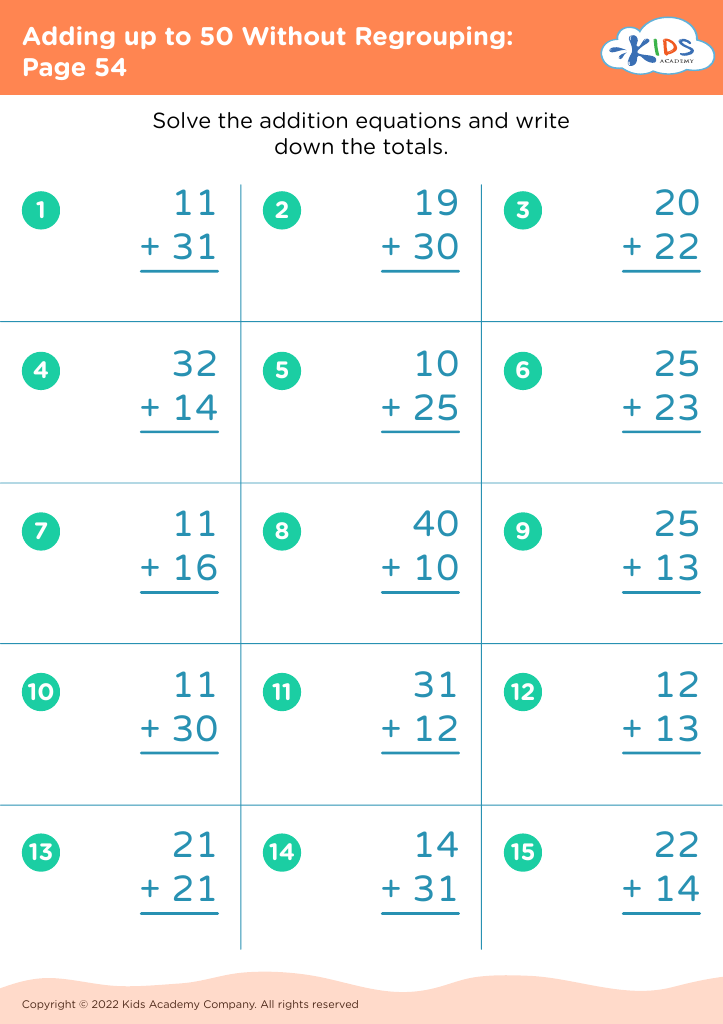
    Adding up to 50 Without Regrouping: Page 54
    Adding up to 50 Without Regrouping: Page 54
    Adding up to 50 Without Regrouping: Page 54
    Worksheet
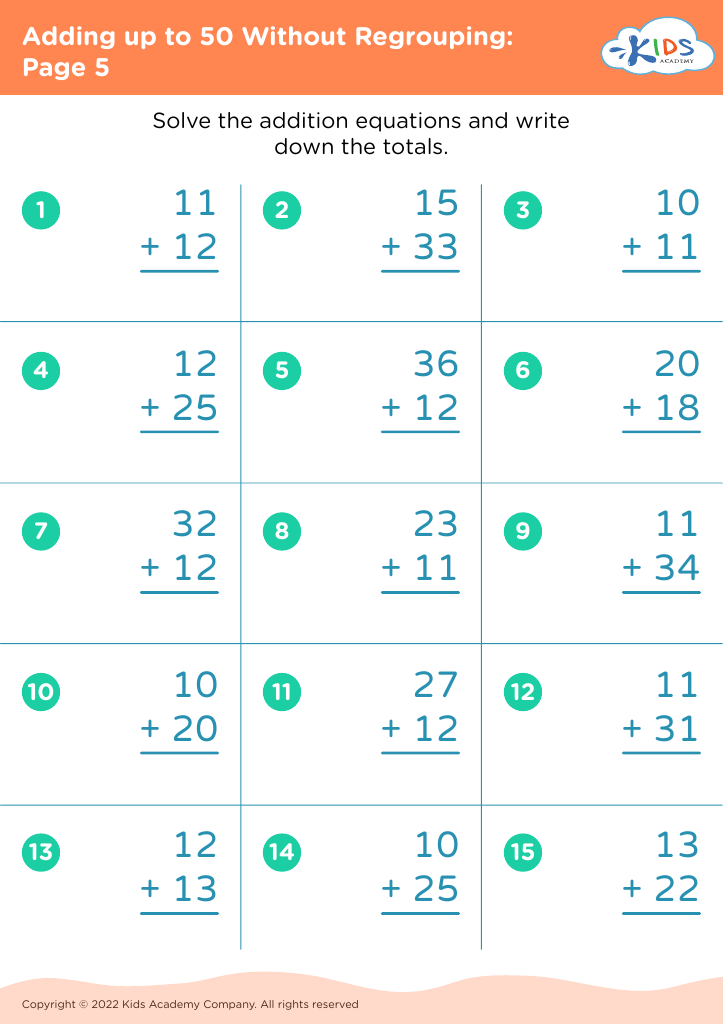
    Adding up to 50 Without Regrouping: Page 5
    Adding up to 50 Without Regrouping: Page 5
    Adding up to 50 Without Regrouping: Page 5
    Worksheet
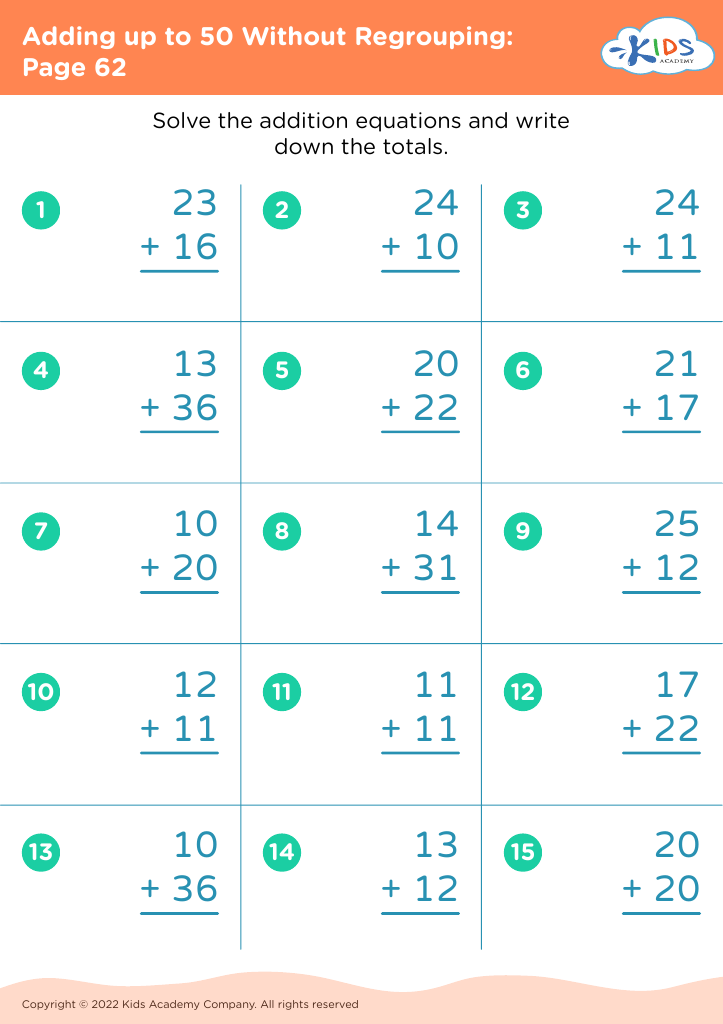
    Adding up to 50 Without Regrouping: Page 62
    Adding up to 50 Without Regrouping: Page 62
    Adding up to 50 Without Regrouping: Page 62
    Worksheet
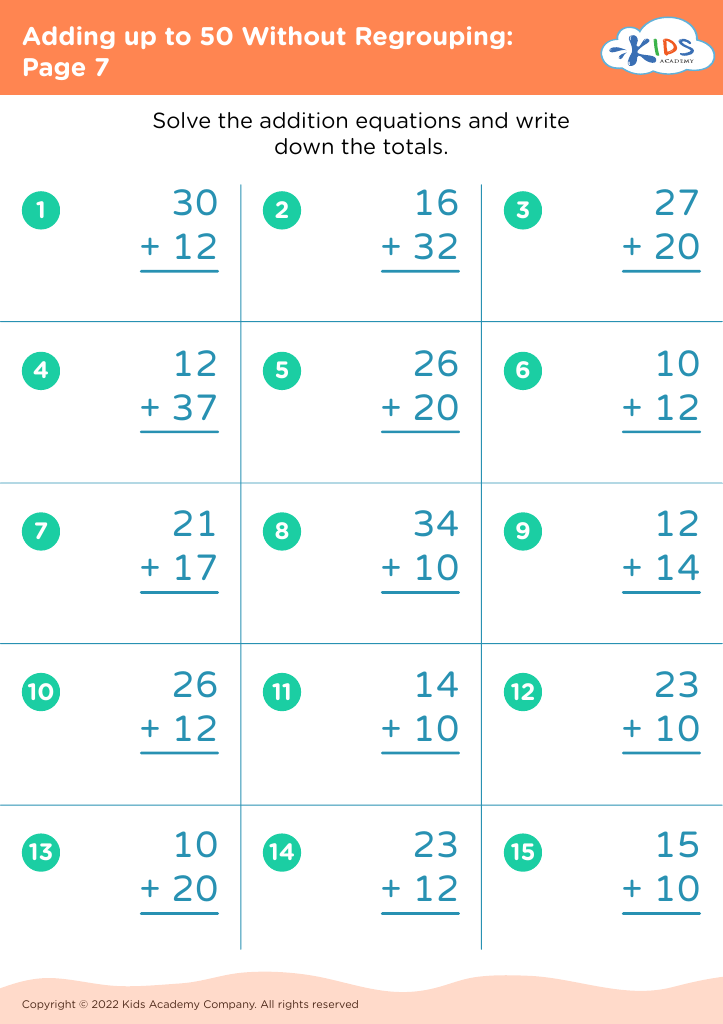
    Adding up to 50 Without Regrouping: Page 7
    Adding up to 50 Without Regrouping: Page 7
    Adding up to 50 Without Regrouping: Page 7
    Worksheet
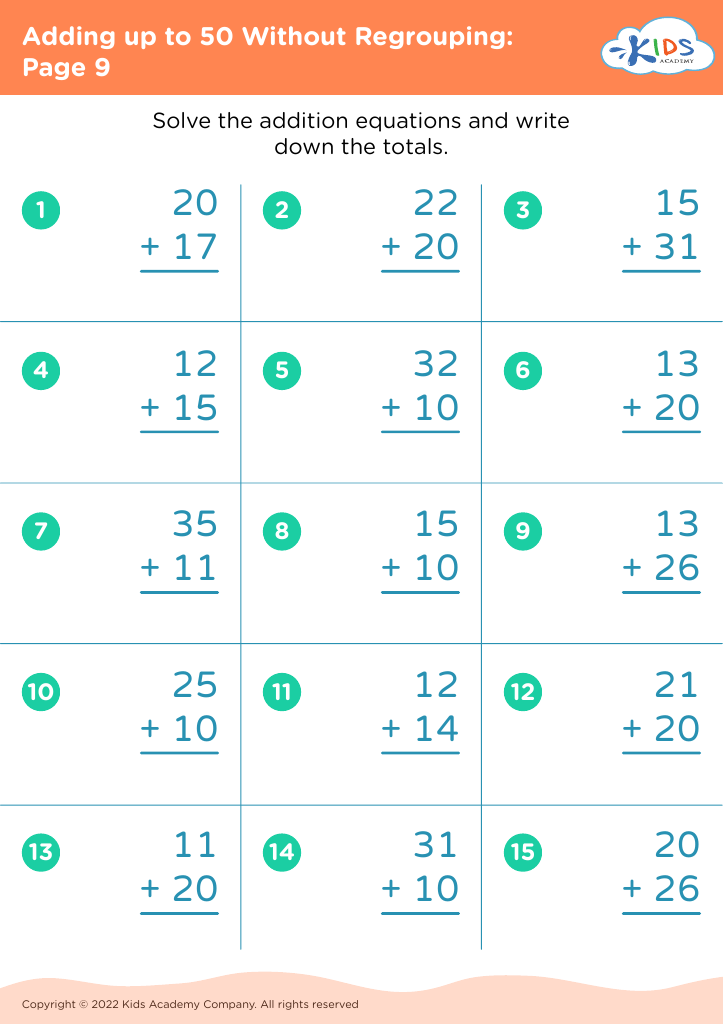
    Adding up to 50 Without Regrouping: Page 9
    Adding up to 50 Without Regrouping: Page 9
    Adding up to 50 Without Regrouping: Page 9
    Worksheet
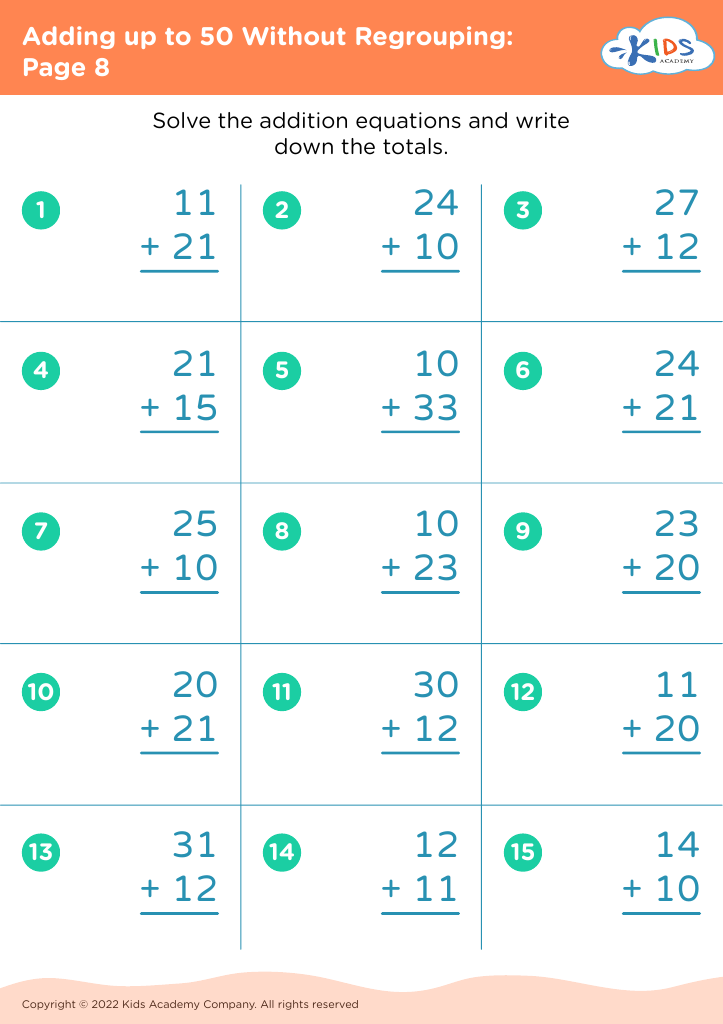
    Adding up to 50 Without Regrouping: Page 8
    Adding up to 50 Without Regrouping: Page 8
    Adding up to 50 Without Regrouping: Page 8
    Worksheet
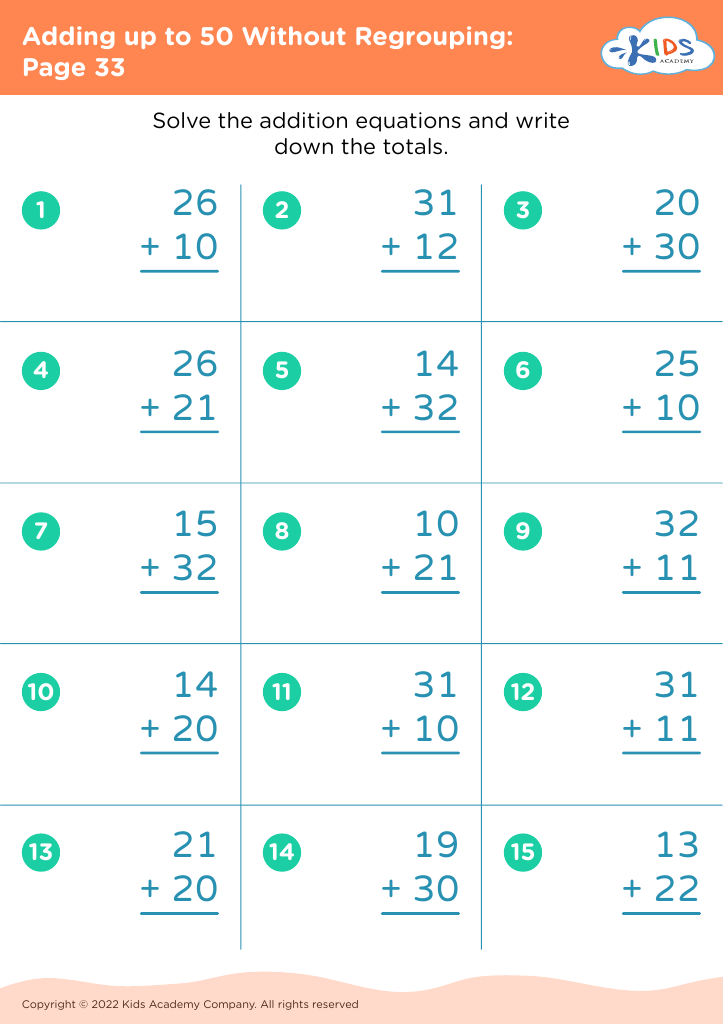
    Adding up to 50 Without Regrouping: Page 33
    Adding up to 50 Without Regrouping: Page 33
    Adding up to 50 Without Regrouping: Page 33
    Worksheet
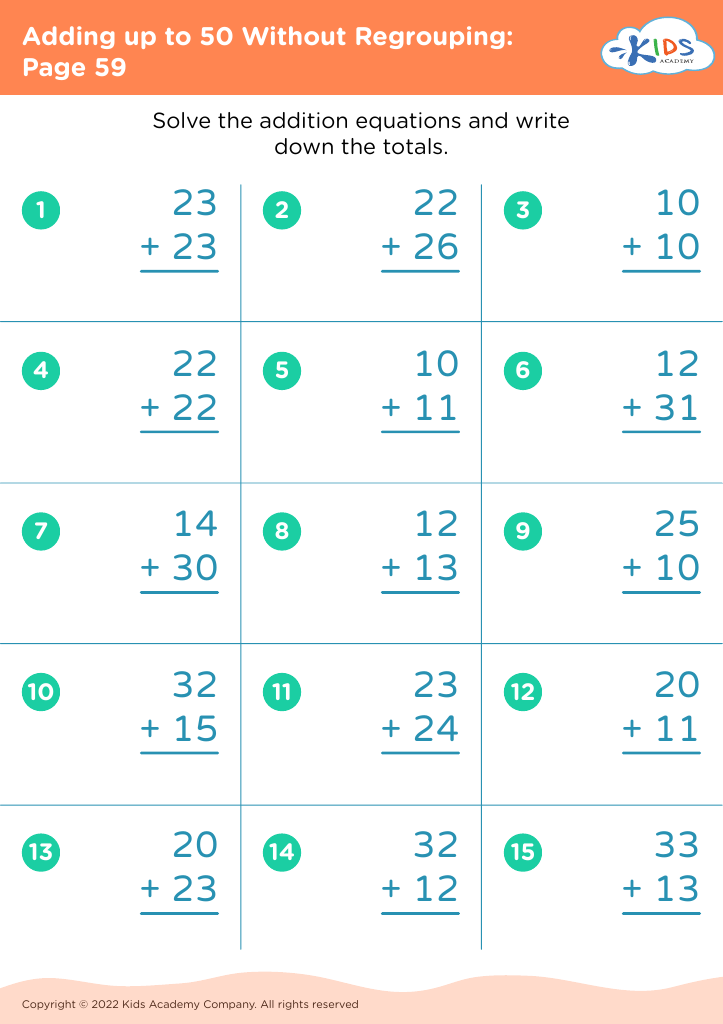
    Adding up to 50 Without Regrouping: Page 59
    Adding up to 50 Without Regrouping: Page 59
    Adding up to 50 Without Regrouping: Page 59
    Worksheet
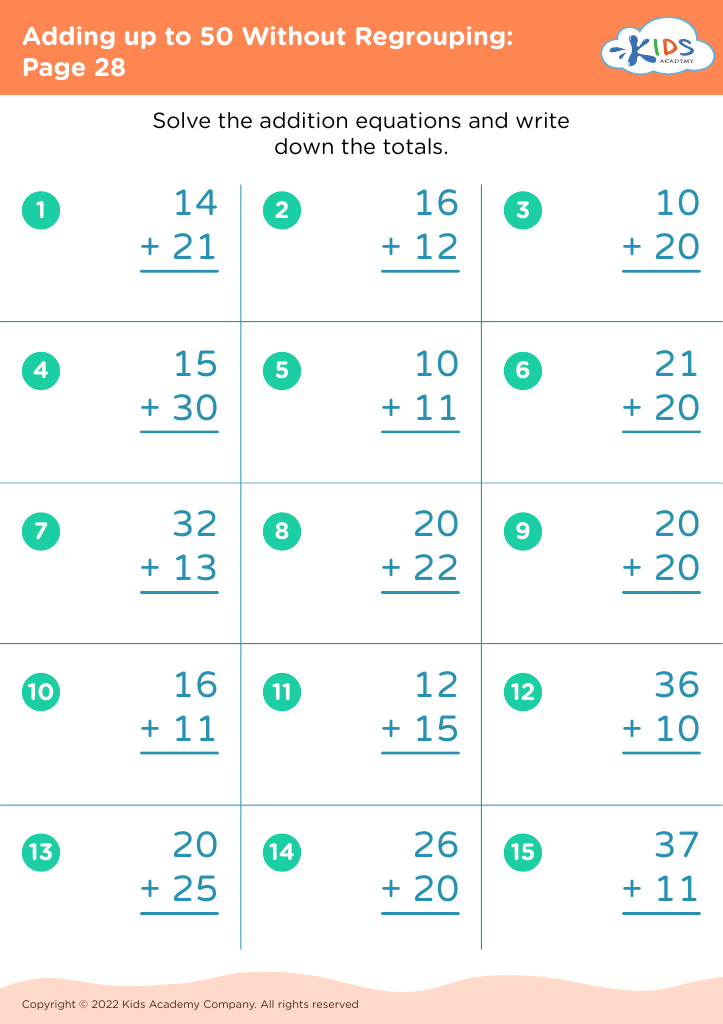
    Adding up to 50 Without Regrouping: Page 28
    Adding up to 50 Without Regrouping: Page 28
    Adding up to 50 Without Regrouping: Page 28
    Worksheet
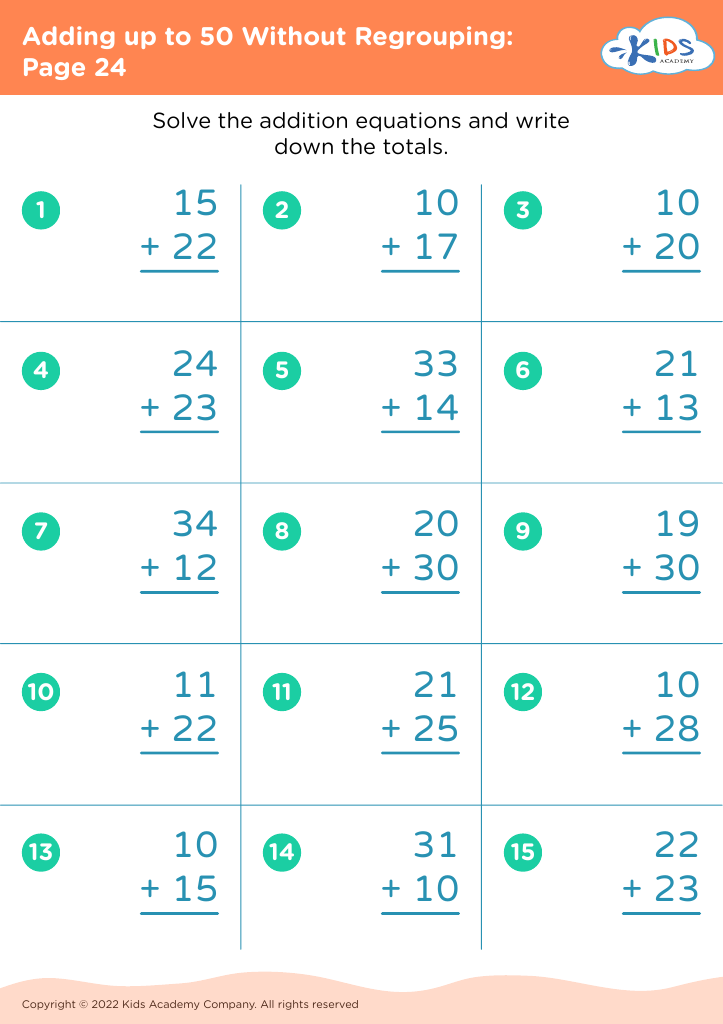
    Adding up to 50 Without Regrouping: Page 24
    Adding up to 50 Without Regrouping: Page 24
    Adding up to 50 Without Regrouping: Page 24
    Worksheet
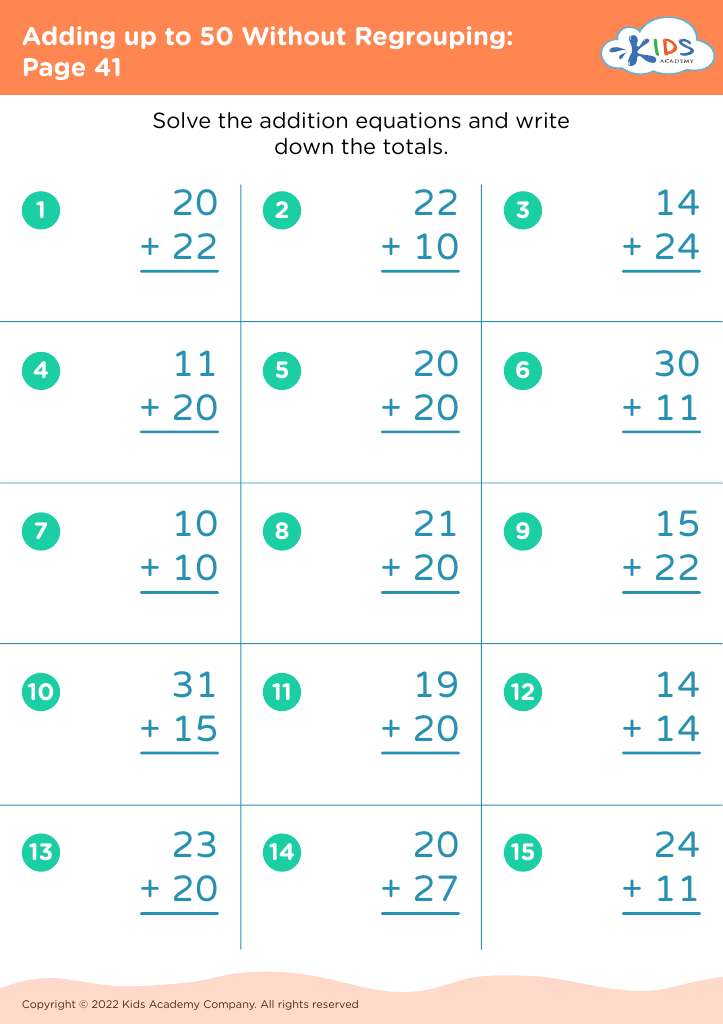
    Adding up to 50 Without Regrouping: Page 41
    Adding up to 50 Without Regrouping: Page 41
    Adding up to 50 Without Regrouping: Page 41
    Worksheet
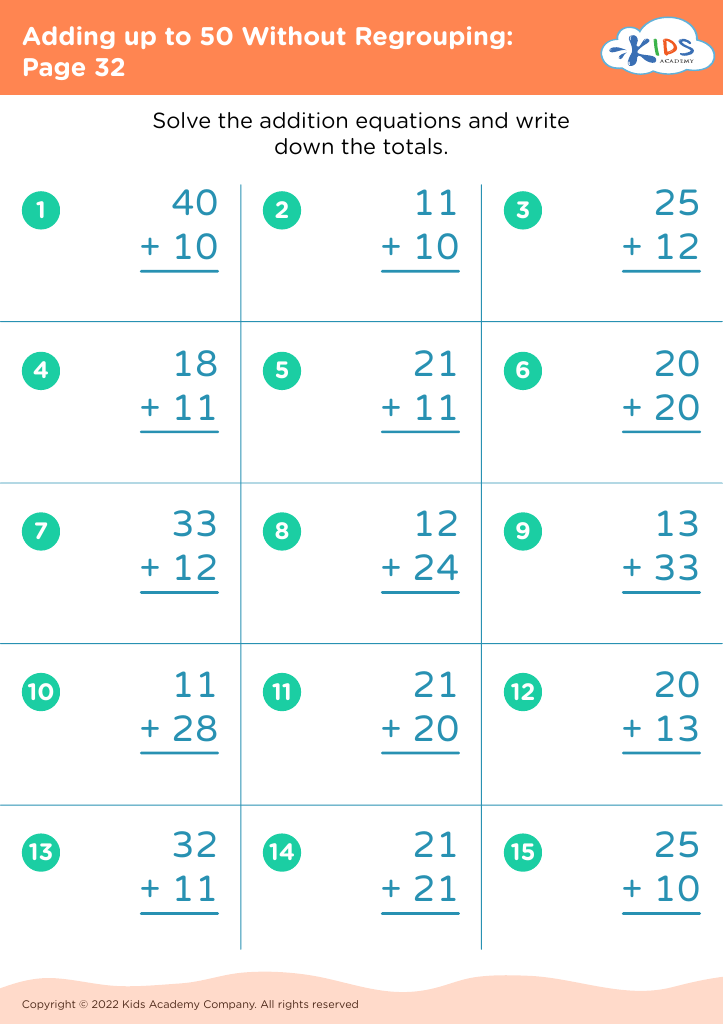
    Adding up to 50 Without Regrouping: Page 32
    Adding up to 50 Without Regrouping: Page 32
    Adding up to 50 Without Regrouping: Page 32
    Worksheet
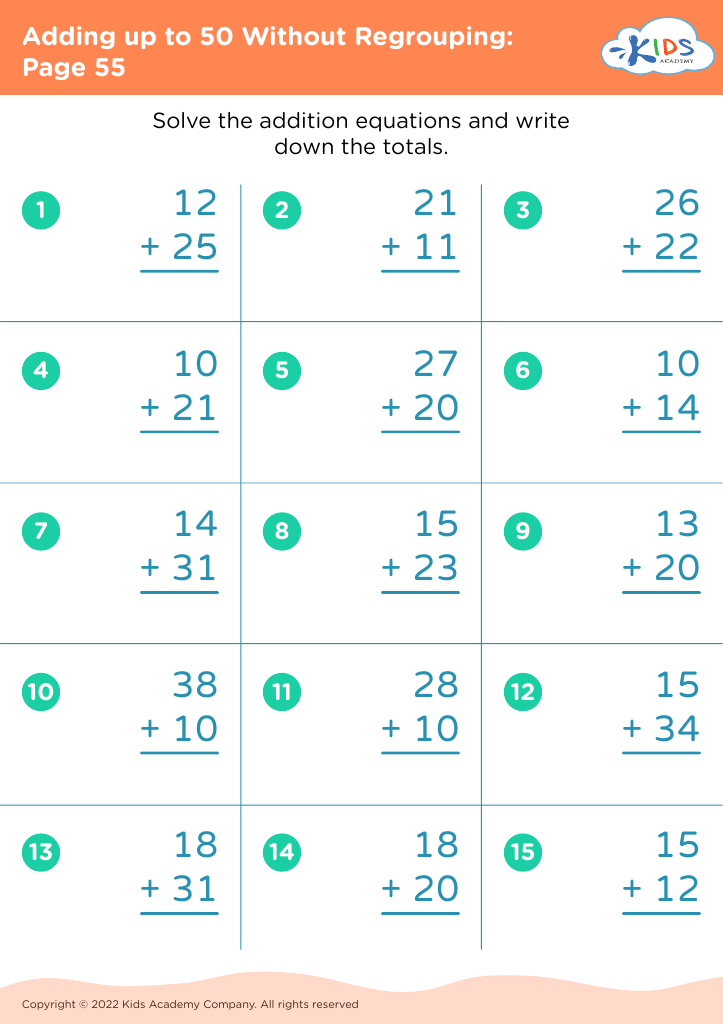
    Adding up to 50 Without Regrouping: Page 55
    Adding up to 50 Without Regrouping: Page 55
    Adding up to 50 Without Regrouping: Page 55
    Worksheet


    Number recognition and the ability to add without regrouping are fundamental skills for early learners, forming the foundation for future mathematical understanding. Parents and teachers should prioritize these concepts for several reasons.

    Firstly, number recognition is essential for children to understand their environment and navigate daily tasks. Recognizing numbers helps them in reading street signs, telling time, and using money, fostering independence and confidence.

    Secondly, adding up to 50 without regrouping reinforces basic arithmetic skills. This skill allows children to perform calculations quickly and accurately, setting them up for success in more complex mathematical operations later. When students can confidently add numbers within this range, they are better prepared for challenges involving larger numbers and even subtraction.

    Moreover, mastering these skills supports cognitive development. As children practice number recognition and addition, they enhance their logical thinking and problem-solving abilities, essential components not only in math but in everyday life.

    Finally, these foundational skills can boost students' self-esteem. Proficiency in math builds a positive attitude towards the subject, encouraging a lifelong love of learning and inquiry. Therefore, investing time in teaching number recognition and addition is beneficial for children academically and personally.