Addition skills Adding up to 50 Worksheets
7 filtered results
-
From - To
Looking to enhance your child's addition skills? Our thoughtfully designed "Adding up to 50" worksheets are perfect for young learners! They provide engaging exercises tailored to build a strong foundation in basic mathematics. Through a variety of fun and interactive activities, these worksheets make learning enjoyable and effective. The vibrant and kid-friendly designs captivate children's interest, encouraging them to explore addition with enthusiasm. Ideal for both classroom and home practice, our worksheets help students develop confidence and accuracy in solving addition problems up to 50. Foster a love for math and watch your child’s skills grow with our premium resources!
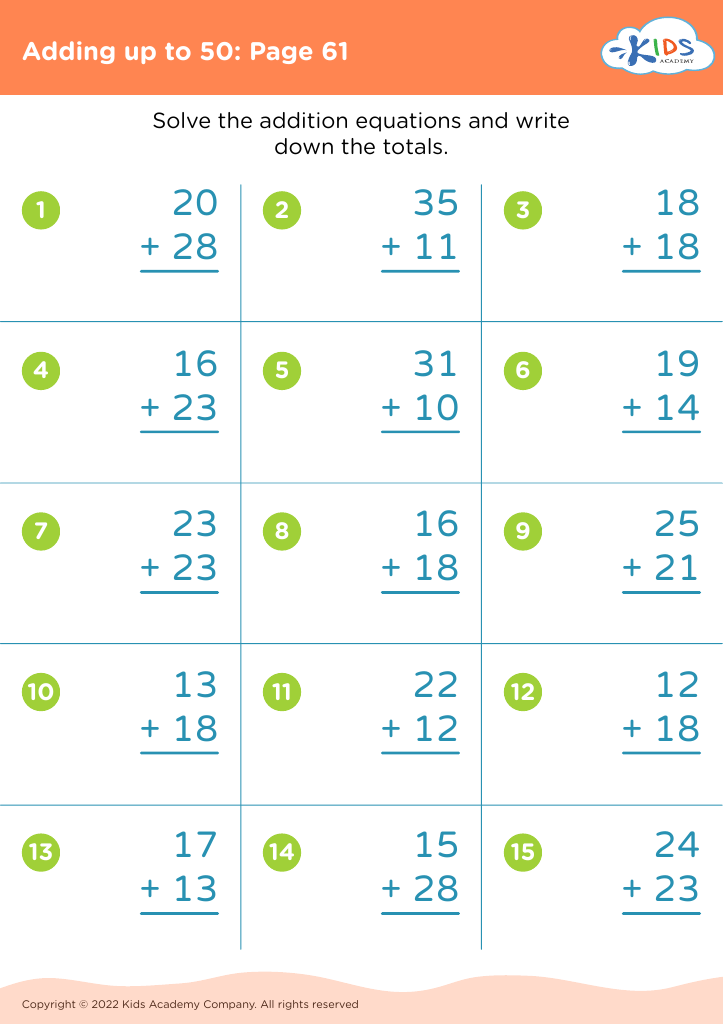
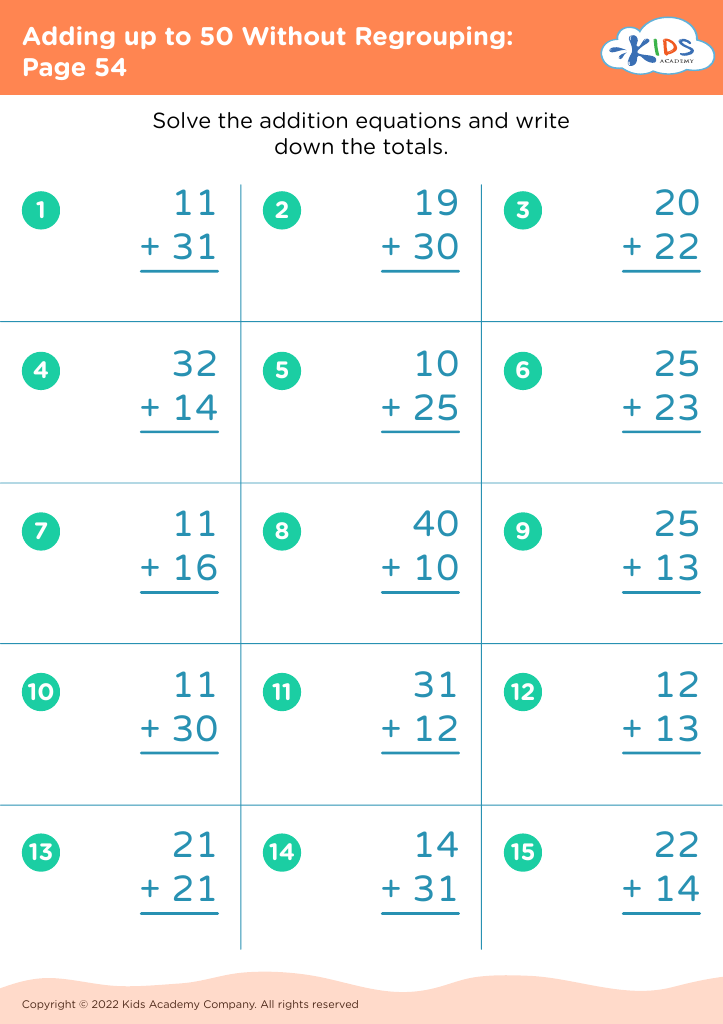
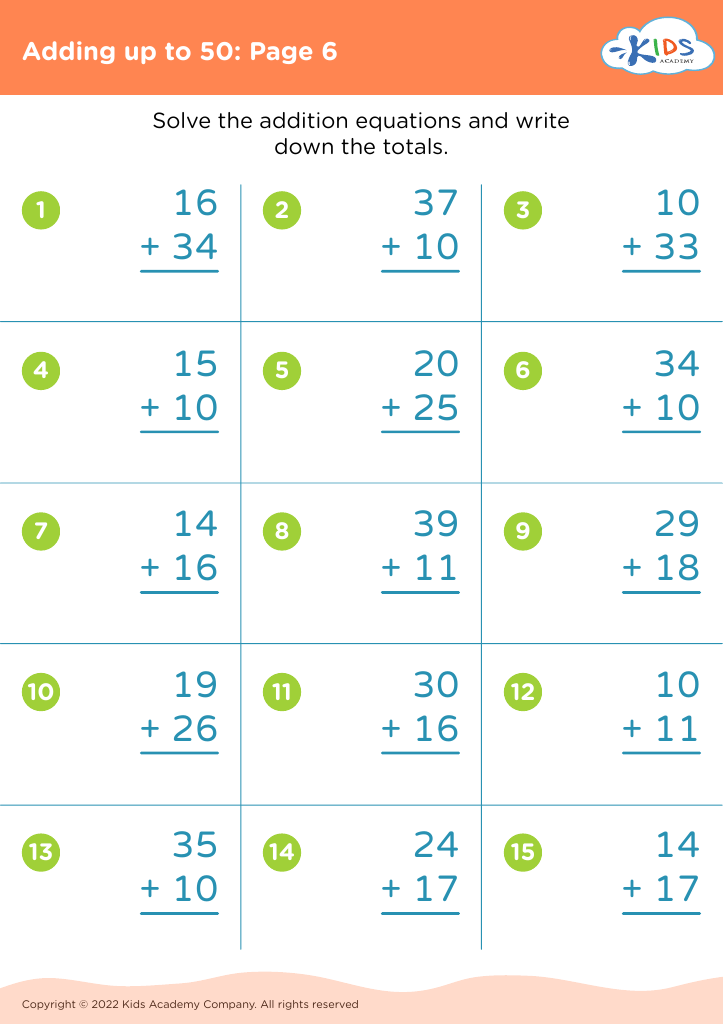
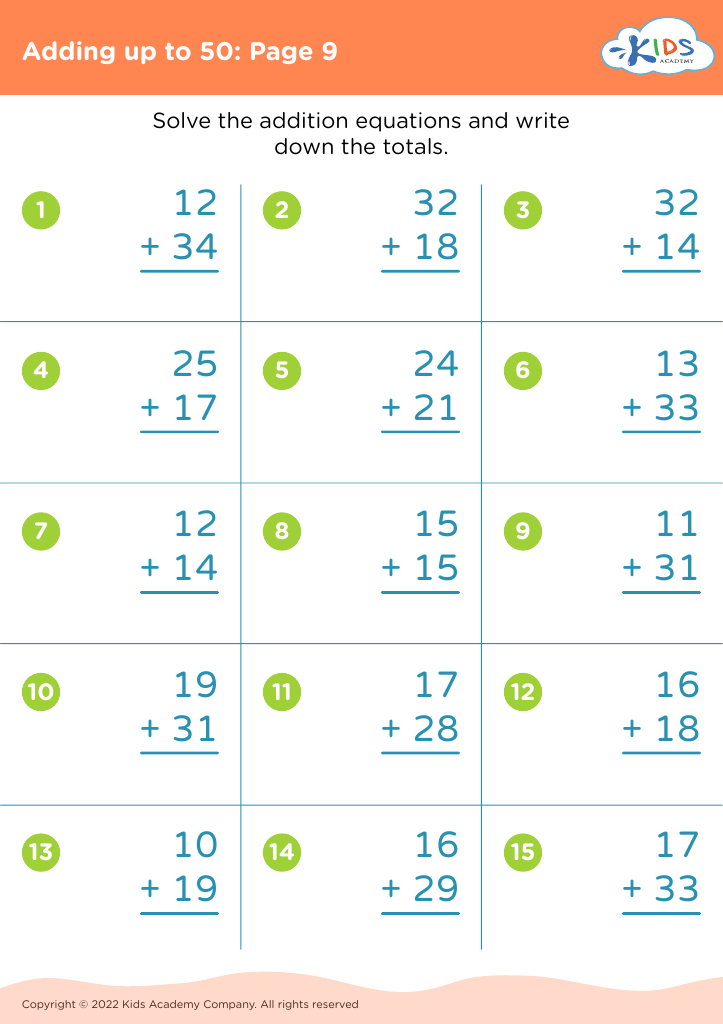
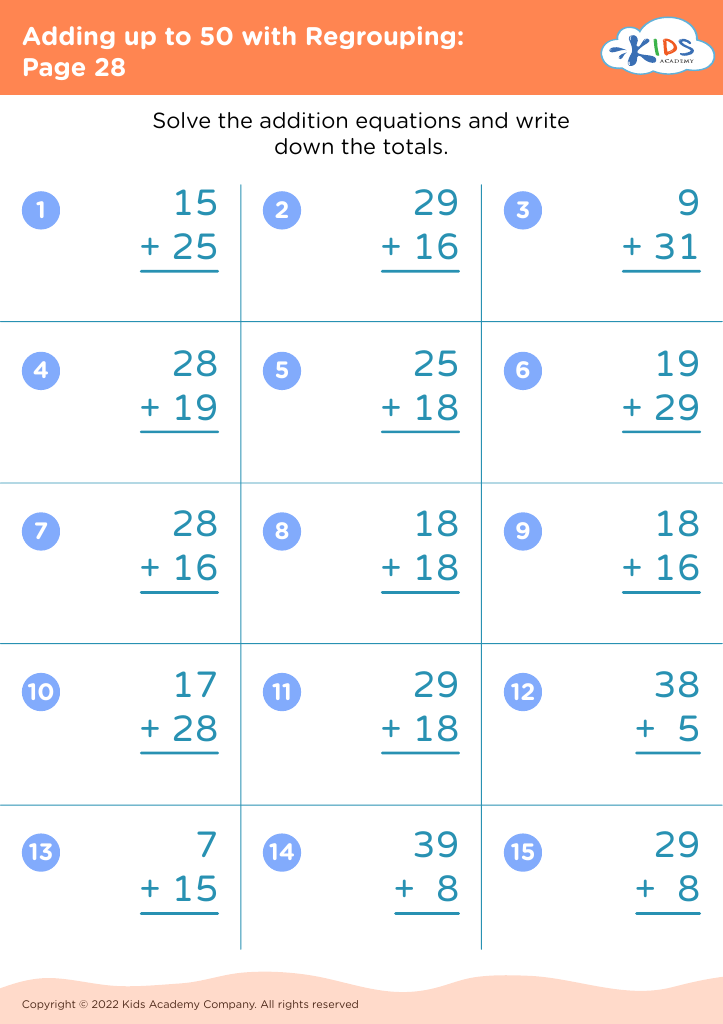
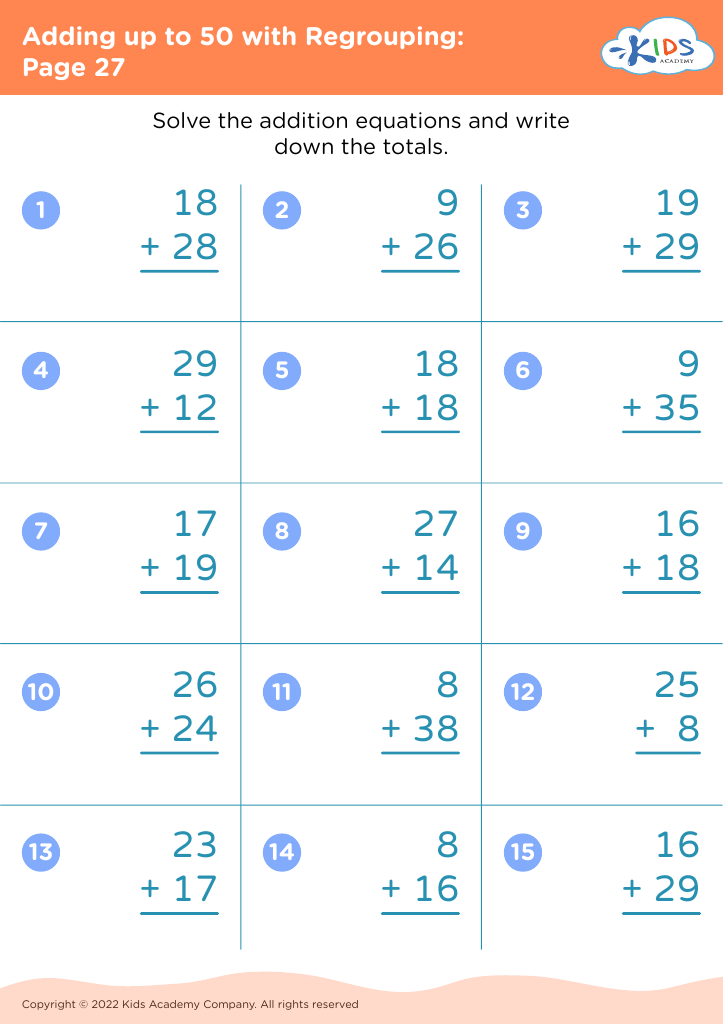
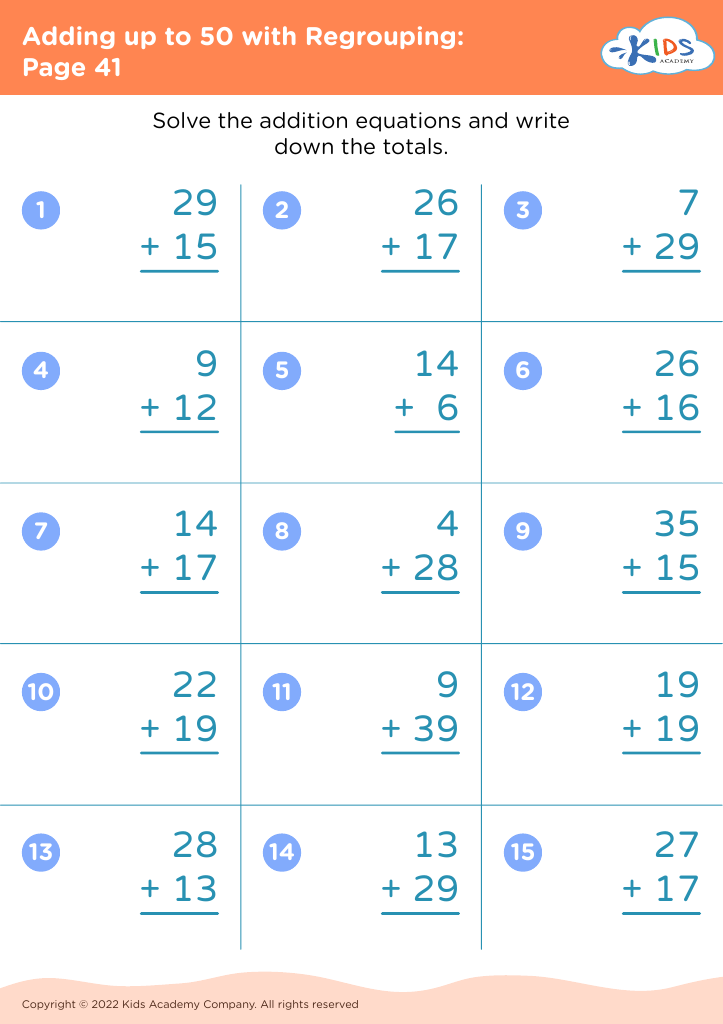




Addition skills are foundational to a child's mathematical journey and are crucial for both academic success and day-to-day functioning. By focusing on addition up to 50, parents or teachers ensure that children acquire essential numeracy skills within a manageable number range. This foundational competency helps build confidence and promotes a solid understanding of more complex mathematical concepts encountered later.
Early mastery of these addition skills aids in cognitive development by fostering logical thinking, problem-solving abilities, and mental arithmetic. These skills are not only vital for progressing in mathematics but also enhance other areas such as science and reasoning. Addition up to 50 is often employed in practical life scenarios including simple budgeting, telling time, cooking measurements, and determining quantities, thus rendering these skills indispensable.
Moreover, engaging with addition operations actively stimulates memory and concentration. These capacities provide children with a toolkit for a disciplined academic approach. Educators and parents should recognize that ensuring proficiency in addition by second or third grade positions children for long-term academic achievements and real-world efficiency.
Instilling these early math skills can curb the onset of math anxiety, encouraging positive associations with learning. As a result, students with strong addition capabilities are likely to be more motivated, curious, and capable learners in the classroom and beyond.








