Basic addition practice Adding up to 50 Worksheets
5 filtered results
-
From - To
Boost your child's math confidence with our "Basic Addition Practice: Adding up to 50 Worksheets." Tailored for young learners, these engaging activities are designed to reinforce foundational addition skills in a fun and interactive way. Worksheets provide a mix of visual aids and structured problems to cultivate a sound understanding of adding numbers up to 50. Ideal for classroom or home practice, these colorful, motivating materials will help your child master addition facts, enhance problem-solving abilities, and build a solid math foundation. Perfect for kids in early grades, these worksheets pave the way for future math success!
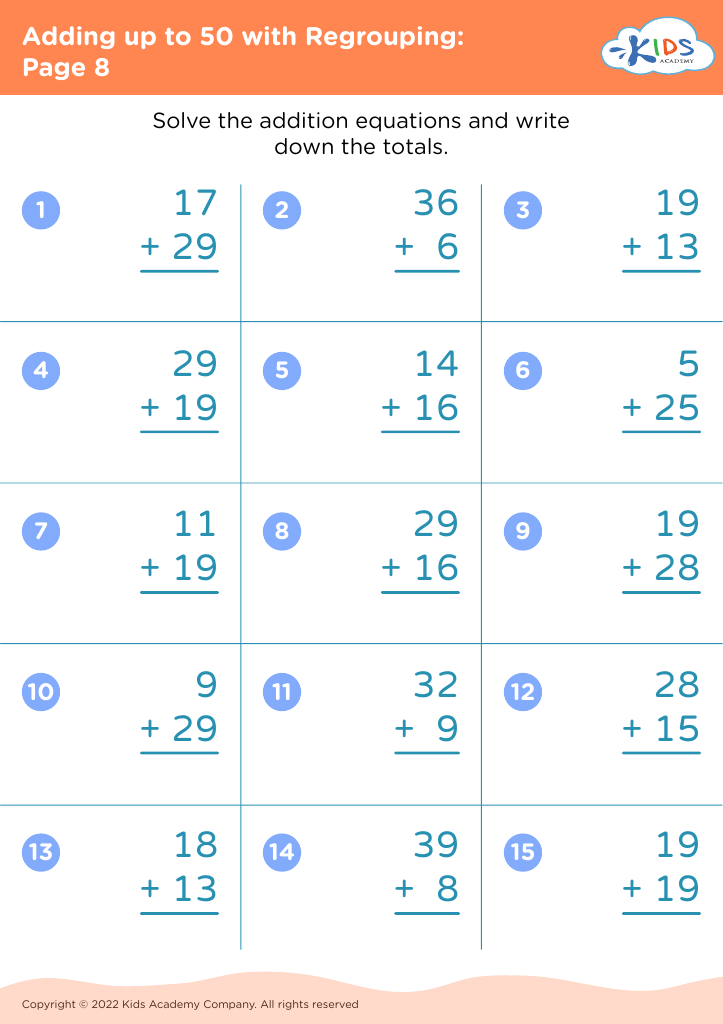
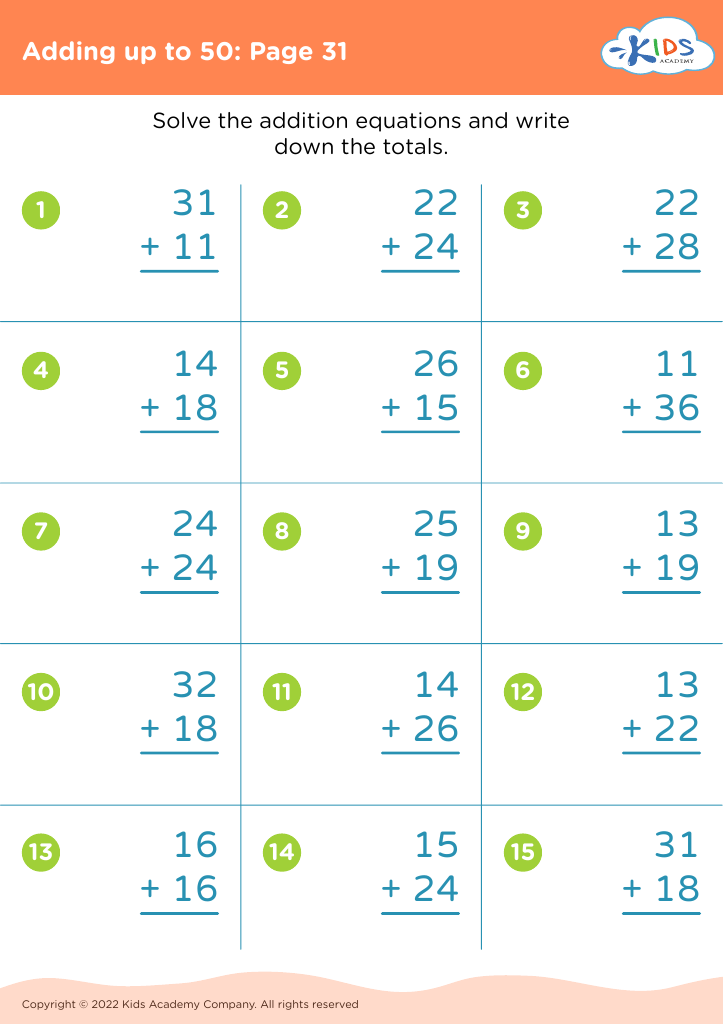
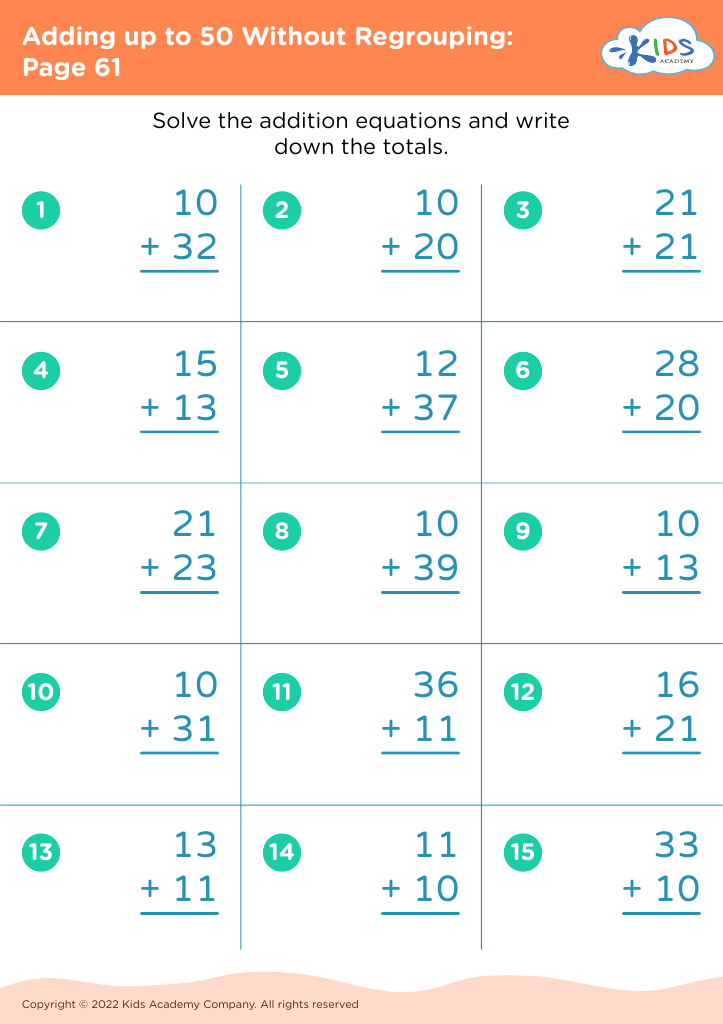
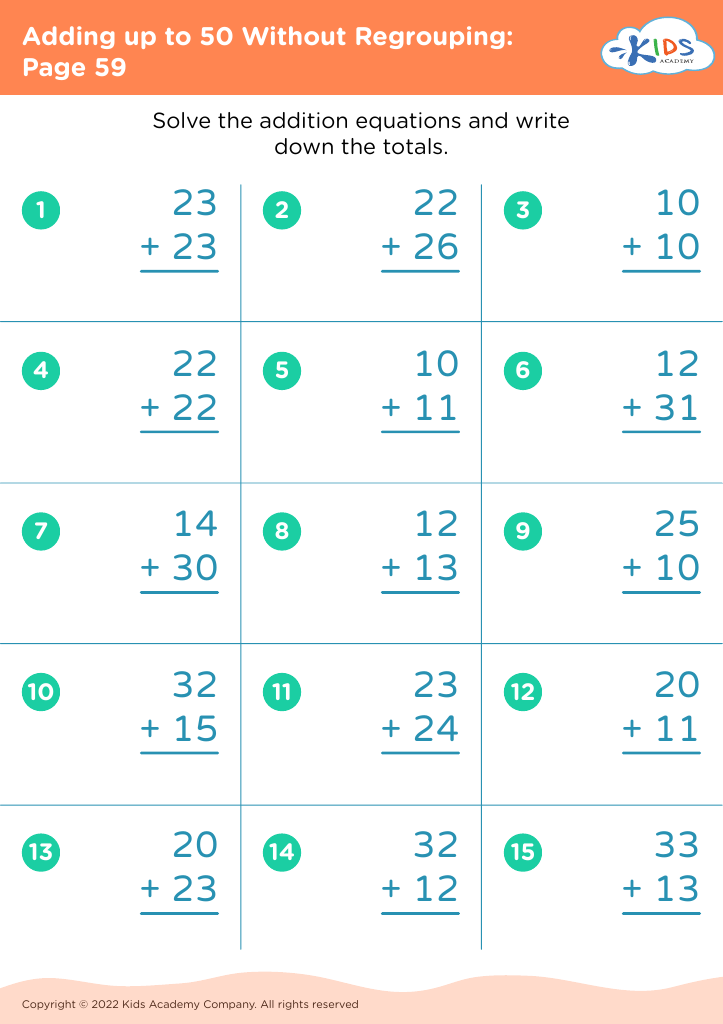
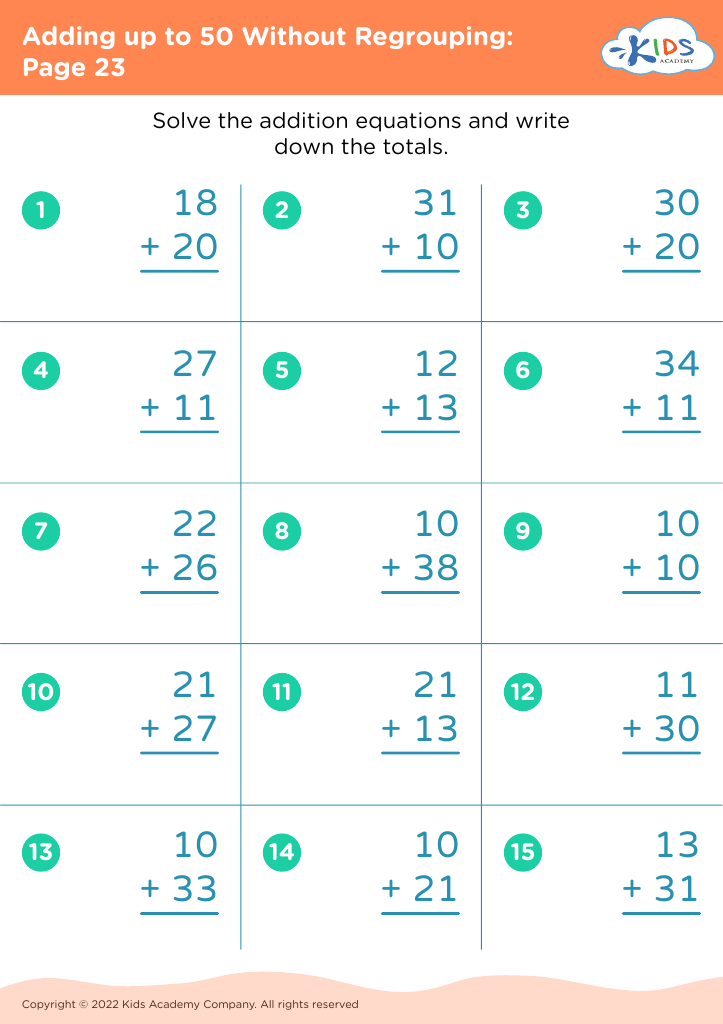




Basic addition practice involving sums up to 50 is foundational for young learners as it builds essential math skills and confidence necessary for advanced mathematical concepts. For parents and teachers, prioritizing this practice is crucial for several reasons.
First, mastering basic addition helps children develop numerical fluency. This fluency is the cornerstone of all future math learning, enabling students to carry out calculations quickly and accurately. It sets the stage for more complex operations such as subtraction, multiplication, and division, which rely on strong addition skills.
Second, early success in math can boost a child’s confidence and attitude toward the subject. Positive experiences with math foster a 'can-do' mindset, where children feel capable and motivated to tackle increasingly challenging problems.
Third, proficiency in math is linked to better problem-solving skills. Math challenges children to think logically and approach problems systematically. This not only aids their academic journey but also equips them with skills useful in everyday life.
Lastly, numeracy skills are fundamental across various subjects and future career paths. Ensuring children are competent in basic addition prepares them for science, technology, engineering, and math (STEM) disciplines that are pivotal in today’s job market.
In summary, parents and teachers should care about basic addition practice as it is the gateway to higher math proficiency, builds confidence, enhances problem-solving skills, and opens doors to future academic and career opportunities.








