Filters

16 filtered results

Clear all filters
Favorites
With answer key
Interactive

16 filtered results

Difficulty Level

Grade


Boost your child's math confidence with our "Basic Math Skills Adding up to 50 Worksheets." These engaging, printable worksheets are designed for early learners to practice their addition skills in a fun and interactive way. Featuring a variety of exercises, students will enhance their ability to add numbers within a range of 0 to 50, laying a strong foundation for future mathematical concepts. Ideal for classroom use or at-home practice, our worksheets promote independent learning while improving critical thinking skills. Help your child master addition through repetition and fun activities, ensuring they are well-prepared for their math journey!
Check out this FREE Trial Lesson on Adding up to 50!

H

Favorites
With answer key
Interactive
  • Basic Math Skills
  • Adding up to 50
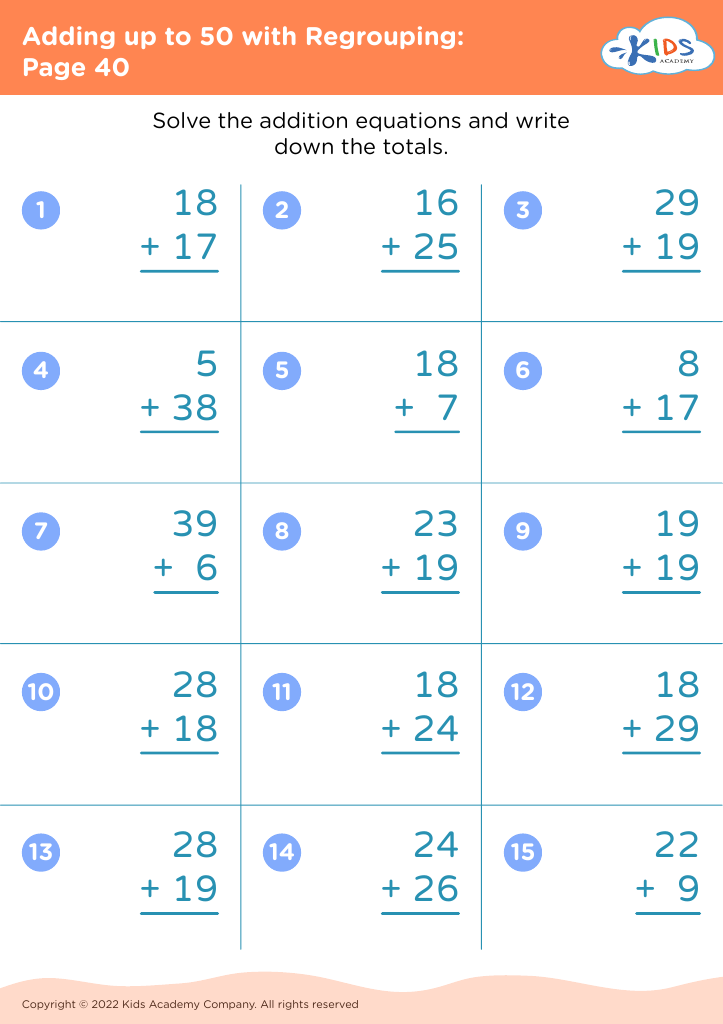
Adding up to 50 with Regrouping: Page 40
Worksheet
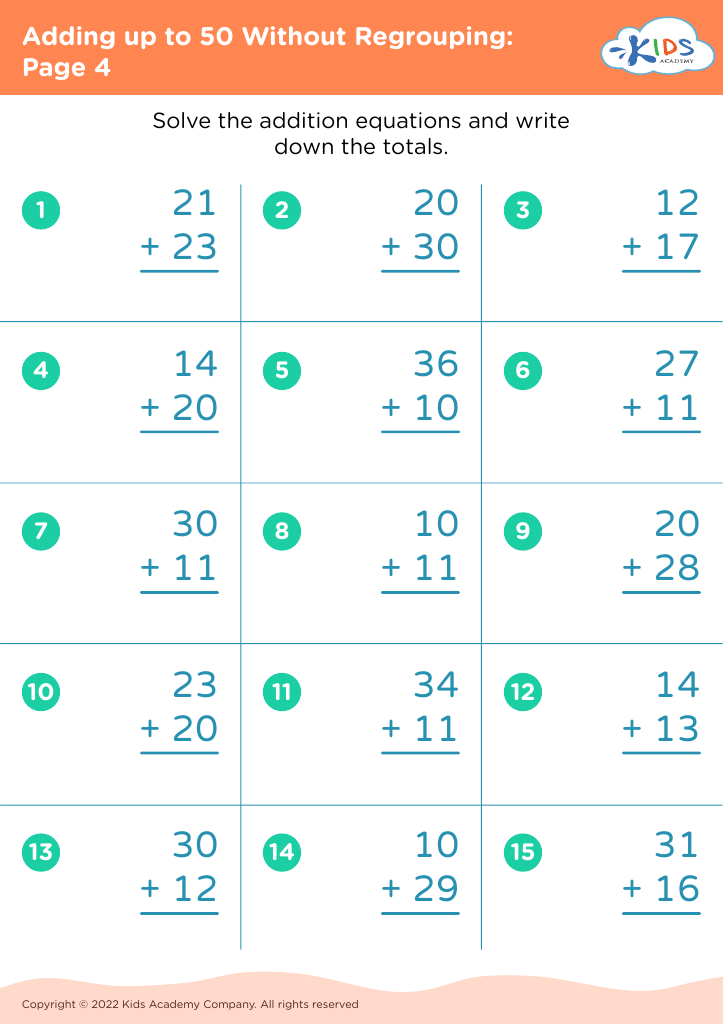
Adding up to 50 Without Regrouping: Page 4
Worksheet
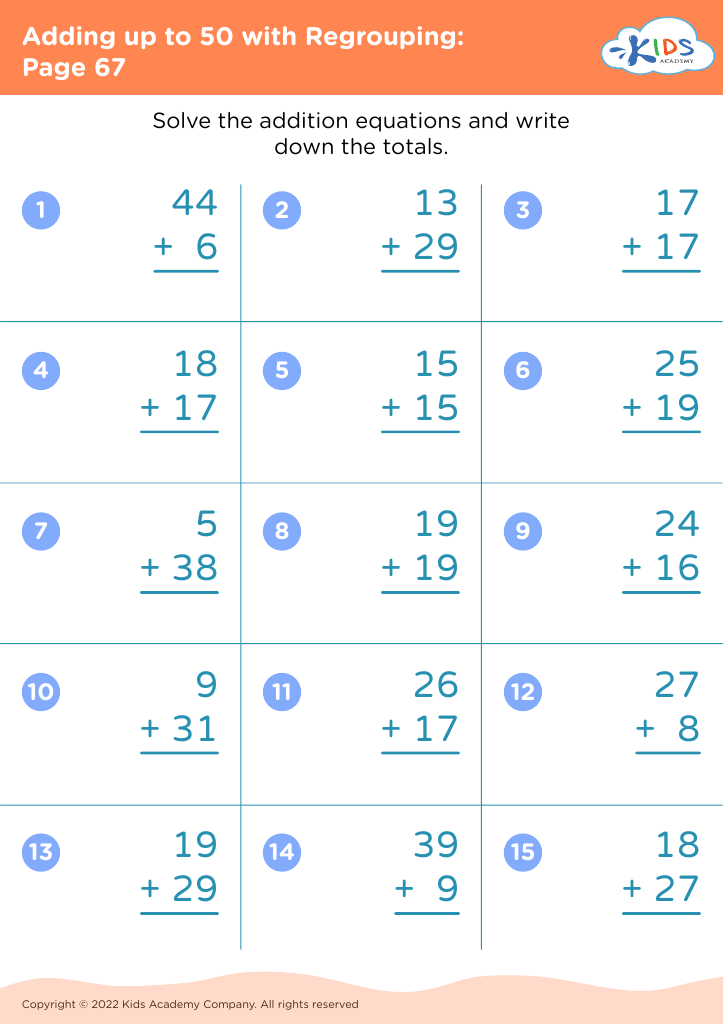
Adding up to 50 with Regrouping: Page 67
Worksheet
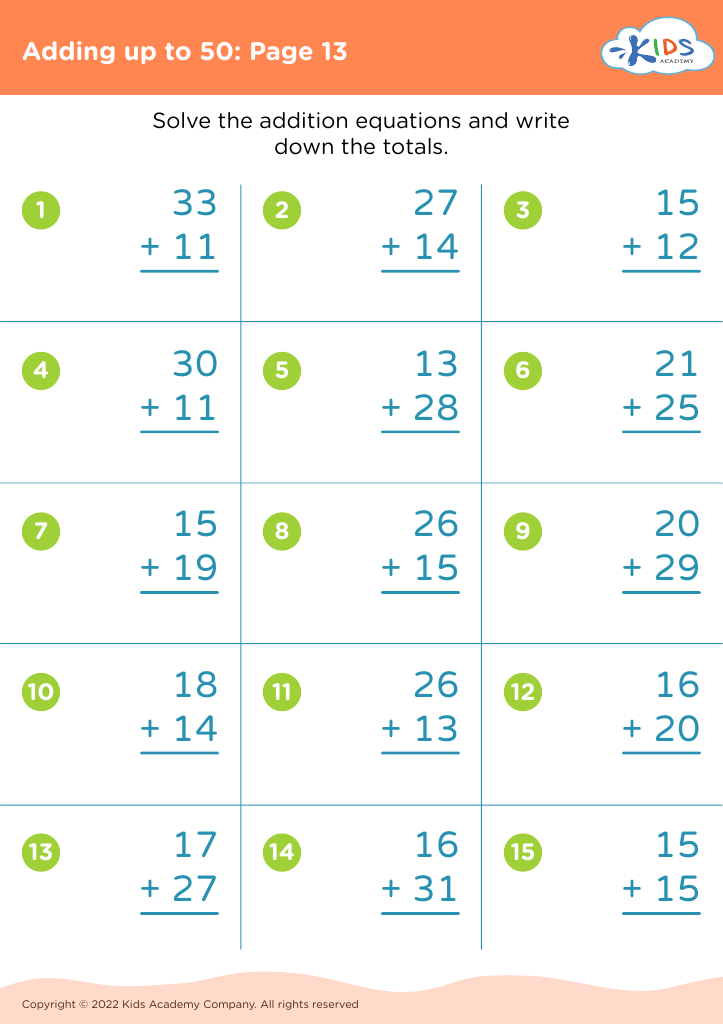
Adding up to 50: Page 13

Adding up to 50: Page 13

Adding up to 50: Page 13
Worksheet
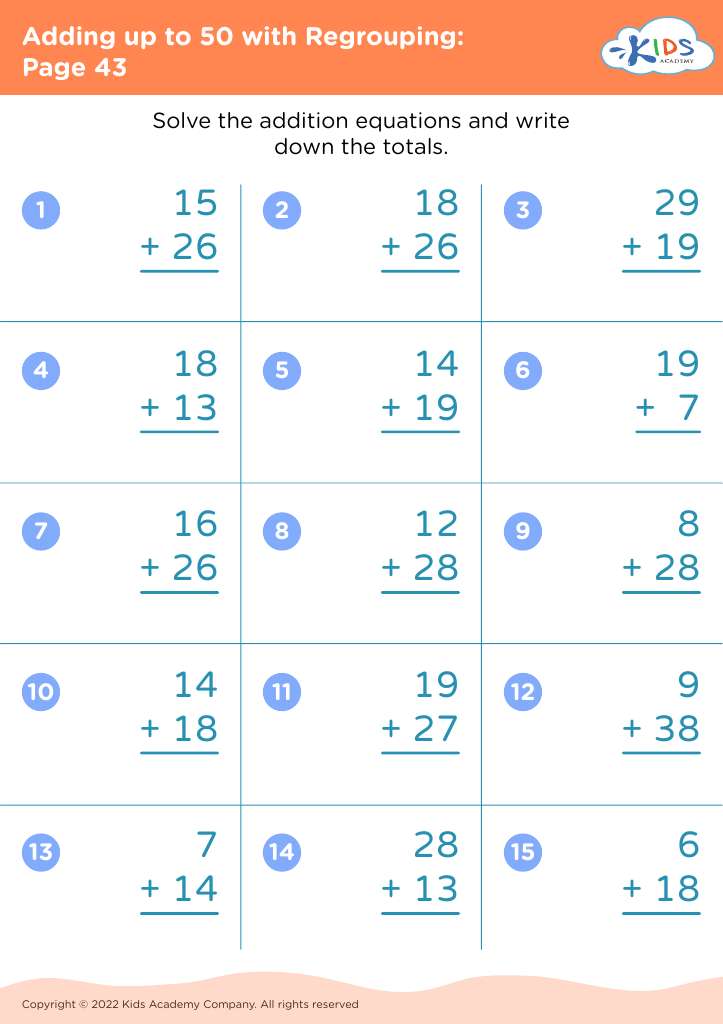
Adding up to 50 with Regrouping: Page 43
Worksheet
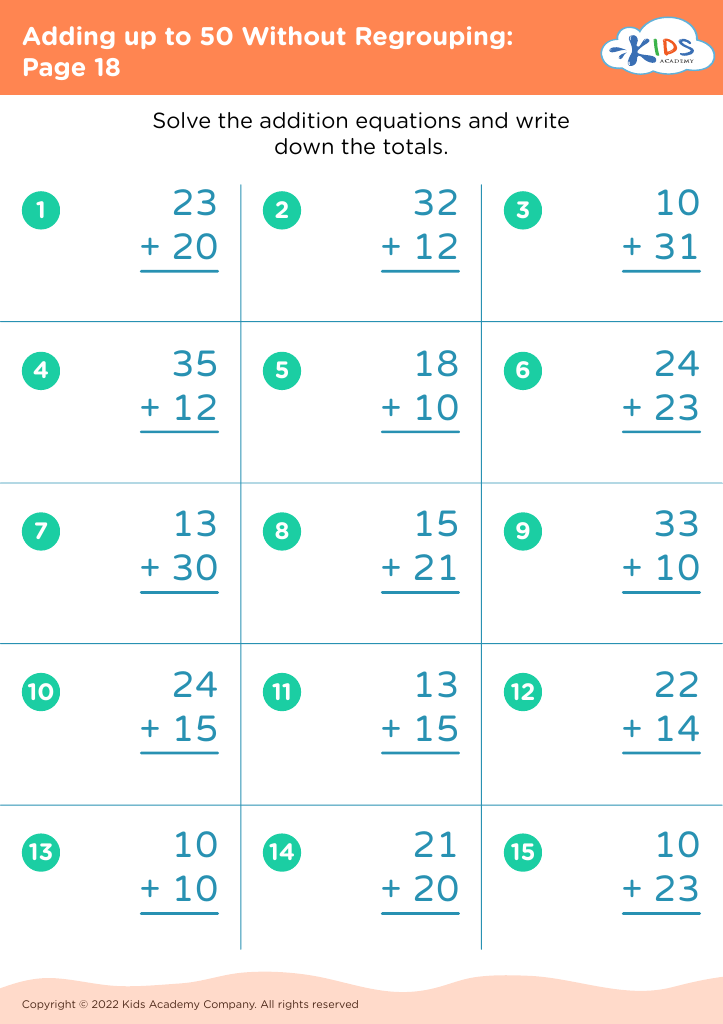
Adding up to 50 Without Regrouping: Page 18
Worksheet
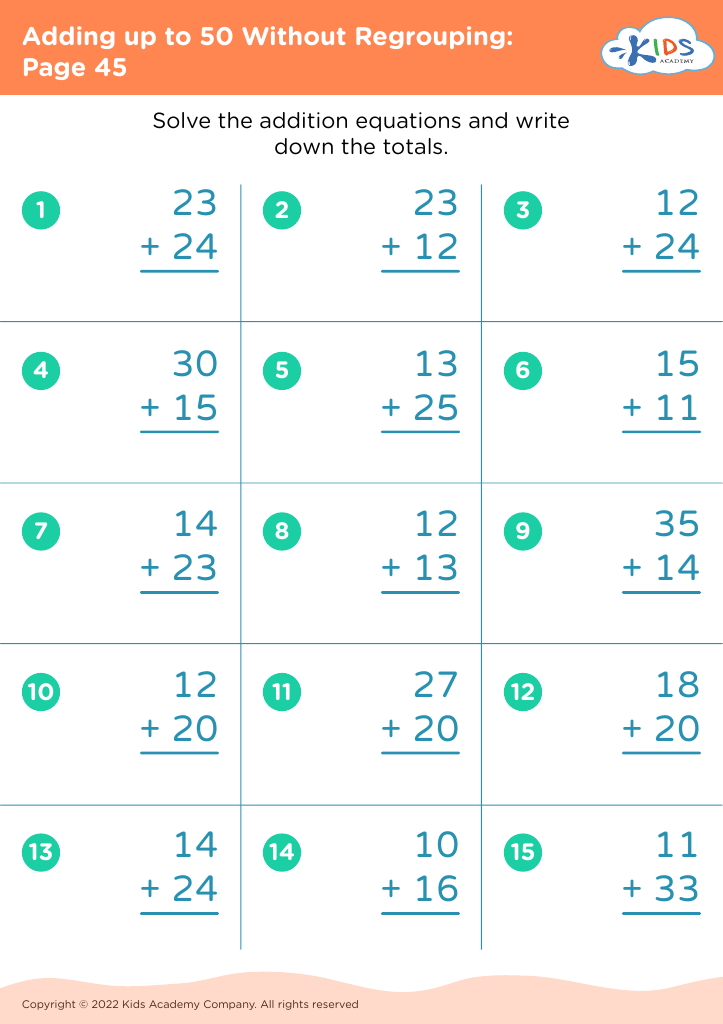
Adding up to 50 Without Regrouping: Page 45
Worksheet
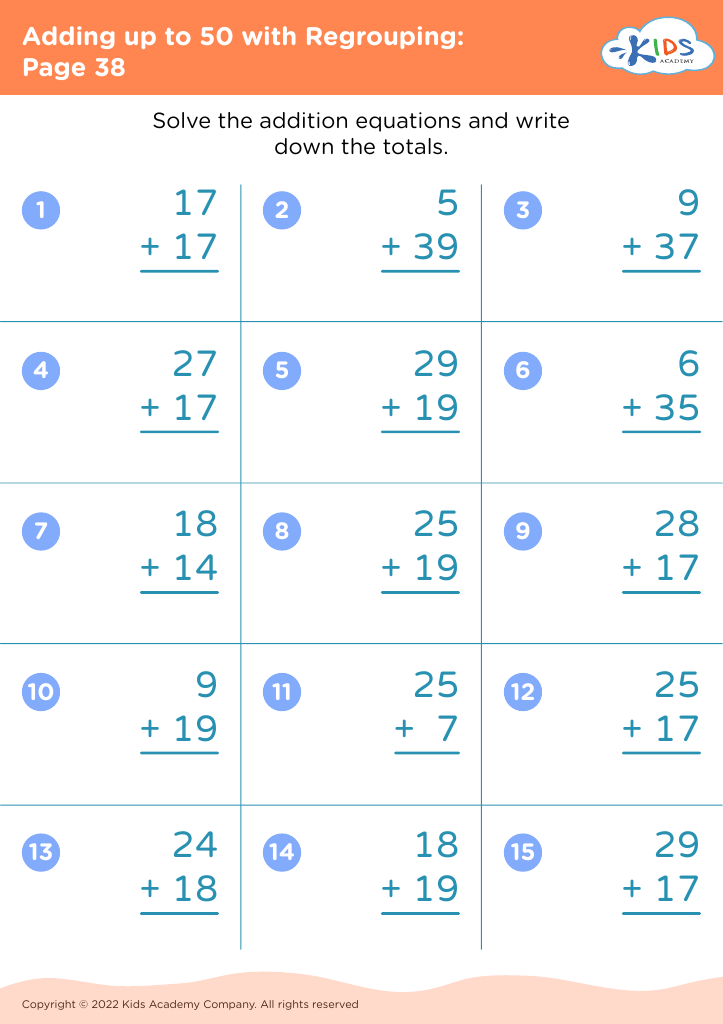
Adding up to 50 with Regrouping: Page 38
Worksheet
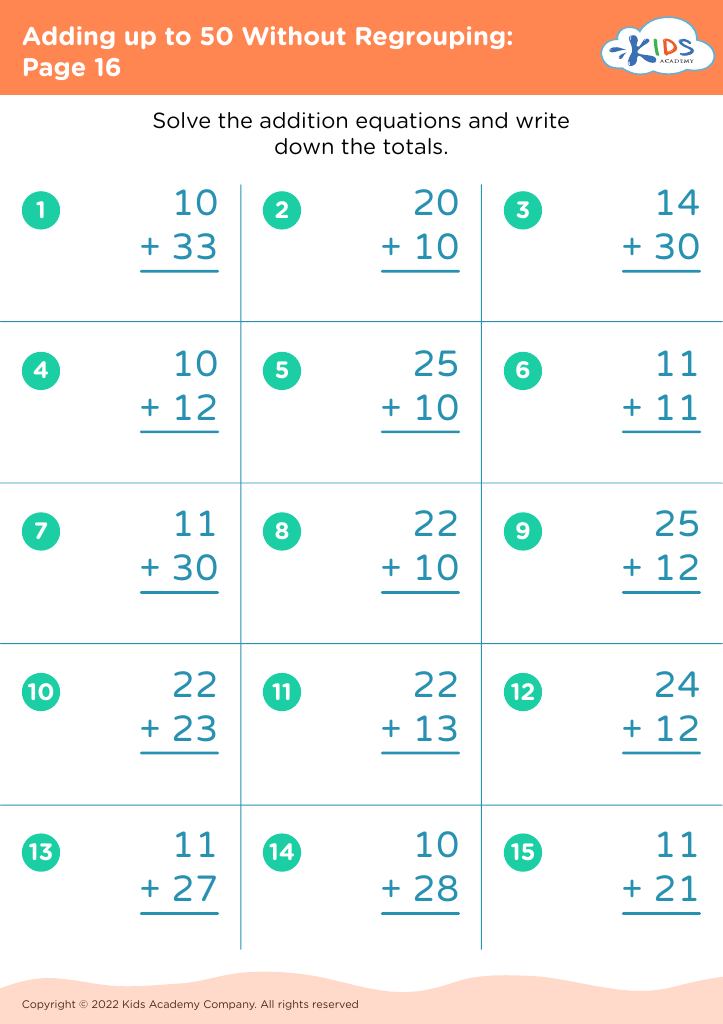
Adding up to 50 Without Regrouping: Page 16
Worksheet
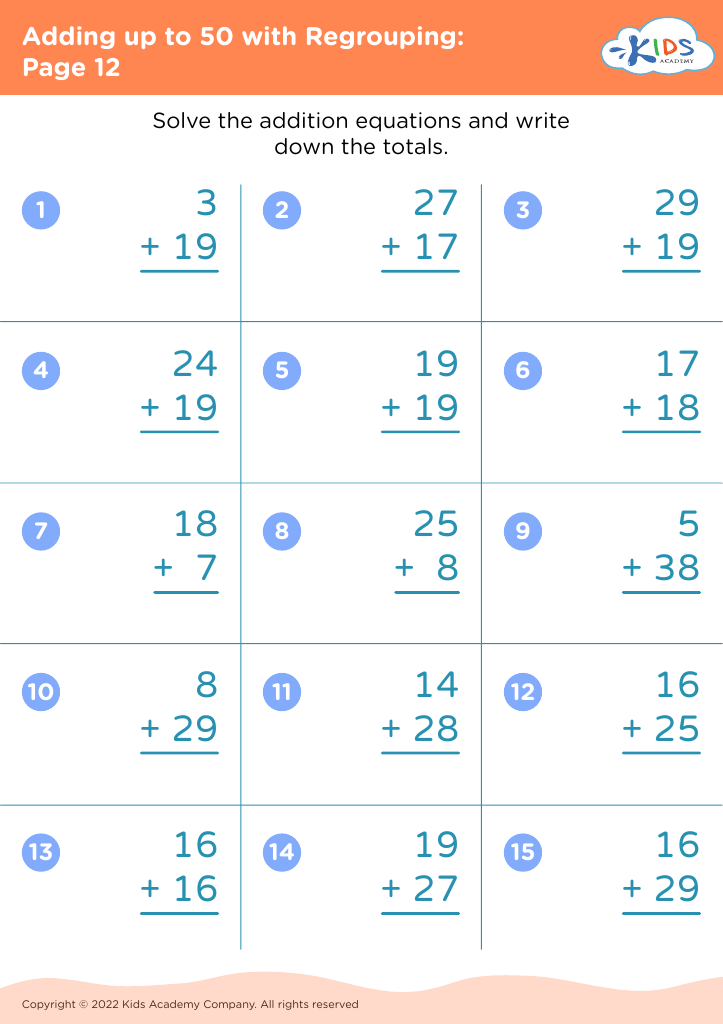
Adding up to 50 with Regrouping: Page 12
Worksheet
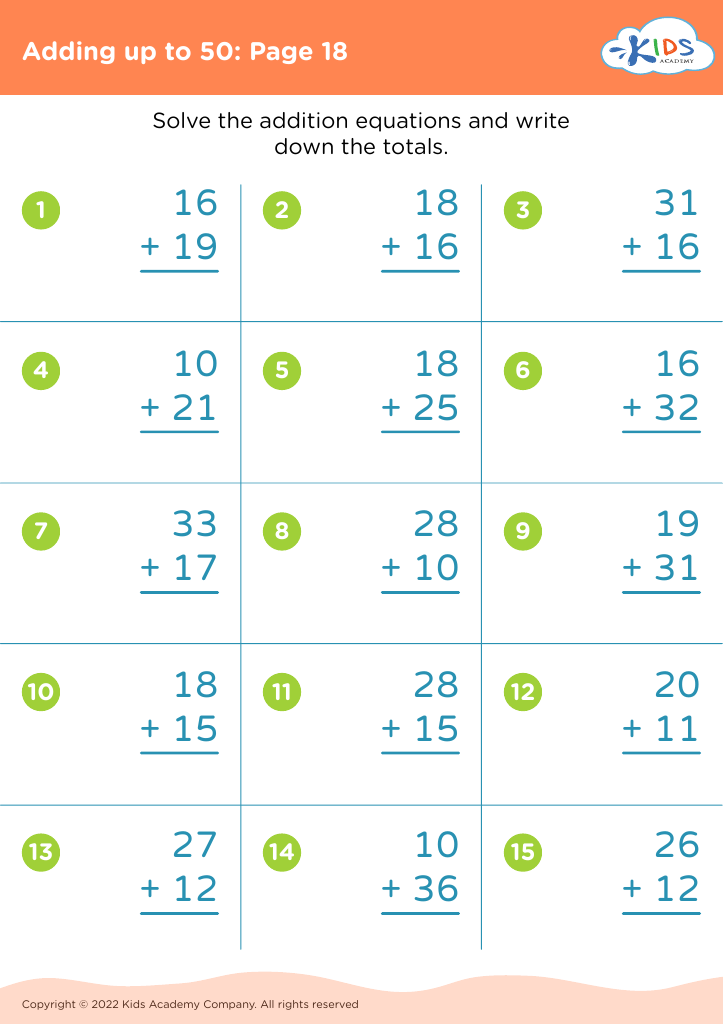
Adding up to 50: Page 18

Adding up to 50: Page 18

Adding up to 50: Page 18
Worksheet
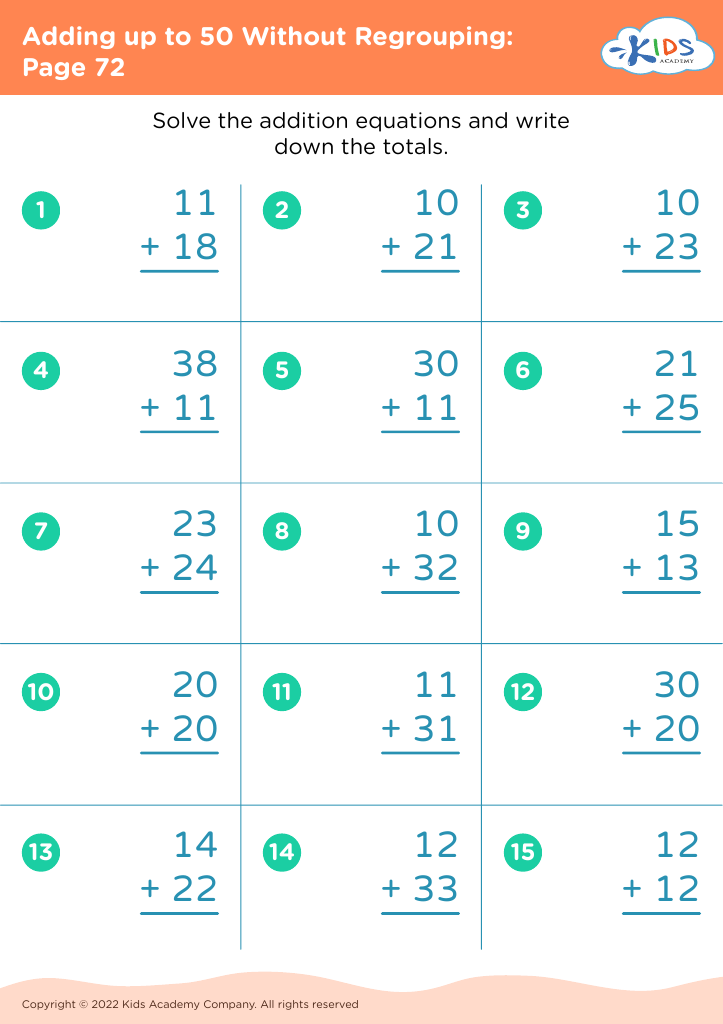
Adding up to 50 Without Regrouping: Page 72
Worksheet
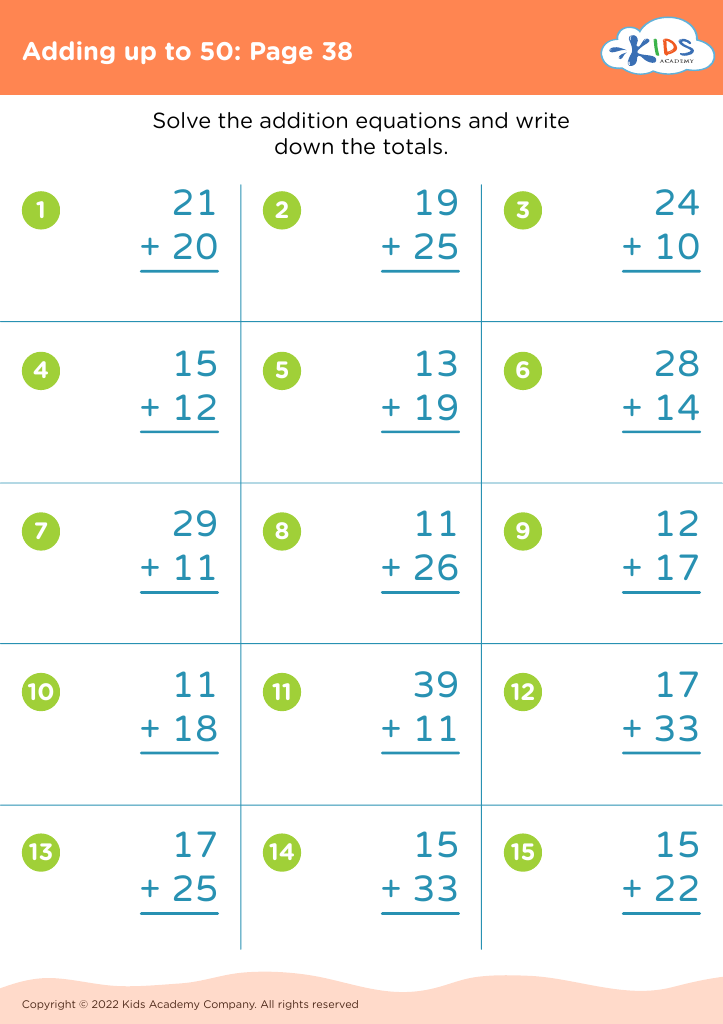
Adding up to 50: Page 38

Adding up to 50: Page 38

Adding up to 50: Page 38
Worksheet
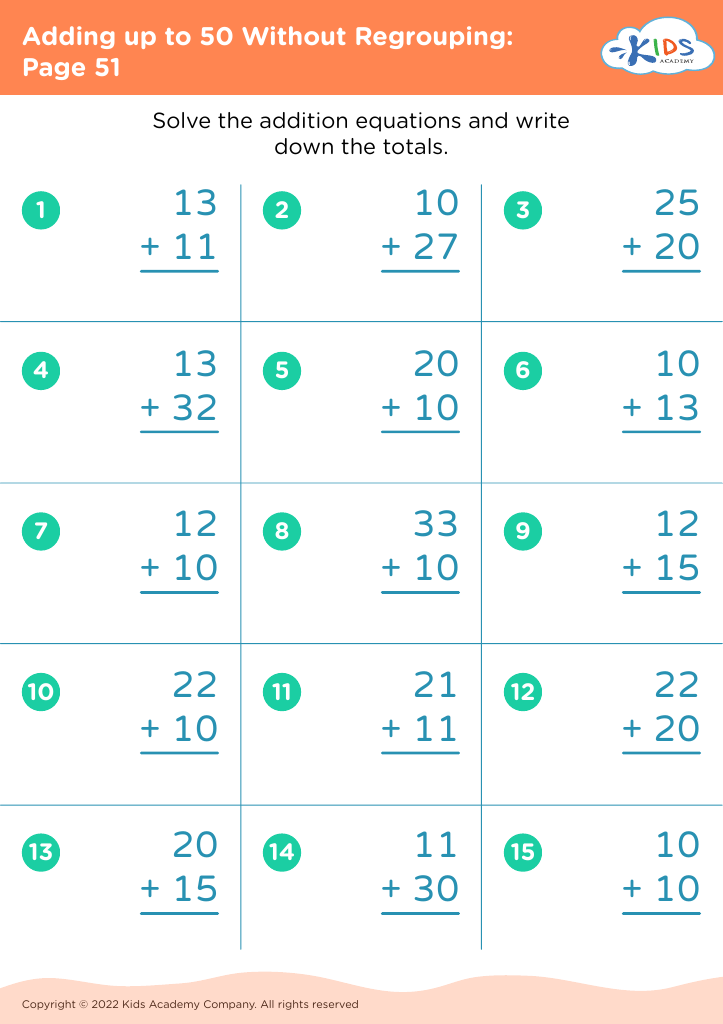
Adding up to 50 Without Regrouping: Page 51
Worksheet
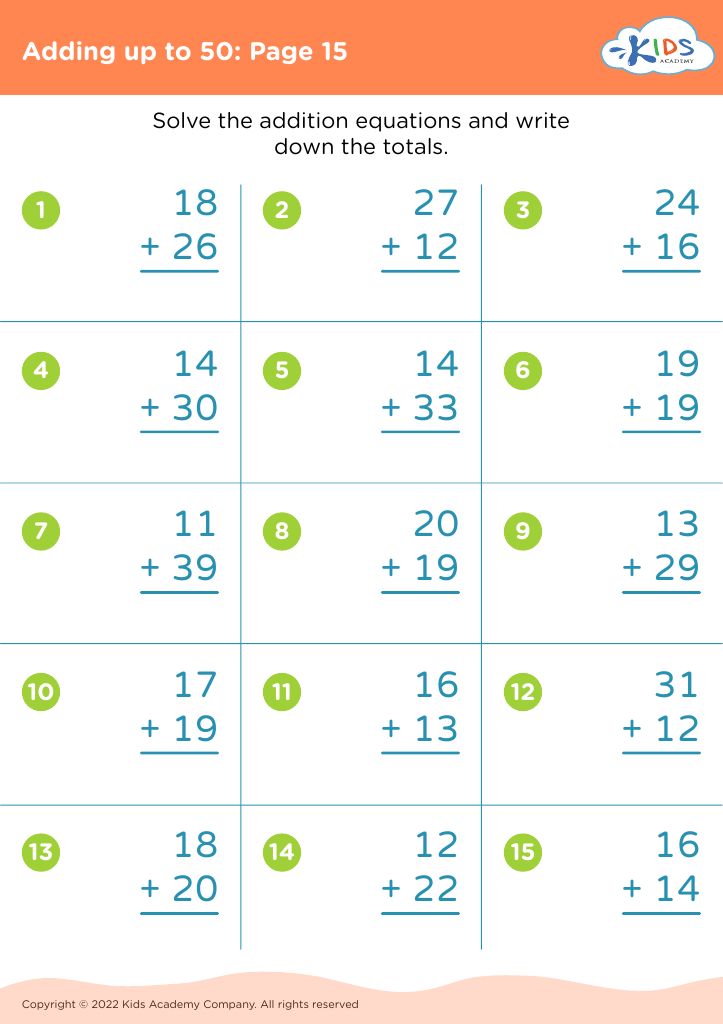
Adding up to 50: Page 15

Adding up to 50: Page 15

Adding up to 50: Page 15
Worksheet
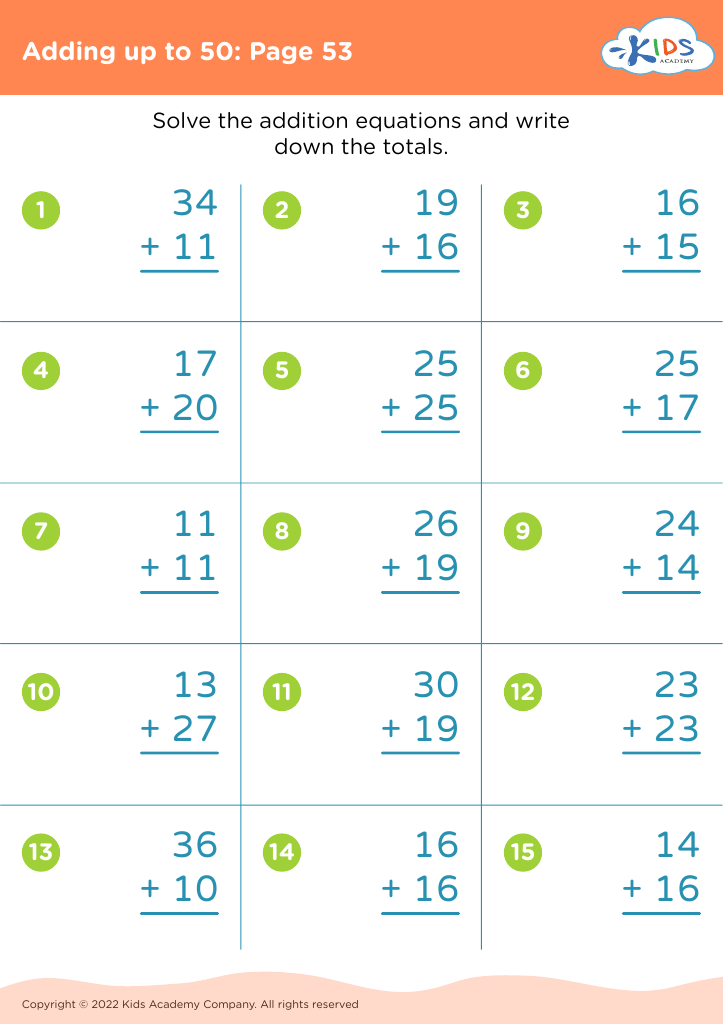
Adding up to 50: Page 53

Adding up to 50: Page 53

Adding up to 50: Page 53
Worksheet


Basic math skills, such as the ability to add numbers up to 50, form a crucial foundation for children's overall academic success and life skills. For parents and teachers, fostering these skills is essential because they not only enhance a child's mathematical comprehension but also build problem-solving abilities critical for future learning.

Understanding how to add numbers up to 50 enables children to perform well in more advanced math topics and supports their participation in everyday activities, such as budgeting, cooking, and measuring. Early competencies in math can boost confidence and encourage a positive attitude towards learning, leading to greater engagement in school.

Moreover, reinforcing basic math skills at a young age can identify any learning difficulties early on, allowing for timely intervention and support. This proactive approach helps to ensure that children do not fall behind as they progress through their education.

Ultimately, when parents and teachers prioritize basic math competencies, they empower children with essential tools for academic achievement, critical thinking, and independence, creating a strong foundation for lifelong learning and success. Investing in these fundamental skills now can pave the way for a future where children can navigate not only academic challenges but everyday life with confidence and capability.