Color recognition Adding up to 50 Worksheets
3 filtered results
-
From - To
Discover an engaging way to teach addition and color recognition with our "Adding up to 50 Worksheets." These educational resources combine the fun of coloring with math practice, making learning enjoyable for young children. Each worksheet challenges students to add numbers up to 50 and use the sums to complete colorful pictures. This hands-on approach not only helps hone math skills but also reinforces color recognition, crucial for cognitive development. Ideal for early graders, our worksheets make math accessible and exciting, laying a strong foundation for future learning. Download and print to transform learning time into a fun and effective experience!
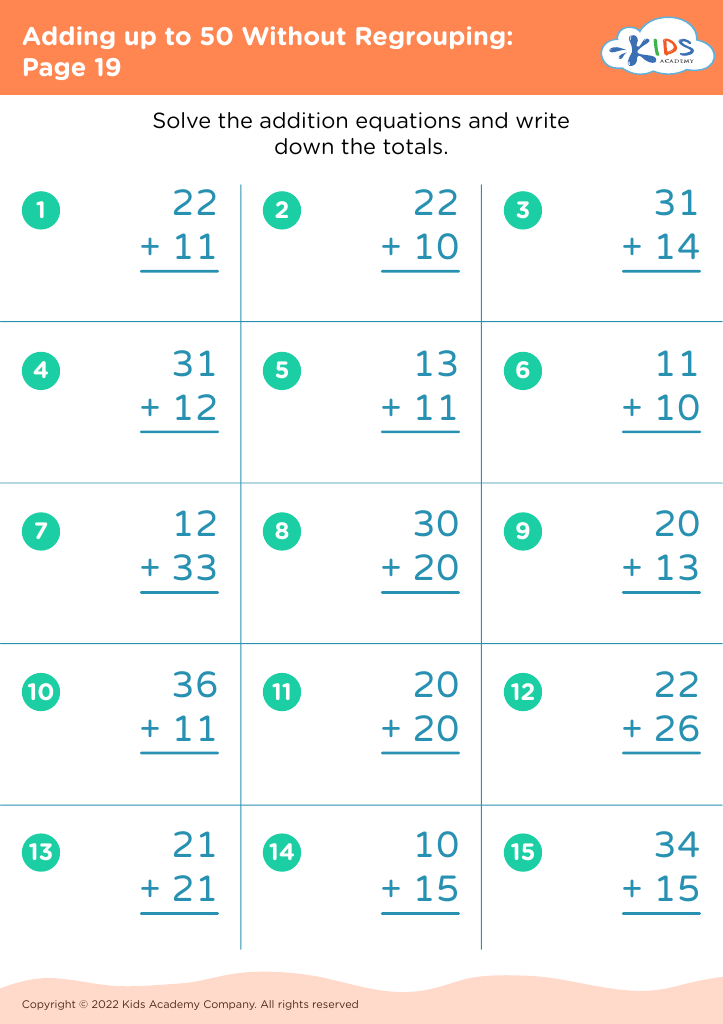
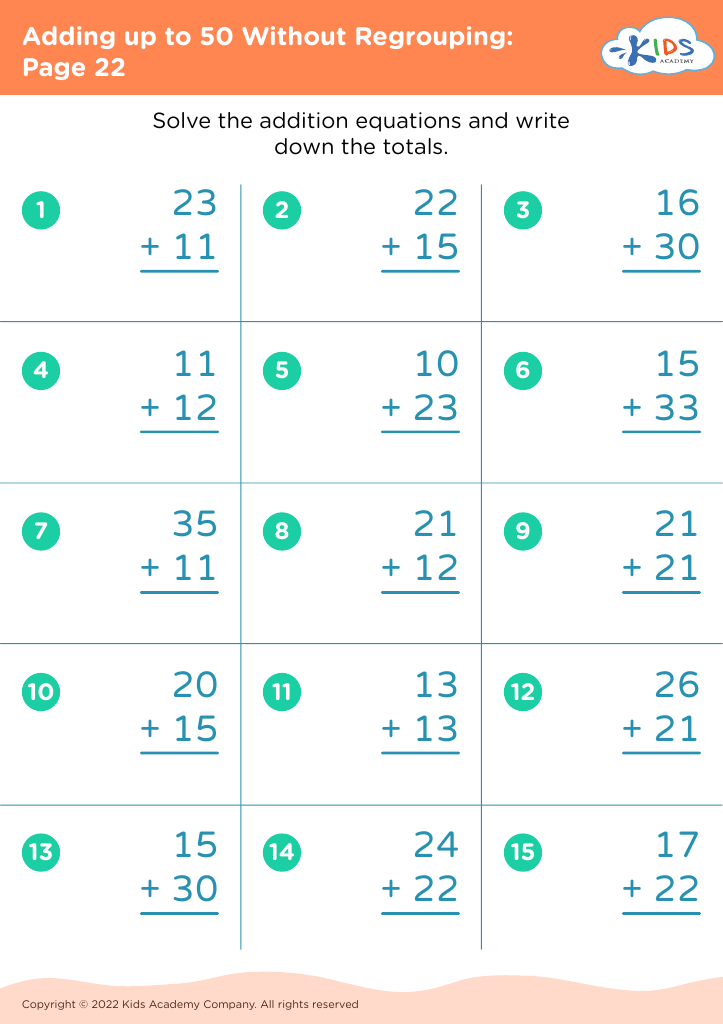
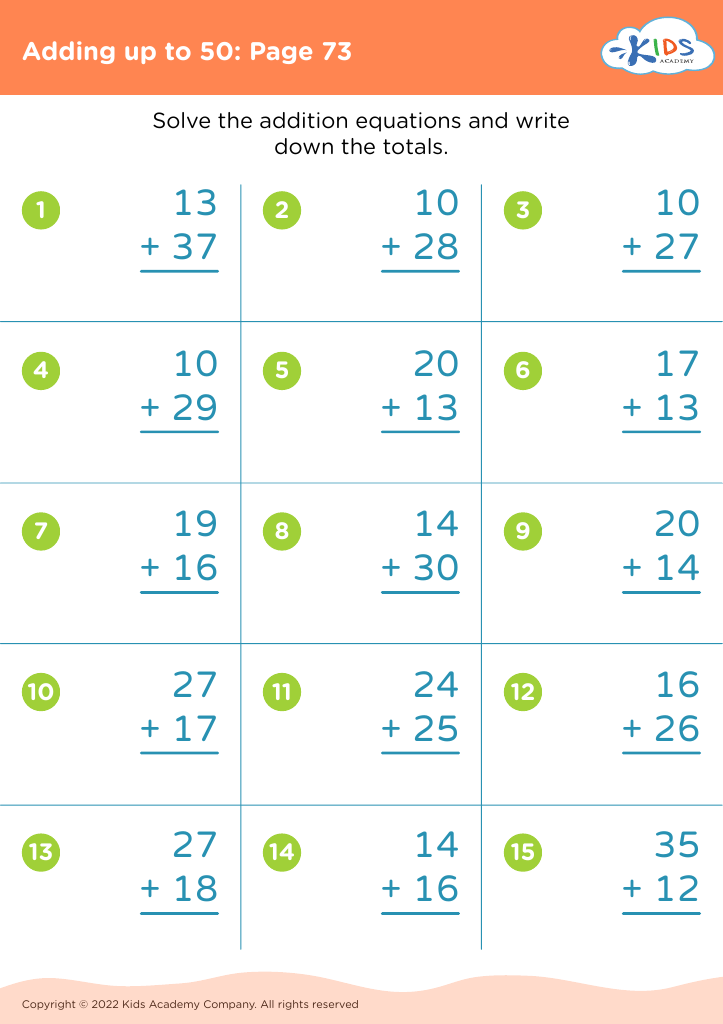




Color recognition and understanding numbers up to 50 are foundational skills with significant developmental impacts for early learners.
Color recognition is crucial because it enhances cognitive development and improves a child's ability to categorize and compare objects. It supports language development as children learn the names and attributes of different colors. Recognizing colors is often one of the first milestones in learning for young children, making it an essential gateway to more complex educational concepts.
Understanding numbers up to 50, on the other hand, lays the groundwork for numeracy skills. Early number recognition and the ability to add simple numbers contribute to mathematical literacy, which is crucial for more advanced mathematics in later years. It’s not just about counting or simple arithmetic; number recognition up to 50 helps children understand concepts of quantity, order, and measurements in real-life contexts.
Both skills also enhance social development and confidence. For example, when coloring within lines or adding numbers to complete a puzzle, students develop fine motor skills and attention to detail. These activities often involve group scenarios, fostering teamwork and communication skills.
By supporting color recognition and early numeracy up to 50, parents and teachers provide children with the tools for academic success and lifelong learning, equipping them with the essential skills they need to navigate their educational journey effectively.








