Compare fractions Adding up to 50 Worksheets
3 filtered results
-
From - To
Enhance your child's fraction skills with our engaging "Compare Fractions Adding up to 50 Worksheets." Designed for young learners, these worksheets provide a fun and interactive way to help children understand and compare fractions while adding up to 50. With colorful illustrations and varied questions, kids will develop critical thinking skills and boost their mathematical confidence. Ideal for classroom or home use, these worksheets cater to all learning styles and encourage independent practice. Turn fraction comparisons into an enjoyable activity while building a solid foundation in basic math concepts! Explore our collection today for comprehensive and effective learning experiences.
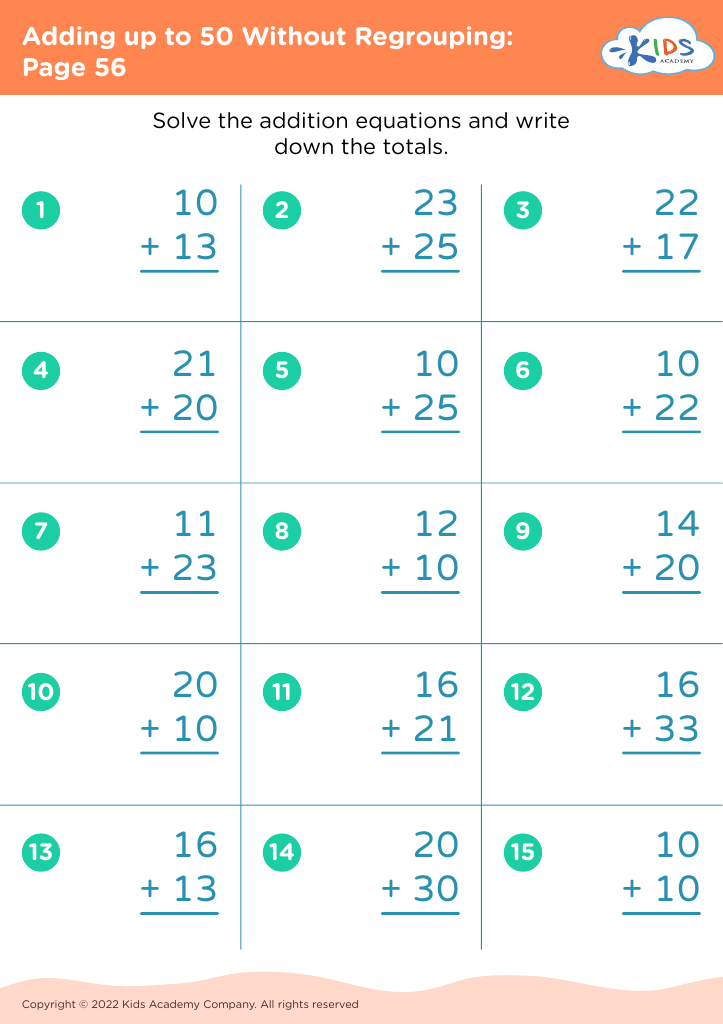
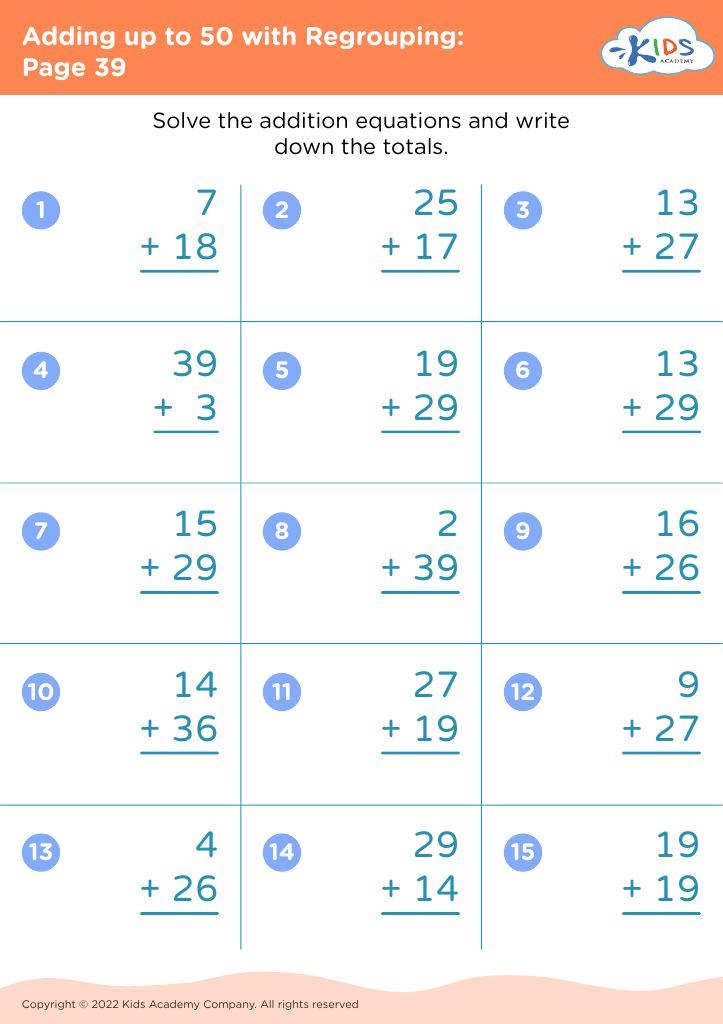
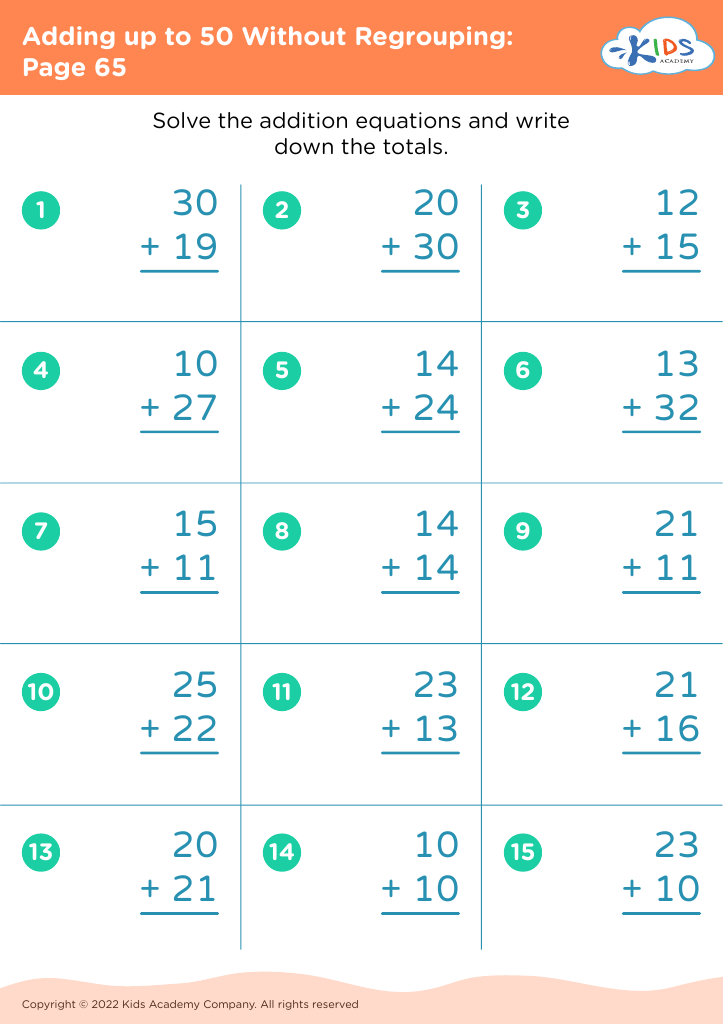




Understanding how to compare fractions and adding them to 50 is an essential skill for young learners. For parents and teachers, fostering this understanding is important as it lays a foundation for critical thinking and problem-solving. In many real-life situations—such as cooking, budgeting, or measuring—having a grasp of fractions is crucial. This skill helps children make informed decisions, whether it’s adjusting a recipe or understanding proportions in different contexts.
Moreover, mastering fractions enhances mathematical fluency, which is vital for tackling more complex concepts in later grades. By teaching children to compare fractions, educators and parents empower them with the ability to evaluate situations carefully and rationally. It also boosts confidence as students navigate further mathematical challenges.
Additionally, this knowledge links directly to other subjects, such as science and economics, where fractions often play a key role. Engaging in fraction comparisons promotes mathematical language and encourages discussion, ensuring students can articulate their reasoning.
In summary, caring about these mathematical foundations supports children’s overall academic growth and develops practical skills necessary for everyday life. Empathetic engagement from parents and teachers can nurture a positive attitude towards mathematics and enhance lifelong learning.








