Comparing Fractions Adding up to 50 Worksheets - Page 2
30 filtered results
-
From - To
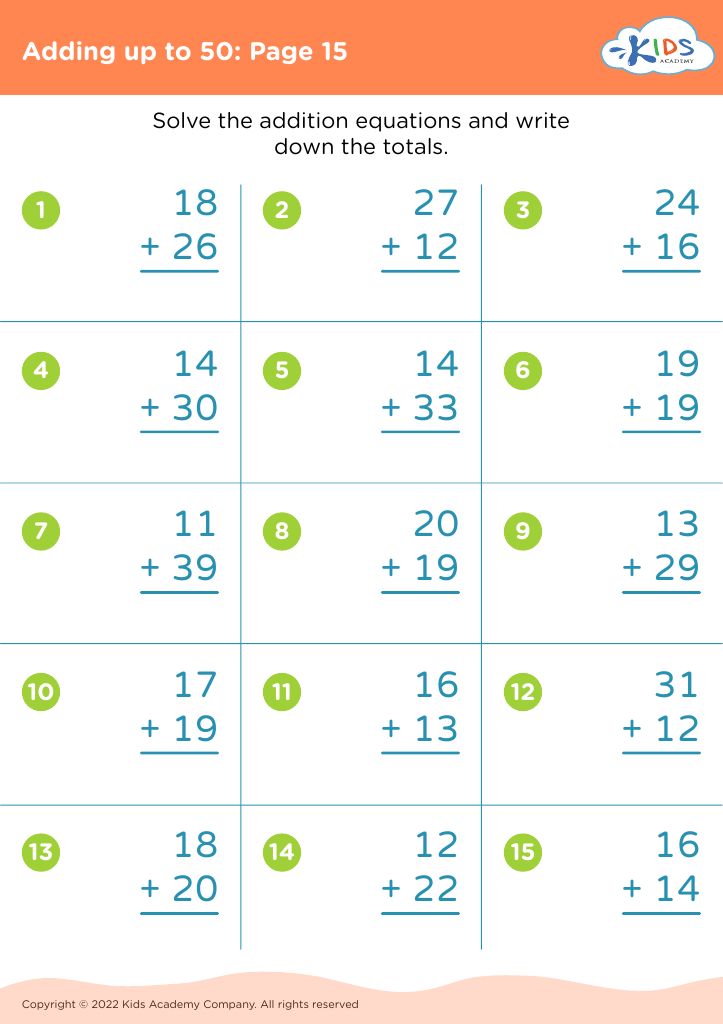
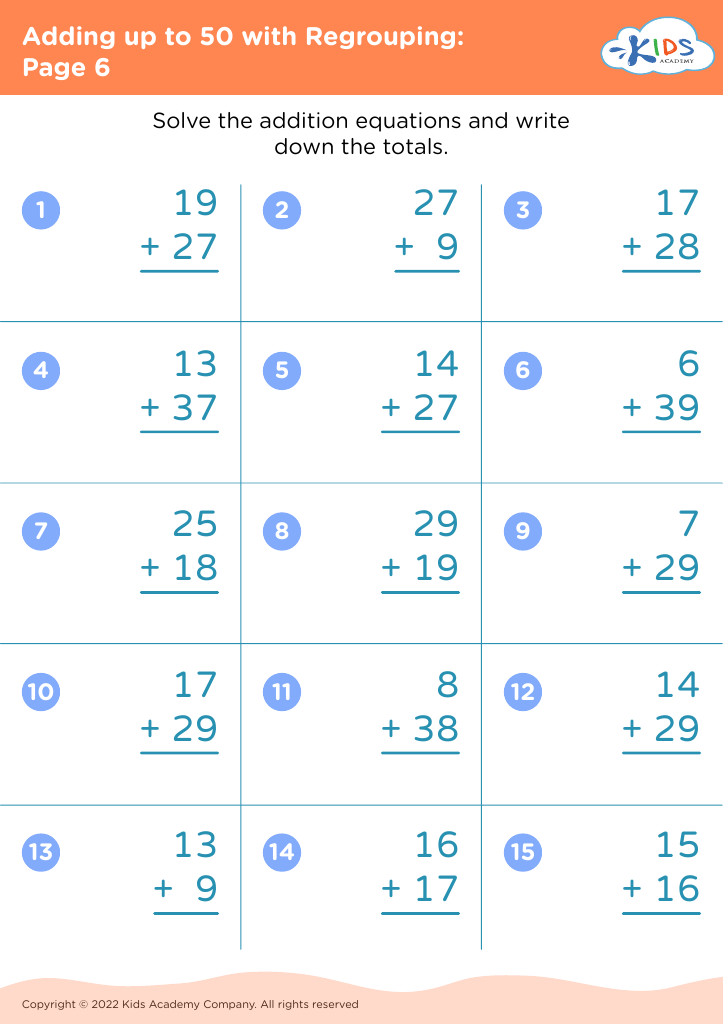
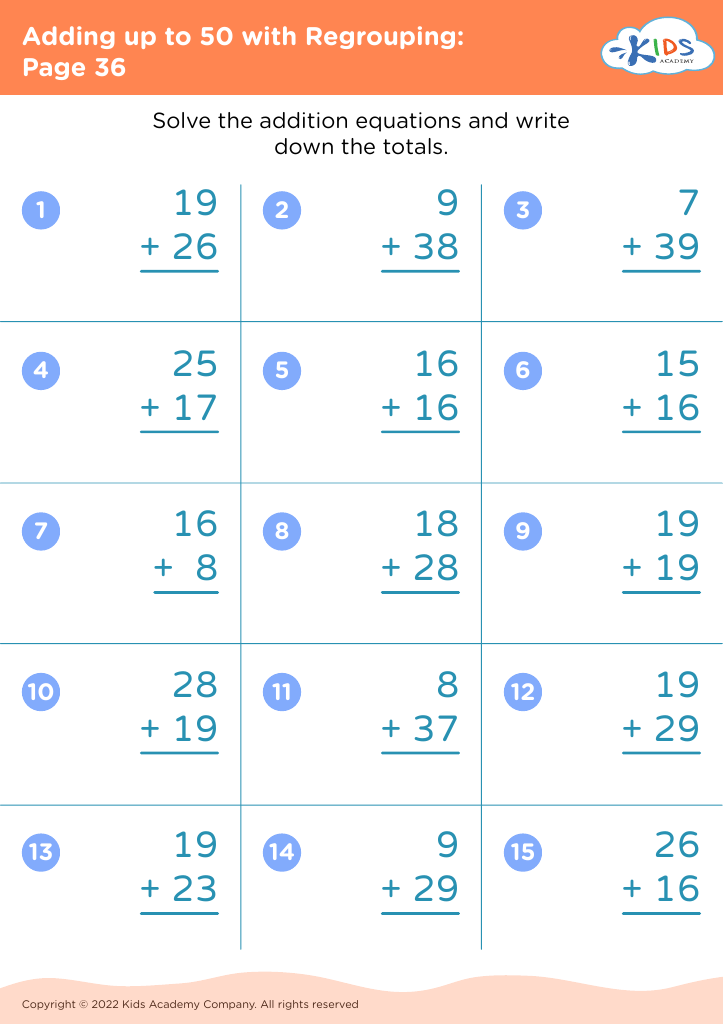
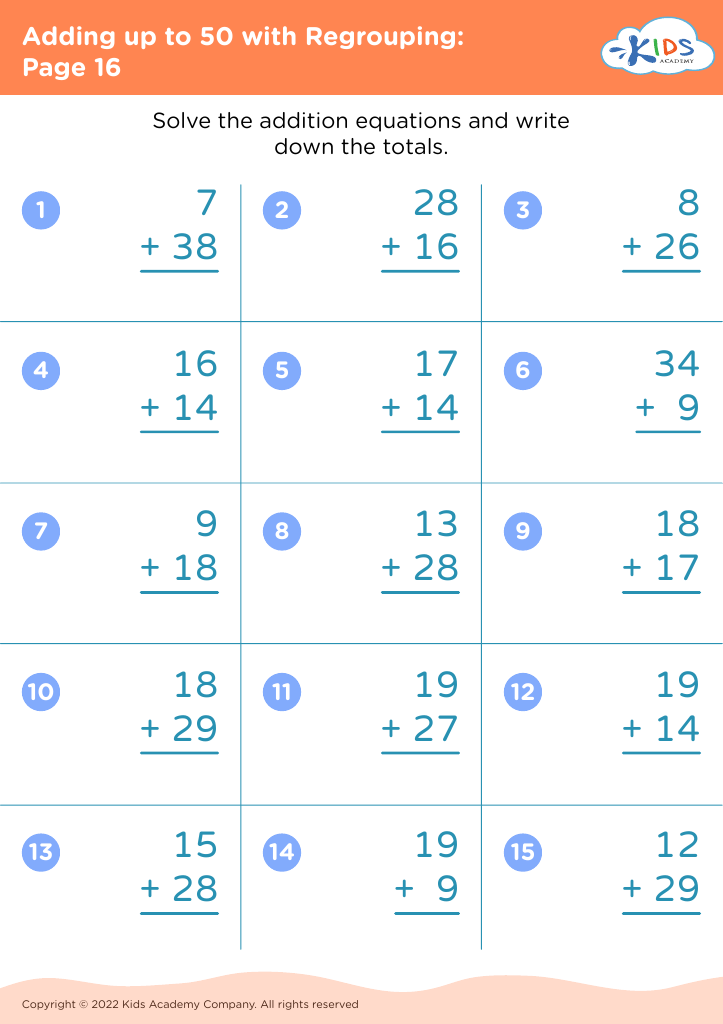
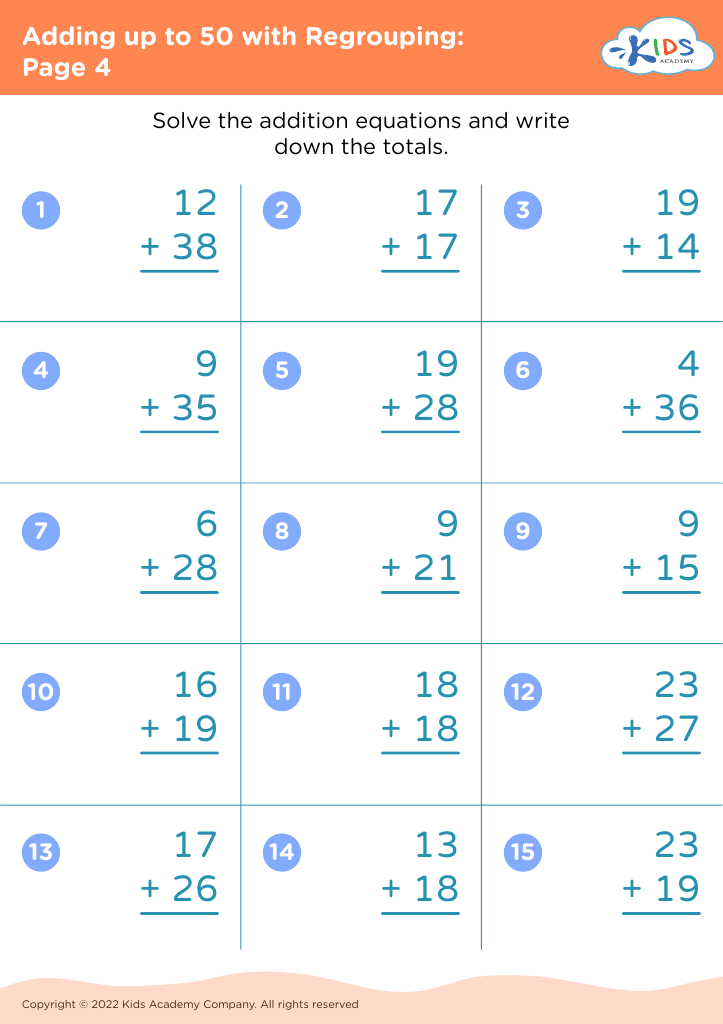
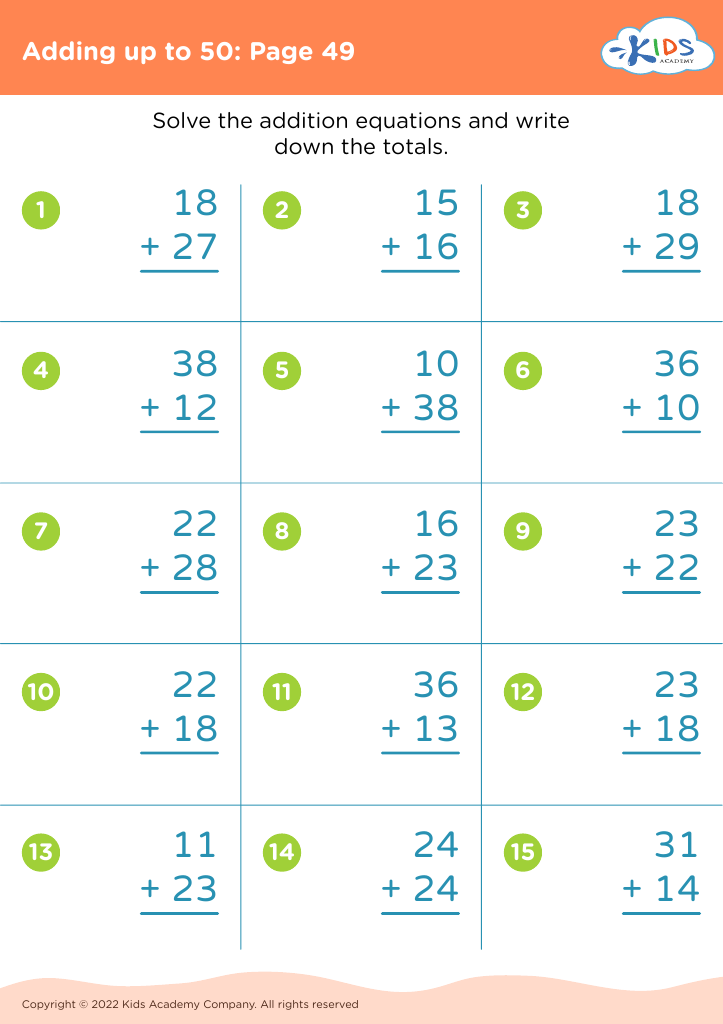




Understanding how to compare fractions is crucial for children as it lays the foundation for their mathematical development. By grasping this concept, they learn to analyze and evaluate different quantities, a skill that is essential not only in academics but also in daily life. For example, comparing fractions helps children share things fairly, follow recipes, and understand time.
When it comes to fractions adding up to 50, this specific exercise helps children build a robust understanding of number sense and arithmetic. It ensures that they can accurately sum parts to form a whole, enhancing their ability to solve problems that involve fractions and whole numbers.
Comparing fractions and working within a total value, like 50, allows students to explore equivalent fractions, simplification, and common denominators—all vital skills for higher-level math. These activities incorporate visual learning and hands-on practice, which can particularly benefit early learners who may struggle with abstract concepts.
Moreover, engaging with such exercises fosters critical thinking, persistence, and attention to detail. Parents and teachers who emphasize these skills provide children with invaluable tools to excel in more complex mathematical tasks, and stimulate an all-around intellectual growth beneficial in various aspects of life, from logical reasoning to analytical thinking.








